Kirjojen hintavertailu. Mukana 11 342 296 kirjaa ja 12 kauppaa.

Kirjahaku

Etsi kirjoja tekijän nimen, kirjan nimen tai ISBN:n perusteella.

1000 tulosta hakusanalla David Ross Locke

The Limits of Language

The Limits of Language

Stephen David Ross

Fordham University Press
1993
sidottu
The Limits of Language concerns itself with the nature and limits of language at a time when our understanding of the world and of ourselves is intimately related to what we understand of language.
Aristotle

Aristotle

Sir David Ross

Routledge
2016
sidottu
Written by renowned Aristotle scholar Sir David Ross, this study has long been established as one of the foremost surveys of Aristotle's life, work and philosophy. With John L. Ackrill's introduction and updated bibliography, created for the sixth edition, the book continues to serve as a standard guide, both for the student of ancient history and the general reader.
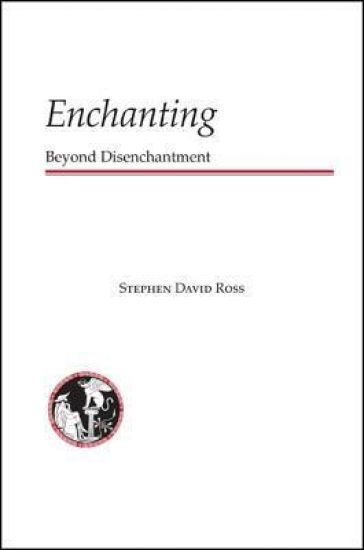
Enchanting

Enchanting

Stephen David Ross

Global Academic Publishing
2013
pokkari
Taking his departure from Max Weber's famous description of the world as disenchanted, by which he meant that everything could now be accounted for by theoretical and empirical science, Stephen David Ross asks how we might think and live in the enchantment of the secular, modern world. Enchanting offers a three-fold response: first, it takes seriously Weber's claim and seeks to understand what is important about the disenchantment of the world; second, it takes seriously the ways in which the world exceeds its disenchantments (which is to say that the world, along with everything in it, is both disenchanted and enchanted, unaccountable in myriad ways); and third, it takes seriously the possibility that we cannot express enchantment in a disenchanted voice (which is to say that the voice in which it is written is evocative and poetic while at the same time concerned with understanding and explaining). One of the book's most provocative claims is that all the posts of our time—including postmodernity, poststructuralism, postcoloniality, postmarxism, postsecularity, postcritique, postgender, postchristianity—are concerned with ways to think about enchanting.Among the topics explored are the death of nature in the advance of modern science, the uncertainties of truth, infinite and immeasurable ethics, the enchantments of art, the magic and provocation of human and other material bodies, and finally the excessiveness of things under the heading of betraying, understood as the nonidentity of every identity with itself. Everything is other to itself—uncertain, unthinkable, unspeakable, yet expressive—and Enchanting offers a thoughtful approach to understanding the ordinary things of the world as extraordinary in unlimited ways.
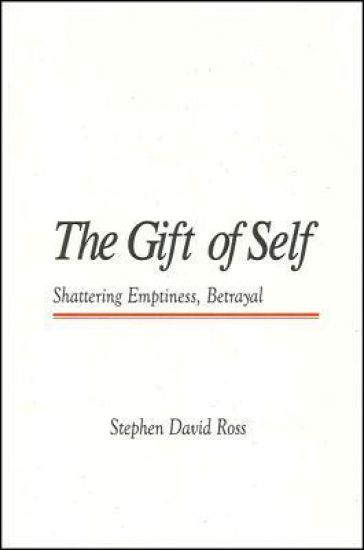
The Gift of Self

The Gift of Self

Stephen David Ross

Global Academic Publishing
2005
pokkari
In this book Stephen David Ross explores themes of dispossession, shattering, and fragmentation that arise in contemporary writings from the point of view of the selves whose subjectivities and practices are said to be fragmented, shattered, and dispossessed. He thereby addresses the question of what it might mean to be a poststructuralist, postmodern, post-enlightenment, post-religious, postcolonial, or post-capitalist self (if there be such) in the context of worldwide changes in thought and practice that have occurred in the interstices of global developments and local traditions. One of his major concerns is with a self in the world with relations that surpass relations with other human beings, an ethical, caring, relational self that inhabits the earth with other creatures and things, a self with ecological relations. Ross argues that ethical, political, social, religious, and ecological concerns cannot be separated from the images, representations, and discourses that frame the contemporary world, that a self must relate to itself and others in aesthetic, mimetic, imagistic terms if it is to address questions of identity, identification, and responsibility; moreover that such images, identifications, and representations are, in Derrida's words, not only human, that they disrupt the categories of humanity and nature. In this way, boundaries that separate selves from others, humans from nature, finite from infinite, present themselves for crossing and double crossing.The book continues the themes of giving, generosity, betrayal, forgiveness, responsibility, relationality, and the good developed in his previous writings, especially the five volumes of the gift series (The Gift of Beauty: The Good as Art; The Gift of Truth: Gathering the Good; The Gift of Touch: Embodying the Good; The Gift of Kinds: The Good in Abundance, an ethic of the earth; The Gift of Property: Having the Good, betraying genitivity, economy, and ecology, an ethic of the earth) and the three immediately preceding volumes (The Ring of Representation; Injustice and Restitution: The Ordinance of Time; Plenishment in the Earth: An Ethic of Inclusion). Ross explores these themes here in relation to the possibilities of life for a self among others in the world.The book proceeds from the themes of care of self and technologies of self developed in Foucault's later writings, preceded by an examination of the notion of sôphrosunê in Plato's Charmides. These themes are framed from the beginning by Derrida's writings on responsibility—its impossibilities, temptations, and excesses—and by Levinas's insistence that the self, the ego, is composed by relations toward the other, in alterity. It is not I who decides to accept my responsibilities toward my neighbor but those responsibilities determine who and what I am. The self is not constituted by what it has or possesses but by generosity beyond itself. In this double sense, from Levinas and Derrida, the self is constituted by relations with others that exceed any categories and measures. This excess of relation and expression pervades all things.The major themes of the book are named in the chapter titles (slightly amended): I myself, self knowledge, self care, self identity, self image, self love, self possession, self and others, self and world, shattering, emptiness, responsiveness, self betrayal. Betrayal is taken from Levinas as exposition—exposure and expression—reworked in relation to Derrida as performativity and responsibility. It strongly retains its double meaning as violation and revelation. Generosity and forgiveness are situated in the space where the self betrays itself.Authors discussed at length are Plato, Nietzsche, Levinas, Derrida, Foucault, Freud (together with Erikson and Lacan), Blanchot, Nancy, and Irigaray, with extended references to Spinoza, Heidegger, Sartre, Beauvoir, and Deleuze and Guattari. Throughout, Ross discusses writings that pertain to other cultures—African and Asian—to further complicate the discussions.A long chapter is devoted to Buddhist themes of emptiness, nonattachment, and nonself in relation to the shattering, fragmentation, and dispossession of the modern self, exploring how Buddhism and other Asian texts and practices may define a different multiple, relational sense of self in some of the countries in which they have become socially widespread. This discussion concerns itself in part with ways in which continental writings on self and other retain a European, Christian, and Enlightenment attachment to individuals, persons, and selves. In return, however, the discussion also examines how Buddhist and other views of self that may have in some respects achieved a far greater multiplicity and relationality than European views become captive to social and political developments that frequently appear incompatible with their central tenetsThe author's hope is that the social-ethical-political critique that emerges from post-enlightenment critiques of modernity can be brought into relation with themes of emptiness and nonattachment in productive ways. His goal is to open up discussions of self and world that move beyond the boundaries that have framed them historically.
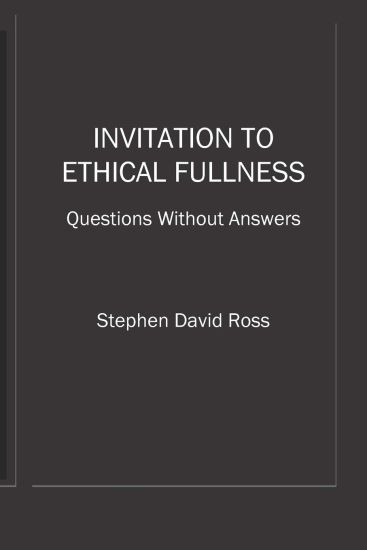
Invitation to Ethical Fullness: Questions Without Answers

Invitation to Ethical Fullness: Questions Without Answers

Stephen David Ross

Createspace Independent Publishing Platform
2018
nidottu
The world is full of things full of being, things that matter to other things, things that matter to themselves, where how they matter, and what mattering means, exceeds all limits and expectations. Such a fullness is ethical, exceeding comprehension and anticipation, inexhaustibly full in goodness and abundance, in suffering and joy. I wrote my book, Ethical Fullness: Thinking of Animals, Believing in Things, to express such an ethics, from animals to plants and things. Such a fullness is also aesthetic, inexhaustibly filled with beauty and abundance, with enchantment and wonder. I wrote my book, The World as Image, to express such an aesthetics. The fullness of being is full beyond itself, full beyond ethics and aesthetics, where they are full beyond themselves.Here I hope to provide a guide to such a fullness, with ethical fullness foremost in mind. This guide and invitation continues the more complex, earlier work by making it more accessible, but also by developing what fullness means and why it is ethical. It provides answers to the persistent questions of why ethics is so difficult, why injustice is always mixed with justice, why the world is not a better place. The answer is that this divergence and variation is what fullness means.This book may be read in different ways: As an introduction to Ethical Fullness, which spells out its movements in greater detail; As a more explicit account of what ethical fullness means in human life, given its complexities and evasions, supposing the development in Ethical Fullness; As an extension of the theory of ethical fullness in the context of human life, ethics and politics, taking the thinking and believing of Ethical Fullness for granted; As another struggle to be ethical in the fullness of its exposition.
A Life in Question

A Life in Question

Stephen David Ross

Createspace Independent Publishing Platform
2018
nidottu
The story of my life becoming a philosopher. Learning to question. The story of my life as a philosopher. A life in question, as every life is in question before its end, in the face of wounding and death. But most of all, a life of questioning, joyously and affirmatively. In the fullness of being, the fullness of living ethically. Not a guide to life but perhaps a celebration of its promises.
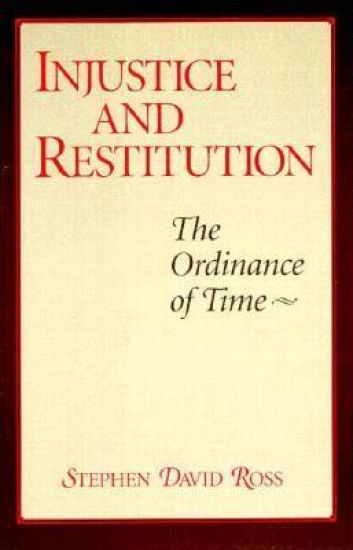
Injustice and Restitution

Injustice and Restitution

Stephen David Ross

State University of New York Press
1993
pokkari
This book addresses the nature and injustice of authority, retracing the ideas of reason and law from ancient Greece to the present, pursuing a line of thought begun with Anaximander, who speaks of the ordinance of time as restitution for immemorial injustice, and Heraclitus, who speaks of justice as strife. Predominantly philosophical, exploring the authority of Western philosophy in twentieth-century continental and pragmatist writings, the book explores alternative voices as challenges to authority, in feminist and multicultural writings, in Greek mythology and African narratives, in Greek drama and twentieth-century literature.
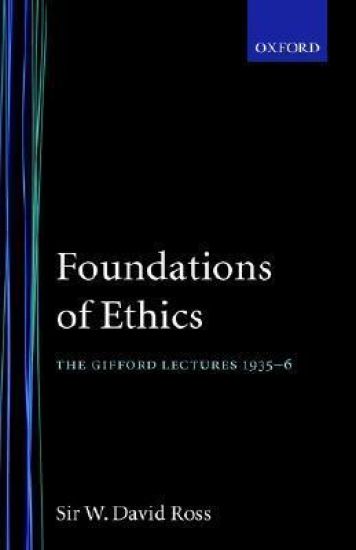
The Foundations of Ethics

The Foundations of Ethics

W. David Ross

Oxford University Press
2000
sidottu
Oxford Scholarly Classics brings together a number of great academic works from the archives of Oxford University Press. Reissued in a uniform series design, they will enable libraries, scholars, and students to gain fresh access to some of the finest scholarship of the last century.
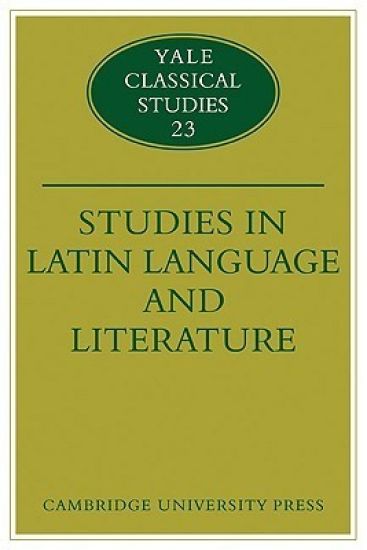
Studies in Latin Language and Literature

Studies in Latin Language and Literature

Thomas Cole; David Ross

Cambridge University Press
2009
pokkari
This book covers a wide range of subjects from Latin literature and language to textual history and criticism. E. D. Francis gives a history of the words prae and pro, as adverb, preposition and prefix. H. D. Jocelyn surveys the distribution and differing uses of quotations from Greek poetry in Cicero's prose writings and D. F. S. Thomson takes a fresh look at the manuscript tradition of Catullus. The remaining six articles deal with later authors and are divided equally between the poets and the historians: a reading of Horace's Roman Odes and their relation to the other odes in which he addressed the Roman people; a demonstration of the internal coherence of a Tibullan elegy and two Juvenal satires; a review of disputed readings in the OCT of Livy IX; an analysis of the structure of the prologues to the Annals, Histories and Agricola to cast light on Tacitus' intentions; and a critical review of Tacitus' portrait of Germanicus, generally viewed in a sympathetic light but debated by D. O. Ross.
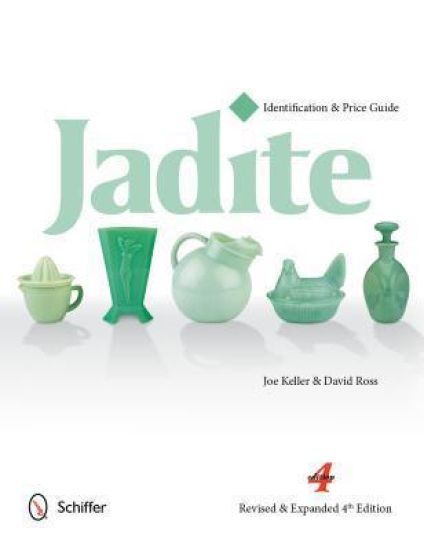
Jadite

Jadite

Joe Keller; David Ross

Schiffer Publishing Ltd
2014
sidottu
When Joe Keller and David Ross introduced the first book ever written dedicated to jadite, it was met with critical and popular enthusiasm. It was a tour de force! Now this fourth edition, there are over a thousand pieces illustrated in over 700 color photographs. Additional photographs and a reproduction section enhance the book, along with updated values to keep up with an ever-changing marketplace. Jadite: An Identification and Price Guide brings together the works of the three major glass companies that produced jadite from the 1930s to the mid-1970s: McKee, Jeannette, and Anchor Hocking. Exploring these perennially popular collectibles, the book includes numerous dinnerware patterns, all sorts of jadite kitchenware, canisters, shakers, mixing bowls, and ovenware, and jadite items for the home, such as lamps, bathroom items, and ashtrays. The authors have produced a book that will be an invaluable and welcome addition to collectors’ libraries.
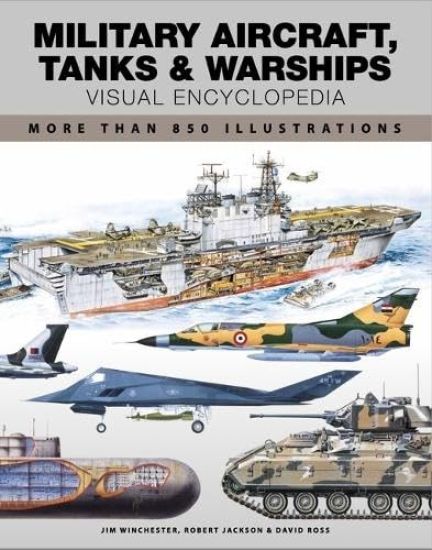
Military Aircraft, Tanks and Warships Visual Encyclopedia

Military Aircraft, Tanks and Warships Visual Encyclopedia

Robert Jackson; David Ross; Jim Winchester

AMBER BOOKS LTD
2024
nidottu
From early jets to the F-22 Raptor, from the Centurion A41 tank to the Bradley M2, from aircraft carriers to nuclear submarines, Military Aircraft, Tanks & Warships Visual Encyclopedia is a fascinating guide to aircraft, tanks and ships from the beginning of the Cold War to the present day. Arranged by type and then chronologically within each type, each entry or variant is illustrated with an excellent full-colour artwork, showing in great detail its characteristics and markings, and completed with an informative caption and technical specifications. Ranging from the Korean War to Vietnam, from India and Pakistan to the Arab-Israeli conflict, from the Falklands to Afghanistan and Iraq, the book includes main battle tanks, tank destroyers, armoured personnel carriers, amphibious tanks, fighter jets, interceptors, bombers, transport aircraft, Stealth bombers, aircraft carriers, destroyers and submarines. With 850 outstanding colour artworks, Military Aircraft, Tanks & Warships Visual Encyclopedia is an authoritatively researched book that will appeal to anyone with an interest in modern military technology.