Kirjojen hintavertailu. Mukana 12 390 323 kirjaa ja 12 kauppaa.

Kirjahaku

Etsi kirjoja tekijän nimen, kirjan nimen tai ISBN:n perusteella.

1000 tulosta hakusanalla David-E

New plane geometry, by Wooster Woodruff Beman ... and David Eugene Smith ...

New plane geometry, by Wooster Woodruff Beman ... and David Eugene Smith ...

Wooster Woodruff Beman

University of Michigan Library
2001
sidottu
Trieste Publishing has a massive catalogue of classic book titles. Our aim is to provide readers with the highest quality reproductions of fiction and non-fiction literature that has stood the test of time. The many thousands of books in our collection have been sourced from libraries and private collections around the world.The titles that Trieste Publishing has chosen to be part of the collection have been scanned to simulate the original. Our readers see the books the same way that their first readers did decades or a hundred or more years ago. Books from that period are often spoiled by imperfections that did not exist in the original. Imperfections could be in the form of blurred text, photographs, or missing pages. It is highly unlikely that this would occur with one of our books. Our extensive quality control ensures that the readers of Trieste Publishing's books will be delighted with their purchase. Our staff has thoroughly reviewed every page of all the books in the collection, repairing, or if necessary, rejecting titles that are not of the highest quality. This process ensures that the reader of one of Trieste Publishing's titles receives a volume that faithfully reproduces the original, and to the maximum degree possible, gives them the experience of owning the original work.We pride ourselves on not only creating a pathway to an extensive reservoir of books of the finest quality, but also providing value to every one of our readers. Generally, Trieste books are purchased singly - on demand, however they may also be purchased in bulk. Readers interested in bulk purchases are invited to contact us directly to enquire about our tailored bulk rates.
Oeuvres Poétiques: Sainte Cécile, La Maison, David Et Nathan, Poésies Diverses
Oeuvres poetiques: Sainte Cecile, la Maison, David et Nathan, poesies diverses / Mis de SegurDate de l'edition originale: 1899Ce livre est la reproduction fidele d'une oeuvre publiee avant 1920 et fait partie d'une collection de livres reimprimes a la demande editee par Hachette Livre, dans le cadre d'un partenariat avec la Bibliotheque nationale de France, offrant l'opportunite d'acceder a des ouvrages anciens et souvent rares issus des fonds patrimoniaux de la BnF.Les oeuvres faisant partie de cette collection ont ete numerisees par la BnF et sont presentes sur Gallica, sa bibliotheque numerique.En entreprenant de redonner vie a ces ouvrages au travers d'une collection de livres reimprimes a la demande, nous leur donnons la possibilite de rencontrer un public elargi et participons a la transmission de connaissances et de savoirs parfois difficilement accessibles.Nous avons cherche a concilier la reproduction fidele d'un livre ancien a partir de sa version numerisee avec le souci d'un confort de lecture optimal. Nous esperons que les ouvrages de cette nouvelle collection vous apporteront entiere satisfaction.Pour plus d'informations, rendez-vous sur www.hachettebnf.fr
An Address Commerative Of The Life And Character Of The Rev. David Elliot, D.D., Ll.D.
An Address Commerative Of The Life And Character Of The Rev. David Elliot, D.D., Ll.D.: Professor In The Western Theological Seminary At Allegheny, Penn.: Delivered In The First Presbyterian Church Of Allegheny, Wednesday Evening, April 22D, 1874. has been considered by academicians and scholars of great significance and value to literature. This forms a part of the knowledge base for future generations. So that the book is never forgotten we have represented this book in a print format as the same form as it was originally first published. Hence any marks or annotations seen are left intentionally to preserve its true nature.
CCAR Journal: The Reform Jewish Quarterly, Fall 2024, In Memory of Rabbi David Ellenson, z"l
This issue of the CCAR Journal is dedicated to honoring Rabbi David Ellenson, z"l, . Articles include "Exploring Tradition and Modernity: Ellenson on Holdheim," "David Ellenson: The Passionate and Practical Zionist;," "Borowitz, Durkheim, and Ellenson: Covenantal Theology and Collective Effervescence in Conversation," among others. General articles, book reviews, and poems are also included.
Nominations of Rufus Hawkins Yerxa, Charlene Barshefsky, Walter Broadnax, Avis Lavelle, Jerry Klepner, David Ellwood, Kenneth Apfel, Bruce Vladeck, Harriet Rabb, and Jean Hanson
This work has been selected by scholars as being culturally important, and is part of the knowledge base of civilization as we know it. This work was reproduced from the original artifact, and remains as true to the original work as possible. Therefore, you will see the original copyright references, library stamps (as most of these works have been housed in our most important libraries around the world), and other notations in the work.This work is in the public domain in the United States of America, and possibly other nations. Within the United States, you may freely copy and distribute this work, as no entity (individual or corporate) has a copyright on the body of the work.As a reproduction of a historical artifact, this work may contain missing or blurred pages, poor pictures, errant marks, etc. Scholars believe, and we concur, that this work is important enough to be preserved, reproduced, and made generally available to the public. We appreciate your support of the preservation process, and thank you for being an important part of keeping this knowledge alive and relevant.
Addition, Elimination and Substitution: Markovnikov, Hofmann, Zaitsev and Walden
Addition, Elimination and Substitution: Markovnikov, Hofmann, Zaitsev and Walden: Discovery and Development discusses foundational reactions in organic chemistry and their major protagonists, contributions to synthesis, and history. Hofmann, Zaitsev, and Markovnikov are introduced, along with their major discoveries and contributions to organic chemistry. The history of controversies around Markovnikov’s Rule are addressed. The book introduces Walden’s original demonstration of configuration inversion, then discusses bimolecular elimination reactions, regioselective addition reactions, regiospecific alkene synthesis, and the development of modern reactions with configuration inversion. With its unique perspective, focus, and comprehensive coverage, this book belongs on the shelf of every organic chemist.
T. S. Eliot and the Cultural Divide

T. S. Eliot and the Cultural Divide

David E. Chinitz

University of Chicago Press
2005
nidottu
For decades T. S. Eliot has been applauded and denounced as a staunch champion of high art and an implacable opponent of popular culture. But Eliot's elitism was never what it seemed. "T. S. Eliot and the Cultural Divide" represents this great writer as the complex figure he was, an artist attentive not only to literature but also to detective fiction, Vaudeville Theater, jazz, and the songs of Tin Pan Alley. David Chinitz argues that Eliot was productively engaged with popular culture in some form at every stage of his career, and that his response to it, as expressed in his poetry, plays, and essays, was dynamic rather than hostile. He shows that American jazz, for example, was a major influence on Eliot's poetry during its maturation. He discusses Eliot's surprisingly persistent interest in popular culture, both in such famous works as "The Waste Land" and in such lesser-known pieces as "Sweeney Agonistes". And he traces Eliot's long, quixotic struggle to close the widening gap between high art and popular culture through a new type of public art: contemporary popular verse drama. What results is a work that will persuade adherents and detractors alike to return to Eliot and find in him a writer who liked a good show, a good thriller, and a good tune, as well as a "great" poem.
T. S. Eliot and the Cultural Divide

T. S. Eliot and the Cultural Divide

David E. Chinitz

University of Chicago Press
2003
sidottu
For decades T. S. Eliot has been applauded and denounced as a staunch champion of high art and an implacable opponent of popular culture. But Eliot's elitism was never what it seemed. "T. S. Eliot and the Cultural Divide" represents this great writer as the complex figure he was, an artist attentive not only to literature but also to detective fiction, Vaudeville Theater, jazz, and the songs of Tin Pan Alley. David Chinitz argues that Eliot was productively engaged with popular culture in some form at every stage of his career, and that his response to it, as expressed in his poetry, plays, and essays, was dynamic rather than hostile. He shows that American jazz, for example, was a major influence on Eliot's poetry during its maturation. He discusses Eliot's surprisingly persistent interest in popular culture, both in such famous works as "The Waste Land" and in such lesser-known pieces as "Sweeney Agonistes". And he traces Eliot's long, quixotic struggle to close the widening gap between high art and popular culture through a new type of public art: contemporary popular verse drama. What results is a work that will persuade adherents and detractors alike to return to Eliot and find in him a writer who liked a good show, a good thriller, and a good tune, as well as a "great" poem.

Inventing the Public Enemy

Inventing the Public Enemy

David E. Ruth

University of Chicago Press
1996
nidottu
In this account of mass media images, David Ruth looks at Al Capone and other "invented" gangsters of the 1920s and 1930s. The subject of innumerable newspaper and magazine articles, novels and Hollywood movies, the gangster was a compelling figure for Americans preoccupied with crime and the social turmoil it symbolized. Ruth shows that the media gangster was less a reflection of reality than a projection created from Americans' values, concerns and ideas about what would sell. We see efficient criminal executives demonstrating the multifarious uses of organization; dapper, big-spending gangsters highlighting the promises and perils of the emerging consumer society; and gunmen and molls guiding an uncertain public through the shifting terrain of modern gender roles. In this study, Ruth reveals how the public enemy provides a far-ranging critique of modern culture.
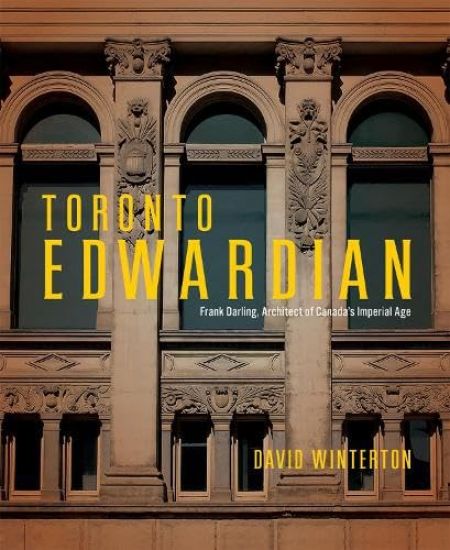
Toronto Edwardian

Toronto Edwardian

David E. Winterton; Michael McClelland

MCGILL-QUEEN'S UNIVERSITY PRESS
2026
sidottu
Beginning his career as an independent architect in the mid-1870s, Frank Darling came to prominence as the principal of Darling & Pearson Architects, designing a plethora of delightful bank buildings in the early twentieth century. Darling’s work aligned with the national ambitions of his clients and gave shape to Britain’s global imperial project on Canadian soil. In Toronto Edwardian David Winterton positions Darling as a leading architectural figure of the era. He demonstrates that the Canadian Edwardian Grand Manner was not merely an architectural interlude: it was pivotal to the development of Canada’s cultural identity and of the possibility of a national architecture in the early twentieth century. Darling was the first Canadian architect with a truly national presence, with built projects in every province – over 360 known buildings – ranging from elaborate urban designs to prefabricated banks that rose up in many towns and villages west of Lake Superior. Winterton has drawn from institutional archives and consulted with local historians, heritage professionals, and scholars to meticulously reconstruct the story of Frank Darling and his work. First exploring biographical, cultural, and patronage contexts, then focusing on the design and construction of fine houses, academic buildings, banks, and even the country’s first skyscrapers, Toronto Edwardian features new and previously unpublished photographs that illuminate the firm’s considerable influence and provide a visual record of Darling’s approach to style. Toronto Edwardian richly illustrates the breadth of Darling’s architectural creation and compellingly articulates the Edwardian period’s importance to Canadian architecture.