Kirjojen hintavertailu. Mukana 11 699 587 kirjaa ja 12 kauppaa.

Kirjahaku

Etsi kirjoja tekijän nimen, kirjan nimen tai ISBN:n perusteella.

1000 tulosta hakusanalla Debora Pol

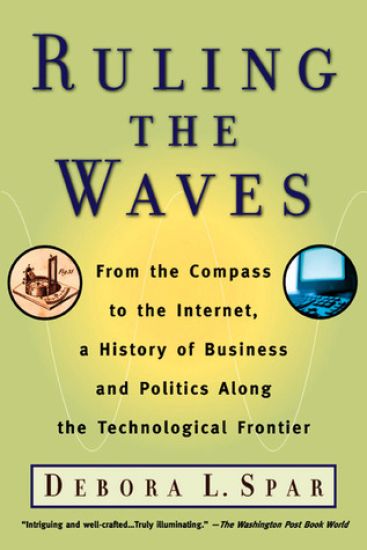
Ruling the Waves: Cycles of Discovery, Chaos, and Wealth from the Compass to the Internet
Beginning with the development of the compass, Ruling the Waves examines a series of technological revolutions that promised, in their time, to transform the world's politics and business. With Debora Spar's gifted storytelling, each chapter reads like an adventure tale as she recounts the histories of the printing press and maps; of the telegraph, radio, and satellite television; of software, encryption, and the advent of digital music. At each of these junctures Spar suggests that invention led to both a wave of commerce and of chaos. Entrepreneurs such as Samuel Morse and Rupert Murdoch carved new markets from the emerging technology and proclaimed that the old rules no longer applied. And for a while, they were right. But eventually--and inevitably--even cowboys need rules: rules of property, rules of coordination, rules of competition. The erstwhile pioneers thus turn to government, lobbying for order and setting the stage for the next wave of discovery. A fascinating history of business, Ruling the Waves is also an original, thought-provoking analysis of the parallels between past innovations and inventions and our own tumultuous times.

Paratexts of the English Bible, 1525-1611

Paratexts of the English Bible, 1525-1611

Debora Shuger

Oxford University Press
2022
sidottu
English bibles, from Tyndale's 1525 New Testament to the 1611 King James, feature calendars, woodcuts, maps, chronologies, prayers, philological glosses, inset historical essays, elaborate multi-page diagrams, single-leaf summaries of scripture, prefaces by eminent churchmen, doctrinal notes by leading theologians, a dialogue on predestination, a twelfth-century genealogy of Christ, a ninth-century Jewish chronicle--most widely available, given the hundreds of editions printed between those dates. This book explores this archive, but it also tracks its changes, because while biblical translations remain relatively stable over time, the paratexts cocooning a bible's first printing sometimes mutate or vanish in succeeding editions--and indeed sometimes they migrate to a competing bible. These paratexts, together with their revelatory print histories, disclose a picture of the English Reformation that differs in striking ways from the authorized version.
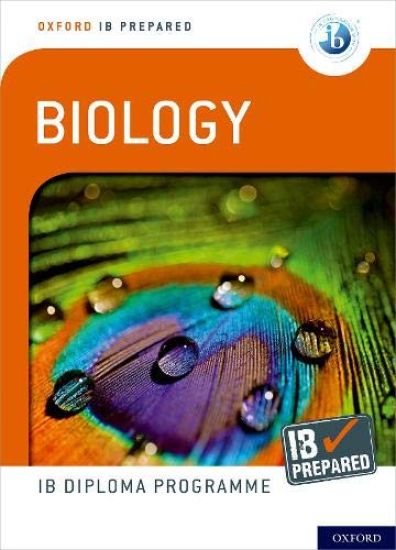
Oxford IB Diploma Programme: IB Prepared: Biology

Oxford IB Diploma Programme: IB Prepared: Biology

Debora Primrose

Oxford University Press
2019
muu
IB Prepared resources are developed directly with the IB to provide the most up-to-date, authentic and authoritative guidance on DP assessment. IB Prepared: Biology combines a concise review of course content with strategic guidance, past paper material and exam-style practice opportunities, allowing learners to consolidate the knowledge and skills that are essential to success.
Oxford IB Diploma Programme: IB Prepared: Biology (Online)

Oxford IB Diploma Programme: IB Prepared: Biology (Online)

Debora Primrose

Oxford University Press
2019
lisenssiavain
IB Prepared resources are developed directly with the IB to provide the most up-to-date, authentic and authoritative guidance on DP assessment. IB Prepared: Biology combines a concise review of course content with strategic guidance, past paper material and exam-style practice opportunities, allowing learners to consolidate the knowledge and skills that are essential to success.
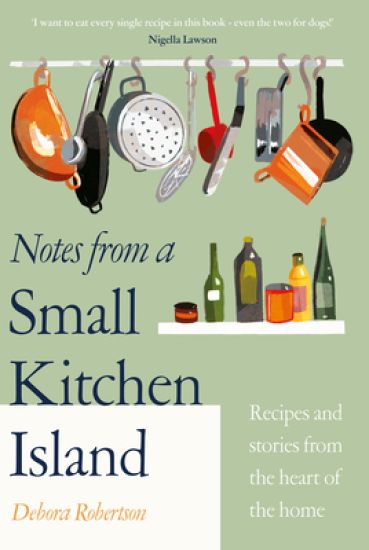
Notes from a Small Kitchen Island

Notes from a Small Kitchen Island

Debora Robertson

PENGUIN BOOKS LTD
2022
sidottu
Discover the cookbook you'll never want to live without, filled with the secrets to creating delicious home-cooked meals every single day'I want to eat every single recipe in this book' NIGELLA LAWSON'There are wonderful tales and recipes here, and lots of wisdom. It's approachable, anchored in real life and a joy to read. I want more' DIANA HENRY'A wonderful book full of inspiring, simple and time-saving recipes. This should be an everyday book for everybody' TOM KERRIDGE_________Debora Robertson, home cook and renowned food writer, tells how, from the least promising of culinary starts, she learned to love cooking and transformed her cosy kitchen into the beating heart of her home.Through her stories and recipes, she will whisk you away to hot summers in Languedoc and balmy weeknights in London, revealing the life-changing dishes that made her. Bound together with life- and dinner-saving lessons, Debora has written the essential kitchen companion for every home cook.From the tastes of Debora's childhood to the recipes she discovered on her travels, to the food she cooks every day . . .· Leek and ham hock steamed pudding· Slow roast lamb with Durham salad· Meemaw's Texan margarita pie· The best recipe for roast chicken· Delicious plum cakeDebora will take you by the hand and tell you everything you'll ever need to know about cooking food you'll love time and time again._________'Foodies will love this joyful cookbook full of must-try recipes and funny anecdotes' GOOD HOUSEKEEPING
Off-Season at the Edge of the World

Off-Season at the Edge of the World

Debora Greger

University of Illinois Press
1994
nidottu
Debora Greger is a stoic comedian in an age when even wit has its dark undertones. In this her fourth collection she finds Ovid in Provincetown, a right whale in Iowa, and Cleopatra in the afterworld. Nothing resides in its proper place, except the place of exile. "Characteristic wit, irony, and precision." ?Publishers Weekly
Iron Triangles and Revolving Doors

Iron Triangles and Revolving Doors

Debora L. Spar; Glenn Tobin; Raymond Vernon

Praeger Publishers Inc
1991
sidottu
In a rapidly shrinking world, governments everywhere find themselves increasingly obliged to deal with international economic issues. When dealing with such issues, their processes of decisionmaking prove strikingly different from those employed in the handling of political or strategic problems. This unique volume by Raymond Vernon, Debora L. Spar, and Glenn Tobin provides a close-up view of the decisionmaking process within the U.S. establishment as it has wrestled with a series of greatly publicized economic issues in recent years. The book synthesizes a literature that has been accumulating over three decades, deriving from this literature a model of the processes of decisionmaking in the field of U.S. foreign economic policy. Five detailed case studies are presented, each covering a major economic plan or agreement that raised significant controversy.Since the process by which economic decisions are reached involves institutions and characteristics quite different from those encountered in political decisionmaking, Iron Triangles and Revolving Doors emphasizes the persistent regularities to be found in the United States when it comes to economic decisionmaking. The opening chapter offers a model of the characteristics of the foreign economic policymaking process. The next five chapters examine the U.S.-Canada Free Trade Agreement; the battle over the codevelopment of the FSX fighter plane with Japan; the problem of international debt and the creation of the Brady plan; and U.S. trade policy and security export controls in light of the Toshiba-Kongsberg affair. Each of these cases is linked to the overall model of U.S. economic policy presented by the authors. This volume will be an excellent text for university or graduate courses in foreign economic policy, U.S. foreign policy, and international political economy. It will also be of interest to political scientists, economists, government officials, policy analysts, and others looking for insights into economic decisionmaking.
Iron Triangles and Revolving Doors

Iron Triangles and Revolving Doors

Debora L. Spar; Glenn Tobin; Raymond Vernon

Praeger Publishers Inc
1991
nidottu
In a rapidly shrinking world, governments everywhere find themselves increasingly obliged to deal with international economic issues. When dealing with such issues, their processes of decisionmaking prove strikingly different from those employed in the handling of political or strategic problems. This unique volume by Raymond Vernon, Debora L. Spar, and Glenn Tobin provides a close-up view of the decisionmaking process within the U.S. establishment as it has wrestled with a series of greatly publicized economic issues in recent years. The book synthesizes a literature that has been accumulating over three decades, deriving from this literature a model of the processes of decisionmaking in the field of U.S. foreign economic policy. Five detailed case studies are presented, each covering a major economic plan or agreement that raised significant controversy.Since the process by which economic decisions are reached involves institutions and characteristics quite different from those encountered in political decisionmaking, Iron Triangles and Revolving Doors emphasizes the persistent regularities to be found in the United States when it comes to economic decisionmaking. The opening chapter offers a model of the characteristics of the foreign economic policymaking process. The next five chapters examine the U.S.-Canada Free Trade Agreement; the battle over the codevelopment of the FSX fighter plane with Japan; the problem of international debt and the creation of the Brady plan; and U.S. trade policy and security export controls in light of the Toshiba-Kongsberg affair. Each of these cases is linked to the overall model of U.S. economic policy presented by the authors. This volume will be an excellent text for university or graduate courses in foreign economic policy, U.S. foreign policy, and international political economy. It will also be of interest to political scientists, economists, government officials, policy analysts, and others looking for insights into economic decisionmaking.
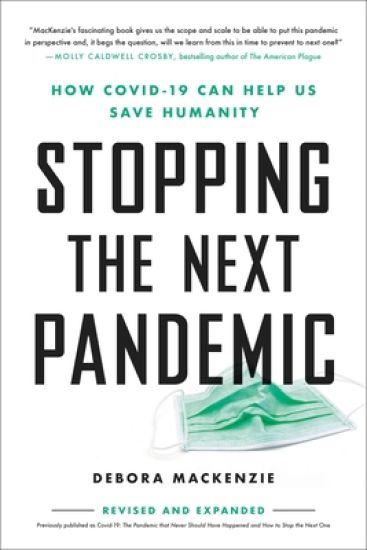
Stopping the Next Pandemic: How Covid-19 Can Help Us Save Humanity
An urgent case for how we could have stopped the Covid-19 pandemic--and how to make sure it never happens again "MacKenzie's fascinating book gives us the scope and scale to be able to put this pandemic in perspective and, it begs the question, will we learn from this in time to prevent to next one?"--Molly Caldwell Crosby, bestselling author of The American Plague. *Named one of the Best Science Books of the Year by the Financial Times*The Covid-19 pandemic has left a trail of loss, misery, and economic ruin in its wake. With such destruction, can there be any silver lining? As veteran science journalist Debora MacKenzie illuminates in this captivating, acclaimed book, there is one: with the lessons learned from this disaster, we can stop it from happening again. Here, in this fully revised and updated edition, she lays out the full story in accessible, gripping detail: the previous viruses that should have prepared us, the shocking public health failures that led to this catastrophe, the wrong decisions made at every turn. And employing what we have learned about viruses, vaccines, inequality, global cooperation, and more, she charts a bold, optimistic path forward for protecting humanity from threats to come. There is no question that more viruses are on the way, and we are still unprepared. But if we learn from our mistakes and heed the vision MacKenzie lays out in this book, we might avoid going through a nightmare like this - or worse - ever again.
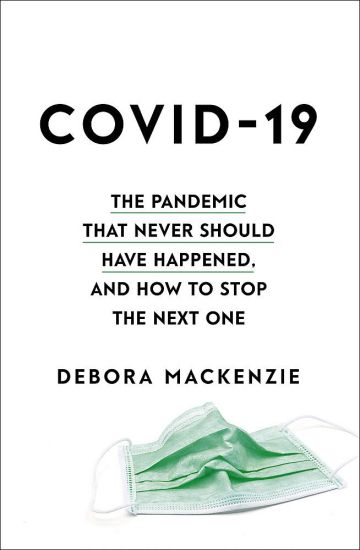
COVID-19

COVID-19

Debora MacKenzie

The Bridge Street Press
2020
sidottu
'Excellent . . . analyses clearly and authoritatively how the coronavirus pandemic played out, what governments should have done, and what we need to do when it happens again - as it undoubtedly will' Financial Times'You could not hope for a better guide to the pandemic world order than Debora MacKenzie, who's been on this story from the start. This is an authoritative yet readable explanation of how this catastrophe happened - and more important, how it will happen again if we don't change'Tim Harford, author of The Undercover Economist, Adapt and Messy'This definitely deserves a read - the first of the post mortems by a writer who knows what she's talking about'Laura Spinney, author of Pale Rider: The Spanish Flu of 1918 and How It Changed the WorldIn a gripping, accessible narrative, a veteran science journalist lays out the shocking story of how the COVID-19 coronavirus pandemic happened and how to make sure this never happens againOver the last 30 years of epidemics and pandemics, we learned every lesson needed to stop this coronavirus outbreak in its tracks. We heeded almost none of them. The result is a pandemic on a scale never before seen in our lifetimes. In this captivating, authoritative, and eye-opening book, science journalist Debora MacKenzie lays out the full story of how and why it happened: the previous viruses that should have prepared us, the shocking public health failures that paved the way, the failure to contain the outbreak, and most importantly, what we must do to prevent future pandemics.Debora MacKenzie has been reporting on emerging diseases for more than three decades, and she draws on that experience to explain how COVID-19 went from a potentially manageable outbreak to a global pandemic. Offering a compelling history of the most significant recent outbreaks, including SARS, MERS, H1N1, Zika, and Ebola, she gives a crash course in Epidemiology 101--how viruses spread and how pandemics end--and outlines the lessons we failed to learn from each past crisis. In vivid detail, she takes us through the arrival and spread of COVID-19, making clear the steps that governments knew they could have taken to prevent or at least prepare for this. Looking forward, MacKenzie makes a bold, optimistic argument: this pandemic might finally galvanize the world to take viruses seriously. Fighting this pandemic and preventing the next one will take political action of all kinds, globally, from governments, the scientific community, and individuals--but it is possible.No one has yet brought together our knowledge of COVID-19 in a comprehensive, informative, and accessible way. But that story can already be told, and Debora MacKenzie's urgent telling is required reading for these times and beyond. It is too early to say where the COVID-19 pandemic will go, but it is past time to talk about what went wrong and how we can do better.
Stopping the Next Pandemic

Stopping the Next Pandemic

Debora MacKenzie

The Bridge Street Press
2021
pokkari
'Excellent . . . analyses clearly and authoritatively how the coronavirus pandemic played out, what governments should have done, and what we need to do when it happens again - as it undoubtedly will' Financial Times'You could not hope for a better guide to the pandemic world order than Debora MacKenzie, who's been on this story from the start. This is an authoritative yet readable explanation of how this catastrophe happened - and more important, how it will happen again if we don't change'Tim Harford, author of The Undercover Economist, Adapt and Messy'This definitely deserves a read - the first of the post mortems by a writer who knows what she's talking about'Laura Spinney, author of Pale Rider: The Spanish Flu of 1918 and How It Changed the WorldIn a gripping, accessible narrative, a veteran science journalist lays out the shocking story of how the COVID-19 coronavirus pandemic happened and how to make sure this never happens againOver the last 30 years of epidemics and pandemics, we learned every lesson needed to stop this coronavirus outbreak in its tracks. We heeded almost none of them. The result is a pandemic on a scale never before seen in our lifetimes. In this captivating, authoritative, and eye-opening book, science journalist Debora MacKenzie lays out the full story of how and why it happened: the previous viruses that should have prepared us, the shocking public health failures that paved the way, the failure to contain the outbreak, and most importantly, what we must do to prevent future pandemics.Debora MacKenzie has been reporting on emerging diseases for more than three decades, and she draws on that experience to explain how COVID-19 went from a potentially manageable outbreak to a global pandemic. Offering a compelling history of the most significant recent outbreaks, including SARS, MERS, H1N1, Zika, and Ebola, she gives a crash course in Epidemiology 101--how viruses spread and how pandemics end--and outlines the lessons we failed to learn from each past crisis. In vivid detail, she takes us through the arrival and spread of COVID-19, making clear the steps that governments knew they could have taken to prevent or at least prepare for this. Looking forward, MacKenzie makes a bold, optimistic argument: this pandemic might finally galvanize the world to take viruses seriously. Fighting this pandemic and preventing the next one will take political action of all kinds, globally, from governments, the scientific community, and individuals--but it is possible.No one has yet brought together our knowledge of COVID-19 in a comprehensive, informative, and accessible way. But that story can already be told, and Debora MacKenzie's urgent telling is required reading for these times and beyond. It is too early to say where the COVID-19 pandemic will go, but it is past time to talk about what went wrong and how we can do better.
Resisting Intellectual Property

Resisting Intellectual Property

Debora J. Halbert

Routledge
2006
nidottu
Over the past decade, the scope of copyright and patent law has grown significantly, strengthening property rights, even when such rights seem to infringe upon other, more basic, priorities. This book investigates the ways in which activists, scholars, and communities are resisting the expansion of copyright and patent law in the information age.Debora J. Halbert explores how an alternative framework for understanding intellectual property - including about how we ought to think about the issues, the development of social movements around specific issues, and civil disobedience - has developed. Each chapter in the book discusses how resistance is developing in relation to a particular copyright or patent issue such as:access to patented medicationaccess to copyrighted information and music via the Internet the patenting of genetic material.This controversial book examines the ways in which the idea of intellectual property is being re-thought by the victims of an over-expansive legal system. It will appeal to students and researchers from a range of disciplines, from law and political science to computer science, with an interest in intellectual property.
Resisting Intellectual Property

Resisting Intellectual Property

Debora J. Halbert

Routledge
2005
sidottu
Over the past decade, the scope of copyright and patent law has grown significantly, strengthening property rights, even when such rights seem to infringe upon other, more basic, priorities. This book investigates the ways in which activists, scholars, and communities are resisting the expansion of copyright and patent law in the information age.Debora J. Halbert explores how an alternative framework for understanding intellectual property - including about how we ought to think about the issues, the development of social movements around specific issues, and civil disobedience - has developed. Each chapter in the book discusses how resistance is developing in relation to a particular copyright or patent issue such as:access to patented medicationaccess to copyrighted information and music via the Internet the patenting of genetic material.This controversial book examines the ways in which the idea of intellectual property is being re-thought by the victims of an over-expansive legal system. It will appeal to students and researchers from a range of disciplines, from law and political science to computer science, with an interest in intellectual property.
The State of Copyright

The State of Copyright

Debora Halbert

Routledge
2014
sidottu
This book seeks to make an intervention into the ongoing debate about the scope and intensity of global copyright laws. While mapping out the primary actors in the context of globalization and the modern political economy of information ownership, the argument is made that alternatives to further expansion of copyright are necessary. By examining the multiple and competing interests in creating the legal regime of copyright law, this books attempts to map the political economy of copyright in the information age, critique the concentration of ownership that is intrinsic in the status quo, and provide an assessment of the state of the contemporary global copyright landscape and its futures. It draws upon the current narratives of copyright as produced by corporate, government, and political actors and frames these narratives as language games within a global political project to define how information and culture will be shared and exchanged in the future. The text problematizes the relationship of the state to culture, comments on the global flows of culture, and critiques the regulatory apparatus that is in place to commodify culture and align it with the contemporary nation-state. In the end, the possibility of non-commodified and more open futures are explored. The State of Copyright will be of particular interest for students and scholars of international political economy, law, political science, anthropology, sociology, cultural studies, library sciences, and communication studies. It also will appeal to a growing popular audience that has taken an interest in the issues of copyright.
The 1002nd Night

The 1002nd Night

Debora Greger

Princeton University Press
2014
pokkari
While seeming to affirm the Western poetic and cultural tradition, Greger attacks its rational heart. The subjects of her poems--Mozart operas, Botticelli's Three Graces, narcissus flowers--are the vestments of aristocratic Europe, but her poetic issue is stream-of-consciousness. Originally published in 1990. The Princeton Legacy Library uses the latest print-on-demand technology to again make available previously out-of-print books from the distinguished backlist of Princeton University Press. These editions preserve the original texts of these important books while presenting them in durable paperback and hardcover editions. The goal of the Princeton Legacy Library is to vastly increase access to the rich scholarly heritage found in the thousands of books published by Princeton University Press since its founding in 1905.