Provides an integrated and holistic review of effective crime prevention programs, practices and policies, their theoretical grounding, the scientific evidence of their effectiveness, and the practical issues involved in their implementation at the community, state and national levels. The Prevention of Crime offers a comprehensive yet easy-to-understand overview of crime prevention strategies, such as programs and practices guided by life-course developmental theories of crime, situational crime prevention, law enforcement practices and policies, and correctional interventions. Containing the most up-to-date and accurate information about “what works” in crime prevention, this unique textbook introduces students to the public health and prevention science approaches to addressing the causes of crime, with a focus on prevention-oriented, community-based interventions. Throughout the text, the authors emphasize the importance of using high-quality scientific methodologies to identify effective and ineffective interventions that are based on theory, provide expert insights on practical issues relating to crime prevention in communities, and discuss how practitioners can effectively implement a range of crime prevention strategies. Incorporating recent advances and emerging research in the field, the second edition of The Prevention of Crime contains new and updated coverage of developments in criminological theory and evaluation methods, efforts to avoid and correct discriminatory crime prevention practices, understand how and why communities make adaptations to evidence-based interventions (EBI), strategies to investigate and communicate the impact of EBIs on different populations (including members of racial/ethnic minority groups), and more. This edition includes new links to relevant research and internet resources, additional real-world examples, updated crime statistics, and information on recent changes in EBI registries that list crime prevention interventions. Describes effective interventions that have been developed, tested, and used in the United States and internationallyDemonstrates the relationship between criminological theories, research, and practiceDiscusses the practical challenges of implementing crime prevention strategies and policies Corrects misconceptions about widely-used prevention models shown to be ineffective in reducing crimeDraws from cutting-edge conceptual frameworks and the latest research in prevention science and crime preventionWritten to be accessible to students without formal training in research methods, The Prevention of Crime, Second Edition, is an excellent textbook for undergraduate and graduate programs in criminology, criminal justice, and prevention science programs, as well as courses on psychology, public health, sociology, and social work.
The classic bestseller--expanded and updatedThe guide dog lovers have relied on for more than twenty-seven years, this handbook has been extensively revised to include the latest information on everything from canine healthcare to nutrition to holistic treatments. Dog Owner's Home Veterinary Handbook, Fourth Edition, is the definitive guide for every dog owner. It puts vital information at your fingertips, with: An index of signs and symptoms to help you find information fastClearly written, step-by-step directions for handling common canine ailments and problemsA chapter on emergencies that explains what to do immediately for shock, broken bones, burns, dehydration, heat stroke, poisoning, insect stings and bites, wounds, and moreHundreds of photos and drawings that illustrate what to look for and what to do to provide the best care for your dogA glossary of termsWith this guide, you'll know when to rush your pet to the vet and when you can begin treatment at home. You'll communicate more effectively with your vet. You'll have the latest information on every aspect of your dog's medical care when you need it. This is the hands-on reference you'll trust again and again.
Rhetoric and Governance under Trump: Proclamations from the Bullshit Pulpit analyzes the rhetoric of Donald Trump to argue that Trump’s deeply illiberal rhetoric, cruel policies, corruption, disruptive foreign policy, and disdain for the rule of law makes him a textbook populist. However, his embrace of mainstream conservative policies and the culture war narratives that come with them made him a rather conventional Republican. Being more plutocrat than populist, Trump had to bridge this fundamental contradiction by employing populist and polarizing rhetoric, alongside fabricated crises, to uphold the veneer of being an anti-status quo politician. Bernd Kaussler, Lars J. Kristiansen, and Jeffrey Delbert argue that, for Trump, bullshit, confrontational politics, and fear has emerged as a vital political strategy. Through an analysis of Trump’s first three years in office, the authors find that President Trump governed using a communication strategy that a) denied facts, relied heavily on bullshit, lies, and fabricated counter-narratives; b) attacked news outlets and the opposition to foster identity-based polarization in order to sideline critics and stir up factions for specific political ends; and c) dismissed legitimate criticism of policies and the conduct of the administration and the president himself as “fake news.” Kaussler, Kristiansen, and Delbert argue that the repeated use of this strategy, along with a mixture of public complacency and concerted efforts on the part of his own party, has allowed Trump to work toward normalizing these lies and cover-ups throughout his tenure, only further exacerbating the highly polarized and partisan political environment in the United States. Scholars of rhetoric, communication, political science, and media studies will find this book particularly useful.
Rhetoric and Governance under Trump: Proclamations from the Bullshit Pulpit analyzes the rhetoric of Donald Trump to argue that Trump’s deeply illiberal rhetoric, cruel policies, corruption, disruptive foreign policy, and disdain for the rule of law makes him a textbook populist. However, his embrace of mainstream conservative policies and the culture war narratives that come with them made him a rather conventional Republican. Being more plutocrat than populist, Trump had to bridge this fundamental contradiction by employing populist and polarizing rhetoric, alongside fabricated crises, to uphold the veneer of being an anti-status quo politician. Bernd Kaussler, Lars J. Kristiansen, and Jeffrey Delbert argue that, for Trump, bullshit, confrontational politics, and fear has emerged as a vital political strategy. Through an analysis of Trump’s first three years in office, the authors find that President Trump governed using a communication strategy that a) denied facts, relied heavily on bullshit, lies, and fabricated counter-narratives; b) attacked news outlets and the opposition to foster identity-based polarization in order to sideline critics and stir up factions for specific political ends; and c) dismissed legitimate criticism of policies and the conduct of the administration and the president himself as “fake news.” Kaussler, Kristiansen, and Delbert argue that the repeated use of this strategy, along with a mixture of public complacency and concerted efforts on the part of his own party, has allowed Trump to work toward normalizing these lies and cover-ups throughout his tenure, only further exacerbating the highly polarized and partisan political environment in the United States. Scholars of rhetoric, communication, political science, and media studies will find this book particularly useful.
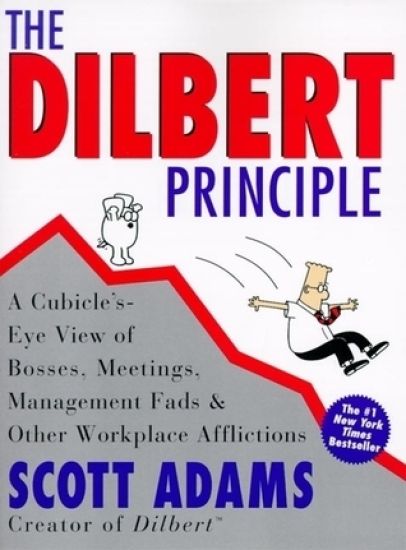
The creator of Dilbert, the fastest-growing comic strip in the nation (syndicated in nearly 1000 newspapers), takes a look at corporate America in all its glorious lunacy. Lavishly illustrated with Dilbert strips, these hilarious essays on incompetent bosses, management fads, bewildering technological changes and so much more, will make anyone who has ever worked in an office laugh out loud in recognition. The Dilbert Principle: The most ineffective workers will be systematically moved to the place where they can do the least damage -- management. Since 1989, Scott Adams has been illustrating this principle each day, lampooning the corporate world through Dilbert, his enormously popular comic strip. In Dilbert, the potato-shaped, abuse-absorbing hero of the strip, Adams has given voice to the millions of Americans buffeted by the many adversities of the workplace. Now he takes the next step, attacking corporate culture head-on in this lighthearted series of essays. Packed with more than 100 hilarious cartoons, these 25 chapters explore the zeitgeist of ever-changing management trends, overbearing egos, management incompetence, bottomless bureaucracies, petrifying performance reviews, three-hour meetings, the confusion of the information superhighway and more. With sharp eyes, and an even sharper wit, Adams exposes -- and skewers -- the bizarre absurdities of everyday corporate life. Readers will be convinced that he must be spying on their bosses, The Dilbert Principle rings so true
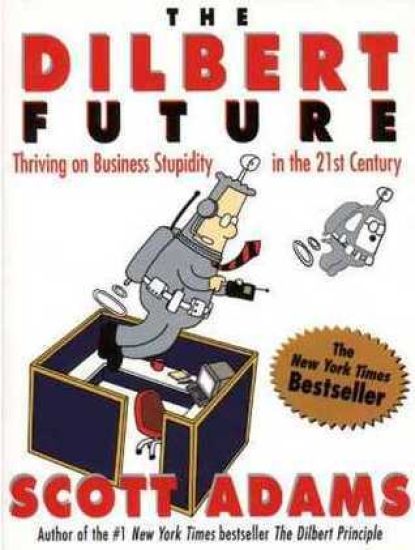
Step aside, Bill Gates Here comes today′s real technology guru and his totally original, laugh-out-loud New York Times bestseller that looks at the approaching new millennium and boldly predicts: more stupidity ahead. In The Dilbert Principle and Dogbert′s Top Secret Management Handbook, Scott Adams skewered the absurdities of the corporate world. Now he takes the next logical step, turning his keen analytical focus on how human greed, stupidity and horniness will shape the future. Featuring the same irresistible amalgam of essays and cartoons that made Adams previous works so singularly entertaining, this uproariously funny, dead-on-target tome offers half-truthful, half-farcical predictions that push all of today′s hot buttons - from business and technology to society and government. Children - they are our future, so we′re pretty much hosed. Tip: Grab what you can while they′re still too little to stop us. Human Potential - we′ll finally learn to use the 90 percent of the brain we don′t use today, and find out that there wasn′t anything in that part. Computers - Technology and homeliness will combine to form a powerful type of birth control. In The Dilbert Principle and Dogbert′s Top Secret Management Handbook, Scott Adams skewered the absurdities of the corporate world. Now he takes the next logical step, turning his keen analytical focus on how human greed, stupidity and horniness will shape the future. Featuring the same irresistible amalgam of essays and cartoons that made Adams previous works so singularly entertaining, this uproariously
Cynicism began as a school of philosophy that was largely inspired by Socrates and often decried by popular commentators as a social pathology, a nihilistic rebellion against the foundations of civilization. Modern definitions of the cynic describe an individual who is negative and sarcastic, violently opposed to established authority and social convention, and dedicated to existentialism. This book attempts to vindicate cynicism, arguing that it is both a progressive approach to social dilemmas and an enlightened understanding of the human condition. Chapter One establishes the foundations of classical Greek cynicism, while later chapters illustrate the varied faces of the cynic phenomenon in the persons of such disparate characters as Machiavelli, Nietzsche, Diogenes, the Dadaists, George Bataille, Samuel Beckett, Auberon Waugh, the creators of South Park, and others. Nietzsche is portrayed as the most important representative of both classical and postmodern cynicism, as well as the pivotal link between the two. The book focuses on significant periods of historical change, such as the Renaissance, and the historical cynics responsible for several seminal social ideas, including cosmopolitanism (citizenship of the world), asceticism (personal growth through self-testing), and parrhesia (finding one's voice in the presence of tyrannical forces). The author claims that aspects of Greek cynicism are present in contemporary society, offering a positive strategy for living in a hostile world.
Kjerstin Dellert på livets scenerI väntan på räven är berättelsen om en operasångerska och en storslagen artist som gärna beträdde många olika scener. Hon var en lysande medelpunkt och älskade att synas. Hos henne fanns en lust och en kraft i skapandet liksom en ovanlig förmåga att få kontakt med publiken. Dellert var gränsöverskridande, mångkunnig och orädd. Hon var själv sin bästa pr-kvinna. Genom sitt glada humör, sin humor och slagfärdighet blev hon populär i radio, tv och andra media. Men bakom denna kreativa, viljestarka och okonventionella primadonna fanns samtidigt en sårbar, känslig, reflekterande och bekräftelsesökande kvinna. Det är denna intressanta och mångbottnade sångerska som författaren Catarina Ericson-Roos insiktsfullt och lyhört skildrar i denna välillustrerade volym. Dellerts nutida kollega och efterföljare Rickard Söderberg har skrivit ett lika uppskattande som varmt företal.Catarina Ericson-Roos, författare, bosatt i Uppsala och f.d. överbibliotekarie vid Stockholms universitetsbibliotek. Hon har tidigare utgivit två omfattande biografier, dels om sångerskan, pedagogen och folkbildaren Dorothy Irving (2016), dels om operasångaren Erik Saedén (2019). Berättelsen om Kjerstin Dellert blir således hennes tredje stora sångarbiografi. Ericson-Roos har nu inlett arbetet med en fjärde biografi, om operasångaren Ragnar Ulfung. Hon disputerade 1977 med en avhandling om enheten text-ton i Robert Burns sånger. Ericson-Roos har också tidigare själv framträtt som sångerska. "Kjerstin Dellert var under en period en av sin tids främsta sångerskor. Lika skön apparition som en stormig höstdag och med ojämförlig vilja till kommunikation i en operavärld där det för en del andra stjärnor räckte med att stå vid rampen och sjunga vackert. Men Dellert offrade delar av den obefläckade rampsången på uttryckets altare, och det var just det som bidrog till att jag ägnat mitt liv åt opera. Hon var nämligen inte gudomlig, utan något både större och vackrare. Hon var mänsklig."Rickard Söderberg i bokens företal