This book, "Artificial Intelligence Transforming Geotechnical Engineering," delves into the exciting ways AI is revolutionizing the way we approach the earth beneath our feet. We will embark on a journey that explores the cutting-edge applications of AI in this critical engineering discipline.The foundation of our built environment, both literally and figuratively, rests on the shoulders of geotechnical engineering. This discipline, a vital branch of civil engineering, acts as the bridge between the natural world and human structures. By understanding the behavior of soil and rock the very ground beneath our feet geotechnical engineers ensure the stability and safety of everything from towering skyscrapers to sprawling transportation networks.This book is not just a chronicle of the present; it is a compass guiding us towards the future of AI-powered geotechnical engineering. We will explore cutting-edge applications, such as real-time monitoring systems with AI-based anomaly detection and autonomous construction machinery guided by intelligent algorithms.
A history of the erosion of democracy across the globe Democracy is being destroyed. This is a crisis that expresses itself in the rising authoritarianism visible in divisive and exclusionary politics, populist political parties and movements, increased distrust in fact-based information and news, and the withering accountability of state institutions. Over the last four decades, democracy has radically shifted to a market democracy in which all aspects of human, non-human and planetary life are commodified, with corporations becoming more powerful than states and their citizens. This is how neoliberal capitalism functions at a systemic level and if left unchecked, is the greatest threat to democracy and a sustainable planet. Volume six of the Democratic Marxism series focuses on how decades of neoliberal capitalism have eroded the global democratic project and how, in the process, authoritarian politics are gaining ground. Scholars and activists from the political left focus on four country cases – India, Brazil, South Africa and the United States of America – in which the COVID-19 pandemic has fuelled and highlighted the pre-existing crisis. They interrogate issues of politics, ecology, state security, media, access to information and political parties, and affirm the need to reclaim and re-build an expansive and inclusive democracy. Destroying Democracy is an invaluable resource for the general public, activists, scholars and students who are interested in understanding the threats to democracy and the rising tide of authoritarianism in the global south and the global north.
A history of the erosion of democracy across the globe Democracy is being destroyed. This is a crisis that expresses itself in the rising authoritarianism visible in divisive and exclusionary politics, populist political parties and movements, increased distrust in fact-based information and news, and the withering accountability of state institutions. Over the last four decades, democracy has radically shifted to a market democracy in which all aspects of human, non-human and planetary life are commodified, with corporations becoming more powerful than states and their citizens. This is how neoliberal capitalism functions at a systemic level and if left unchecked, is the greatest threat to democracy and a sustainable planet. Volume six of the Democratic Marxism series focuses on how decades of neoliberal capitalism have eroded the global democratic project and how, in the process, authoritarian politics are gaining ground. Scholars and activists from the political left focus on four country cases – India, Brazil, South Africa and the United States of America – in which the COVID-19 pandemic has fuelled and highlighted the pre-existing crisis. They interrogate issues of politics, ecology, state security, media, access to information and political parties, and affirm the need to reclaim and re-build an expansive and inclusive democracy. Destroying Democracy is an invaluable resource for the general public, activists, scholars and students who are interested in understanding the threats to democracy and the rising tide of authoritarianism in the global south and the global north.
Naidoo Prishani; Nieftagodien Noor; Paret Marcel; Pillay Devan; Samantha Ashman; Harvey Ross; Crispen Chinguno; Turton Anthony; Southall Roger; Pierre Vos; Samantha Waterhouse; Ivor Sarakinsky; Marks Monique; David Bruce; David Dickinson; Khadiagala Gilbert M.; Garth le Pere; Smith Karen; Rod Alence
This fifth volume in the New South African Review series takes as its starting point the shock wave emanating from the events at Marikana on 16 August 2012 and how it has reverberated throughout politics and society. some of the chapters in the volume refer directly to Marikana. In others, the influence of that fateful day is pervasive if not direct. Marikana has, for instance, made us look differently at the police and at how order is imposed on society. Monique Marks and David Bruce write that the massacre `has come to hold a central place in the analysis of policing, and broader political events since 2012 …’. The chapters highlight a range of current concerns – political, economic and social. David Dickinson’s chapter looks at the life of the poor in a township from within. in contrast, the chapter on foreign policy by Garth le Pere analyses south Africa’s approach to international relations in the Mandela, Mbeki and Zuma eras. Anthony turton’s account, `When gold mining ends’ is a chilling forecast of an impending environmental catastrophe. Both Devan Pillay and noor nieftagodien focus attention on the left and, in different ways, ascribe its rise to a new politics in the wake of Marikana. The essays in Beyond Marikana present a range of topics and perspectives of interest to general readers, but the book will also be a useful work of reference for students and researchers.
David Zahl; Malcolm Guite; Kelsey Osgood; Abraham Nussbaum; A. E. Stallings; Narine Abgaryan; John Swinton; Devan Stahl; James Mumford; Jessica T. Miskelly; Brewer Eberly; Aberdeen Livingstone; Terence Sweeney; Sam Tomlin; Hazel Thomson
In an age of health care and wellness industries and near-religious pursuit of fitness and self-optimization, what does “health” mean for the chronically ill? For people with disabilities or mental health challenges or neurodiversity? For the aging and dying? This issue asks what it means to live well despite the limitations and frailties of our bodies, and what, beyond the scope of medicine, is needed for our flourishing. On this theme: Aberdeen Livingstone learns when to battle, and when to accept, chronic illness. Malcolm Guite defends the responsible use of pipe and pint. David Zahl calls out the wellness industry’s false promise of optimization. Abraham Nussbaum learns the limits of psychotherapy from his first patient. Cristiano Dennani photographs survivors of the Bhopal chemical spill in India. Heather M. Surls visits a tuberculosis hospital in Mafraq, Jordan. Brewer Eberly considers direct primary care, an attempt to reset the doctor-patient relationship. Devan Stahl considers what the wounds of the resurrected Christ mean for people with disabled bodies. Sam Tomlin wishes church and school weren’t such hurdles for children with autism. James Mumford finds the twelve steps of AA work when other approaches to addiction fail. Other articles in this issue: Jessica T. Miskelly, monitoring ocean currents on an icebreaker off Antarctica, feels the planet breathe. Kelsey Osgood visits a Jewish-Christian-Muslim interfaith center after October 7. Terence Sweeney profiles a repentant slaveholder, Bartolomé de las Casas. Plus: new poems by A. E. Stallings, short fiction by Narine Abgaryan, book reviews, and more. Plough Quarterly features stories, ideas, and culture for people eager to apply their faith to the challenges we face. Each issue includes in-depth articles, interviews, poetry, book reviews, and art.
Capitalism’s addiction to fossil fuels is heating our planet at a pace and scale never before experienced. Extreme weather patterns, rising sea levels and accelerating feedback loops are a commonplace feature of our lives. The number of environmental refugees is increasing and several island states and low-lying countries are becoming vulnerable. Corporate-induced climate change has set us on an ecocidal path of species extinction. Governments and their international platforms such as the Paris Climate Agreement deliver too little, too late. Most states, including South Africa, continue on their carbon-intensive energy paths, with devastating results. Political leaders across the world are failing to provide systemic solutions to the climate crisis. This is the context in which we must ask ourselves: how can people and class agency change this destructive course of history? Volume three in the Democratic Marxism series, The Climate Crisis investigates ecosocialist alternatives that are emerging. It presents the thinking of leading climate justice activists, campaigners and social movements advancing systemic alternatives and developing bottom-up, just transitions to sustain life. Through a combination of theoretical and empirical work, the authors collectively examine the challenges and opportunities inherent in the current moment. This volume builds on the class-struggle focus of Volume 2 by placing ecological issues at the center of democratic Marxism. Most importantly, it explores ways to renew historical socialism with democratic, ecosocialist alternatives to meet current challenges in South Africa and the world.
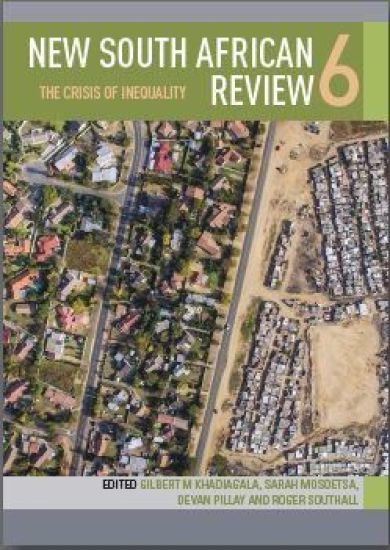
Despite the transition from apartheid to democracy, South Africa is the most unequal country in the world. Its extremes of wealth and poverty undermine intensifying struggles for a better life for all.The wide-ranging essays in this sixth volume of the New South African Review demonstrate how the consequences of inequality extend throughout society and the political economy, crippling the quest for social justice, polarising the politics, skewing economic outcomes and bringing devastating environmental consequences in their wake.Contributors survey the extent and consequences of inequality across fields as diverse as education, disability, agrarian reform, nuclear geography and small towns, and tackle some of the most difficult social, political and economic issues. How has the quest for greater equality affected progressive political discourse? How has inequality reproduced itself, despite best intentions in social policy, to the detriment of the poor and the historically disadvantaged? How have shifts in mining and the financialisation of the economy reshaped the contours of inequality? How does inequality reach into the daily social life of South Africans, and shape the way in which they interact? How does the extent and shape of inequality in South Africa compare with that of other major countries of the global South which themselves are notorious for their extremes of wealth and poverty? South African extremes of inequality reflect increasing inequality globally, and The Crisis of Inequality will speak to all those – general readers, policy makers, researchers and students – who are demanding a more equal world.
Shireen Hassim; Tawana Kupe; Eric Worby; Paul Verryn; Alex Eliseev; Rolf Maruping; Daryl Glaser; Noor Nieftagodien; Stephen Gelb; Devan Pillay; Loren Landau; David Coplan; Julia Hornberger; Melinda Silverman; Tanya Zack; Anton Harber; Cathi Albertyn; Andile Mngxitama; Pumla Dineo Gqola; Véronique Tadjo
The xenophobic attacks that started in Alexandra, Johannesburg in May 2008 before quickly spreading around the country caused an outcry across the world and raised many fundamental questions: Of what profound social malaise is xenophobia – and the violence that it inspires – a symptom? Have our economic and political choices created new forms of exclusion that fuel anger and distrust? What consequences does the emergence of xenophobia hold for the idea of an equal, non-racial society as symbolised by a democratic South Africa? On 28 May 2008 the Faculty of Humanities in the University of the Witwatersrand, Johannesburg convened an urgent colloquium that focused on searching for short and long-term solutions. Nearly twenty individuals – mostly Wits academics from a variety of disciplines, but also two student leaders, a journalist and a bishop – addressed the unfolding violence in ways that were conversant with the moment, yet rooted in scholarship and ongoing research. Go Home or Die Here emanates directly from the colloquium. It hopes to make sense of the nuances and trajectories of building a democratic society out of a deeply divided and conflictual past, in the conditions of global recession, heightening inequalities and future uncertainty. The authors hoped to pose questions that would lead both to research and to more informed, reflective forms of public action. With extensive photographs by award-winning photographer Alon Skuy, who covered the violence for The Times newspaper, the volume is passionate and engaged, and aims to stimulate reflection, debate and activism among concerned members of a broad public.
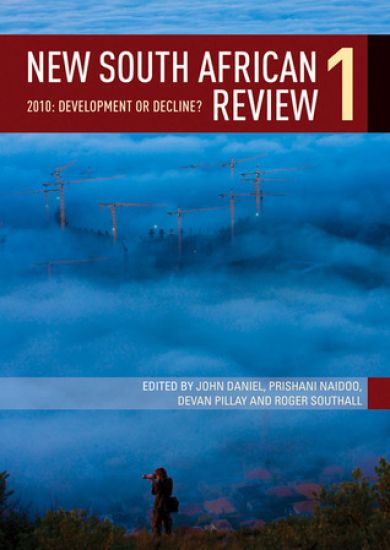
Reviving the tradition of critical, analytical scholarship developed by the 1970s and 1980s editions of the South African review, this first volume of the New South African review offers a collection of original surveys of key issues and problems confronting post-apartheid South Africa. Written by a team of engaged social scientists and based often on new research, the volume ranges widely across the implications of the international crisis for the economy, the threats to our fragile ecology of present economic strategies, through to the state of the ANC and the public service, issues around service delivery, migration, HIV/AIDS, land reform, crime, the sexual behavior of our youth, and much more. Posing the provocative question of whether South Africa is embarking upon a long-term decline, the volume simultaneously argues the potential for a society premised upon social equality, social coherence and sustainability. This collection will appeal to a wide audience, national and international, interested in engaging with the multiple dilemmas and challenges facing contemporary South Africa.
William Attwell; Leslie Bank; Naidoo Prishani; Patrick Bond; Imraan Buccus; John Daniel; Jane Duncan; Fig David; Hamill James; Janine Hicks; John Hoffman; Paul Hoffman; Malose Langa; Lindsay Don; Clifford Mabhena; Rajohane Matshedisho; Pillay Devan; Saloojee Haroon; Satgar Vishwas; Christopher Saunders; Sharife Khadija; Skinner Kate; Southall Roger; Neil Southern; Karl von Holdt; Edward Webster; Williams Michelle
The second volume of the New South African Review (NSAR) continues a tradition of debate and critical, analytical scholarship about contemporary South Africa. Drawing on authors from academia and beyond, it aims to be informative, discursive and provocative. In this volume, the New Growth Path (NGP) adopted by the South African government in 2010 provides the basis for a debate about whether 'decent work' is the best possible solution to South Africa's problems of low economic growth and high unemployment. Rising inequality is explored against the backdrop of the failings of Black Economic Empowerment (BEE) and Broad-Based Black Economic Empowerment (BBBEE). The NGP's proposals for 'greening the economy' are discussed, with emphasis on the creation of 'green jobs' and biofuels. The volume also includes investigations into the crisis of acid mine drainage on the Witwatersrand, and other persistent environmental challenges. Possibilities for participatory forms of government are surveyed, and civil society activism is explored in relation to the South African Broadcasting Corporation (SABC) and environmental campaigns. The crisis in child care in public hospitals, the difficulties that characterise attempts at building relationships between the police and a township community, and the problems related to the absence of legislation to govern the powers of traditional authorities over land allocation (through the experience of the Eastern Cape) are also featured. Asking whether the NGP reflects a set of new policies or an attempt to re-dress old (com)promises in new clothes, this volume brings together different voices in debate about possibilities for alternatives to neo-liberal and capitalist development in South Africa.
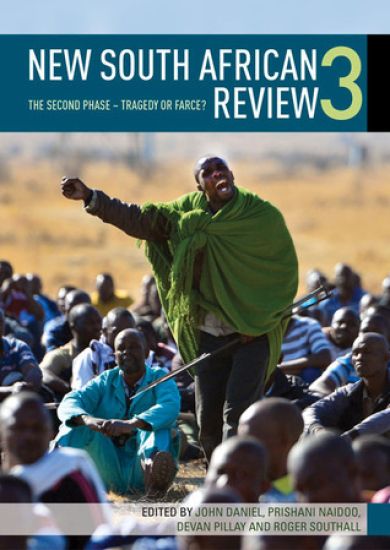
Hegel remarks somewhere that all great world-historic facts and personages appear, so to speak, twice. He forgot to add: the first time as tragedy, the second time as farce … (Karl Marx 1852) In the face of the continuing national tragedy of the inequality, poverty and unemployment which have triggered rising working- class discontent around the country, the ANC announced a `second phase’ of the `national democratic revolution’ to deal with the challenges. Ironically, the ANC post-Mangaung has resolved to preserve the core tenets of the minerals-energy-financial complex that defined racial capitalism – while at the same time ratcheting up the revolutionary rhetoric to keep the working class and marginalised onside. If the `first phase’ was a tragedy of the unmet expectations of the majority, is the `second phase’ likely to be a farce? The chapters in this volume are written by experts in their fields and address issues of politics, power and social class; economy, ecology and labour; public policy and social practice; and South Africa beyond its borders. They examine some of these challenges, and indicate that they are as much about the defective content of policies as their poor implementation. The third volume of the New South African Review continues the series by providing in-depth analyses of the key issues facing our country today.
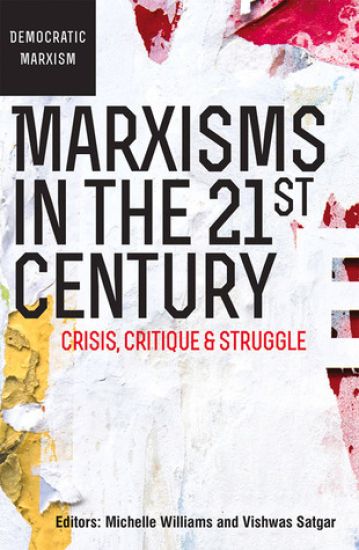
This is the first publication in the Democratic Marxism Series, which seeks to elaborate the social theorising and politics of Democratic Marxism. Marx’s writings on and ideas about social transformation have figured prominently in the global Left imagination for more than 150 years. At the end of the twentieth century a number of factors seemed to converge to mark the end of Marxism’s influence on the world and, as a result, by the late twentieth century the relevance of Marxism was under question by both the Left (including Marxists) and Right. The decline was relatively short-lived, however, as the 2008 economic crisis brought into sharp relief the catastrophic effects of financialised capitalism and the need to (re)find alternatives. In the second decade of the twenty-first century, the revival of Marxism is finding new sources of inspiration that revolve around four primary factors: the importance of democracy for an emancipatory project; the ecological limits of capitalism; the crisis of global capitalism; and learning lessons from the failures of Marxist-inspired experiments. This is not simply a return to nineteenth and twentieth century understandings of Marxism. Rather, the twenty-first century has seen enormous creativity from movements that seek to overcome the weaknesses of the past by forging fundamentally new approaches to politics that draw inspiration from Marxism along with many other anti-capitalist traditions such as feminism, ecology, anarchism and indigenous traditions. The Marxism of many of these movements is not dogmatic or prescriptive, but rather open, searching, dialectical, humanist, utopian and inspirational. This edited volume introduces some contemporary approaches to Marxism and explores some of the ways in which Marxism has been used in Africa.
The death of Nelson Mandela on 5 December 2013 was in a sense a wake-up call for South Africans, and a time to reflect on what has been achieved since `those magnificent days in late April 1994’ (as the editors of this volume put it) `when South Africans of all colours voted for the first time in a democratic election’. In a time of recall and reflection it is important to take account, not only of the dramatic events that grip the headlines, but also of other signposts that indicate the shape and characteristics of a society. The New South African Review looks, every year, at some of these signposts, and the essays in this fourth volume of the series again examine and analyse a broad spectrum of issues affecting the country. They tackle topics as diverse as the state of organised labour; food retailing; electricity generation; access to information; civil courage; the school system; and – looking outside the country to its place in the world – South Africa’s relationships with north-east Asia, with Israel and with its neighbours in the southern African region. Taken together, these essays give a multidimensional perspective on South Africa’s democracy as it turns twenty, and will be of interest to general readers while being particularly useful to students and researchers.
The classic humorous novel about an alcohol-loving clergyman who thinks he is the reincarnation of a dog. Complete with the award-winning film screenplay that expands upon the tale. Dean Spanley is affable, conventional and prudent – the very archetype of a bland churchman. Only his keen interest in the transmigration of souls and his obsession with dogs betray any shadow of eccentricity. But then, richly primed with a few glasses of Imperial Tokay, he begins to speak vividly of the joys of rabbiting, of rolling in fresh dung and of baying at the moon. Are these canine memories a drunken fancy? Or can it be that Dean Spanley must once have been a dog? This special edition includes Lord Dunsany’s witty and inventive novel, My Talks With Dean Spanley, together with Alan Sharp’s award-winning screenplay for the film starring Peter O’Toole and Sam Neill, which faithfully adapts and expands upon the events in the story.
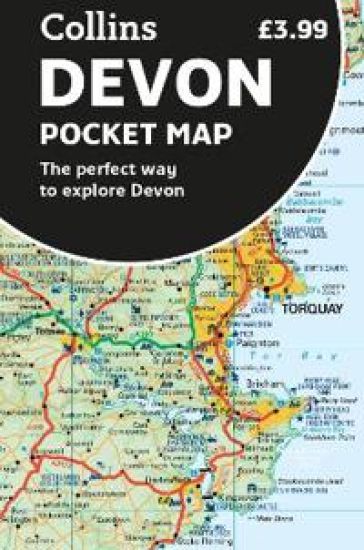
Explore new places with handy pocket maps from Collins. Handy little full-colour map of Devon. Detailed mapping and tourist information ideal for any road trip. Main features of this map include: Clear mappingMain tourist attractions located and describedPlaces to stay, cafe/restaurant, golf courses, and things to do are all clearly marked on the mapEssential travel informationIndex to places of interest and place names Essential for those planning a trip to Devon.
Explore the whole county of Devon extending from Taunton to Plymouth. With detailed road mapping and illustrated town plans of major cities, this feature-rich, helpful tourist guide is ideal for visitors to Devon. Published at a clear 3.33 miles to 1 inch scale (2.11 cm to 1 km), this handy map is a detailed and informative exploration of all Devon has to offer. Highlights include:• 8 inset street maps to major cities and popular destinations, including: Exeter, Paignton, Dartmouth and Torquay, with detailed descriptions and places of interest• Locations of visitor centres and tourist information sites• Useful key to map symbols making it a clear and easy read The perfect map for exploring Devon whether you are a tourist or a local.