Kirjojen hintavertailu. Mukana 11 599 716 kirjaa ja 12 kauppaa.

Kirjahaku

Etsi kirjoja tekijän nimen, kirjan nimen tai ISBN:n perusteella.

1000 tulosta hakusanalla Dimitris Plantzos

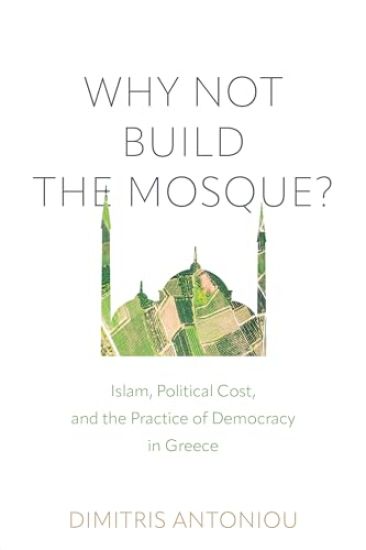
Why not Build the Mosque?

Why not Build the Mosque?

Dimitris Antoniou

UNIVERSITY OF PENNSYLVANIA PRESS
2025
pokkari
An ethnography of a long-unbuilt mosque in Greece that explores government operations and contemporary democracy Why Not Build the Mosque? tells the story of the Greek state's centuries-long attempt to build a central mosque. After the fall of Ottoman Empire, Greek Orthodoxy entwined with Greek nationalism, and by the twentieth century, the state came to imagine Islam as incompatible with a Greek-speaking Orthodox Christian identity. And so as late as 2020, the contemporary Greek state did not have a mosque, even as its Islamic population grew and increasingly required a place of worship. Focusing on the failed effort in the early 2000s to build a mosque in a suburb of Athens and on the subsequent, successful realization of the project in 2020, Dimitris Antoniou investigates the roles that the Orthodox Church, politicians concerned about the "political cost" of supporting a mosque, and the community played in the project's delays, failures, and its bittersweet success. The mosque that was ultimately built in 2020 was itself a compromise, a modest building that failed to deliver on the dreamed-of and finally illusory building discussed in the 2000s. As Antoniou brings readers from under-the-radar home mosques to the offices of polling companies, politicians, and media corporations, he reveals that the years-long debate over if, how, and where to build a mosque wasa matter greater than religion or nationalism alone. Indeed, the story of the central mosque in Athens compellingly demonstrates how productive unrealized plans can be for some stakeholders—here politicians and members of media who built reputations on their support for or opposition to the unbuilt mosque—while leaving other stakeholders unable to move a project forward even when the will of the majority is with them. Ultimately, Why Not Build the Mosque? sheds light on what it takes for a government to make tangible changes—to infrastructure, in development, for a community—happen in contemporary democracies.
Why not Build the Mosque?

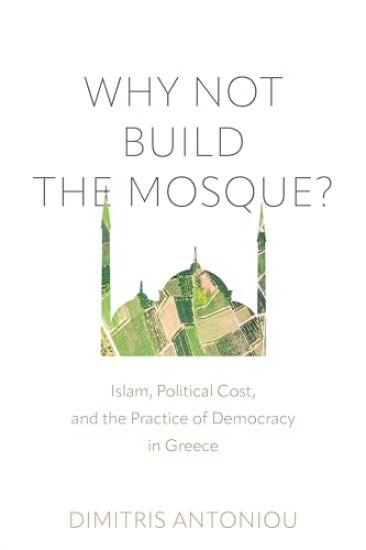
Why not Build the Mosque?

Dimitris Antoniou

UNIVERSITY OF PENNSYLVANIA PRESS
2025
sidottu
An ethnography of a long-unbuilt mosque in Greece that explores government operations and contemporary democracy Why Not Build the Mosque? tells the story of the Greek state's centuries-long attempt to build a central mosque. After the fall of Ottoman Empire, Greek Orthodoxy entwined with Greek nationalism, and by the twentieth century, the state came to imagine Islam as incompatible with a Greek-speaking Orthodox Christian identity. And so as late as 2020, the contemporary Greek state did not have a mosque, even as its Islamic population grew and increasingly required a place of worship. Focusing on the failed effort in the early 2000s to build a mosque in a suburb of Athens and on the subsequent, successful realization of the project in 2020, Dimitris Antoniou investigates the roles that the Orthodox Church, politicians concerned about the "political cost" of supporting a mosque, and the community played in the project's delays, failures, and its bittersweet success. The mosque that was ultimately built in 2020 was itself a compromise, a modest building that failed to deliver on the dreamed-of and finally illusory building discussed in the 2000s. As Antoniou brings readers from under-the-radar home mosques to the offices of polling companies, politicians, and media corporations, he reveals that the years-long debate over if, how, and where to build a mosque wasa matter greater than religion or nationalism alone. Indeed, the story of the central mosque in Athens compellingly demonstrates how productive unrealized plans can be for some stakeholders—here politicians and members of media who built reputations on their support for or opposition to the unbuilt mosque—while leaving other stakeholders unable to move a project forward even when the will of the majority is with them. Ultimately, Why Not Build the Mosque? sheds light on what it takes for a government to make tangible changes—to infrastructure, in development, for a community—happen in contemporary democracies.

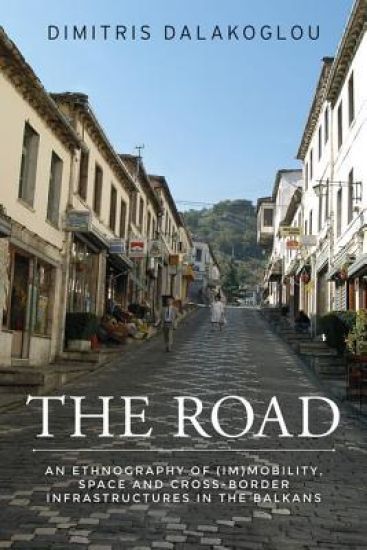
The Road

The Road

Dimitris Dalakoglou

Manchester University Press
2017
sidottu
This book is an ethnographic and historical study of the main Albania-Greece highway. But more than an ethnography on the road, it is an anthropology of the road. Highways are part of an explicit cultural-material nexus that includes houses, urban architecture and vehicles. Complex socio-political phenomena such as EU border security, nationalist politics, post-Cold War capitalism and financial crises all leave their mark in the concrete. This book explores anew classical anthropological and sociological categories of analysis in direct reference to infrastructure, providing unique insights into the political and cultural processes that took place across Europe after the Cold War. More specifically, it sheds light on political and economic relationships in the Balkans during the socialist post-Cold War period, focusing especially on Albania, one of the most under-researched countries in the region.
The Road

The Road

Dimitris Dalakoglou

Manchester University Press
2017
nidottu
This book is an ethnographic and historical study of the main Albania-Greece highway. But more than an ethnography on the road, it is an anthropology of the road. Highways are part of an explicit cultural-material nexus that includes houses, urban architecture and vehicles. Complex socio-political phenomena such as EU border security, nationalist politics, post-Cold War capitalism and financial crises all leave their mark in the concrete. This book explores anew classical anthropological and sociological categories of analysis in direct reference to infrastructure, providing unique insights into the political and cultural processes that took place across Europe after the Cold War. More specifically, it sheds light on political and economic relationships in the Balkans during the socialist post-Cold War period, focusing especially on Albania, one of the most under-researched countries in the region.
The Ruse of Techne

The Ruse of Techne

Dimitris Vardoulakis

FORDHAM UNIVERSITY PRESS
2024
sidottu
The Ruse of Techne offers a reappraisal of Heidegger's entire work by focusing on the forms of activity he regards as separate from instrumentality. Non-instrumental activities like authenticity, poetry, and thinking—in short, the ineffectual—are critical for Heidegger as they offer the only path to the truth of being throughout his work. By unearthing the source of the conception of non-instrumental action in Heidegger's reading of Aristotle, Vardoulakis elaborates how it forms part of Heidegger's response to an old problem, namely, how to account for difference after positing a single and unified being that is not amenable to change. He further demonstrates that an action without ends and effects leads to an ethics and politics rife with difficulties and contradictions that only become starker when compared to other responses to the same problem that we find in the philosophical tradition and which rely on instrumentality. Heidegger's conception of an action without ends or effect forgets the role of instrumentality in the tradition that posits a single, unified being. And yet, the ineffectual has had a profound influence in how continental philosophy determines the ethical and the political since World War II. The critique of the ineffectual in Heidegger is thus effectively a critique of the conception of praxis in continental philosophy. Vardoulakis proposes that it is urgent to undo the forgetting of instrumentality if we are to conceive of a democratic politics and an ethics fit to respond to the challenges of high capitalism.
The Ruse of Techne

The Ruse of Techne

Dimitris Vardoulakis

FORDHAM UNIVERSITY PRESS
2024
pokkari
The Ruse of Techne offers a reappraisal of Heidegger's entire work by focusing on the forms of activity he regards as separate from instrumentality. Non-instrumental activities like authenticity, poetry, and thinking—in short, the ineffectual—are critical for Heidegger as they offer the only path to the truth of being throughout his work. By unearthing the source of the conception of non-instrumental action in Heidegger's reading of Aristotle, Vardoulakis elaborates how it forms part of Heidegger's response to an old problem, namely, how to account for difference after positing a single and unified being that is not amenable to change. He further demonstrates that an action without ends and effects leads to an ethics and politics rife with difficulties and contradictions that only become starker when compared to other responses to the same problem that we find in the philosophical tradition and which rely on instrumentality. Heidegger's conception of an action without ends or effect forgets the role of instrumentality in the tradition that posits a single, unified being. And yet, the ineffectual has had a profound influence in how continental philosophy determines the ethical and the political since World War II. The critique of the ineffectual in Heidegger is thus effectively a critique of the conception of praxis in continental philosophy. Vardoulakis proposes that it is urgent to undo the forgetting of instrumentality if we are to conceive of a democratic politics and an ethics fit to respond to the challenges of high capitalism.
Narrative Riddles of Sherlock Holmes

Narrative Riddles of Sherlock Holmes

Dimitris Ladikos

Createspace Independent Publishing Platform
2016
nidottu
"You see, Watson, but you do not observe." (Sherlock Holmes) This phrase is the sharp peak of Sherlock's intelligence, the most famous proverb which tells us about the power of observation. The book, "Narrative Riddles of Sherlock Holmes", contains 10 riddles regarding the stories of the brilliant detective. Particularly, every case places the reader inside the story and he has to play the role of Watson or Holmes each time. Thus, the reader permeates deeper reasoning and investigation of a true detective. This book can also help readers to interact with Sir Doyle's literature and its mysterious atmosphere. Every single riddle consists of narration and dialogues for better understanding and more excitement. You have to think, observe carefully and search for different themes, such as murders, physical phenomenons, secret messages and more. This book consists of 13 pages including the answers to the riddles. The writer and the editor made an effort to include a variety of interesting cases from all the stories and the movies of Sherlock Holmes. Indicatively, there are some riddles' titles below: "An obvious murderer", "An unexpected letter", "The summer cold", "The secret symbol", "Adequate information", etc. Enjoy... and remember: all things have their explanation
Merleau-Ponty’s Phenomenology of Language

Merleau-Ponty’s Phenomenology of Language

Dimitris Apostolopoulos

BLOOMSBURY PUBLISHING PLC
2022
nidottu
Merleau-Ponty’s status as a philosopher of perception is well-established, but his distinctive contributions to the philosophy and phenomenology of language have yet to be fully appreciated. Through detailed, clear, and accessible analyses of Merleau-Ponty’s views of linguistic meaning, expression, and understanding, and by tracing the evolution and development of these views throughout the course of his philosophical career, Merleau-Ponty’s Phenomenology of Language offers a global and comprehensive picture of his engagement with the philosophy of language. This book demonstrates that the phenomenology of language is essential for grasping the meaning and motivations behind some of Merleau-Ponty’s most celebrated philosophical contributions. It argues that his philosophy of language should take on a central role in our appraisal of the development and basic goals of his thought. And it suggests that the success of phenomenology’s return to the ‘things themselves’ must be judged not only by the evidence of intuition, but also by the labour of expression.
Troubles with Turtles

Troubles with Turtles

Dimitris Theodossopoulos

Berghahn Books, Incorporated
2003
sidottu
The people of Vassilikos, farmers and tourist entrepreneurs on the Greek island of Zakynthos, are involved in a bitter environmental dispute concerning the conservation of sea turtles. Against the environmentalists' practices and ideals they set their own culture of relating to the land, cultivation, wild and domestic animals. Written from an anthropological perspective, this book puts forward the idea that a thorough study of indigenous cultures is a fundamental step to understanding conflicts over the environment. For this purpose, the book offers a detailed account of the cultural depth and richness of the human environmental relationship in Vassilikos, focusing on the engagement of its inhabitants with diverse aspects of the local environment, such as animal care, agriculture, tourism and hunting.
Troubles with Turtles

Troubles with Turtles

Dimitris Theodossopoulos

Berghahn Books, Incorporated
2005
pokkari
The people of Vassilikos, farmers and tourist entrepreneurs on the Greek island of Zakynthos, are involved in a bitter environmental dispute concerning the conservation of sea turtles. Against the environmentalists' practices and ideals they set their own culture of relating to the land, cultivation, wild and domestic animals. Written from an anthropological perspective, this book puts forward the idea that a thorough study of indigenous cultures is a fundamental step to understanding conflicts over the environment. For this purpose, the book offers a detailed account of the cultural depth and richness of the human environmental relationship in Vassilikos, focusing on the engagement of its inhabitants with diverse aspects of the local environment, such as animal care, agriculture, tourism and hunting.
Enterprise Architecture and New Generation Information Systems
Based on an extensive research project done by the author in the United States, Britain, Germany, France, Switzerland, Sweden, and Austria from December 1999 to June 2001, Enterprise Architecture and New Generation Information Systems focuses on four main themes: Next Generation Information Technology The Likely Technologies of this Decade Enterprise Computing The Internet as the 21st Century's Answer to MerchandisingWhile the majority of books presently available on information systems are written from the viewpoint of system analysis, programming, or common applications, this text: Brings to the reader's attention the importance of organization and infrastructure Presents a wealth of case studies to explain the need for reengineering and restructuring Details the latest advances which influence the implementation of advanced technologyWritten in a simple, comprehensive manner without specific prerequisites and data processing jargon, with concepts and case studies properly explained, this book addresses itself to practitioners in computer technology, telecommunications and software development, who are interested in acquiring skills through knowledge of the most advanced applications, tools, and methods, both present and coming. Enterprise Architecture and New Generation Information Systems will prove appealing to every person charged with planning, developing, applying, and delivering advanced information systems, architectural solutions, and programming products.
Pharmaceutical Marketing

Pharmaceutical Marketing

Dimitris Dogramatzis

CRC Press Inc
2001
sidottu
Designed as a practical guide for the pharmaceutical industry, this book covers how to apply cutting-edge marketing concepts and tools to the real-world intricacies of marketing a heavily regulated product whose success is determined not by the actual end-user, but by various industry stakeholders. From creating a worldwide vision that cascades into local tactics to managing a drug portfolio or pricing a particular product, this book guides readers through developing, implementing, and auditing a successful marketing strategy geared specifically to the pharmaceutical industry. It provides graphs, tables, worksheets, pharmaceutical case studies, and a sample marketing strategy.
Statistical and Adaptive Signal Processing

Statistical and Adaptive Signal Processing

Dimitris G. Manolakis; Vinay K. Ingle; Stephen M. Kogon

Artech House
2005
sidottu
Signal processing is an essential topic for all practicing and aspiring electrical engineers to understand no matter what specific area they are involved in. Originally published by McGraw-Hill* and now reissued by Artech House, this definitive volume offers a unified, comprehensive and practical treatment of statistical and adaptive signal processing. Written by leading experts in industry and academia, the book covers the most important aspects of the subject, such as spectral estimation, signal modeling, adaptive filtering, and array processing. This unique resource provides balanced coverage of implementation issues, applications, and theory, making it a smart choice for professional engineers and students alike. The book presents clear examples, problem sets, and computer experiments that help readers master the material and learn how to implement various methods presented in the chapters. This invaluable reference also includes a set of Matlab[registered] functions that engineers can use to solve real-world problems in the field. The book is packed with over 3,000 equations and more than 300 illustrations.
Bayesian Approaches to Shrinkage and Sparse Estimation

Bayesian Approaches to Shrinkage and Sparse Estimation

Dimitris Korobilis; Kenichi Shimizu

Now Publishers Inc
2022
nidottu
Bayesian Approaches to Shrinkage and Sparse Estimation introduces the reader to the world of Bayesian model determination by surveying modern shrinkage and variable selection algorithms and methodologies. Bayesian inference is a natural probabilistic framework for quantifying uncertainty and learning about model parameters, and this feature is particularly important for inference in modern models of high dimensions and increased complexity. The authors begin with a linear regression setting in order to introduce various classes of priors that lead to shrinkage/sparse estimators of comparable value to popular penalized likelihood estimators (e.g. ridge, LASSO). They examine various methods of exact and approximate inference, and discuss their pros and cons. Finally, they explore how priors developed for the simple regression setting can be extended in a straightforward way to various classes of interesting econometric models. In particular, the following case-studies are considered that demonstrate application of Bayesian shrinkage and variable selection strategies to popular econometric contexts: i) vector autoregressive models; ii) factor models; iii) time-varying parameter regressions; iv) confounder selection in treatment effects models; and v) quantile regression models. A MATLAB package and an accompanying technical manual allows the reader to replicate many of the algorithms described in this review.
Autonomy and Cooperation Within the International Criminal Court and United Nations Security Council
In Autonomy and Cooperation, noted legal scholar Dimitris Liakpolous explores the content of powers attributed by the Statute of Rome to United Nations Security Council. It begins by investigating the power to activate the investigations of the prosecutor before examining the power to suspend judicial activity. The book then defines the characteristics of Security Council intervention in the context of cooperation and judicial assistance and examines prerogatives regarding the crime of aggression. The study concludes with an appreciation of the effect of Security Council action on the jurisdictional activity of the International Criminal Court. Final considerations aim to examine the relevance of the possible coordination models of the action of the two bodies, proposed during this introduction, in defining the forms that the interactions between the two bodies.