
Kirjahaku
Etsi kirjoja tekijän nimen, kirjan nimen tai ISBN:n perusteella.
1000 tulosta hakusanalla E M Forster

A major reassessment of the one of the greatest English novelist of the twentieth century, from celebrated critic Sir Frank Kermode.CONCERNING E.M. FORSTER is a rich, varied and original portrait of a literary great. When Sir Frank Kermode delivered the Clark Lectures at Cambridge University, he chose E.M. Forster as his subject; these lectures form the core of this book. Kermode reappraises the influence and meaning of Forster's oeuvre, offering a fascinating interpretation of his most celebrated work, A PASSAGE TO INDIA.There follows a series of interweaving discussions that bring to life diverse topics - Empire, class, poverty, the condition of the novel, the role of the artist - but always return to our enigmatic subject. Kermode also reflects on Forster's considerable talent and shortcomings, places him within a wider social context, and casts spotlight on his contemporaries, presenting a unique panorama of twentieth-century English literature.
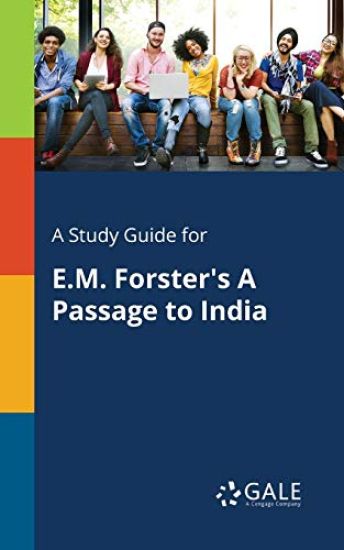
A Study Guide for E.M. Forster's A Passage to India
Cengage Learning Gale
Gale, Study Guides
2017
pokkari
Modernismus und Kolonialismus in E.M. Forsters Eine Passage nach Indien
Zaid Hilal
Verlag Unser Wissen
2023
pokkari
In diesem Buch geht es um die Veranschaulichung des britischen Kolonialismus und darum, wie E.M. Forster alle seine Werkzeuge eingesetzt hat, um die Elemente des Romans durch die Realit t der Dinge zu personifizieren und zu analysieren. Ich bin zu dem Schluss gekommen, dass die Beziehung zwischen den Inhalten dieses Romans mit allen Fakten gezeigt werden sollte, die f r die Leser nicht klar sind. Obwohl E.M. Forster ein Brite war, lehnte er gleichzeitig die Idee des Imperialismus ab und vermittelte den Indern und anderen L ndern den Eindruck, dass England dem indischen Volk die Rechte gegeben hatte und er schildert, wie Gro britannien sie von der Unwissenheit zur Aufkl rung gef hrt hatte und hier lag der Modernismus.

Modernismo e colonialismo in Passaggio in India di E.M. Forster
Zaid Hilal
Edizioni Sapienza
2023
pokkari
Questo libro un'illustrazione del colonialismo britannico e di come E.M Forster abbia usato tutti i suoi strumenti per dare personificazione e analizzare gli elementi del romanzo dalla realt delle cose da qui ho concluso che la relazione dei contenuti di questo romanzo dovrebbe essere mostrata con tutti i fatti che non sono chiari per i lettori. Sebbene E.M. Forster fosse britannico, allo stesso tempo rifiutava l'idea di essere imperialista e dava l'impressione agli indiani e agli altri Paesi che l'Inghilterra avesse dato al popolo indiano dei diritti e ritraeva come la Gran Bretagna li avesse spostati dall'ignoranza all'illuminazione e qui stava il modernismo.

Intercultural relationships and national identities in E.M. Forster´s novel 'A Passage to India'
Sarai Jung
Grin Publishing
2007
pokkari

The Trouble with Forming Meaningful Bonds in E.M. Forster's A Passage to India
Alex Phuong
Grin Verlag
2017
nidottu
Modernisme et colonialisme dans le roman d'E.M. Forster Un passage vers l'Inde
Zaid Hilal
Editions Notre Savoir
2023
pokkari
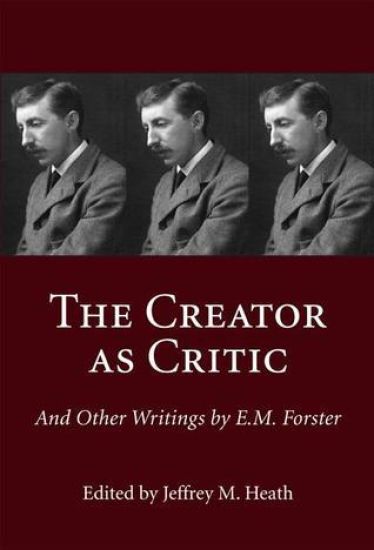
The Creator as Critic and Other Writings by E.M. Forster
Dundurn Group Ltd
2008
sidottu
E.M. Forster, whose novels A Room with a View, Howards End, and A Passage to India probe the values of the English middle class, is recognized as one of the twentieth century's most distinguished authors. He was also a highly respected literary critic. The Creator as Critic contains more than 40 of Forster's hitherto-unpublished essays, lectures, and memoirs, spanning the period 1898 to 1960. They reflect his views on a wide range of authors: Coleridge, Tolstoy, Pater, Wilde, James, Hardy, Butler, Housman, Kipling, Joyce, Lawrence, Proust, Cavafy, and others. The Creator as Critic also presents the original texts of some 30 broadcasts made by Forster for the BBC between 1928 and 1959. These radio talks, collected for the first time in this volume, are the thoughtful and thought-provoking products of Forster's active engagement with the literary, political, and social events of his time.

Study Guide to Howards End and A Passage to India by E.M. Forster
Influence Publishers
2020
pokkari
A comprehensive study guide offering in-depth explanation, essay, and test prep for selected works by E.M. Forster, one of the most gifted writers of his time. Titles in this study guide include Howards End and A Passage to India. As a thirteen-time Nobel Prize in Literature nominee, Forster created well-plotted and ironic stories that explored themes of class and hypocrisy in English society. Moreover, Forster employed an intricate structure of ideas, idealized connection, and sincerity above all else to express his vision of the world. This Bright Notes Study Guide explores the context and history of Forster's classic work, helping students to thoroughly explore the reasonsthey have stood the literary test of time. Each Bright Notes Study Guide contains: - Introductions to the Author and the Work - Character Summaries - Plot Guides - Section and Chapter Overviews - Test Essay and Study Q&As The Bright Notes Study Guide series offers an in-depth tour of more than 275 classic works of literature, exploring characters, critical commentary, historical background, plots, and themes. This set of study guides encourages readers to dig deeper in their understanding by including essay questions and answers as well as topics for further research.
Modernismo y colonialismo en Pasaje a la India, de E.M. Forster
Zaid Hilal
Ediciones Nuestro Conocimiento
2023
nidottu
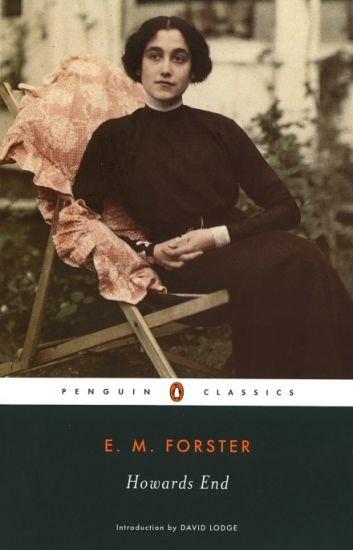
A meticulously-observed drama of class warfare, E.M. Forster's Howards End explores the conflict inherent within English society, unveiling the character of a nation as never before. This Penguin Classics edition includes an introduction and notes by David Lodge.'Only connect...'A chance acquaintance brings together the preposterous bourgeois Wilcox family and the clever, cultured and idealistic Schlegel sisters. As clear-eyed Margaret develops a friendship with Mrs Wilcox, the impetuous Helen brings into their midst a young bank clerk named Leonard Bast, who lives at the edge of poverty and ruin. When Mrs Wilcox dies, her family discovers that she wants to leave her country home, Howards End, to Margaret. Thus as Forster sets in motion a chain of events that will entangle three different families, he brilliantly portrays their aspirations to personal and social harmony.David Lodge's introduction provides an absorbing and eloquent overture to the 1910 novel that established Forster's reputation as an important writer, and that he himself later referred to as 'my best novel'. This edition also contains a note on the text, suggestions for further reading, and explanatory notes.E. M. Forster (1879-1970) was a noted English author and critic and a member of the Bloomsbury group. His first novel, Where Angels Fear To Tread appeared in 1905. The Longest Journey appeared in 1907, followed by A Room With A View (1908), based partly on the material from extended holidays in Italy with his mother. Howards End (1910) was a story that centered on an English country house and dealt with the clash between two families, one interested in art and literature, the other only in business. Maurice was revised several times during his life, and finally published posthumously in 1971.If you enjoyed Howard's End, you might like Forster's A Room with a View, also available in Penguin Classics.
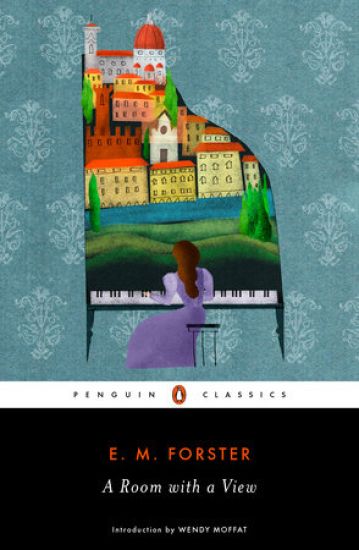
'My first intimation of the possibilities of fiction' Zadie SmithMore than a love story, A Room with a View is a penetrating social comedy and a brilliant study of contrasts - in values, social class, and cultural perspectives - and the ingenuity of fate. Its heroine, Lucy Honeychurch, visits Italy with her prim cousin Charlotte as a chaperone, where she meets the unconventional, lower class Mr. Emerson and his son, George. Upon her return to England, Lucy becomes engaged to the supercilious Cecil Vyse, but finds herself increasingly torn between the expectations of the world in which she moves and the passionate yearnings of her heart.With an Introduction by Malcolm Bradbury
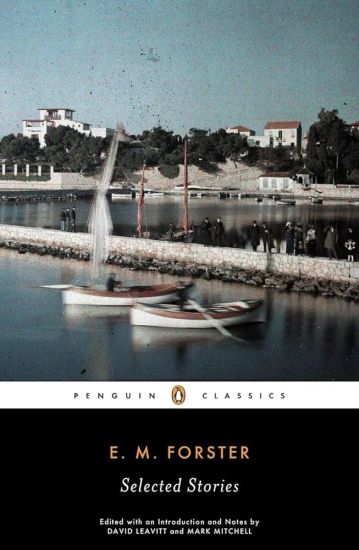
Although he is best known for his exquisite novels, E.M. Forster also wrote remarkable short stories. He referred to his stories as ‘fantasies’ and his attraction to myth and magic is apparent in many of them. Like his novels, the stories – whether they are set in Italy, Greece, India, and other places Forster visited, or in England itself – contrast the freedom of paganism with the restraints of English civilization, the personal, sensual delights of the body with the impersonal, inhibiting rules imposed by society. Rich in irony and alive with sharp observations on the surprises life holds, the stories often feature violent events, discomforting coincidences, and other disruptive happenings that throw the characters’ perceptions and beliefs off balance. This volume includes all twelve stories published during Forster’s lifetime.

First time in Black Classics for Forster's autobiographical novel of homosexual love. Maurice Hall is a young man who grows up confident in his privileged status and well aware of his role in society. Modest and generally conformist, he nevertheless finds himself increasingly attracted to his own sex. Through Clive, whom he encounters at Cambridge, and through Alec, the gamekeeper on Clive's country estate, Maurice gradually experiences a profound emotional and sexual awakening. A tale of passion, bravery and defiance, this intensely personal novel was completed in 1914 but remained unpublished until after Forster's death in 1970. Compellingly honest and beautifully written, it offers a powerful condemnation of the repressive attitudes of British society, and is at once a moving love story and an intimate tale of one man's erotic and political self-discovery.
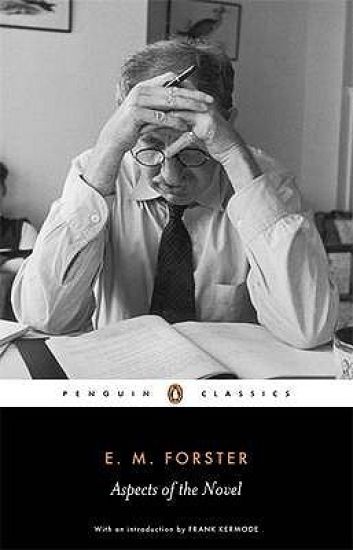
E.M. Forster's Aspects of the Novel is an innovative and effusive treatise on a literary form that, at the time of publication, had only recently begun to enjoy serious academic consideration. This Penguin Classics edition is edited with an introduction by Oliver Stallybrass, and features a new preface by Frank Kermode.First given as a series of lectures at Cambridge University, Aspects of the Novel is Forster's analysis of this great literary form. Here he rejects the 'pseudoscholarship' of historical criticism - 'that great demon of chronology' - that considers writers in terms of the period in which they wrote and instead asks us to imagine the great novelists working together in a single room. He discusses aspects of people, plot, fantasy and rhythm, making illuminating comparisons between novelists such as Proust and James, Dickens and Thackeray, Eliot and Dostoyevsky - the features shared by their books and the ways in which they differ. Written in a wonderfully engaging and conversational manner, this penetrating work of criticism is full of Forster's habitual irreverence, wit and wisdom.In his new introduction, Frank Kermode discusses the ways in which Forster's perspective as a novelist inspired his lectures. This edition also includes the original introduction by Oliver Stallybrass, a chronology, further reading and appendices.E. M. Forster (1879-1970) was a noted English author and critic and a member of the Bloomsbury group. His first novel, Where Angels Fear To Tread appeared in 1905. The Longest Journey appeared in 1907, followed by A Room With A View (1908), based partly on the material from extended holidays in Italy with his mother. Howards End (1910) was a story that centered on an English country house and dealt with the clash between two families, one interested in art and literature, the other only in business. Maurice was revised several times during his life, and finally published posthumously in 1971.If you enjoyed Aspects of the Novel, you might like Forster's A Room with a View, also available in Penguin Classics.
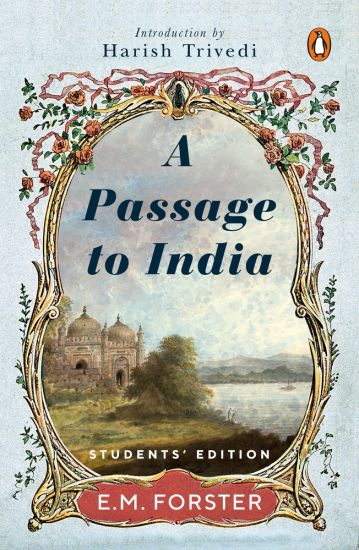
Among the greatest novels of the twentieth century, A Passage to India is set in pre-Independence India. A compelling portrait of a society in the grip of imperialism, this classic depicts the fate of individuals caught in the great political and cultural conflicts of their age. It begins when Adela and her elderly companion Mrs. Moore arrive in the Indian town of Chandrapore, and feel trapped by its insular and prejudiced British community. Determined to explore the 'real India,' they seek the guidance of the charming and mercurial Dr. Aziz. But a mysterious incident occurs while they are exploring the Marabar caves, and the well-respected doctor soon finds himself at the centre of a scandal. The introduction by Harish Trivedi provides the required scholarly context for the English literature course.
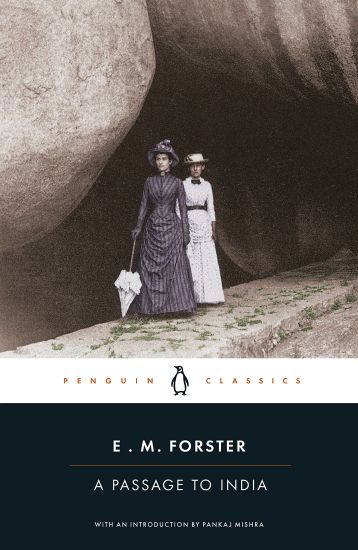
'His great book ... masterly in its prescience and its lucidity' ANITA DESAI A compelling portrait of a society in the grip of imperialism, A Passage to India depicts the fate of individuals caught in the great political and cultural conflicts of their age. It begins when Adela and her elderly companion Mrs Moore arrive in the Indian town of Chandrapore, and feel trapped by its insular and prejudiced British community. Determined to explore the 'real India', they seek the guidance of the charming and mercurial Dr Aziz. But a mysterious incident occurs while they are exploring the Marabar caves, and the well-respected doctor soon finds himself at the centre of a scandal. Edited by OLIVER STALLYBRASS with an Introduction by PANKAJ MISHRA