Kirjahaku
Etsi kirjoja tekijän nimen, kirjan nimen tai ISBN:n perusteella.
1000 tulosta hakusanalla Eberhard Blanke
Eberhard Arnold (1883–1935) fue una de las figuras cristianas más notables del siglo XX. En los años posteriores a la primera guerra mundial, abandonó su carrera como teólogo universitario para vivir el espíritu radical del Sermón del monte. Con su familia y un pequeño círculo de amigos fundó el Bruderhof, una comunidad arraigada en la tradición anabautista. En sus escritos, preocupados por la búsqueda de la paz, la comunidad y el llamamiento a una rev¬olución del espíritu, se escucha el reto evangélico que invita a vivir comprometidamente desde la autenticidad personal. Menos conocido en el mundo hispanohablante, este libro brinda la oportunidad de leer una selección de escritos que permiten escuchar su voz profética.
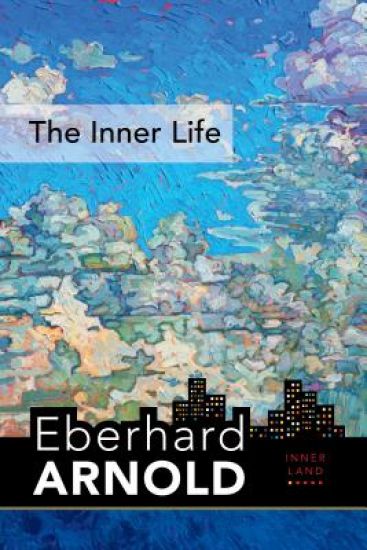
A trusted guide into the inner realm where our spirits find strength to master life and live for God. It is hard to exaggerate the significance of Innerland, either for Eberhard Arnold or his readers. It absorbed his energies off and on for most of his adult life--from World War I, when he published the first chapter under the title War: A Call to Inwardness, to 1935, the last year of his life. Packed in metal boxes and buried at night for safekeeping from the Nazis, who raided the author’s study a year before his death (and again a year after it), Innerland was not openly critical of Hitler’s regime. Nevertheless, it attacked the spirits that animated German society: its murderous strains of racism and bigotry, its heady nationalistic fervor, its mindless mass hysteria, and its vulgar materialism. In this sense Innerland stands as starkly opposed to the zeitgeist of our own day as to that of the author’s. At a glance, the focus of Innerland seems to be the cultivation of the spiritual life as an end in itself. Nothing could be more misleading. In fact, to Eberhard Arnold the very thought of encouraging the sort of selfish solitude whereby people seek their own private peace by shutting out the noise and rush of public life around them is anathema. He writes in The Inner Life:“These are times of distress. We cannot retreat, willfully blind to the overwhelming urgency of the tasks pressing on society. We cannot look for inner detachment in an inner and outer isolation...The only justification for withdrawing into the inner self to escape today's confusing, hectic whirl would be that fruitfulness is enriched by it. It is a question of gaining within, through unity with eternal powers, a strength of character ready to be tested in the stream of the world.” Innerland, then, calls us not to passivity, but to action. It invites us to discover the abundance of a life lived for God. It opens our eyes to the possibilities of that “inner land of the invisible where our spirit can find the roots of its strength and thus enable us to press on to the mastery of life we are called to by God.” Only there, says Eberhard Arnold, can our life be placed under the illuminating light of the eternal and seen for what it is. Only there will we find the clarity of vision we need to win the daily battle that is life, and the inner anchor without which we will lose our moorings.
Plough Quarterly No. 13 - Save Our Souls
Eberhard Arnold; Stephanie Saldaa; Ross Douthat; Dana Gioia; Simone Weil; Rod Dreher; Pawel Kuczynski; Meister Eckhart; Isaac Penington; Gerard Manley Hopkins; Jacqueline C. Rivers
Plough Publishing House
2017
pokkari
In an age of distraction, this issue of Plough Quarterly looks at inwardness – how sustainable human community and social activism must be rooted in the spiritual life. How much of your day is spent in reality, and how much in a fake world? We’ve learned that screen time is bad for you, too much media consumption damages your heart, and Facebook can make you mentally ill. We’re aware of the mind-altering power of advertising, the dehumanizing passions of our polarized politics, and the fact that millions of us have learned to multitask while watching footage of refugees drowning. But what are we to do about it? If this fake world is invading our souls, it’s in our souls that we must find the cure. Only a return to inwardness can bring distracted moderns back to Jesus and to constructive work for his kingdom. Here activists may object: Isn’t it the height of selfishness to retreat into our interior life when we ought to be out saving starving children? Yet Christians through the ages have insisted that inwardness is crucial to the life of discipleship. It’s what keeps us from falling for demagogues and false gospels, from wasting life on superficialities, and from ignoring our neighbor. In fact, throughout history it has often been the mystics who were most active in serving others. In true Plough fashion, this issue brings together a colorful cast of examples: from medieval Beguines and Benedictines to Gerard Manley Hopkins, Simone Weil, and Fannie Lou Hamer, to contemporary voices like Robert Cardinal Sarah, Johann Christoph Arnold, and three persecuted Syrian priests. These lives offer us glimpses of the real world from which our fake world seeks to distract us, and can guide us in our own refusal to conform. Also in this issue: • Poetry from Gerard Manley Hopkins and Malcolm Guite • Insights on inwardness from Meister Eckhart, Eberhard Arnold, Marguerite Porete, Simone Weil, and Isaac Penington • A forum on the Benedict Option with Rod Dreher, Ross Douthat, Jacqueline C. Rivers, and Randall Gauger • Artwork by Jason Landsel, Bruce Herman, Jane Chapin, Graham Berry, Fra Angelico, Francisco de Zurbarán, Eleanor Fortescue-Brickdale, Matthew J. Cutter, John August Swanson, Vittorio Matteo Corcos, and Leon Dabo Plough Quarterly features stories, ideas, and culture for people eager to put their faith into action. Each issue brings you in-depth articles, interviews, poetry, book reviews, and art to help you put Jesus’ message into practice and find common cause with others.
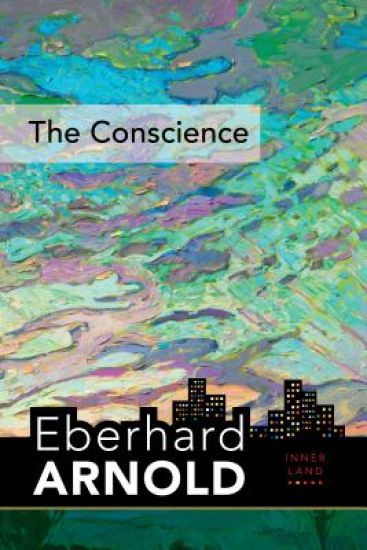
When troubled consciences find healing they become a force for good. The conscience, our inner moral compass, is a sensitive instrument meant to warn us against all that might endanger our life and happiness. Many today despise or ignore the conscience, calling its working unhealthy repression of natural urges, or rejecting any certainty in the name of relativism. Others are tormented by its accusations. In this little book, Arnold points the way to complete healing and restoration of even the most troubled conscience. When Christ’s forgiveness sets the conscience free and floods it with his live-renewing spirit, it becomes an active force for good, giving us clarity in personal, social, and political questions and leading us to peace, joy, justice, and community. The Conscience is the second volume of five in Inner Land: A Guide into the Heart of the Gospel. About Inner Land A trusted guide into the inner realm where our spirits find strength to master life and live for God. It is hard to exaggerate the significance of Innerland, either for Eberhard Arnold or his readers. It absorbed his energies off and on for most of his adult life--from World War I, when he published the first chapter under the title War: A Call to Inwardness, to 1935, the last year of his life. Packed in metal boxes and buried at night for safekeeping from the Nazis, who raided the author’s study a year before his death (and again a year after it), Innerland was not openly critical of Hitler’s regime. Nevertheless, it attacked the spirits that animated German society: its murderous strains of racism and bigotry, its heady nationalistic fervor, its mindless mass hysteria, and its vulgar materialism. In this sense Innerland stands as starkly opposed to the zeitgeist of our own day as to that of the author’s. At a glance, the focus of Innerland seems to be the cultivation of the spiritual life as an end in itself. Nothing could be more misleading. In fact, to Eberhard Arnold the very thought of encouraging the sort of selfish solitude whereby people seek their own private peace by shutting out the noise and rush of public life around them is anathema. He writes in The Inner Life:“These are times of distress. We cannot retreat, willfully blind to the overwhelming urgency of the tasks pressing on society. We cannot look for inner detachment in an inner and outer isolation...The only justification for withdrawing into the inner self to escape today's confusing, hectic whirl would be that fruitfulness is enriched by it. It is a question of gaining within, through unity with eternal powers, a strength of character ready to be tested in the stream of the world.” Innerland, then, calls us not to passivity, but to action. It invites us to discover the abundance of a life lived for God. It opens our eyes to the possibilities of that “inner land of the invisible where our spirit can find the roots of its strength and thus enable us to press on to the mastery of life we are called to by God.” Only there, says Eberhard Arnold, can our life be placed under the illuminating light of the eternal and seen for what it is. Only there will we find the clarity of vision we need to win the daily battle that is life, and the inner anchor without which we will lose our moorings.

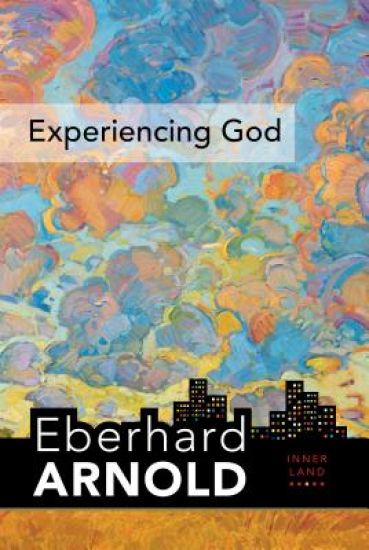
What happens when we let the living God into our practical lives? Everyone is looking for deeper meaning in their lives and for personal peace as well as peace for all. But are we ready for what can happen when we invite the living God to rule our personal lives and transform us and our society? Where religion, self-help, and the political ideologies of left and right have failed us, God enters with power to break the grip of money, violence, and tribalism and bring about a new life of justice and fellowship. This book is not for those who look to spirituality as an escape from reality. But for those who hunger for change that is genuine and tangible, for a personal peace of heart that is inseparable from justice and peace between nations, Arnold’s words will be a rousing encouragement to expect more than you ever dared hope. Experiencing God is the third volume in Inner Land: A Guide into the Heart of the Gospel
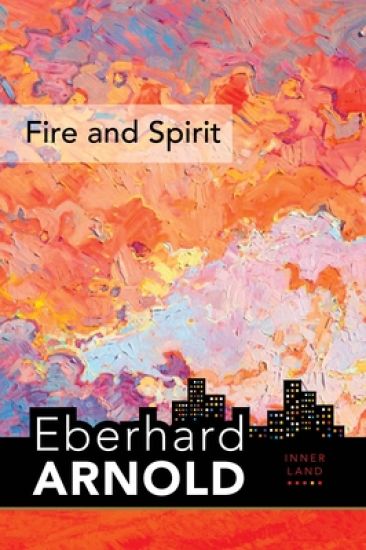
Lightning and forest fires could strike terror in primitive humans, yet they also cherished fire as a life-giving gift from the gods. Eberhard Arnold surveys the symbolism of light and fire in the Bible, literature, and history to illuminate our love/fear relationship with God. The Holy Spirit, like fire, is a two-edged sword: it brings the blazing wrath of God’s judgment, consuming all that is dead and cold in us, but also the radiant warmth of his love, mercy, and redemption. Though Inner Land was not explicitly critical of the Nazi regime, it nevertheless attacked the spirits that animated German society at the time: racism and bigotry, nationalistic fervor, mass hysteria, and materialism. The chapter “Light and Fire,” in particular, was a deliberate public statement at a decisive moment of Germany’s history. Eberhard Arnold sent Hitler a copy on November 9, 1933. A week later the Gestapo raided the community and ransacked the author’s study. After this first raid, Eberhard Arnold asked two friends to pack the already printed signatures of Inner Land in watertight metal boxes and bury them at night for safekeeping. They later dug up Inner Land and smuggled it out of the country, publishing it in Lichtenstein after Eberhard Arnold’s death. The fourth volume of five in Inner Land, Fire and Spirit contains two chapters, “Light and Fire” and “The Holy Spirit.” About Innerland: It is hard to exaggerate the significance of Innerland, either for Eberhard Arnold or his readers. It absorbed his energies off and on for most of his adult life – from World War I, when he published the first chapter under the title War: A Call to Inwardness, to 1935, the last year of his life. Packed in metal boxes and buried at night for safekeeping from the Nazis, who raided the author’s study a year before his death (and again a year after it), Innerland was not openly critical of Hitler’s regime. Nevertheless, it attacked the spirits that animated German society: its murderous strains of racism and bigotry, its heady nationalistic fervor, its mindless mass hysteria, and its vulgar materialism. In this sense Innerland stands as starkly opposed to the zeitgeist of our own day as to that of the author’s. At a glance, the focus of Innerland seems to be the cultivation of the spiritual life as an end in itself. Nothing could be more misleading. In fact, to Eberhard Arnold the very thought of encouraging the sort of selfish solitude whereby people seek their own private peace by shutting out the noise and rush of public life around them is anathema. He writes in The Inner Life: “These are times of distress. We cannot retreat, willfully blind to the overwhelming urgency of the tasks pressing on society. We cannot look for inner detachment in an inner and outer isolation...The only justification for withdrawing into the inner self to escape today's confusing, hectic whirl would be that fruitfulness is enriched by it. It is a question of gaining within, through unity with eternal powers, a strength of character ready to be tested in the stream of the world.” Innerland, then, calls us not to passivity, but to action. It invites us to discover the abundance of a life lived for God. It opens our eyes to the possibilities of that “inner land of the invisible where our spirit can find the roots of its strength and thus enable us to press on to the mastery of life we are called to by God.” Only there, says Eberhard Arnold, can our life be placed under the illuminating light of the eternal and seen for what it is. Only there will we find the clarity of vision we need to win the daily battle that is life, and the inner anchor without which we will lose our moorings.
Why has God not answered my prayers? What should I be praying for? If everything I prayed for came true, would I be ready? In this spiritual classic, Eberhard Arnold mines the riches of biblical teaching on prayer and the example of Jesus, the Hebrew prophets, and the early Christians to point us back to the prayer that pleases God most – prayer that has the power to transform our lives and our world. In a new reflective response, much-loved author Richard J. Foster relates Arnold’s words to our contemporary reality.
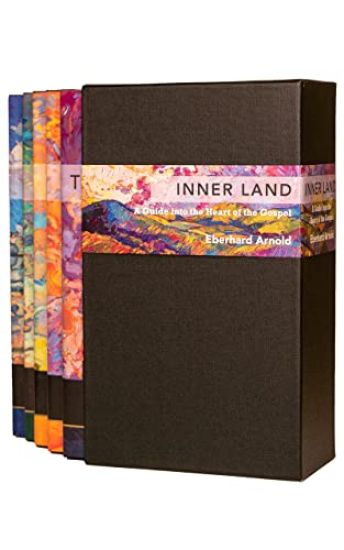
Inner Land: A Guide into the Heart of the Gospel (Complete Boxed Set)
Eberhard Arnold
PLOUGH PUBLISHING HOUSE
2023
tuotepaketti
Find the clarity of vision needed to win the daily battle that is life, and the inner anchor without which we lose our moorings.It is hard to exaggerate the significance of Inner Land, either for Eberhard Arnold or his readers. It absorbed his energies off and on for most of his adult life – from World War I, when he published the first chapter under the title War: A Call to Inwardness, to 1935, the last year of his life.Packed in metal boxes and buried at night for safekeeping from the Nazis, who raided the author’s study a year before his death (and again a year after it), Inner Land was not openly critical of Hitler’s regime. Nevertheless, it attacked the spirits that animated German society: its murderous strains of racism and bigotry, its heady nationalistic fervor, its mindless mass hysteria, and its vulgar materialism. In this sense Innerland stands as starkly opposed to the zeitgeist of our own day as to that of the author’s.At a glance, the focus of Inner Land seems to be the cultivation of the spiritual life as an end in itself. Nothing could be more misleading. In fact, to Eberhard Arnold the very thought of encouraging the sort of selfish solitude whereby people seek their own private peace by shutting out the noise and rush of public life around them is anathema. He writes in The Inner Life: “These are times of distress. We cannot retreat, willfully blind to the overwhelming urgency of the tasks pressing on society. We cannot look for inner detachment in an inner and outer isolation...The only justification for withdrawing into the inner self to escape today's confusing, hectic whirl would be that fruitfulness is enriched by it. It is a question of gaining within, through unity with eternal powers, a strength of character ready to be tested in the stream of the world.”Inner Land, then, calls us not to passivity, but to action. It invites us to discover the abundance of a life lived for God. It opens our eyes to the possibilities of that “inner land of the invisible where our spirit can find the roots of its strength and thus enable us to press on to the mastery of life we are called to by God.” Only there, says Eberhard Arnold, can our life be placed under the illuminating light of the eternal and seen for what it is. Only there will we find the clarity of vision we need to win the daily battle that is life, and the inner anchor without which we will lose our moorings.
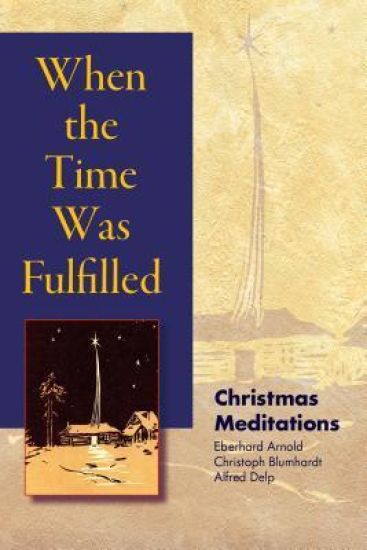
When the Time Was Fulfilled
Eberhard Arnold; Christoph Friedrich Blumhardt; Alfred Delp
Plough Publishing House
2014
pokkari
The 40 short, pithy meditations in this collection witness to the fact that the birth of Jesus is more than history for those who feel their need of him. Christmas is the season of joy for good reason: it is the news of a savior being born, of light breaking into darkness, of God’s peace and goodwill to all. But joy is more than merriment. For those who only want to have a good time or a feeling of togetherness, Christmas brings a temporary feeling of cheer. But for those who feel bankrupt, without real meaning or hope – either for themselves or for the world – Christmas can be genuinely life-changing.
Textual Criticism and the New Testament Text
Eberhard W Güting
Society of Biblical Literature
2020
sidottu
This work has been selected by scholars as being culturally important and is part of the knowledge base of civilization as we know it.This work is in the public domain in the United States of America, and possibly other nations. Within the United States, you may freely copy and distribute this work, as no entity (individual or corporate) has a copyright on the body of the work.Scholars believe, and we concur, that this work is important enough to be preserved, reproduced, and made generally available to the public. To ensure a quality reading experience, this work has been proofread and republished using a format that seamlessly blends the original graphical elements with text in an easy-to-read typeface.We appreciate your support of the preservation process, and thank you for being an important part of keeping this knowledge alive and relevant.