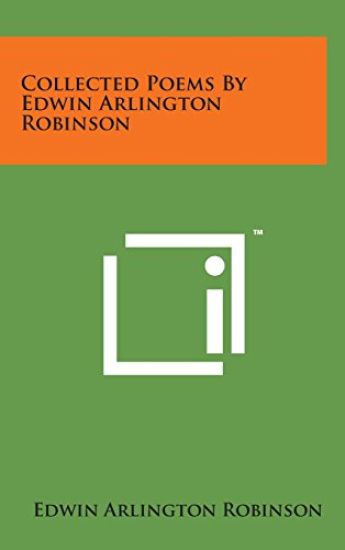
Collected Poems By Edwin Arlington Robinson is a comprehensive collection of the works of the American poet Edwin Arlington Robinson. This book contains a wide range of Robinson's poetry, including his most famous and celebrated works such as ""Richard Cory"" and ""Miniver Cheevy"". The poems in this collection are known for their powerful themes and vivid imagery, which often explore the complexities of human nature and the struggles of everyday life. Robinson's poetry is also renowned for its use of traditional forms and structures, such as sonnets and ballads, which give his work a timeless quality. This book is a must-read for anyone interested in American poetry, and offers a fascinating insight into the life and work of one of the country's most important poets.This Is A New Release Of The Original 1922 Edition.This scarce antiquarian book is a facsimile reprint of the old original and may contain some imperfections such as library marks and notations. Because we believe this work is culturally important, we have made it available as part of our commitment for protecting, preserving, and promoting the world's literature in affordable, high quality, modern editions, that are true to their original work.
Hello, Edwin Welcome to the world of books. This colorful, personalized keepsake is just for you. In Edwin s Reading Log, your family and friends will be able to record the first 200 books you read and prepare you for a lifetime of reading, achievement, and success. Sprinkled with great advice and inspiration, this memory book will remind you throughout your life of those books and people who inspired you. A note for adults: recording a child s first books creates a mindset of reading the first steps to a lifetime of learning and growth."
Hello, Edwin Welcome to the world of books. This colorful, personalized keepsake is just for you. In Edwin s Reading Log, your family and friends will be able to record the first 200 books you read and prepare you for a lifetime of reading, achievement, and success. Sprinkled with great advice and inspiration, this memory book will remind you throughout your life of those books and people who inspired you. A note for adults: recording a child s first books creates a mindset of reading the first steps to a lifetime of learning and growth."
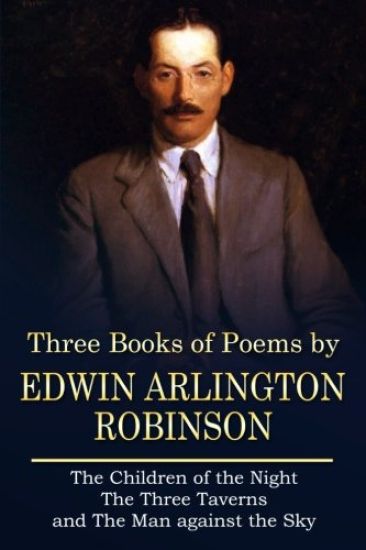
Three Books of Poems by Edwin Arlington Robinson The Children of the Night The Three Taverns and The Man against the Sky Edwin Arlington Robinson (1869 - 1935) Edwin Arlington Robinson (December 22, 1869 - April 6, 1935) was an American poet who won three Pulitzer Prizes for his work. Career With his father gone, Edwin became the man of the household. He tried farming and developed a close relationship with his brother's wife Emma Robinson, who after her husband Herman's death moved back to Gardiner with her children. She twice rejected marriage proposals from Edwin, after which he permanently left Gardiner. He moved to New York, where he led a precarious existence as an impoverished poet while cultivating friendships with other writers, artists, and would-be intellectuals. In 1896 he self-published his first book, The Torrent and the Night Before, paying 100 dollars for 500 copies. Robinson meant it as a surprise for his mother. Days before the copies arrived, Mary Palmer Robinson died of diphtheria. His second volume, Children of the Night, had a somewhat wider circulation. Its readers included President Theodore Roosevelt's son Kermit, who recommended it to his father. Impressed by the poems and aware of Robinson's straits, Roosevelt in 1905 secured the writer a job at the New York Customs Office. According to Edmund Morris, author of Theodore Rex, a tacit condition of his employment was that, in exchange for his desk and two thousand dollars a year, he should work "with a view to helping American letters," rather than the receipts of the United States Treasury. Robinson remained in the job until Roosevelt left office. Gradually his literary successes began to mount. He won the Pulitzer Prize three times in the 1920s. and posterity has him described as ' more artful than Hardy and more coy than Frost and a brilliant sonneteer . During the last twenty years of his life he became a regular summer resident at the MacDowell Colony in New Hampshire, where several women made him the object of their devoted attention. Robinson and artist Elizabeth Sparhawk-Jones visited the MacDowell Colony at the same times over a cumulative total of ten years. They had a romantic relationship in which she was in love with him, devoted to him and understood him, and was relaxed in her approach with him. He called her Sparhawk and was courteous towards her. They had a relationship that D. H. Tracy described as "courtly, quiet, and intense." She described him as a charming, sensitive, and emotionally grounded man with high moral values. Robinson never married. He died of cancer on April 6, 1935 in the New York Hospital (now New York Cornell Hospital) in New York City. When he died, Sparhawk-Jones attended his vigil and then painted several paintings in his memory. His childhood home in Gardiner was designated a National Historic Landmark in 1971. Robinson's grandnephew David S. Nivison later became a noted expert on Chinese philosophy and Chinese history.
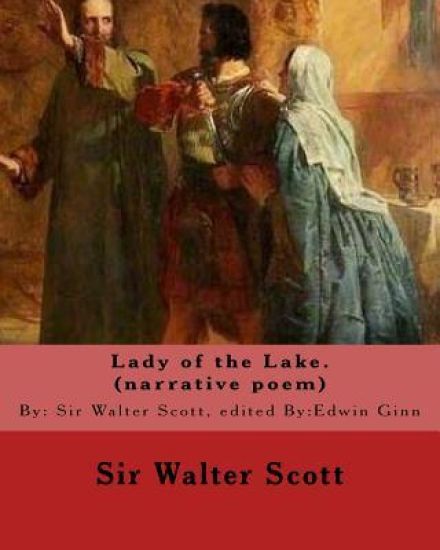
The Lady of the Lake is a narrative poem by Sir Walter Scott, first published in 1810. Set in the Trossachs region of Scotland, it is composed of six cantos, each of which concerns the action of a single day.The poem has three main plots: the contest among three men, Roderick Dhu, James Fitz-James, and Malcolm Graeme, to win the love of Ellen Douglas; the feud and reconciliation of King James V of Scotland and James Douglas; and a war between the lowland Scots (led by James V) and the highland clans (led by Roderick Dhu of Clan Alpine). The poem was tremendously influential in the nineteenth century, and inspired the Highland Revival.By the late nineteenth century, however, the poem was much less popular. (It continued, however, to be a standard reading in elementary schools until the early twentieth century.) Its influence is indirect: Schubert's Ellens Dritter Gesang (later adapted to use the full lyrics of the Latin Ave Maria), Rossini's La Donna del Lago (1819), the Ku Klux Klan custom of cross burning, the last name of U.S. abolitionist Frederick Douglass, and the song "Hail to the Chief", were all inspired by the poem.It shares its name with the Arthurian character, the Lady of the Lake. Other allusions to the legend are scant..... Sir Walter Scott, 1st Baronet, FRSE (15 August 1771 - 21 September 1832) was a Scottish historical novelist, playwright and poet with many contemporary readers in Europe, Australia, and North America. Scott's novels and poetry are still read, and many of his works remain classics of both English-language literature and of Scottish literature. Famous titles include Ivanhoe, Rob Roy, Old Mortality, The Lady of the Lake, Waverley, The Heart of Midlothian and The Bride of Lammermoor. Although primarily remembered for his extensive literary works and his political engagement, Scott was an advocate, judge and legal administrator by profession, and throughout his career combined his writing and editing work with his daily occupation as Clerk of Session and Sheriff-Depute of Selkirkshire. A prominent member of the Tory establishment in Edinburgh, Scott was an active member of the Highland Society and served a long term as President of the Royal Society of Edinburgh (1820-32).......... Edwin Ginn (February 14, 1838 - January 21, 1914) was an American publisher, peace advocate, and philanthropist.
Edwin Abbott Abbott (20 December 1838 - 12 October 1926) was an English schoolmaster and theologian, best known as the author of the novella Flatland (1884).Edwin Abbott Abbott was the eldest son of Edwin Abbott (1808-1882), headmaster of the Philological School, Marylebone, and his wife, Jane Abbott (1806-1882). His parents were first cousins. He was educated at the City of London School and at St John's College, Cambridge, where he took the highest honours in classics, mathematics and theology, and became a fellow of his college. In particular, he was 1st Smith's prizeman in 1861. This seems to be an error by Venn: Colby's preface to Abbott's Flatland states that Abbott was 7th Senior Optime, Senior Classic and 1st Chancellor's Medallist in 1861; William Steadman Aldis was 1st Smith's Prizeman in 1861.] In 1862 he took orders. After holding masterships at King Edward's School, Birmingham, he succeeded G. F. Mortimer as headmaster of the City of London School in 1865 at the early age of twenty-six. Here he oversaw the education of future Prime Minister H. H. Asquith. He was Hulsean lecturer in 1876. He retired in 1889, and devoted himself to literary and theological pursuits. Abbott's liberal inclinations in theology were prominent both in his educational views and in his books. His Shakespearian Grammar (1870) is a permanent contribution to English philology. In 1885 he published a life of Francis Bacon. His theological writings include three anonymously published religious romances - Philochristus (1878), where he tried to raise interest in Gospels reading, Onesimus (1882), and Silanus the Christian (1908). More weighty contributions are the anonymous theological discussion The Kernel and the Husk (1886), Philomythus (1891), his book The Anglican Career of Cardinal Newman (1892), and his article "The Gospels" in the ninth edition of the Encyclop dia Britannica, embodying a critical view which caused considerable stir in the English theological world. He also wrote St Thomas of Canterbury, his Death and Miracles (1898), Johannine Vocabulary (1905), Johannine Grammar (1906). Abbott also wrote educational text books, one being "Via Latina: First Latin Book" which was published in 1898 and distributed around the world within the education system.
Paul the Apostle, commonly known as Saint Paul, and also known by his native name Saul of Tarsuswas an apostle (though not one of the Twelve Apostles) who taught the gospel of the Christ to the first century world.. Edwin Abbott Abbott (20 December 1838 - 12 October 1926) was an English schoolmaster and theologian, best known as the author of the novella Flatland (1884).Edwin Abbott Abbott was the eldest son of Edwin Abbott (1808-1882), headmaster of the Philological School, Marylebone, and his wife, Jane Abbott (1806-1882). His parents were first cousins. He was educated at the City of London School and at St John's College, Cambridge, where he took the highest honours in classics, mathematics and theology, and became a fellow of his college. In particular, he was 1st Smith's prizeman in 1861. This seems to be an error by Venn: Colby's preface to Abbott's Flatland states that Abbott was 7th Senior Optime, Senior Classic and 1st Chancellor's Medallist in 1861; William Steadman Aldis was 1st Smith's Prizeman in 1861.] In 1862 he took orders. After holding masterships at King Edward's School, Birmingham, he succeeded G. F. Mortimer as headmaster of the City of London School in 1865 at the early age of twenty-six. Here he oversaw the education of future Prime Minister H. H. Asquith. He was Hulsean lecturer in 1876. He retired in 1889, and devoted himself to literary and theological pursuits. Abbott's liberal inclinations in theology were prominent both in his educational views and in his books. His Shakespearian Grammar (1870) is a permanent contribution to English philology. In 1885 he published a life of Francis Bacon. His theological writings include three anonymously published religious romances - Philochristus (1878), where he tried to raise interest in Gospels reading, Onesimus (1882), and Silanus the Christian (1908). More weighty contributions are the anonymous theological discussion The Kernel and the Husk (1886), Philomythus (1891), his book The Anglican Career of Cardinal Newman (1892), and his article "The Gospels" in the ninth edition of the Encyclop dia Britannica, embodying a critical view which caused considerable stir in the English theological world. He also wrote St Thomas of Canterbury, his Death and Miracles (1898), Johannine Vocabulary (1905), Johannine Grammar (1906). Abbott also wrote educational text books, one being "Via Latina: First Latin Book" which was published in 1898 and distributed around the world within the education system.
Edwin Abbott Abbott (20 December 1838 - 12 October 1926) was an English schoolmaster and theologian, best known as the author of the novella Flatland (1884).Edwin Abbott Abbott was the eldest son of Edwin Abbott (1808-1882), headmaster of the Philological School, Marylebone, and his wife, Jane Abbott (1806-1882). His parents were first cousins. He was educated at the City of London School and at St John's College, Cambridge, where he took the highest honours in classics, mathematics and theology, and became a fellow of his college. In particular, he was 1st Smith's prizeman in 1861. This seems to be an error by Venn: Colby's preface to Abbott's Flatland states that Abbott was 7th Senior Optime, Senior Classic and 1st Chancellor's Medallist in 1861; William Steadman Aldis was 1st Smith's Prizeman in 1861.] In 1862 he took orders. After holding masterships at King Edward's School, Birmingham, he succeeded G. F. Mortimer as headmaster of the City of London School in 1865 at the early age of twenty-six. Here he oversaw the education of future Prime Minister H. H. Asquith. He was Hulsean lecturer in 1876. He retired in 1889, and devoted himself to literary and theological pursuits. Abbott's liberal inclinations in theology were prominent both in his educational views and in his books. His Shakespearian Grammar (1870) is a permanent contribution to English philology. In 1885 he published a life of Francis Bacon. His theological writings include three anonymously published religious romances - Philochristus (1878), where he tried to raise interest in Gospels reading, Onesimus (1882), and Silanus the Christian (1908). More weighty contributions are the anonymous theological discussion The Kernel and the Husk (1886), Philomythus (1891), his book The Anglican Career of Cardinal Newman (1892), and his article "The Gospels" in the ninth edition of the Encyclop dia Britannica, embodying a critical view which caused considerable stir in the English theological world. He also wrote St Thomas of Canterbury, his Death and Miracles (1898), Johannine Vocabulary (1905), Johannine Grammar (1906). Abbott also wrote educational text books, one being "Via Latina: First Latin Book" which was published in 1898 and distributed around the world within the education system.