Kirjojen hintavertailu. Mukana 11 244 527 kirjaa ja 12 kauppaa.

Kirjahaku

Etsi kirjoja tekijän nimen, kirjan nimen tai ISBN:n perusteella.

1000 tulosta hakusanalla Elizabeth Merritt

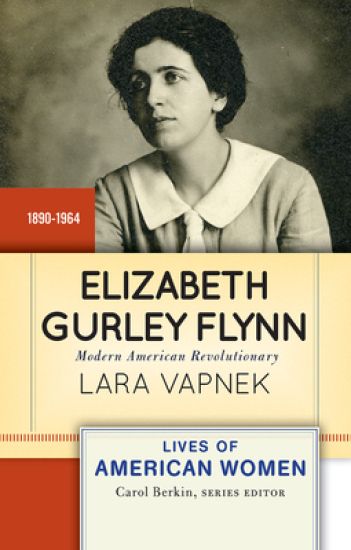
Elizabeth Gurley Flynn

Elizabeth Gurley Flynn

Lara Vapnek

Routledge
2019
sidottu
In 1906, fifteen-year old Elizabeth Gurley Flynn mounted a soapbox in Times Square to denounce capitalism and proclaim a new era for women's freedom. Quickly recognized as an outstanding public speaker and formidable organizer, she devoted her life to creating a socialist America, "free from poverty, exploitation, greed and injustice." Flynn became the most important female leader of the Industrial Workers of the World and of the American Communist Party, fighting tirelessly for workers' rights to organize and to express dissenting ideas. Weaving together Flynn's personal and political life, this biography reveals previously unrecognized connections between feminism, socialism, free love, and free speech. Flynn's remarkable career casts new light on the long and varied history of radicalism in the United States.About the Lives of American Women series: Selected and edited by renowned women's historian Carol Berkin, these brief biographies are designed for use in undergraduate courses. Rather than a comprehensive approach, each biography focuses instead on a particular aspect of a woman's life that is emblematic of her time, or which made her a pivotal figure in the era. The emphasis is on a 'good read', featuring accessible writing and compelling narratives, without sacrificing sound scholarship and academic integrity. Primary sources at the end of each biography reveal the subject's perspective in her own words. Study questions and an annotated bibliography support the student reader.
Elizabeth Cady Stanton

Elizabeth Cady Stanton

Lori D. Ginzberg

Hill Wang Inc.,U.S.
2010
nidottu
In this subtly crafted biography, the historian Lori D. Ginzberg narrates the life of a woman of great charm, enormous appetite, and extraordinary intellectual gifts who turned the limitations placed on women like herself into a universal philosophy of equal rights. Few could match Stanton's self-confidence; loving an argument, she rarely wavered in her assumption that she had won. But she was no secular saint, and her positions were not always on the side of the broadest possible conception of justice and social change. Elitism runs through Stanton's life and thought, defined most often by class, frequently by race, and always by intellect. Even her closest friends found her absolutism both thrilling and exasperating, for Stanton could be an excellent ally and a bothersome menace, sometimes simultaneously. At once critical and admiring, Ginzberg's book captures Stanton's ambiguous place in the world of reformers and intellectuals, describes how she changed the world, and suggests that she left a mixed legacy that continues to haunt American feminism.
Elizabeth: A Biography of Britain's Queen

Elizabeth: A Biography of Britain's Queen

Sarah H. Bradford

Farrar, Straus and Giroux
2018
nidottu
Bradford spent a decade peering behind the Buckingham Palace fa ade to answer questions long on royalty-watchers' minds: What is Elizabeth really like? How has she combined the roles of executive woman and mother? How rich is she? How has she coped with the various royal scandals?
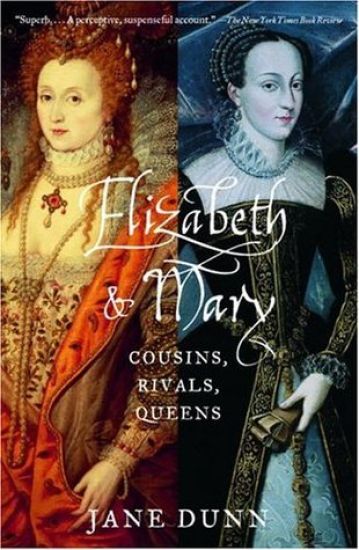
Elizabeth and Mary: Cousins, Rivals, Queens
A dual portrait of England's Queen Elizabeth I and her cousin--and rival--Mary Queen of Scots documents the complex relationship and dramatically different qualities of character, ideals, attitude toward womanliness, and reigns and discusses the power struggle between them and their diverse influence on British history. Reader's Guide available. Reprint. 60,000 first printing
Elizabeth I

Elizabeth I

Anne Somerset

ANCHOR BOOKS
2003
nidottu
In honor of the four hundredth anniversary of the death of Queen Elizabeth I, an detailed biography offers a close-up look at the political, social, and cultural forces that shaped Elizabethan England and Europe, the intrigue-laden Tudor court, and the woman who ruled in a male-dominated world. Reprint. 12,500 first printing.
Elizabeth I and Her Age
Succeeding to the English throne in 1558, she was the third woman monarch in the nation’s history. The role of English monarch—which involved being commander in chief, head of the English Church, and ruler of the royal court, with all its intrigues—was intended for a man ruling among men, and women rulers before Elizabeth had bestowed their power on husbands. Resisting this pattern, Elizabeth not only endured a monarch but flourished as a leader and cultural figurehead, inspiring the Golden Age of English literature, the Age of Discovery, and the Age of Reformation in English religious life. This Norton Critical Edition provides a diverse and extensive selection of authors (including the Queen herself) and carefully annotated works. The works are organized chronologically to cover the forty-four years of Elizabeth’s reign, allowing readers to explore not only the literary and aesthetic qualities that make these writings noteworthy but also the range of political, social, cultural, and historical concerns that prompted their creation. The editors have assembled a rich, thematically organized collection of commentary and criticism for Elizabeth I and Her Age. From Raphael Holinshed’s, Sir Francis Bacon’s, and Agnes Strickland’s early accounts of the Queen to Natalie Mears on Elizabeth I’s strategies for rule and Thomas Betteridge on the Queen in film, the twenty-five diverse views of Elizabeth I herein are sure to promote lively classroom discussion.
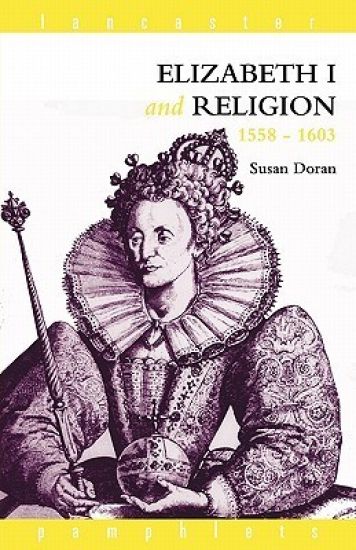
Elizabeth I and Religion 1558-1603
Susan Doran describes and analyses the process of the Elizabethan Reformation, placing it in an English and a European context. She examines the religious views and policies of the Queen, the making of the 1559 settlement and the resulting reforms. The changing beliefs of the English people are discussed, and the author charts the fortunes of both Puritanism and Catholicism. Finally she looks at the strengths and weaknesses of Elizabeth I as royal governor, and of the Church of England as a whole.
Elizabeth I and Foreign Policy, 1558-1603
At her accession in 1558 Elizabeth I inherited a troublesome legacy with a long history of wars against France and Scotland. This international situation was becoming a huge financial burden on the English crown and economy.Elizabeth I and Foreign Policy describes and assesses England's foreign policy during the second half of the sixteenth century. It includes coverage of Elizabeth's relations with foreign powers, the effect of Reformation on foreign affairs, Elizabeth's successs as a stateswoman and the war with Spain.
Elizabeth I

Elizabeth I

Judith M. Richards

Routledge
2011
nidottu
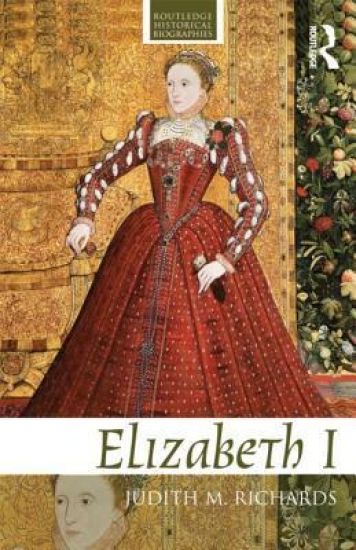
Elizabeth I was Queen of England for almost forty-five years. The daughter of Henry VIII and Ann Boleyn, as an infant she was briefly accepted as her father’s heir. After her mother was executed at her father’s command she was declared illegitimate and led a sometimes scandalous existence until her accession to the throne at the age of twenty-five. Elizabeth oversaw a vibrant age of exploration and literature and established herself, the "Virgin Queen", a national icon that lives on in the popular imagination. But Elizabeth was England’s second female monarch, and was greatly influenced by the experiences and mistakes of the reign of her half-sister, Mary I, before her. During her reign, Elizabeth had to perform a complicated balancing act in religious matters. As religious wars raged in Europe, Elizabeth herself a moderate Protestant, had to manage an inherited Catholic realm and the demands of zealous Protestants. The importance of such familiar features of Elizabeth’s reign as the presence in England of Mary Queen of Scots and her enduring efforts to take the throne, the Spanish armada, and the origins of English colonial expansion beyond the British archipelago all receive fresh attention in this engaging book. This new biography sheds light on Elizabeth’s early life, influences and on her personal religious beliefs as well as examining her reign, politics and reassesses Elizabeth’s reluctance to marry, a matter for which she has been much praised, but which is here judged one of the second queen regnant’s more problematic decisions. Judith M. Richards takes an objective and rounded view of Elizabeth’s whole life and provides the perfect introduction for students and general readers alike.
Elizabeth I

Elizabeth I

Judith M. Richards

Routledge
2011
sidottu
Elizabeth I was Queen of England for almost forty-five years. The daughter of Henry VIII and Ann Boleyn, as an infant she was briefly accepted as her father’s heir. After her mother was executed at her father’s command she was declared illegitimate and led a sometimes scandalous existence until her accession to the throne at the age of twenty-five. Elizabeth oversaw a vibrant age of exploration and literature and established herself, the "Virgin Queen", a national icon that lives on in the popular imagination. But Elizabeth was England’s second female monarch, and was greatly influenced by the experiences and mistakes of the reign of her half-sister, Mary I, before her. During her reign, Elizabeth had to perform a complicated balancing act in religious matters. As religious wars raged in Europe, Elizabeth herself a moderate Protestant, had to manage an inherited Catholic realm and the demands of zealous Protestants. The importance of such familiar features of Elizabeth’s reign as the presence in England of Mary Queen of Scots and her enduring efforts to take the throne, the Spanish armada, and the origins of English colonial expansion beyond the British archipelago all receive fresh attention in this engaging book. This new biography sheds light on Elizabeth’s early life, influences and on her personal religious beliefs as well as examining her reign, politics and reassesses Elizabeth’s reluctance to marry, a matter for which she has been much praised, but which is here judged one of the second queen regnant’s more problematic decisions. Judith M. Richards takes an objective and rounded view of Elizabeth’s whole life and provides the perfect introduction for students and general readers alike.
Elizabeth Barrett Browning
Elizabeth Barrett Browning (1806–61) was the foremost female poet of her day, to the extent that in 1850 she was mooted as a serious candidate for the Poet Laureate. With the publication in 2010 of a definitive five-volume edition of Elizabeth Barrett Browning’s poetry—the first full scholarly edition in a hundred years—this long-awaited collection on Barrett Browning’s work from Routledge’s acclaimed Critical Heritage series is both timely and desirable. After languishing for most of the twentieth century, critical study of Barrett has flourished over the past thirty years, focusing largely on her importance as both a female—and a political—poet.Particularly after her death in 1861, assessments of Barrett have been bound up with gender politics, and in order to partake fully in this—and other—debates, scholars and students need to be able to consult the key primary materials: the reviews and letters which are currently scattered widely across online databases, archives in Texas and Florence, and in anthologies of letters.This new two-volume set from Routledge brings together a careful selection from the vast number of reviews of Elizabeth Barrett and traces the intersecting issues of Barrett as both a female and a political poet. The collection is organized chronologically, drawing attention to particular trends and changes in Barrett’s reception. As well as her success in Britain, Barrett also became popular in America and Italy, and this Routledge Critical Heritage collection includes sections on her Italian and American reception, including newly translated essays currently available only in Italian.The collection also contains passages from letters to Elizabeth Barrett which comment on her poetry, including those from, among others, Richard Hengist Horne, Mary Russell Mitford, John Kenyon, and, of course, Robert Browning. With a comprehensive introduction which highlights trends and changes within Barrett’s reception history, as well as learned editorial commentary to each section, this new addition to Routledge’s Critical Heritage series is certain to be welcomed—particularly by scholars and advanced students of Literary and Victorian Studies—as an indispensable one-stop reference resource.
Elizabeth Anscombe, 4-vol. set
Elizabeth Anscombe (1919–2001) was one of the most important philosophers of the second half of the twentieth century, making major contributions in philosophy of mind, ethics, and metaphysics. She is particularly renowned for her work on intention and action. A pupil and friend of Ludwig Wittgenstein, Anscombe showed a deep understanding of his aims and methods, while being a bold and original thinker in her own right.Anscombe published two monographs and numerous articles in her lifetime, and left a considerable Nachlass. The monograph Intention (1957) has been hugely influential and has generated much discussion, as have such articles as ‘Modern Moral Philosophy’ and ‘The First Person’. (Indeed, ‘Modern Moral Philosophy’ has been credited with inspiring that renewal of interest in virtues and character which came to be embodied in a whole school of thought, often called ‘Virtue Theory’.) Profound, often difficult, sometimes provocative, her work is probably unique in modern philosophy for its combination of breadth and depth.Now, to allow researchers and advanced students to make better sense of Anscombe, her major works, and the developments it has encouraged, Routledge announces this new four-volume collection in its acclaimed Critical Assessments of Leading Philosophers series. Henceforward, Anscombe scholars and students will be able easily and rapidly to locate the best and most influential critical scholarship, work that is otherwise often inaccessible or scattered throughout a variety of specialist journals and books. With material gathered into one easy-to-use set, researchers and students can now spend more of their time with the key journal articles, book chapters, and other pieces, rather than on time-consuming (and sometimes fruitless) archival searches.Fully indexed and with a comprehensive introduction newly written by the expert editor, which places the collected material in its historical and intellectual context, Elizabeth Anscombe is an essential reference work and is destined to be valued as a vital research resource.
Elizabeth Gaskell and the English Provincial Novel
First published in 1975, this book places Elizabeth Gaskell amongst the major novelists of the nineteenth-century. It considers how she has sometimes been overlooked, or admired for very few of her works, or for reasons that are not in fact central to her art. W. A. Craik looks at Gaskell’s full-length novels with three main purposes: to analyse her development as a novelist, her achievements, and the nature of her very original work; to see what she owes to earlier novelists, what she learns from them, and how far she is an innovator; and to put her in relation to those other novelists who write on similar themes with comparable aims. This book establishes Elizabeth Gaskelll’s excellence in comparison with her peers by demonstrating how far she extended the possibilities of the novel, both in materials and techniques.
Elizabeth Gaskell and the English Provincial Novel
First published in 1975, this book places Elizabeth Gaskell amongst the major novelists of the nineteenth-century. It considers how she has sometimes been overlooked, or admired for very few of her works, or for reasons that are not in fact central to her art. W. A. Craik looks at Gaskell’s full-length novels with three main purposes: to analyse her development as a novelist, her achievements, and the nature of her very original work; to see what she owes to earlier novelists, what she learns from them, and how far she is an innovator; and to put her in relation to those other novelists who write on similar themes with comparable aims. This book establishes Elizabeth Gaskelll’s excellence in comparison with her peers by demonstrating how far she extended the possibilities of the novel, both in materials and techniques.
Elizabeth Stoddard & the Boundaries of Bourgeois Culture
Elizabeth Stoddard and the Boundaries of Bourgeois Culture traces Stoddard's emergence as a writer in the 1850s, her conflict-ridden relationships with the writers associated with the genteel tradition, and her efforts to negotiate the boundaries of Victorian culture in the United States. While in many ways a critic of nineteenth-century bourgeois culture, Stoddard remained in other ways an adherent; her work was not a rejection of bourgeois culture but a reworking of it, which suggests that bourgeois culture was not as monolithic as later critics believed. Recovering the richness and possibility that characterized early Victorian writing, this book examines the range of literary expression which had existed at mid-century, a period that boasts some of American literature's most iconoclastic voices.
Elizabeth's Jamestown Colony Diaries: Book One: Our Strange New Land
Award-winning author Pat Hermes tells the story of Elizabeth Barker, whose family sails from Plymouth, England, to Jamestown, Virginia, in 1609. This book helps to relaunch the My America series.In May 1607, 3 ships sailed up the James River in Virginia. In the riverbank marshes, they made land and hung the flag--England's flag--establishing the first permanent English colony in Jamestown, Virginia. In 1609, the first ship carrying women and children arrived. After 71 days at sea, nine-year-old Elizabeth Barker is thrilled to be on dry land. Lizzie keeps a journal for Caleb, her twin brother who stayed in England because of his weak lungs. In her buoyant entries, Lizzie tells of the abundant forests, trading with and learning from the Indians, and adventures with her new friends.