Kirjojen hintavertailu. Mukana 12 390 323 kirjaa ja 12 kauppaa.

Kirjahaku

Etsi kirjoja tekijän nimen, kirjan nimen tai ISBN:n perusteella.

1000 tulosta hakusanalla Ernst Rodenwaldt

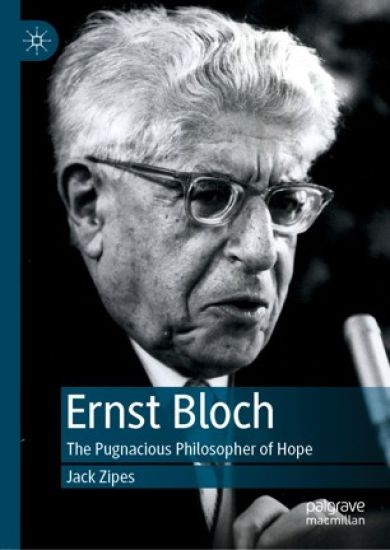
Ernst Bloch

Ernst Bloch

Jack Zipes

Springer Nature Switzerland AG
2019
sidottu
This book provides a comprehensive introduction to and overview of the life and philosophy of Ernst Bloch. Bloch has had a strange fate in the English-speaking world. He wrote his famous three-volume opus, The Principle of Hope, while living in exile in the United States from 1938 to 1940. It was first published, however, in East Germany in the 1950s after he had returned to Europe and became a professor of philosophy at the University of Leipzig. Gradually, his other numerous works became better known and widespread in Europe and scholars in the US and UK started to take note of his works. Yet, he has still remained a somewhat neglected figure in the humanities. While this book does not set out to entirely rectify this neglect, it does offer readers an introduction to Bloch’s works and the opportunity to understand more about the importance of utopian thought. Through an exploration of some of Bloch’s more controversial communist leanings and relationship to the Soviet Union, astudy of Bloch’s utopian quest, and even a comparison with J. R. R. Tolkien, this comprehensive study demonstrates just how interesting a figure Ernst Bloch really was, and how his philosophy of hope has laid the basis for secular humanism.
Ernst Bloch

Ernst Bloch

Jack Zipes

Springer Nature Switzerland AG
2020
nidottu
This book provides a comprehensive introduction to and overview of the life and philosophy of Ernst Bloch. Bloch has had a strange fate in the English-speaking world. He wrote his famous three-volume opus, The Principle of Hope, while living in exile in the United States from 1938 to 1940. It was first published, however, in East Germany in the 1950s after he had returned to Europe and became a professor of philosophy at the University of Leipzig. Gradually, his other numerous works became better known and widespread in Europe and scholars in the US and UK started to take note of his works. Yet, he has still remained a somewhat neglected figure in the humanities. While this book does not set out to entirely rectify this neglect, it does offer readers an introduction to Bloch’s works and the opportunity to understand more about the importance of utopian thought. Through an exploration of some of Bloch’s more controversial communist leanings and relationship to the Soviet Union, astudy of Bloch’s utopian quest, and even a comparison with J. R. R. Tolkien, this comprehensive study demonstrates just how interesting a figure Ernst Bloch really was, and how his philosophy of hope has laid the basis for secular humanism.
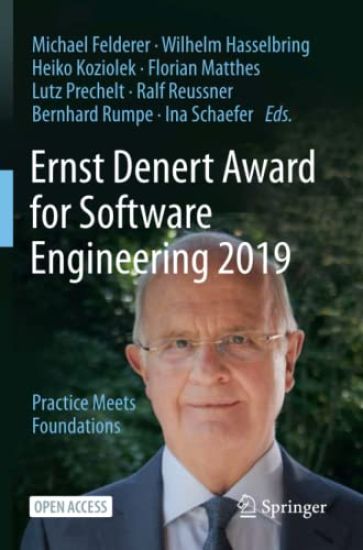
Ernst Denert Award for Software Engineering 2019
This open access book provides an overview of the dissertations of the five nominees for the Ernst Denert Award for Software Engineering in 2019. The prize, kindly sponsored by the Gerlind & Ernst Denert Stiftung, is awarded for excellent work within the discipline of Software Engineering, which includes methods, tools and procedures for better and efficient development of high quality software. An essential requirement for the nominated work is its applicability and usability in industrial practice. The book contains five papers describing the works by Sebastian Baltes (U Trier) on Software Developers’Work Habits and Expertise, Timo Greifenberg’s thesis on Artefaktbasierte Analyse modellgetriebener Softwareentwicklungsprojekte, Marco Konersmann’s (U Duisburg-Essen) work on Explicitly Integrated Architecture, Marija Selakovic’s (TU Darmstadt) research about Actionable Program Analyses for Improving Software Performance, and Johannes Späth’s (Paderborn U)thesis on Synchronized Pushdown Systems for Pointer and Data-Flow Analysis – which actually won the award. The chapters describe key findings of the respective works, show their relevance and applicability to practice and industrial software engineering projects, and provide additional information and findings that have only been discovered afterwards, e.g. when applying the results in industry. This way, the book is not only interesting to other researchers, but also to industrial software professionals who would like to learn about the application of state-of-the-art methods in their daily work.
Ernst Denert Award for Software Engineering 2019
Ernst Denert Software Engineering Awards 2019.- Software Engineering.- Applications of Synchronized Pushdown Systems.- Software Developers' Work Habits and Expertise: Empirical Studies on Sketching, Code Plagiarism, and Expertise Development.- Applied Artifact-Based Analysis for Architecture Consistency Checking.- Same but Different: Consistently Developing and Evolving Software Architecture Models and Their Implementation.- Actionable Program Analyses for Improving Software Performance.
Ernst Denert Award for Software Engineering 2020
This open access book provides an overview of the dissertations of the eleven nominees for the Ernst Denert Award for Software Engineering in 2020. The prize, kindly sponsored by the Gerlind & Ernst Denert Stiftung, is awarded for excellent work within the discipline of Software Engineering, which includes methods, tools and procedures for better and efficient development of high quality software. An essential requirement for the nominated work is its applicability and usability in industrial practice.The book contains eleven papers that describe the works by Jonathan Brachthäuser (EPFL Lausanne) entitled What You See Is What You Get: Practical Effect Handlers in Capability-Passing Style, Mojdeh Golagha’s (Fortiss, Munich) thesis How to Effectively Reduce Failure Analysis Time?, Nikolay Harutyunyan’s (FAU Erlangen-Nürnberg) work on Open Source Software Governance, Dominic Henze’s (TU Munich) research about Dynamically Scalable Fog Architectures, Anne Hess’s (Fraunhofer IESE, Kaiserslautern) work on Crossing Disciplinary Borders to Improve Requirements Communication, Istvan Koren’s (RWTH Aachen U) thesis DevOpsUse: A Community-Oriented Methodology for Societal Software Engineering, Yannic Noller’s (NU Singapore) work on Hybrid Differential Software Testing, Dominic Steinhofel’s (TU Darmstadt) thesis entitled Ever Change a Running System: Structured Software Reengineering Using Automatically Proven-Correct Transformation Rules, Peter Wägemann’s (FAU Erlangen-Nürnberg) work Static Worst-Case Analyses and Their Validation Techniques for Safety-Critical Systems, Michael von Wenckstern’s (RWTH Aachen U) research on Improving the Model-Based Systems Engineering Process, and Franz Zieris’s (FU Berlin) thesis on Understanding How Pair Programming Actually Works in Industry: Mechanisms, Patterns, and Dynamics – which actually won the award. The chapters describe key findings of the respective works, show their relevance and applicability to practice and industrial software engineering projects, and provide additional information and findings that have only been discovered afterwards, e.g. when applying the results in industry. This way, the book is not only interesting to other researchers, but also to industrial software professionals who would like to learn about the application of state-of-the-art methods in their daily work.
Ernst Denert Award for Software Engineering 2020
This open access book provides an overview of the dissertations of the eleven nominees for the Ernst Denert Award for Software Engineering in 2020. The prize, kindly sponsored by the Gerlind & Ernst Denert Stiftung, is awarded for excellent work within the discipline of Software Engineering, which includes methods, tools and procedures for better and efficient development of high quality software. An essential requirement for the nominated work is its applicability and usability in industrial practice.The book contains eleven papers that describe the works by Jonathan Brachthäuser (EPFL Lausanne) entitled What You See Is What You Get: Practical Effect Handlers in Capability-Passing Style, Mojdeh Golagha’s (Fortiss, Munich) thesis How to Effectively Reduce Failure Analysis Time?, Nikolay Harutyunyan’s (FAU Erlangen-Nürnberg) work on Open Source Software Governance, Dominic Henze’s (TU Munich) research about Dynamically Scalable Fog Architectures, Anne Hess’s (Fraunhofer IESE, Kaiserslautern) work on Crossing Disciplinary Borders to Improve Requirements Communication, Istvan Koren’s (RWTH Aachen U) thesis DevOpsUse: A Community-Oriented Methodology for Societal Software Engineering, Yannic Noller’s (NU Singapore) work on Hybrid Differential Software Testing, Dominic Steinhofel’s (TU Darmstadt) thesis entitled Ever Change a Running System: Structured Software Reengineering Using Automatically Proven-Correct Transformation Rules, Peter Wägemann’s (FAU Erlangen-Nürnberg) work Static Worst-Case Analyses and Their Validation Techniques for Safety-Critical Systems, Michael von Wenckstern’s (RWTH Aachen U) research on Improving the Model-Based Systems Engineering Process, and Franz Zieris’s (FU Berlin) thesis on Understanding How Pair Programming Actually Works in Industry: Mechanisms, Patterns, and Dynamics – which actually won the award. The chapters describe key findings of the respective works, show their relevance and applicability to practice and industrial software engineering projects, and provide additional information and findings that have only been discovered afterwards, e.g. when applying the results in industry. This way, the book is not only interesting to other researchers, but also to industrial software professionals who would like to learn about the application of state-of-the-art methods in their daily work.
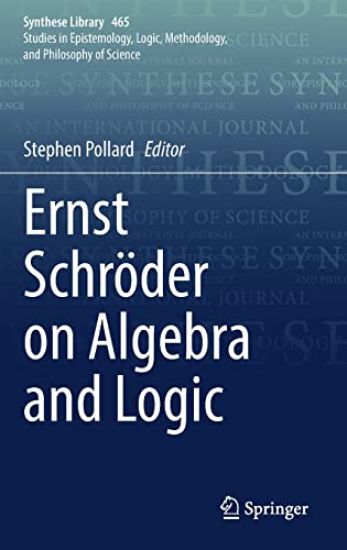
Ernst Schro¨der on Algebra and Logic

Ernst Schro¨der on Algebra and Logic

Springer International Publishing AG
2022
sidottu
This volume offers English translations of three early works by Ernst Schröder (1841-1902), a mathematician and logician whose philosophical ruminations and pathbreaking contributions to algebraic logic attracted the admiration and ire of figures such as Dedekind, Frege, Husserl, and C. S. Peirce. Today he still engages the sympathetic interest of logicians and philosophers. The works translated record Schröder’s journey out of algebra into algebraic logic and document his transformation of George Boole’s opaque and unwieldy logical calculus into what we now recognize as Boolean algebra. Readers interested in algebraic logic and abstract algebra can look forward to a tour of the early history of those fields with a guide who was exceptionally thorough, unfailingly honest, and deeply reflective.
Ernst Schro¨der on Algebra and Logic

Ernst Schro¨der on Algebra and Logic

Springer International Publishing AG
2023
nidottu
This volume offers English translations of three early works by Ernst Schröder (1841-1902), a mathematician and logician whose philosophical ruminations and pathbreaking contributions to algebraic logic attracted the admiration and ire of figures such as Dedekind, Frege, Husserl, and C. S. Peirce. Today he still engages the sympathetic interest of logicians and philosophers. The works translated record Schröder’s journey out of algebra into algebraic logic and document his transformation of George Boole’s opaque and unwieldy logical calculus into what we now recognize as Boolean algebra. Readers interested in algebraic logic and abstract algebra can look forward to a tour of the early history of those fields with a guide who was exceptionally thorough, unfailingly honest, and deeply reflective.
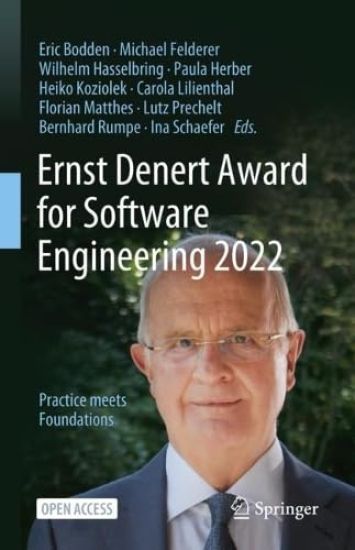
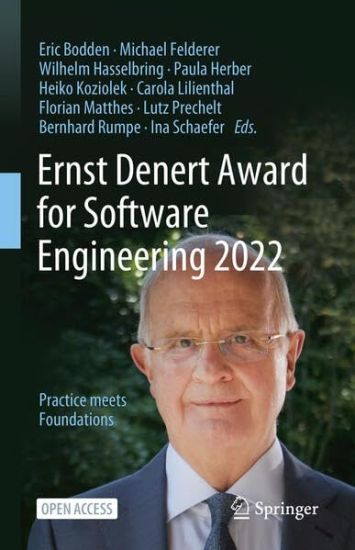
Ernst Denert Award for Software Engineering 2022

Ernst Denert Award for Software Engineering 2022

Springer International Publishing AG
2024
sidottu
This open access book provides an overview of the dissertations of the five nominees for the Ernst Denert Award for Software Engineering in 2022. The prize, kindly sponsored by the Gerlind & Ernst Denert Stiftung, is awarded for excellent work within the discipline of Software Engineering, which includes methods, tools and procedures for better and efficient development of high quality software. An essential requirement for the nominated work is its applicability and usability in industrial practice. The book contains five papers that describe the works by Jannik Fischbach (Netlight Consulting GmbH and fortiss GmbH), who won the award, entitled Conditional Statements in Requirements Artifacts: Logical Interpretation, Use Cases for Automated Software Engineering, and Fine-Grained Extraction, Christian Kirchhof's (RWTH Aachen University) From Design to Reality: An Overview of the MontiThings Ecosystem for Model-Driven IoT Applications, Sven Peldszus's (Ruhr University Bochum) research about Security Compliance in Model-driven Development of Software Systems in Presence of Long-Term Evolution and Variants, Florian Rademacher's (RWTH Aachen University) work on Model-Driven Engineering of Microservice Architectures, and Alexander Trautsch's (University of Passau) Usefulness of Automatic Static Analysis Tools: Evidence from Four Case Studies. The chapters describe key findings of the respective works, show their relevance and applicability to practice and industrial software engineering projects, and provide additional information and findings that have only been discovered afterwards, e.g. when applying the results in industry. This way, the book is not only interesting to other researchers, but also to industrial software professionals who would like to learn about the application of state-of-the-art methods in their daily work.
Ernst Denert Award for Software Engineering 2022

Ernst Denert Award for Software Engineering 2022

Springer International Publishing AG
2024
nidottu
This open access book provides an overview of the dissertations of the five nominees for the Ernst Denert Award for Software Engineering in 2022. The prize, kindly sponsored by the Gerlind & Ernst Denert Stiftung, is awarded for excellent work within the discipline of Software Engineering, which includes methods, tools and procedures for better and efficient development of high quality software. An essential requirement for the nominated work is its applicability and usability in industrial practice. The book contains five papers that describe the works by Jannik Fischbach (Netlight Consulting GmbH and fortiss GmbH), who won the award, entitled Conditional Statements in Requirements Artifacts: Logical Interpretation, Use Cases for Automated Software Engineering, and Fine-Grained Extraction, Christian Kirchhof's (RWTH Aachen University) From Design to Reality: An Overview of the MontiThings Ecosystem for Model-Driven IoT Applications, Sven Peldszus's (Ruhr University Bochum) research about Security Compliance in Model-driven Development of Software Systems in Presence of Long-Term Evolution and Variants, Florian Rademacher's (RWTH Aachen University) work on Model-Driven Engineering of Microservice Architectures, and Alexander Trautsch's (University of Passau) Usefulness of Automatic Static Analysis Tools: Evidence from Four Case Studies. The chapters describe key findings of the respective works, show their relevance and applicability to practice and industrial software engineering projects, and provide additional information and findings that have only been discovered afterwards, e.g. when applying the results in industry. This way, the book is not only interesting to other researchers, but also to industrial software professionals who would like to learn about the application of state-of-the-art methods in their daily work.
Ernst Specker Selecta

Ernst Specker Selecta

Gerhard Jäger; Hans Läuchli; Bruno Scarpellini; Volker Strassen

Springer Basel
2011
nidottu
Ernst Specker has made decisive contributions towards shaping direc­ tions in topology, algebra, mathematical logic, combinatorics and algorith­ mic over the last 40 years. We have derived great pleasure from marking his seventieth birthday by editing the majority of his scientific publications, and thus making his work available in a unified form to the mathematical community. In order to convey an idea of the richness of his personality, we have also included one of his sermons. Of course, the publication of these Selecta can pay tribute only to the writings of Ernst Specker. It cannot adequately express his originality and wisdom as a person nor the fascination he exercises over his students, colleagues and friends. We can do no better than to quote from Hao Wang in the 'Festschrift' Logic and Algorithmic I: Specker was ill for an extended period before completing his formal education. He had the leisure to think over many things. This experi­ ence may have helped cultivating his superiority as a person. In terms of traditional Chinese categories, I would say there is a taoist trait in him in the sense of being more detached, less competitive, and more under­ standing. I believe he has a better sense of what is important in life and arranges his life better than most logicians. We are grateful to Birkhauser Verlag for the production of this Selecta volume. Our special thanks go to Jonas Meon for sharing with us his intimate knowledge of his friend Ernst Specker.
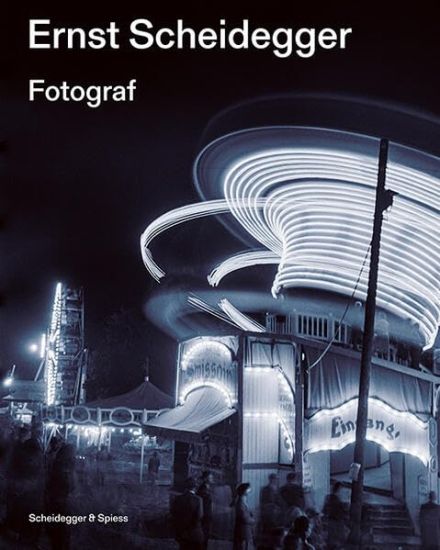
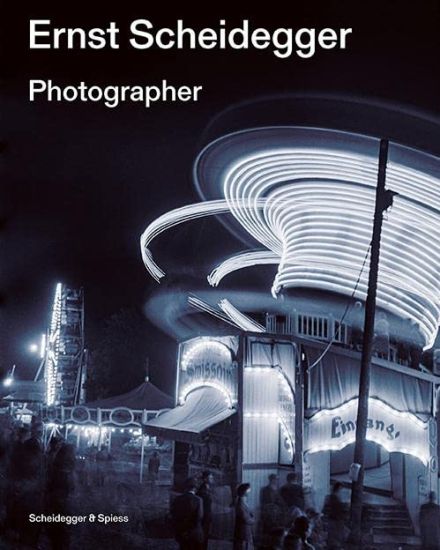
Ernst Scheidegger

Ernst Scheidegger

SCHEIDEGGER UND SPIESS AG, VERLAG
2023
sidottu
Ernst Scheidegger (1923–2016) ranks among Switzerland’s most distinguished 20th-century photographers. His portraits of artists made his name internationally. Scheidegger’s photographs of Alberto Giacometti at his Paris studio or in his native Val Bregaglia in Switzerland continue to shape the public image of this celebrated artist today. Marking the centenary of Ernst Scheidegger, who was also the founder of the Scheidegger & Spiess publishing house, this book offers a fresh and contemporary look at his multi-faceted body of work. It is based on an extensive reappraisal of his estate and features a concise selection of iconic and lesser-known images that demonstrated Scheidegger’s prowess as a portraitist. More importantly, however, the volume enables an encounter with Scheidegger’s hitherto little-published early work and thus undertakes a reassessment of his entire oeuvre. Essays by Tobia Bezzola, art historian and director of the MASI Lugano, Alessa Widmer, curator and artistic director of Photo Basel art fair, and Helen Grob, Scheidegger’s long-time companion, trace his career and self-concept as a photographer. A biography and brief texts on a selection of key examples of Scheidegger’s art round off this beautifully designed photo book.
Ernst Cassirer - Ein Philosoph Der Europaeischen Moderne
Ernst Cassirer wird in diesem Buch als ein Denker vorgestellt, der geistig in der philosophischen Tradition wurzelt und sich gleichzeitig den Herausforderungen duch die europaische Moderne stellt: dem Festschreiben eines vor allem durch die Wissenschaften beglaubigten universalen Vernunftanspruchs auf der einen und der Anerkennung einer Vielfalt kultureller Welten auf der anderen Seite. UEber die Analyse einiger Grundbegriffe des Cassirerschen Entwurfs einer "Philosophie der symbolischen Formen" - in die auch die Werke aus dem Nachlass Cassirers miteinbezogen werden - versucht der Autor, die Spannungen sichtbar zu machen, die diesem Entwurf die Modernitat geben und ihn offen machen fur eine Weiterentwicklung. "Die Vielfalt der symbolischen Welten und die Einheit des Geistes", "der Werkbegriff im Denken Cassirers", "Ausdruck und symbolische Pragnanz", "die ethische Dimension des symbolischen Handelns", "das Denken der Renaissance und die Wurzeln der Moderne", sind die Titel, unter denen - von einer bestimmten Seite aus - jeweils ein Blick auf das Ganze des Cassirerschen Denksn gewonnen werden soll. Dass dieses Ganze kein geschlossenes "System" sein, sondern Wege zum Verstehen unserer geistigen und kulturellen SDituation freilegen will, zeigt der Autor in einer abschliessenden Analyse, die auch die Bedeutung des Cassirerschen Entwurfs fur die philosophische Diskussion der Gegenwart darzulegen versucht.
Ernst Jünger

Ernst Jünger

De Gruyter
2004
sidottu
Ernst Jünger (1895-1998) ist ein bedeutender Repräsentant der deutschen Geistesgeschichte des 20. Jahrhunderts. Sein umfangreiches Werk polarisiert bis heute Literaturkritik und Öffentlichkeit, insbesondere wegen des z. T. mit Gewalt verherrlichenden Tendenzen beschworenen, aus seiner Nietzsche-Rezeption erwachsenen 'heroischen Nihilismus' des Frühwerks. Gleichzeitig machen ihn seine Sprach- und Beobachtungskunst, u. a. in seinen Reiseberichten und Tagebüchern, zu einem der wichtigsten Vertreter der neueren deutschen Literatur. Der Band vereint in kompendienhafter Geschlossenheit Analysen zu den wichtigsten Aspekten des Werks, u. a. zu Jüngers Kritik an der Moderne und seinem Konzept eines ästhetischen Eskapismus, zu den Einflüssen von Politik, Literatur, Mythos und Psychoanalyse auf seine Erzählungen und Romane sowie zur Stellung des Schriftstellers im Denk- und Literatursystem der Moderne. Beiträger sind u. a. Jünger-Kenner wie Josef Fürnkäs, Helmut Lethen, Hans-Harald Müller und Karl Prümm. Der Band stellt eine facettenreiche Gesamtschau der aktuellen Jünger-Forschung dar und perspektiviert das wirkmächtige Werk des bedeutenden Schriftstellers mit wissenschaftlicher Sachlichkeit neu.
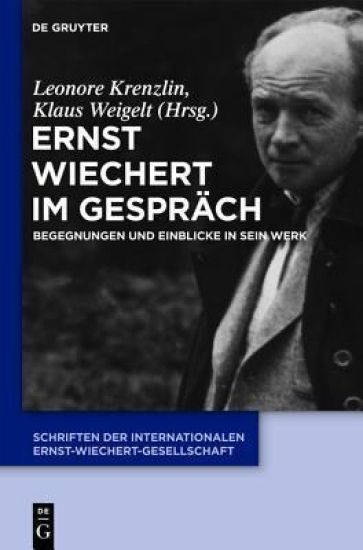
Ernst Wiechert im Gespräch
Der masurische Schriftsteller Ernst Wiechert (1887-1950), den sein Auftreten gegen Rechtlosigkeit und Terror 1938 ins Konzentrationslager brachte, ist als Verfasser des KZ-Berichts „Der Totenwald“ bekannt. Im 20. Jh. zählte er zu den beliebtesten Romanciers und erzielte Höchstauflagen. Die Beiträge des Bandes erörtern Aspekte seiner Biographie und seines Werks, das die Zeitstimmungen und Zeiterfahrungen des vergangenen Jahrhunderts spiegelt.
Ernst Curtius' Vorlesung "Griechische Kunstgeschichte"
Die Vorlage der Griechischen Kunstgeschichte von Ernst Curtius in der Vorlesungsmitschrift seines Schulers Wilhelm Gurlitt, spater Ordinarius fur Archaologie in Graz, erganzt durch die Mitschrift Eduard Hillers, spater Ordinarius fur Klassische Philologie in Halle/S., aus dem Wintersemester 1864/65 in Gottingen erschliet erstmalig das Bild eines der einflussreichsten deutschen Altertumswissenschaftlers des 19. Jahrhunderts von der Kunst der Antike. Die Mitschrift, von S.-G. Groschel transkribiert und mit einem Anmerkungsapparat versehen, zeichnet eine von padagogischem und patriotischem Impetus getragene, noch stark philologisch gepragte, in eine Systematik und einen geschichtlichen Teil gegliederte Darstellung griechischer und romischer Kunst, deren Entwicklung beispielgebend Athen gepragt habe. H. Wredes Untersuchungen der Geschichte der Archaologievorlesung als Nukleus zur Genese der Forschungsuniversitat, zu Curtius' Person, seiner politischen nationalliberalen Einstellung und seinem Philhellenismus, zu seinen Studenten Wilhelm Gurlitt und Eduard Hiller sowie die ausfuhrlicheErklarung der Vorlesung dienen nicht nur als notwendige Hintergrundinformation, sondern belegen die Bedeutung der Griechischen Kunstgeschichte fur Zeit- undArchaologiegeschichte.