

Kirjahaku
Etsi kirjoja tekijän nimen, kirjan nimen tai ISBN:n perusteella.
1000 tulosta hakusanalla Evripides
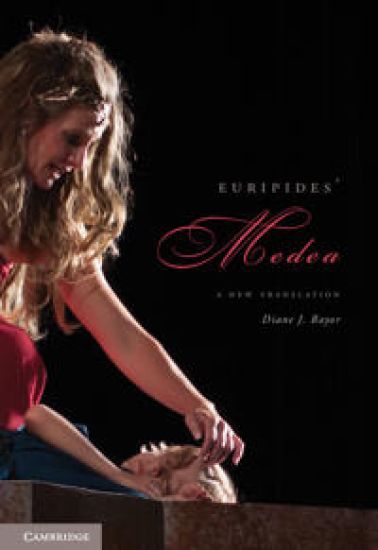
Euripides' Medea
Cambridge University Press
2013
sidottu
Euripides' Medea comes alive in this new translation that will be useful for both academic study and stage production. Diane J. Rayor's accurate yet accessible translation reflects the play's inherent theatricality and vibrant poetry. The book includes an analytical introduction and comprehensive notes, and an essay on directing Medea by stage director Karen Libman. The play begins after Medea, a princess in her own land, has sacrificed everything for Jason: she helped him in his quest for the Golden Fleece, eloped with him to Greece, and bore him sons. When Jason breaks his oath to her and betrays her by marrying the king's daughter - his ticket to the throne - Medea contemplates the ultimate retribution. What happens when words deceive and those you trust most do not mean what they say? Euripides' most enduring Greek tragedy is a fascinating and disturbing story of how far a woman will go to take revenge in a man's world.
Euripides: Iphigenia in Tauris
Cambridge University Press
2023
sidottu
Euripides' Iphigeneia among the Taurians has been a popular and influential text from antiquity onwards. It is a suspenseful drama set on the Black Sea coast in what is now Crimea, which explores themes of family loyalty, Greeks and barbarians, and the nature of the gods. The plot combines an unrecognised meeting between Iphigeneia, now a priestess of Artemis among the Taurians, and her brother Orestes, who with his friend Pylades has been captured and brought to her for sacrifice, with an exciting escape attempt for all three, ultimately brought about by divine intervention. This edition includes a full Introduction to the literary and production aspects of the play, while the Commentary elucidates problems of language as well as interpretation. These combine to make the play fully accessible to intermediate-level undergraduates and graduate students wishing to read it in the original Greek.
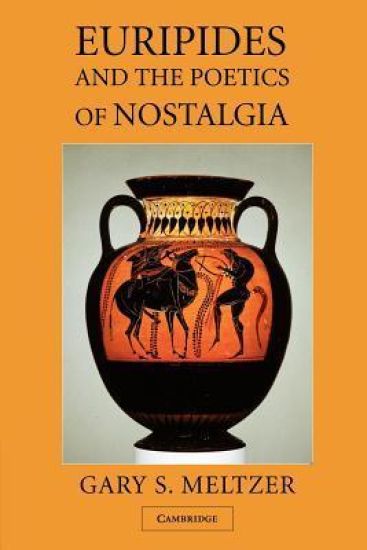
Branded by critics from Aristophanes to Nietzsche as sophistic, iconoclastic, and sensationalistic, Euripides has long been held responsible for the demise of Greek tragedy. Despite this reputation, his drama has a fundamentally conservative character. It conveys nostalgia for an idealized age that still respected the gods and traditional codes of conduct. Using deconstructionist and feminist theory, this book investigates the theme of the lost voice of truth and justice in four Euripidean tragedies. The plays' unstable mix of longing for a transcendent voice of truth and skeptical analysis not only epitomizes the discursive practice of Euripides' era but also speaks to our postmodern condition. The book sheds light on the source of the playwright's tragic power and enduring appeal, revealing the surprising relevance of his works for our own day.

Euripides: Iphigeneia at Aulis
Holly Eckhardt; John Harrison
Cambridge University Press
2012
pokkari
Treating ancient plays as living drama. Classical Greek drama is brought vividly to life in this series of new translations. Students are encouraged to engage with the text through detailed commentaries, including suggestions for discussion and analysis. Numerous practical questions stimulate ideas on staging and encourage students to explore the play's dramatic qualities. Iphigeneia at Aulis is suitable for students of Classical Civilisation and Drama. Features include a full synopsis of the play, commentary alongside translation for easy reference and a comprehensive introduction to the Greek Theatre. Iphigeneia at Aulis is aimed at A-level and undergraduate students in the UK, and college students in North America.
Euripides: Iphigenia in Tauris
Cambridge University Press
2023
pokkari
Euripides' Iphigeneia among the Taurians has been a popular and influential text from antiquity onwards. It is a suspenseful drama set on the Black Sea coast in what is now Crimea, which explores themes of family loyalty, Greeks and barbarians, and the nature of the gods. The plot combines an unrecognised meeting between Iphigeneia, now a priestess of Artemis among the Taurians, and her brother Orestes, who with his friend Pylades has been captured and brought to her for sacrifice, with an exciting escape attempt for all three, ultimately brought about by divine intervention. This edition includes a full Introduction to the literary and production aspects of the play, while the Commentary elucidates problems of language as well as interpretation. These combine to make the play fully accessible to intermediate-level undergraduates and graduate students wishing to read it in the original Greek.

Euripides' Medea
Cambridge University Press
2013
pokkari
Euripides' Medea comes alive in this new translation that will be useful for both academic study and stage production. Diane J. Rayor's accurate yet accessible translation reflects the play's inherent theatricality and vibrant poetry. The book includes an analytical introduction and comprehensive notes, and an essay on directing Medea by stage director Karen Libman. The play begins after Medea, a princess in her own land, has sacrificed everything for Jason: she helped him in his quest for the Golden Fleece, eloped with him to Greece, and bore him sons. When Jason breaks his oath to her and betrays her by marrying the king's daughter - his ticket to the throne - Medea contemplates the ultimate retribution. What happens when words deceive and those you trust most do not mean what they say? Euripides' most enduring Greek tragedy is a fascinating and disturbing story of how far a woman will go to take revenge in a man's world.
Euripides
Cambridge University Press
2010
pokkari
Frederick Apthorp Paley (1815–1888) published Volume 1 of his English commentary on Euripides in 1857. It contains the Greek text of seven of Euripides' most popular plays: Rhesus, Medea, Hippolytus, Alcestis, Heraclidae, Supplices and Troades, each with an introductory essay. Paley's detailed commentary is given at the foot of each page of Greek text. It discusses Euripides' language and style, explaining difficult grammatical structures, syntax and vocabulary; poetic form and Euripides' innovative approach to composing tragedy; textual variation between manuscripts; the historical and literary context of each play; and their reception history. Paley's work greatly influenced Euripidean scholarship: for over a century it was a widely used teaching tool in schools and universities. An outstanding piece of classical scholarship and a key text in the history of Euripidean interpretation, it deserves continued consideration by future generations of scholars and students.
Euripides
Cambridge University Press
2010
pokkari
Frederick Apthorp Paley (1815–1888) published Volume 2 of his English commentary on Euripides in 1858. It contains the Greek text of Euripides' plays Ion, Helena, Andromache, Electra, Bacchae, and Hecuba, each with an introductory essay. Paley's detailed commentary is given at the foot of each page of Greek text. It discusses Euripides' language and style, explaining difficult grammatical structures, syntax and vocabulary; poetic form and Euripides' innovative approach to composing tragedy; textual variation between manuscripts and critical editions; the historical and literary context of each play; and their reception history. Paley's work greatly influenced Euripidean scholarship: for over a century it was a widely used teaching tool in schools and universities. An outstanding piece of classical scholarship and a key text in the history of Euripidean interpretation, it deserves continued consideration by future generations of scholars and students.
Euripides
Cambridge University Press
2010
pokkari
Frederick Apthorp Paley (1815–1888) published Volume 3 of his English commentary on Euripides in 1860. It contains the Greek text of Euripides' plays Hercules Furens, Phoenissae, Orestes, Iphigenia in Tauris, Iphigenia in Aulide, and Cyclops, each with an introductory essay. Paley's detailed commentary is given at the foot of each page of Greek text. It discusses Euripides' language and style, explaining difficult grammatical structures, syntax and vocabulary; poetic form and Euripides' innovative approach to composing tragedy; textual variation between manuscripts; the historical and literary context of each play; and their reception history. Paley's work greatly influenced Euripidean scholarship: for over a century it was a widely used teaching tool in schools and universities. An outstanding piece of classical scholarship and a key text in the history of Euripidean interpretation, it deserves continued consideration by future generations of scholars and students.
Euripides, Herakles
Cambridge University Press
2010
pokkari
Wilamowitz-Moellendorff's edition of Herakles was published in 1895. The renowned German philologist delivers a detailed reading and translation of Euripides' classic tragedy, and also provides the reader with an introduction to the context in which the tragedy unfolds. Volume 1 is divided into three parts. The first is a thorough account of the origins of the story and a characterisation of the figure of Herakles as he first appears in Greek mythology. Herakles belongs to the Dorian tribe and deeply embedded in their self-understanding is, according to Moellendorff, the belief in the divineness of the righteous Dorian man. In the second part of this volume Moellendorff interprets Euripides' version of the Heraclian figure and explains where and how this version of the tragedy differs from the original mythological framework. Part 3 gives Euripides' Greek text and Moellendorff's translation of the drama into German.

Euripides, Herakles
Cambridge University Press
2010
pokkari
Wilamowitz-Moellendorff's edition of Herakles was published in 1895. The renowned German philologist delivers a detailed reading and translation of Euripides' classic tragedy, and also provides the reader with an introduction to the context in which the tragedy unfolds. Volume 2 is devoted to Moellendorf's commentary on the etymological, historical and dramatic details of Euripides' interpretation of Herakles' fate. He reminds the reader that Attic drama was always written for performance on a specific occasion, namely at the Feast of Dionysus, and in a particular place, namely on sacred ground. In order to appreciate the fullness of the drama the modern reader or spectator is therefore required to make full use of the imagination in order to appreciate the religious context and content of the play.
Euripides: Cyclops
Cambridge University Press
2020
pokkari
Euripides' Cyclops is the only example of Attic satyr-drama which survives intact. It is a brilliant dramatisation of the famous story from Homer's Odyssey of how Odysseus blinded the Cyclops after making him drunk. The play has much to teach us, not just about satyr-drama, but also about the reception and adaptation of Homer in classical Athens; the brutal savagery of the Homeric monster is here replaced by an ironised presentation of Athenian social custom. Problems of syntax, metre and language are fully explained, and there is a sophisticated literary discussion of the play. This edition will be of interest to advanced undergraduates and graduate students studying Greek literature, as well as to scholars.
Euripides: Bacchae
Cambridge University Press
2024
sidottu
Euripides' Bacchae is one of the most widely read and performed Greek tragedies. A story of implacable divine vengeance, it skilfully transforms earlier currents of literature and myth, and its formative influence on modern ideas of Greek tragedy and religion is unparalleled. This up-to-date edition offers a detailed literary and cultural analysis. The wide-ranging Introduction discusses such issues as the psychological and anthropological aspects of Dionysiac ritual, the god's ability to blur gender boundaries, his particular connection to dramatic role-playing, and the interaction of belief and practice in Greek religion. The Commentary's notes on language and style are intended to make the play fully accessible to students of Greek at all levels, while the edition as a whole is designed for anyone with an interest in Greek tragedy or cultural history.
Euripides: Bacchae
Cambridge University Press
2024
pokkari
Euripides' Bacchae is one of the most widely read and performed Greek tragedies. A story of implacable divine vengeance, it skilfully transforms earlier currents of literature and myth, and its formative influence on modern ideas of Greek tragedy and religion is unparalleled. This up-to-date edition offers a detailed literary and cultural analysis. The wide-ranging Introduction discusses such issues as the psychological and anthropological aspects of Dionysiac ritual, the god's ability to blur gender boundaries, his particular connection to dramatic role-playing, and the interaction of belief and practice in Greek religion. The Commentary's notes on language and style are intended to make the play fully accessible to students of Greek at all levels, while the edition as a whole is designed for anyone with an interest in Greek tragedy or cultural history.




The Alcestis And Hippolytus Of Euripides (1846)
Euripides; G. Dindorf
KESSINGER PUBLISHING, LLC
2009
pokkari