Kirjojen hintavertailu. Mukana 11 417 646 kirjaa ja 12 kauppaa.

Kirjahaku

Etsi kirjoja tekijän nimen, kirjan nimen tai ISBN:n perusteella.

1000 tulosta hakusanalla Fergus Mason

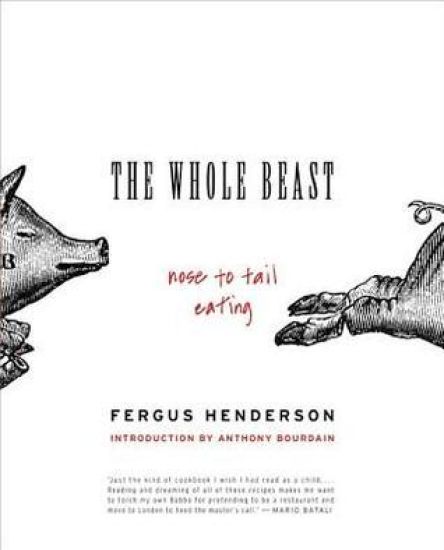
The Whole Beast: Nose to Tail Eating

The Whole Beast: Nose to Tail Eating

Fergus Henderson

Ecco Press
2004
nidottu
The Whole Beast: Nose to Tail Eating is a certified "foodie" classic. In it, Fergus Henderson -- whose London restaurant, St. John, is a world-renowned destination for people who love to eat "on the wild side" -- presents the recipes that have marked him out as one of the most innovative, yet traditional, chefs. Here are recipes that hark back to a strong rural tradition of delicious thrift, and that literally represent Henderson's motto, "Nose to Tail Eating" -- be they Pig's Trotter Stuffed with Potato, Rabbit Wrapped in Fennel and Bacon, or his signature dish of Roast Bone Marrow and Parsley Salad. For those of a less carnivorous bent, there are also splendid dishes such as Deviled Crab; Smoked Haddock, Mustard, and Saffron; Green Beans, Shallots, Garlic, and Anchovies; and to keep the sweetest tooth happy, there are gloriously satisfying puddings, notably the St. John Eccles Cakes, and a very nearly perfect Chocolate Ice Cream.
Washington: How Slaves, Idealists, and Scoundrels Created the Nation's Capital
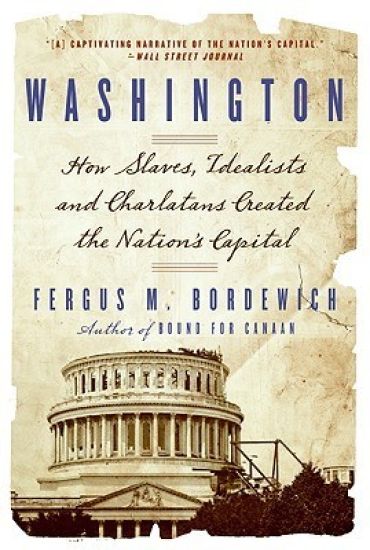
Washington, D.C., is home to the most influential power brokers in the world. But how did we come to call D.C.--a place once described as a mere swamp "producing nothing except myriads of toads and frogs (of enormous size)," and which was strategically indefensible, captive to the politics of slavery, and the target of unbridled land speculation--our nation's capital? In Washington, acclaimed, award-winning author Fergus M. Bordewich turns to the backroom deal-making and shifting alliances among our Founding Fathers to find out, and in doing so pulls back the curtain on the lives of the slaves who actually built the city. The answers revealed in this eye-opening book are not only surprising but also illuminate a story of unexpected triumph over a multitude of political and financial obstacles, including fraudulent real estate deals, overextended financiers, and management more apt for a banana republic than an emerging world power.In a page-turning work that reveals the hidden and unsavory side to the nation's beginnings, Bordewich once again brings his novelist's eye to a little-known chapter of American history.
The Complete Nose to Tail

The Complete Nose to Tail

Fergus Henderson

ECCO Press
2013
sidottu
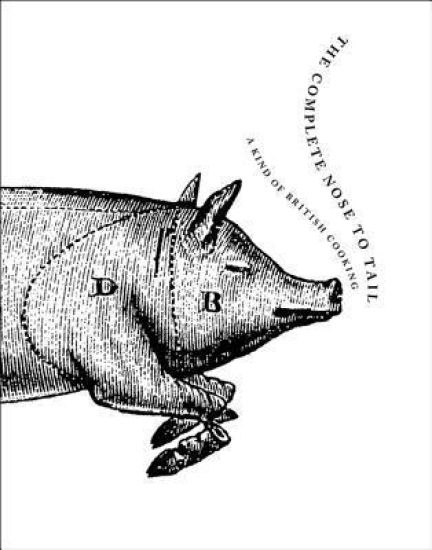
"It would be disingenuous to the animal not to make the most of the whole beast; there is a set of delights, textural and flavoursome, which lie beyond the fillet." Thus Fergus Henderson set out his stall when he opened St. John in 1995, now one of the world's most admired restaurants. His Whole Beast and Beyond Nose to Tail books are full of exhilarating recipes for dishes that combine high sophistication with peasant thriftiness. Now the books are to be joined together in a compendious volume, The Complete Nose to Tail, with additional new recipes and more brilliant photography from Jason Lowe.
Competitive Advantage of Common Sense, The

Competitive Advantage of Common Sense, The

Fergus O'Connell

Financial Times/ Prentice Hall
2003
muu
This is the eBook version of the printed book. If the print book includes a CD-ROM, this content is not included within the eBook version.Life doesn't have to be so complicated - and neither does business. In The Competitive Advantage of Common Sense, leading project management consultant Fergus O'Connell identifies seven "common sense" principles for supercharging your effectiveness. O'Connell unearths simple root causes underlying the most challenging business problems - and equally simple solutions. From project estimating to working with technical specialists, improving meetings to reducing interruptions, this book offers an arsenal of practical ideas for managers in any business environment.
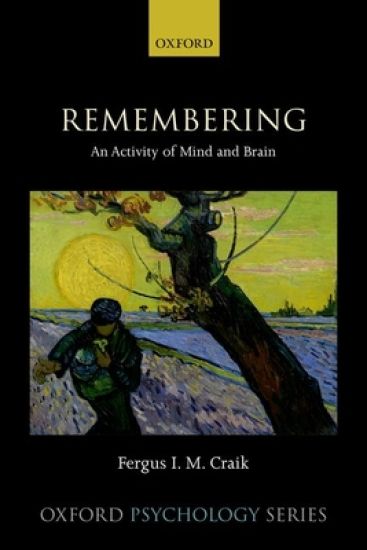
Remembering

Remembering

Fergus I. M. Craik

Oxford University Press
2021
sidottu
Memory is typically thought of as a set of neural representations - 'memory traces' - that must be found and reactivated in order to be experienced. It is often suggested that 'memory traces' are represented by a hierarchically organized system of analyzers, modified, sharpened and differentiated by encounters with successive events. Remembering: An activity of mind and brain is the magnum opus of one of the leading figures in the psychology of memory. It sets out Fergus Craik's current view of human memory as a dynamic activity of mind and brain. The author argues that remembering should be understood as a system of active cognitive processes, similar to (perhaps identical to) the processes underlying attending, perceiving and thinking. Thus, encoding processes are essentially viewed as the mental activities involved in perceiving and understanding, and retrieval is described as the partial reactivation of these same processes. This account proposes that episodic and semantic memory should be thought of as levels in a continuum of specificity rather than as separate systems of memory. In addition, the book presents Craik's views on working memory and on age-related memory impairments. In the latter case the losses are attributed largely to a difficulty with the self-initiation of appropriate encoding and retrieval operations compensated, when needed, by support from the external environment. The development of these ideas is discussed throughout the book and illustrated substantially by experiments from the author's lab, but also by empirical and theoretical contributions from other researchers. A broad account of current ideas and findings in contemporary memory research, but viewed from the author's personal theoretical standpoint, Remembering: An activity of mind and brain will be essential for researchers, graduate and postdoctoral students working in the field of human memory.
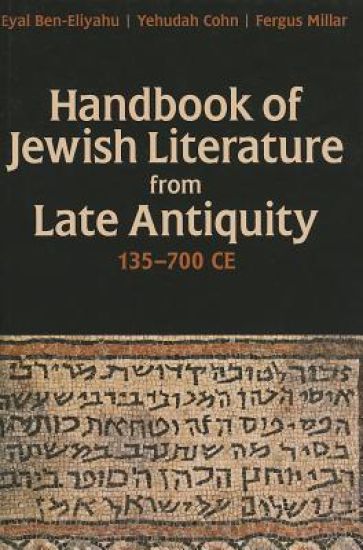
Handbook of Jewish Literature from Late Antiquity, 135-700 CE

Handbook of Jewish Literature from Late Antiquity, 135-700 CE

Fergus Millar; Eyal Ben-Eliyahu; Yehudah Cohn

Oxford University Press
2013
sidottu
From major seminal works like the Mishnah or the Palestinian and Babylonian Talmuds, to Biblical commentaries, translations of Biblical books into Aramaic or relatively little-known mystical, liturgical or apocalyptic writings, here is a complete guide to the rich tradition of Jewish literature in the second to seventh centuries of the Common Era. Each work is described in a succinct and clearly structured entry which covers its contents, dating, language and accessibility (or otherwise) in print or online. The aim throughout is to cover all of this literature and to answer the following questions. What Jewish literature, written either in Hebrew or Aramaic, has survived? What different genres of such literature are there? What printed texts, or translations into any modern language, or commentaries (either in Hebrew or a European language) are there? And, for those who want to enquire further, what are the manuscripts on which modern editions are based? This handbook will be of value to scholars and students of Jewish Studies and historians of Late Antiquity, as well as scholars in neighbouring disciplines, such as Near Eastern history or Theology.
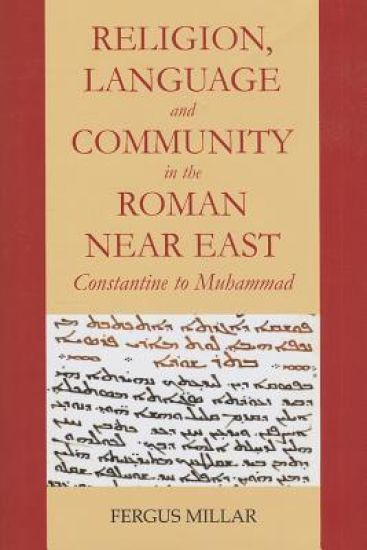
Religion, Language and Community in the Roman Near East

Religion, Language and Community in the Roman Near East

Fergus Millar

Oxford University Press
2013
sidottu
This book explores the way in which different ethnic, religious and linguistic communities co-existed and conflicted in the Roman Near East in the three centuries between the conversion of the Emperor Constantine to Christianity in 312 and the beginning of Muhammad's preaching in about 610. In the fourth century a major role was played by Greek-speaking pagans, most notably the great orator, Libanius, from Antioch in Syria. After about 400, however, the public observance of pagan rituals died away under the pressure of Christianity. But the Greek language, as used in the Church, remained dominant. Pagan Aramaic is curiously invisible in this period, but the dialect of Aramaic used by Jews in Palestine is found in very extensive use, along with Hebrew, in a mass of religious literature, including the Palestinian Talmud, Aramaic versions of books of the Bible, and in inscriptions from synagogues. Most of the synagogue inscriptions come from their often quite elaborate mosaic floors, some of which contain visual representations of scenes from the Bible. Jews used Greek also, even in the inscriptions from synagogues, and so too did Samaritans, who were a powerful force in Late Antique Palestine, mounting two major revolts against the Empire. Outside Palestine, the most notable development in the culture of the region was the emergence of Syriac (a particular dialect and script of Aramaic) as a language of Christian culture and belief. 'Syrians' however were not a distinct ethnic group. The group which was most distinct from the others was made up of the unsettled and warlike peoples on the fringes of the Empire whom almost invariably, call 'Arabs', but who in Late Antiquity were far more often referred to as 'Saracens'. By the end of the period, many of them had converted to Christianity. The major puzzle which the book poses is what is the relation between this process of conversion and the rise of Islam.
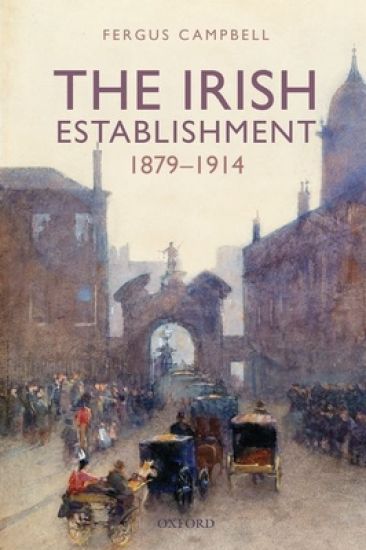
The Irish Establishment 1879-1914

The Irish Establishment 1879-1914

Fergus Campbell

Oxford University Press
2020
nidottu
The Irish Establishment is a study of the country's most powerful men and women in the years 1879 to 1914: who they were, how they gained their power, and how the composition of this elite society changed in the tumultuous period between the Land War and the beginning of the Great War. Despite the enormous shifts in economic and political power that were taking place in the middling sections of Irish society, Fergus Campbell shows that the Irish establishment remained remarkably static and unchanged. Whilst the prominent landlord class and the Protestant middle class (particularly businessmen and professionals) retained their positions of power, the rising Catholic middle class was largely - although not entirely - excluded from the elite. Through focusing on specific groups - landlords, businessmen, religious leaders, politicians, police officers, and senior civil servants - and examining their collective biographies, Campbell explores the changing nature of Ireland's elite society. The Irish Establishment challenges the received narrative of these Irish elite classes. Traditional historiography holds that the members of the rising Catholic middle class were becoming successfully integrated into the Irish establishment by the beginning of the twentieth century, and that the Irish Revolution (1916-23) was a perverse turn of events that undermined an otherwise happy and democratic polity. Campbell offers the opposite: that the revolution was not an undermining of a stable society, but rather a direct result of structural inequality and ethnic discrimination that converted well-educated young Catholics from ambitious students into frustrated revolutionaries. By challenging received narratives and drawing evidence from a broad range of social groups, The Irish Establishment offers an exciting and fresh account of Irish society in the years 1879 to 1914, and offers the first full assessment of elite groups in Ireland in the lead up to the revolution.
The Irish Establishment 1879-1914

The Irish Establishment 1879-1914

Fergus Campbell

Oxford University Press
2009
sidottu
The Irish Establishment examines who the most powerful men and women were in Ireland between the Land War and the beginning of the Great War, and considers how the composition of elite society changed during this period. Although enormous shifts in economic and political power were taking place at the middle levels of Irish society, Fergus Campbell demonstrates that the Irish establishment remained remarkably static and unchanged. The Irish landlord class and the Irish Protestant middle class (especially businessmen and professionals) retained critical positions of power, and the rising Catholic middle class was largely-although not entirely-excluded from this establishment elite. In particular, Campbell focuses on landlords, businessmen, religious leaders, politicians, police officers, and senior civil servants, and examines their collective biographies to explore the changing nature of each of these elite groups. The book provides an alternative analysis to that advanced in the existing literature on elite groups in Ireland. Many historians argue that the members of the rising Catholic middle class were becoming successfully integrated into the Irish establishment by the beginning of the twentieth century, and that the Irish revolution (1916-23) represented a perverse turn of events that undermined an otherwise happy and democratic polity. Campbell suggests, on the other hand, that the revolution was a direct result of structural inequality and ethnic discrimination that converted well-educated young Catholics from ambitious students into frustrated revolutionaries. Finally, Campbell suggests that it was the strange intermediate nature of Ireland's relationship with Britain under the Act of Union (1801-1922)-neither straightforward colony nor fully integrated part of the United Kingdom-that created the tensions that caused the Union to unravel long before Patrick Pearse pulled on his boots and marched down Sackville Street on Easter Monday in 1916.
Land and Revolution

Land and Revolution

Fergus Campbell

Oxford University Press
2005
sidottu
In the 1890s, most of the inhabitants of the west of Ireland experienced great poverty and hardship, living - as they did - on farms that were too small to provide them with a reasonable standard of living. By 1921, however, the living conditions of many of them had been transformed by a series of Land Acts that revolutionized the system of land holding in Ireland. This book examines agrarian conflict in Ireland during the neglected period between the death of Parnell (1891) and the signing of the Anglo-Irish Treaty (1921), and demonstrates that land reform was often introduced in response to popular protest. Whereas earlier accounts have tended to examine Irish political history from the perspective of British governments or nationalist leaders, this book breaks new ground by providing an account of popular political activity in late nineteenth- and twentieth-century Ireland. For the first time, the social background, ideas, and activities of grass-roots political activists are systematically explored, as are the class conflicts that threatened to fragment the unity of the nationalist movement in rural communities. By reinserting the activism of ordinary people into the broader historical record, Dr Campbell suggests new interpretations of a number of critical developments including the failure of 'constructive unionism', the origins of Sinn Féin, and the nature and dynamics of the Irish revolution (1916-23). Using the recently released archives of the Bureau of Military History, the story of the war of independence in the western county of Galway is told in the words of both the Irish Republican Army and its enemies. Land and Revolution transforms our understanding of late nineteenth- and early twentieth-century Irish history, and also contributes to comparative studies of nationalism, revolution, and agrarian protest.
Land and Revolution

Land and Revolution

Fergus Campbell

Oxford University Press
2008
nidottu
In the 1890s, most of the inhabitants of the west of Ireland experienced great poverty and hardship, living - as they did - on farms that were too small to provide them with a reasonable standard of living. By 1921, however, the living conditions of many of them had been transformed by a series of Land Acts that revolutionized the system of land holding in Ireland. This book examines agrarian conflict in Ireland during the neglected period between the death of Parnell (1891) and the signing of the Anglo-Irish Treaty (1921), and demonstrates that land reform was often introduced in response to popular protest. Whereas earlier accounts have tended to examine Irish political history from the perspective of British governments or nationalist leaders, this book breaks new ground by providing an account of popular political activity in late nineteenth- and twentieth-century Ireland. For the first time, the social background, ideas, and activities of grass-roots political activists are systematically explored, as are the class conflicts that threatened to fragment the unity of the nationalist movement in rural communities. By reinserting the activism of ordinary people into the broader historical record, Dr Campbell suggests new interpretations of a number of critical developments including the failure of 'constructive unionism', the origins of Sinn Féin, and the nature and dynamics of the Irish revolution (1916-23). Using the recently released archives of the Bureau of Military History, the story of the war of independence in the western county of Galway is told in the words of both the Irish Republican Army and its enemies. Land and Revolution transforms our understanding of late nineteenth- and early twentieth-century Irish history, and also contributes to comparative studies of nationalism, revolution, and agrarian protest.
Thomas Aquinas

Thomas Aquinas

Fergus Kerr

Oxford University Press
2009
nidottu
Thomas Aquinas, an Italian Catholic priest in the early thirteeth century, is considered to be one of the great Christian thinkers who had, and who still has, a profound influence on Western thought. He was a controversial figure who was exposed and engaged in conflict. This Very Short Introduction looks at Aquinas in a historical context, and explores the Church and culture into which Aquinas was born. It considers Aquinas as philosopher, and looks at the relationship between philosophy and religion in the thirteenth century. Fergus Kerr, in this engaging and informative introduction, will make The Summa Theologiae, Aquinas's greatest single work, accessible to new readers. It will also reflect on the importance of Thomas Aquinas in modern debates and asks why Aquinas matters now. ABOUT THE SERIES: The Very Short Introductions series from Oxford University Press contains hundreds of titles in almost every subject area. These pocket-sized books are the perfect way to get ahead in a new subject quickly. Our expert authors combine facts, analysis, perspective, new ideas, and enthusiasm to make interesting and challenging topics highly readable.
The Bee Book

The Bee Book

Fergus Chadwick; Bill Fitzmaurice; Steve Alton; Judy Earl

DK
2016
sidottu
Bees pollinate plants, produce honey, and create marvellous social colonies. They also need our help. There is nothing quite like a bee, and nothing quite like The Bee Book. This essential guide to all things apiary takes you into the hive and reveals the remarkable lives of these essential pollinators, from their incredible influence on the evolution of flowers to the role of an individual worker bee within her colony. Bee species have existed for millions of years - but, as a result of pesticides and the climate crisis, their numbers are now threatened like never before.Discover how you can support bee populations where you live, with advice on creating bee hotels and nectar-rich wild gardens, or take the next step and try your hand at beekeeping. The Bee Book contains all the essential information you need to set up your own hive, establish your own colony, and care for your bees. It even includes ideas for making the most of the honey, beeswax, and propolis your hive will produce, including a honey and clay face mask, soothing cough drops, and luxurious body butter. Whether you're interested in bees, beekeeping, or simply wish to support local biodiversity, The Bee Book contains everything you need to know and more.
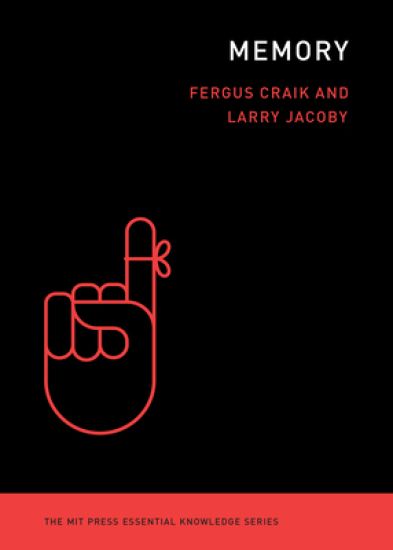
Memory

Memory

Fergus Craik

MIT PRESS LTD
2023
nidottu
A short, accessible primer on human memory, its workings, feats, and flaws, by two leading psychological researchers.Why do we vividly recall a traumatic childhood event but forget where we left our keys five minutes ago? How can a scent take us back fifty years while a colleague’s name eludes us? In this compact introduction, two leading psychological researchers describe memory—how it works and why it sometimes doesn’t; how it can be tricked, trained, or improved; and what changes with time. In a manner as engaging as it is informative, Fergus Craik and Larry Jacoby explain the strengths and weaknesses of memory. They trace evolving ideas about memory’s function and present a down-to-earth account of modern views. Citing the latest research, they outline the processes for acquiring and retrieving memories and explore the distinction between conscious and unconscious processes. With insights into the workings of the brain, Craik and Jacoby also provide a succinct account of feats and failures of memory, emotion and false memories, and the effects of aging. Their book draws a clear picture, at once broad and concise, of current and classical views of memory, that most essential and often mysterious feature of human life.
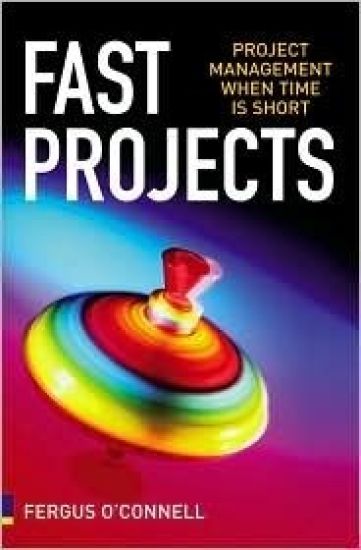
Fast Projects

Fast Projects

Fergus O'Connell

Pearson Business
2007
nidottu
We are all faced with projects going off the rails, veering far from what we initially set out to do, costing ten times as much and taking far too long to complete - this is just part of everyday working life. Honing our general skills in project management seems like the obvious answer, but Fast Projects promises a quicker and easier solution - cutting the time to get projects done in the first place. Learning to operate within a short schedule not only cuts costs and improves revenue and cash flow, but it also sets you aside as a sharper and slicker operation. How to build, shorten and execute a realistic plan in the shortest time possible is covered in detail along with a specific focus on ensuring you have clearly defined goals and are making accurate project predictions with a successful tracking progress. Using worked examples and tried and tested techniques, Fast Projects is your practical guide to ensuring projects not only succeed, but are delivered early. If you want to get the most out of your team and take control of your workload, resources and time, this book is for you.
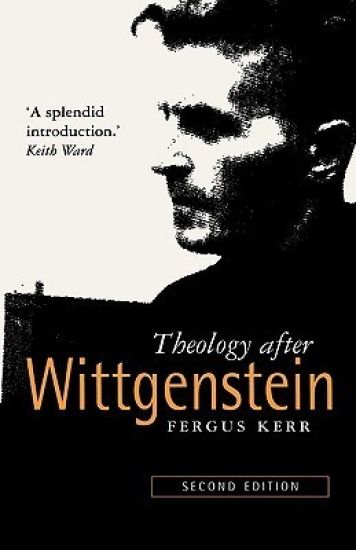
Theology After Wittgenstein

Theology After Wittgenstein

Fergus Kerr

SPCK Publishing
1997
pokkari
The philosopher Wittgenstein is considered by many to be the most influential and significant of the 20th century. This book introduces him to students of theology and focuses on his writings dealing with theological issues such as the inner life, immortality of the soul, and the relationship of the believer to church and tradition.
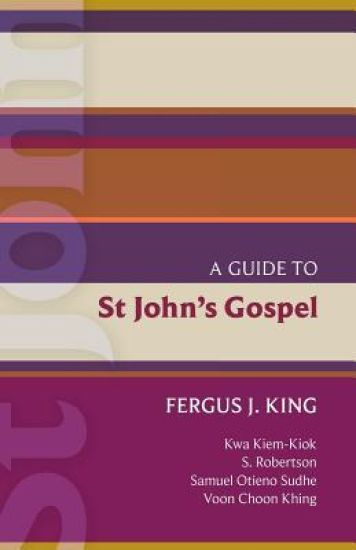
ISG 51: A Guide to St John's Gospel

ISG 51: A Guide to St John's Gospel

Fergus King

SPCK Publishing
2015
pokkari
A clear and accessible guide to John's Gospel, aimed primarily at people training to serve the church for whom English is an additional language. The contributors are theological educators who come from different countries and different religious backgrounds, and bring practical emphasis alongside contemporary scholarly reflection. The Gospel according to John is a very important writing for Christian tradition. It has a character all of its own, and presents a picture of Jesus of Nazareth which is both similar to the other gospels and yet very different from them.
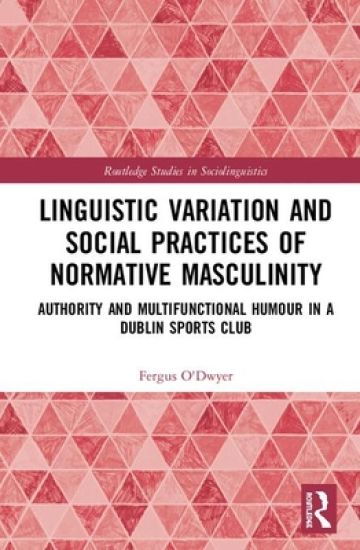
Linguistic Variation and Social Practices of Normative Masculinity
This book explores the ways in which linguistic variation and complex social practices interact toward the formation of male interactional identities in a sports club in Dublin, illustrating the affordances of studying sporting contexts in contributing to advancing sociolinguistic theory.Adopting a participant-informed ethnographic approach, the book examines both the social interactional contexts within the club and the sociopragmatic and sociophonetic features which contribute to the different performances of masculinity in and outside the club. The volume focuses particularly on the linguistic analysis of humor and its multifunctional uses as a means of establishing solidarity and social ties but also aggression, competitiveness, and status within the social world of this club as well as similar such clubs across Ireland. The book’s unique approach is intended to complement and build on existing sociolinguistic studies looking at linguistic variation in groups by supporting quantitative data with ethnographically informed insights to look at social meaning in interaction from micro-, meso-, and macro-levels.This book will be of particular interesting to graduate students and scholars in sociolinguistics, language, gender, and sexuality, and language and identity.
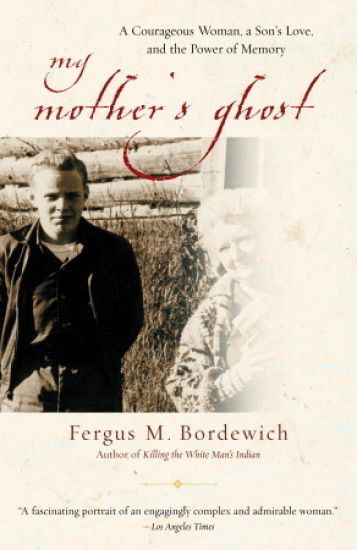
My Mother's Ghost: A Courageous Woman, a Son's Love, and the Power of Memory
The story of a brilliant woman cut down in her prime and of a haunted man who confronted the source of his pain, uncovered startling truths, and reclaimed his own life along with that of his mother. "Beautifully written.... A fascinating portrait of an engagingly complex and admirable woman." --Los Angeles TimesLaVerne Madigan led an extraordinary life. In an era when few women even worked outside the home, La Verne was the executive director of the only major national rights advocacy group for American Indians at the time. Brilliant, beautiful, stylish, and independent, she worked tirelessly for what she believed in and inspired those who knew her. Perhaps no one as much as her young son, Fergus Bordewich. One morning when Fergus was fourteen, he and his mother went riding, which they did often. It was the last time he saw her alive. Attempting to jump from her runaway horse, LaVerne fell under the hooves of her son's mount and was killed. Fergus was left with the belief that he was responsible. More than thirty years later and after a lifetime of guilt and self-punishment, the son returned to his mother's life.