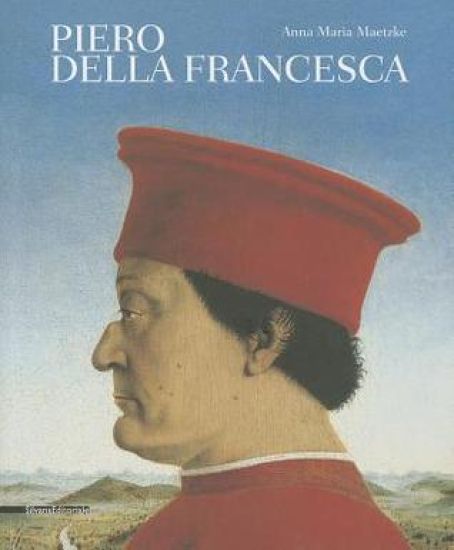
A guide to one of the greatest artists of all time; compact and up to date. These pages are intended as a compact up-to-date guide for readers wishing to find out more about one of the greatest artistic geniuses of all times, an artist epitomising the highest ideals of the age of Humanism whose complex personality challenges even the experts in this field of studies.
Observera att förlaget som ger ut denna produkt baserar innehållet i sina produkter på fria källor som Wikipedia. Boken är med stor sannolikhet endast ett utdrag ur dessa informationskällor, alltså inte en vanlig bok i den bemärkelsen.
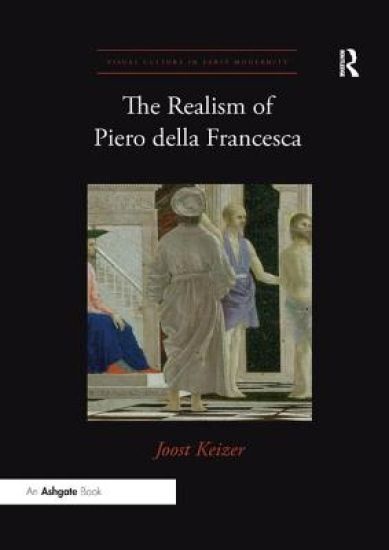
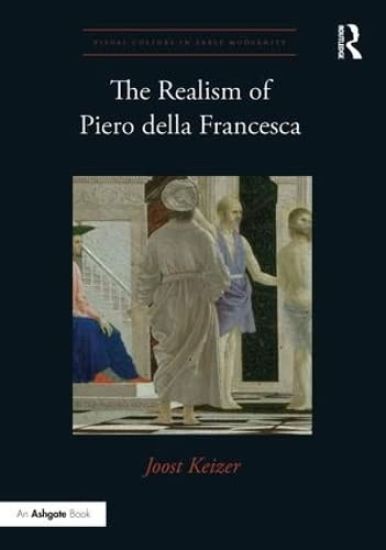
The fifteenth-century Italian artist Piero della Francesca painted a familiar world. Roads wind through hilly landscapes, run past farms, sheds, barns, and villages. This is the world in which Piero lived. At the same time, Piero’s paintings depict a world that is distant. The subjects of his pictures are often Christian and that means that their setting is the Holy Land, a place Piero had never visited. The Realism of Piero della Francesca studies this paradoxical aspect of Piero’s art. It tells the story of an artist who could think of the local churches, palaces, and landscapes in and around his hometown of Sansepolcro as miraculously built replicas of the monuments of Jerusalem. Piero’s application of perspective, to which he devoted a long treatise, was meant to convince his contemporaries that his paintings report on things that Piero actually observed. Piero’s methodical way of painting seems to have offered no room for his own fantasy. His art looks deliberately styleless. This book uncovers a world in which painting needed to validate itself by cultivating the illusion that it reported on things observed instead of things imagined by the artist. Piero’s painting claimed truth in a world of increasing uncertainties.
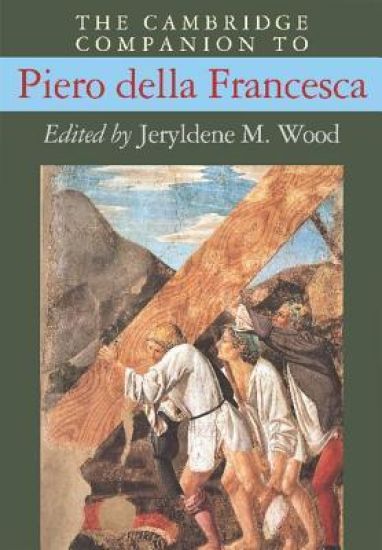
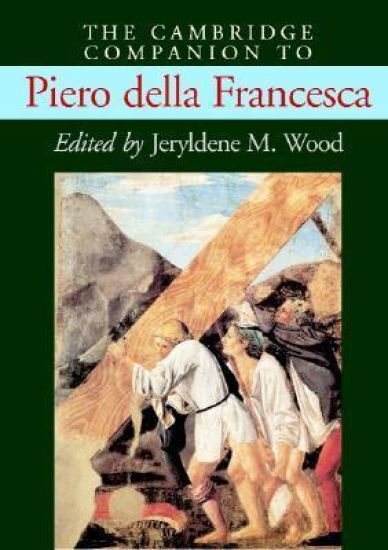
A great master of the early Renaissance, Piero della Francesca created paintings for ecclesiastics, confraternities, and illustrious nobles throughout the Italian peninsula. Since the early twentieth century, the rational space, abstract designs, lucid illumination and naturalistic details of his pictures have attracted a wide audience. Piero's treatises on mathematics and perspective also fascinate scholars in a wide range of disciplines. This 2002 Companion brings together essays that offer a synthesis and overview of Piero's life and accomplishments as a painter and theoretician. They explore a variety of themes associated with the artist's career, including the historical and religious circumstances surrounding Piero's altarpieces and frescoes; the politics underlying his portraits; the significance of clothing in his paintings; the influence of his theories on perspective and mathematics; and the artist's enduring fascination for modern painters and writers.
A great master of the early Renaissance, Piero della Francesca created paintings for ecclesiastics, confraternities, and illustrious nobles throughout the Italian peninsula. Since the early twentieth century, the rational space, abstract designs, lucid illumination and naturalistic details of his pictures have attracted a wide audience. Piero's treatises on mathematics and perspective also fascinate scholars in a wide range of disciplines. This 2002 Companion brings together essays that offer a synthesis and overview of Piero's life and accomplishments as a painter and theoretician. They explore a variety of themes associated with the artist's career, including the historical and religious circumstances surrounding Piero's altarpieces and frescoes; the politics underlying his portraits; the significance of clothing in his paintings; the influence of his theories on perspective and mathematics; and the artist's enduring fascination for modern painters and writers.
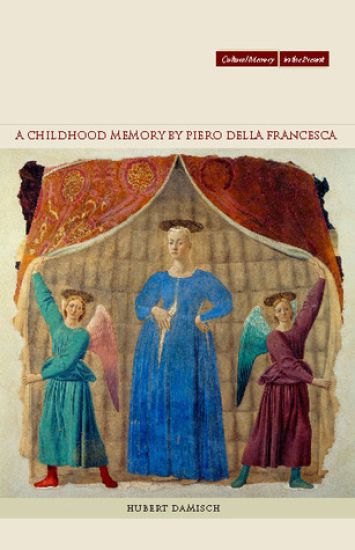
Piero della Francesca's Madonna del Parto, a celebrated fifteenth-century Tuscan fresco in which the Virgin gestures to her partially open dress and her pregnant womb, is highly unusual in its iconography. Hubert Damisch undertakes an anthropological and historical analysis of an artwork he constructs as a childhood dream of one of humanity's oldest preoccupations, the mysteries of our origins, of our conception and birth. At once parodying and paying homage to Freud's seminal essay on Leonardo da Vinci, Damisch uses Piero's enigmatic painting to narrate our archaic memories. He shows that we must return to Freud because work in psychoanalysis and art has not solved the problem of what is being analyzed: in the triangle of author, work, and audience, where is the psychoanalytic component located?
Piero della Francesca's Madonna del Parto, a celebrated fifteenth-century Tuscan fresco in which the Virgin gestures to her partially open dress and her pregnant womb, is highly unusual in its iconography. Hubert Damisch undertakes an anthropological and historical analysis of an artwork he constructs as a childhood dream of one of humanity's oldest preoccupations, the mysteries of our origins, of our conception and birth. At once parodying and paying homage to Freud's seminal essay on Leonardo da Vinci, Damisch uses Piero's enigmatic painting to narrate our archaic memories. He shows that we must return to Freud because work in psychoanalysis and art has not solved the problem of what is being analyzed: in the triangle of author, work, and audience, where is the psychoanalytic component located?
The fifteenth-century Italian artist Piero della Francesca painted a familiar world. Roads wind through hilly landscapes, run past farms, sheds, barns, and villages. This is the world in which Piero lived. At the same time, Piero’s paintings depict a world that is distant. The subjects of his pictures are often Christian and that means that their setting is the Holy Land, a place Piero had never visited. The Realism of Piero della Francesca studies this paradoxical aspect of Piero’s art. It tells the story of an artist who could think of the local churches, palaces, and landscapes in and around his hometown of Sansepolcro as miraculously built replicas of the monuments of Jerusalem. Piero’s application of perspective, to which he devoted a long treatise, was meant to convince his contemporaries that his paintings report on things that Piero actually observed. Piero’s methodical way of painting seems to have offered no room for his own fantasy. His art looks deliberately styleless. This book uncovers a world in which painting needed to validate itself by cultivating the illusion that it reported on things observed instead of things imagined by the artist. Piero’s painting claimed truth in a world of increasing uncertainties.
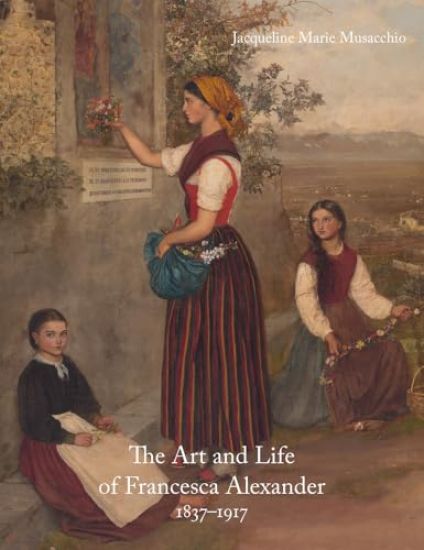
This is the first book to examine the art and life of Boston-born artist Francesca Alexander (1837–1917). Francesca and her parents moved to Florence in 1853 and became part of a thriving international community. She was a largely self-taught artist, and both her art and writing focused on Italians and Italian life. Her portraits and nature studies, and her translations of songs and stories, were much admired by her contemporaries, including John Ruskin, who published three of her manuscripts and promoted her work to his followers. She used her earnings from the sale of these publications, and her art, to fund her many charitable endeavours; both friends and admirers marvelled at her saintly character, which they linked to a romantic view of Italy itself. Nonetheless, in spite of her celebrity on both sides of the Atlantic, she and her work have been largely forgotten. Drawing on her work, as well as other sources including letters, diaries, guidebooks, newspapers and magazines, this book provides a vivid biography of Francesca Alexander, her art, and her place in history.