Kirjojen hintavertailu. Mukana 11 244 527 kirjaa ja 12 kauppaa.

Kirjahaku

Etsi kirjoja tekijän nimen, kirjan nimen tai ISBN:n perusteella.

1000 tulosta hakusanalla Francis Alua

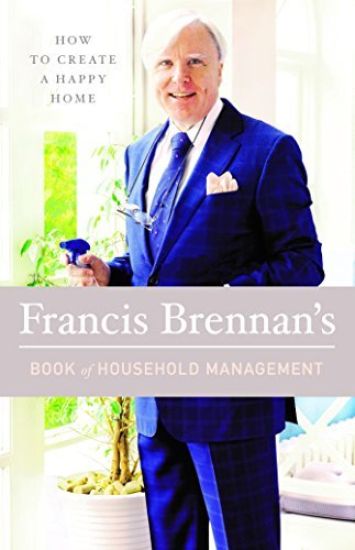
Francis Brennan's Book of Household Management
Francis Brennan is known for his impeccable taste and high standards in homemaking, so there's no better man to tell you how to wash your sheets, clean your oven and arrange your cushions. In this book, Francis takes us through the house room by room and offers his advice and unique insights on how to manage your household, while relating hilarious anecdotes from his experiences in the hotel trade. He will inform readers on the practical measures needed to ensure domestic bliss from the kitchen to the bathroom.
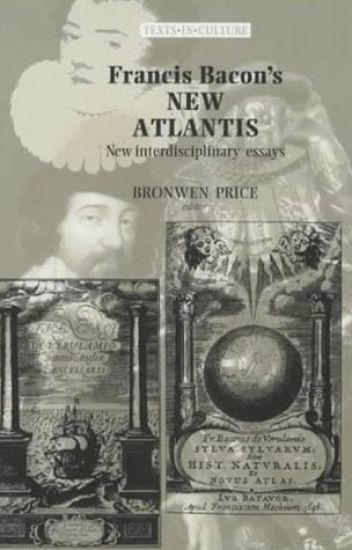
Francis Bacon's New Atlantis

Francis Bacon's New Atlantis

Manchester University Press
2003
nidottu
This volume of eight new essays by leading scholars provides a stimulating dialogue between a range of critical perspectives. Encompassing the fields of cultural history, history of science, literature, and politics, the collection explores The New Atlantis' complex location within Bacon's oeuvre and its negotiations with cultural debates of the past and present. Often regarded as the apotheosis of Bacon's ideas through its depiction of an advanced “scientific” society, it is also read as a seminal work of science fiction.An electronic edition of this book is freely available under a Creative Commons (CC BY-NC-ND) licence.
Francis Bacon's Inquiry Touching Human Nature

Francis Bacon's Inquiry Touching Human Nature

Svetozar Minkov

Lexington Books
2010
sidottu
Francis Bacon's "Inquiry Touching Human Nature" is a study of Francis Bacon's moral philosophy in its relation to the enlightenment project he helped launch. Since Bacon is one of the founders of technological modernity, the book presents a meditation on the presuppositions and character of modern life. In its distinctiveness, modern life is characterized by a rejection as well as a reinterpretation of the classical and Christian approaches to life and conceptions of virtue. Svetozar Minkov follows closely Bacon's confrontation with the traditional views on courage, moderation, justice, wisdom, love, and ways of dealing with death and general adversity. Bacon had a comprehensive vision of the human situation. He can help us think through the relation between power and wisdom. And because he saw the costs or dangers of modern life as clearly as he predicted, and helped bring about, its advancements and boons, Bacon is a thinker who addresses directly and deeply our own perplexities.
Francis Bacon's New Atlantis in the Foundation of Modern Political Thought
Francis Bacon, long considered a minor figure in the founding of modern political thought, is now recognized as one of its foremost thinkers. Bacon not only championed a new type and method of scientific inquiry, he also developed a plan for how modern society could be re-ordered to accommodate and promote scientific progress. Bacon’s scientific writings cannot be wholly understood apart from his political writings, and many of his works combine the two topics so subtly that it is difficult to even place them in a definitive category; in this book, Kimberly Hurd Hale identifies the thread in Bacon’s body of work that links modern science and liberalism. Hale provides a detailed analysis of New Atlantis, examining Bacon’s place in the founding of modern political philosophy and the ways he relates to Plato, Machiavelli, and Hobbes. Hurd argues that Bacon’s demonstration of scientific rule in the New Atlantis is not meant as a blueprint for modern society; rather it shows us the dangers of a scientific society devoid of liberty. By examining what is troubling about the New Atlantis, this book explains what problems lead to the emergence of Atlantean societies, i.e. societies that are prosperous, ambitious, and doomed. It shows that Bacon’s portrait of Bensalem may provide the light necessary to guide those of us living in a world shaped by modern science through the dangerous seas.
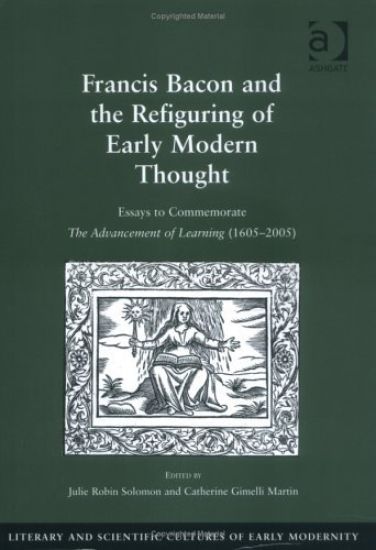
Francis Bacon and the Refiguring of Early Modern Thought

Francis Bacon and the Refiguring of Early Modern Thought

Catherine Gimelli Martin

Ashgate Publishing Limited
2005
sidottu
Commemorating the 400th anniversary of the publication of Francis Bacon's Advancement of Learning (1605), this collection examines Bacon's recasting of proto-scientific philosophies and practices into early modern discourses of knowledge. Like Bacon, all of the contributors to this volume confront an essential question: how to integrate intellectual traditions with emergent knowledges to forge new intellectual futures. The volume's main theme is Bacon's core interest in identifying and conceptualizing coherent intellectual disciplines, including the central question of whether Bacon succeeded in creating unified discourses about learning. Bacon's interests in natural philosophy, politics, ethics, law, medicine, religion, neoplatonic magic, technology and humanistic learning are here mirrored in the contributors' varied intellectual backgrounds and diverse approaches to Bacon's thought.
Francis of Assisi as Artist of the Spiritual Life

Francis of Assisi as Artist of the Spiritual Life

Andrew T. McCarthy

University Press of America
2010
nidottu
Francis of Assisi as Artist of the Spiritual Life applies modern psychological understanding to a historical person. While most such studies have sought a comprehensive personality profile, this work focuses on one aspect — Francis' imagination — and seeks greater insight into the imaginatively inspired spiritual vision of St. Francis. An analysis of Francis' writings builds on a survey of modern views of the imagination and the approach of ORT, or Object Relations Theory. ORT, with its contention that the imaginative creation of an infant's world develops out of the earliest interactions with the maternal caregiver, highlights the way Francis formed his way of visualizing the reality around him. While any study of a person 800 years in the grave is more dependent on what is plausible than on what is determinable, this study finds numerous examples where Francis' writings display an adept use of imagination and even encourages others in that use in a manner that corresponds to an ORT perspective on tutoring the imagination.
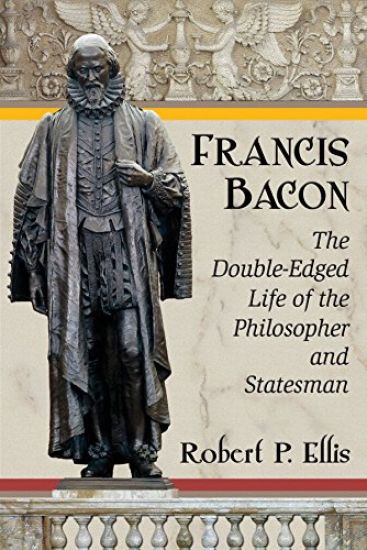
Francis Bacon

Francis Bacon

Robert P. Ellis

McFarland Co Inc
2015
pokkari
Around the time Shakespeare inaugurated the golden age of English drama, the young Francis Bacon proposed to take "all knowledge to be my province." He soon realized the difficulty of that but in the process he posed two related questions, which he understood better than any other man of his time: Can human beings respect and obey nature, and Can they also command nature? He asked many other questions considered useless and impractical in his time but vital in ours. After a busy career as an English parliamentarian, judge and advisor of King James I, Bacon published in his final years The Advancement of Learning, which included his New Atlantis, with its prescient vision of human accomplishments, many achieved only in the past century. The first important book of English essays, it is an investigation of civil and moral problems that continue to engage and perplex us.