Kirjojen hintavertailu. Mukana 11 342 296 kirjaa ja 12 kauppaa.

Kirjahaku

Etsi kirjoja tekijän nimen, kirjan nimen tai ISBN:n perusteella.

1000 tulosta hakusanalla Frederick Slate

The Live and Writings of Frederick Douglass, Volume 3

The Live and Writings of Frederick Douglass, Volume 3

Frederick Douglass

International Publishers
2020
pokkari
The second volume of The Life and Writings of Frederick Douglass traced the career of this outstanding leader of the Negro people during the crucial decade, 1850-1860. In that volume was presented Douglass' incisive analysis of the strategy and tactics of the Abolitionist movement, the Negro Convention movement, woman's rights, the Kansas-Nebraska Act, the life and death of John Brown, the foundation of the Republican Party, and the elections of 1852, 1856, and 1860 . In volume 3, this astute analysis by one of the most brilliant minds of the nineteenth century relates to a decisive era in world history, the Civil War in the United States, which began on April 12, 1861 with the firing on Fort Sumter and ended at the Appomattox Court House on April 9, 1865.
The Life and Writings of Frederick Douglass, Volume 4

The Life and Writings of Frederick Douglass, Volume 4

Frederick Douglass

International Publishers
2020
pokkari
"Reconstruction and After," the fourth volume of the collected works of Frederick Douglass, brings together for the first time his writings and speeches during the crucial period, 1865-1895. These years are also covered in the section of Dr. Foner's full-scale biography of Douglass which appears in this volume. The present volume brings out Douglass' fight to give meaning to the Union victory in the Civil War by guaranteeing economic, political, and civil freedom to the Negro people. He was an outstanding leader in the campaign for the fourteenth and fifteenth amendments and, when they were ratified, continued to battle to make these laws effective. His writings have a contemporary ring.
The Life and Writings of Frederick Douglass Volume 5

The Life and Writings of Frederick Douglass Volume 5

Frederick Douglass

International Publishers
2020
pokkari
The original four volumes of the collected works of Frederick Douglass included a substantial number of his writings and speeches but far from all of them. At the time the first volumes of Douglass' writings and speeches were published (1950-1955), the possibilities of incorporating the other unpublished material were remote. Subsequently this became possible and the present, Supplementary Volume covering the writings of Douglass over the important period from 1844 to 1860 was produced. These pages will furnish the reader with an excellent picture of the Black communities of Cleveland, Cincinnati, Philadelphia, Chicago, Detroit and other northern cities which Douglass visited and from which he sent penetrating dispatches to his paper. They also contain considerable evidence of the ideological debates, sometimes quite bitter, which were part of the life of these Black communities in the ante-bellum years, especially over such issues as emigration. Here, as in the previous four volumes, all of Douglass' writings and speeches are reproduced with no substantial change whatsoever; misspellings and grammatical errors have been corrected if they appeared in the printed sources and clearly were typographical mistakes. A few passages have been omitted from several of the selections to avoid repetition, but these have been properly indicated. In a few cases the only account of a Douglass speech was in the form of a digest by the reporter, and where these have been included, this has been clearly indicated.
Frederick Douglass and the Philosophy of Religion

Frederick Douglass and the Philosophy of Religion

Timothy J. Golden

BLOOMSBURY PUBLISHING PLC
2021
sidottu
Frederick Douglass and the Philosophy of Religion: An Interpretation of Narrative, Art, and Politics addresses Douglass's narrative method and the reformed epistemology of analytic theism within the context of incarnational theology. Timothy J. Golden argues that in this context, Douglass's use of narrative maintains a robust moral, social, and political engagement—and thus a closer connection to an authentic Christian theology—in a way that analytic theism does not. To show this contrast, Golden presents existential and phenomenological interpretations of Douglass, reading him with Kierkegaard, Kafka, and Levinas. Golden also interprets Douglass's use of moral suasion with Kant's moments of aesthetic judgment and his account of judgment as a mediating faculty between the understanding and reason. Golden concludes the book with reflection on how Douglass’s incarnational theology connects to his future philosophical and theological work, work that understands consciousness (subjectivity) as saturated in time understood as history. The resulting understanding of consciousness provides tools to overcome abstraction not only in social and political philosophy, Christianity, and philosophical theology, but also in gender studies.
Narrative of the Life of Frederick Douglass: An American Slave, Written by Himself
Enriched Classics offer readers accessible editions of great works of literature enhanced by helpful notes and commentary. Each book includes educational tools alongside the text, enabling students and readers alike to gain a deeper and more developed understanding of the writer and their work. Frederick Douglass's powerful autobiographical account of life in bondage, his triumphant escape to freedom, and his analysis of slavery as a condition. Enriched Classics enhance your engagement by introducing and explaining the historical and cultural significance of the work, the author's personal history, and what impact this book had on subsequent scholarship. Each book includes discussion questions that help clarify and reinforce major themes and reading recommendations for further research. Read with confidence.
Frederick the Great and his Musicians: The Viola da Gamba Music of the Berlin School
After decades of stagnation during the reign of his father, the 'Barracks King', the performing arts began to flourish in Berlin under Frederick the Great. Even before his coronation in 1740, the crown prince commenced recruitment of a group of musician-composers who were to form the basis of a brilliant court ensemble. Several composers, including C.P.E. Bach and the Graun brothers, wrote music for the viola da gamba, an instrument which was already becoming obsolete elsewhere. They were encouraged in this endeavour by the presence in the orchestra from 1741 of Ludwig Christian Hesse, one of the last gamba virtuosi, who was described in 1766 as 'unquestionably the finest gambist in Europe'. This study shows how the unique situation in Berlin produced the last major corpus of music written for the viola da gamba, and how the more virtuosic works were probably the result of close collaboration between Hesse and the Berlin School composers. The reader is also introduced to the more approachable pieces which were written and arranged for amateur viol players, including the king's nephew and ultimate successor, Frederick William II. O'Loghlin argues that the aesthetic circumstances which prevailed in Berlin brought forth a specific style that is reflected not only in the music for viola da gamba. Characteristics of this Berlin style are identified with reference to a broad selection of original written sources, many of which are hardly accessible to English-speaking readers. There is also a discussion of the rather contradictory reception history of the Berlin School and some of its composers. The book concludes with a complete thematic catalogue of the Berlin gamba music, with a listing of original manuscript sources and modern publications. The book will appeal to professional and amateur viola da gamba players as well as to scholars of eighteenth-century German music.
Frederick the Wise

Frederick the Wise

Sam Wellman

CONCORDIA PUBLISHING HOUSE LTD
2015
pokkari
Frederick the Wise unlocks German research to make available in English, for the first time, a full-length story of Frederick III of Saxony. The fascinating biographical journey reveals why this noteworthy elector risked his realm of Saxony to protect the fiery monk Martin Luther and the developing reforms of the Church. As one of the most powerful territorial princes of the Holy Roman Empire of his time, Frederick's "humanity and integrity were rare for someone of his elite status", notes Dr. Paul M. Bacon. "Elector Frederick the Wise of Saxony was much more than simply Martin Luther's noble protector."A valuable resource for students of German history and the Reformation period.Features: Discusses how Frederick dominated other princes of the Holy Roman Empire for nearly 40 yearsTells why Frederick's only "wife"-but not their children-had to be kept "secret"Chronology of events relevant to Frederick the WiseIndex of persons and places
Frederick Starr

Frederick Starr

Donald McVicker

AltaMira Press,U.S.
2012
sidottu
This definitive, detail-packed biography is the first of Frederick Starr (1856-1933), a founding father of American anthropology at the University of Chicago. It presents a major reevaluation of Starr’s place as the missionizer of anthropology, illuminates the consequences of the professionalization of anthropology, and yields a greater understanding of the United States as it moved into a position of global power. Donald McVicker considers Frederick Starr’s colorful life in the context of the times. In many respects Starr’s early career paralleled that of Franz Boas, “the architect of American anthropology.” Nonetheless, as Boas led professional anthropology into the twentieth century in the United States, Starr, the popularizer, increasingly fell behind. Today, if Starr is remembered at all, he is usually described in terms of his intellectual, professional, and ethical failings. Yet his collections, publications, and photographic and paper archives provide a rich set of resources for archaeologists, ethnologists, folklorists, and historians. McVicker argues that Starr’s mission to bring anthropology to the public and enlighten them was as valid a goal during his career as was Boas’s goal to professionalize the field.
Frederick Carder and Steuben Glass

Frederick Carder and Steuben Glass

Thomas P. Dimitroff

Schiffer Publishing Ltd
1998
sidottu
This essential reference work provides a detailed study of Frederick Carder, his contributions to the Steuben Glass Works, and the captivating works of art he produced in glass. To dazzle and delight the reader, there are over 760 photographs and 450 line drawings, the vast majority of which provide illustration for 800 pieces of Steuben glass from the famous Rockwell collections. Reference material and photographs never before in print are provided. The text evaluates Carder and the Steuben Glass Works that he cofounded in 1903 in a critical light. It reviews Carder's lengthy and productive career, analyzes his changing role within the company, and places Carder's artistic contributions within the matrix of the international decorative arts industries of his time. A section valuable to all collectors is one in which many aspects of identification and evaluation are covered--signatures, relative rarity, and dating.
Frederick Carder's Steuben Glass

Frederick Carder's Steuben Glass

Marshall Ketchum

Schiffer Publishing Ltd
2002
nidottu
This new book is a valuable aid when used in conjunction with eight important books which picture F. Carder's Steuben glass. The tabulated format is easy to use. The line drawings of shapes in Paul Gardner's classic book The Glass of Frederick Carder (reprinted by Schiffer Publishing), auction records of the last seven years, and references to photographs in the eight books cited are cross-referenced for easy access. In addition, 40 new color photographs of Carder Steuben glass, which have not been shown in other publications, are included here. Finally, the respected authorities on this finest of American manufactured glass speak in unison to today's researchers. Curators, historians, glass dealers, scholars, and collectors alike owe a round of applause to Marshall Ketchum for this precise and important reference work; this book will make their jobs much easier.
Frederick Carder's Steuben Glass

Frederick Carder's Steuben Glass

Marshall Ketchum

Schiffer Publishing Ltd
2006
nidottu
This new edition is a valuable aid when used in conjunction with eight important books that picture Frederick Carder's Steuben glass. The easy-to-use tabulated format cross references the line drawings of shapes found in Paul Gardner's classic book The Glass of Frederick Carder (reprinted by Schiffer Publishing), auction records from the last eleven years, and references to photographs in the eight books cited. This revised second edition features a greatly expanded photo section with over 100 new photos; drawings of over 60 new glass shapes found in the archives of the Rakow Research Library at the Corning Museum of Glass in Corning, New York; and a new chapter on Steuben candlesticks. It also expands the auction results from about 2,000 to over 8,500, and includes additional auction houses not covered in the first edition. Curators, historians, glass dealers, scholars, and collectors alike owe a round of applause to Marshall Ketchum for this precise, important, and now updated reference work; this book will make their jobs much easier.
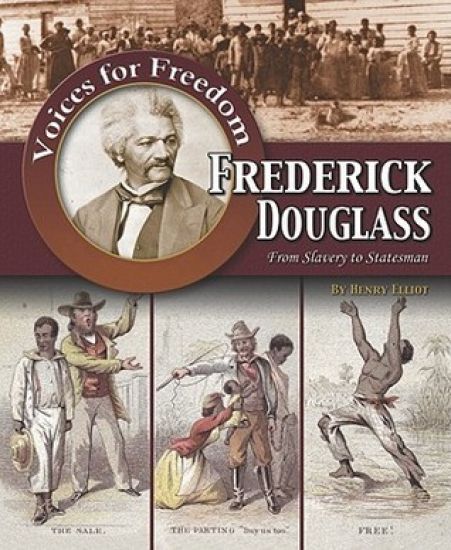
Frederick Douglass

Frederick Douglass

Henry Elliot

Crabtree Publishing Co,Canada
2009
nidottu
Born into slavery, Douglass became an eloquent spokesperson for both black’s and women’s rights. During and after the Civil War, Douglass became a confidant of presidents Abraham Lincoln and Andrew Johnson. Douglass also argued for African Americans to be allowed to join the Union army in the fight for their own freedom.
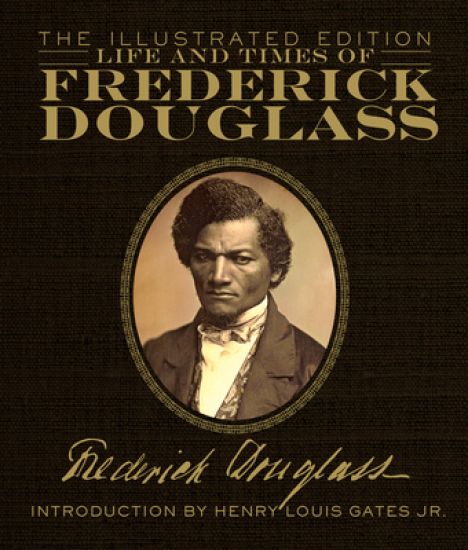
Life and Times of Frederick Douglass

Life and Times of Frederick Douglass

Frederick Douglass

Chartwell Books Inc.,U.S.
2021
sidottu
This richly illustrated edition of this classic American autobiography sheds new light on Douglass’s famous text for a new generation of readers.Famous orator and former slave Frederick Douglass published his third and last autobiography, Life and Times of Frederick Douglass, in 1881. No longer in danger as an escaped slave, it goes into greater detail and encompasses Douglass’s entire life, from his early years living with his grandmother in Maryland to the events during and after the Civil War, including his meetings with presidents and dignitaries and his deep involvement with the burgeoning suffragist movement. His account reveals what life was like as a slave and how Douglass went on to escape from slavery and then dedicate his life to advocating equality for all people. Including an introduction by prominent historian and PBS Finding Your Roots host Henry Louis Gates Jr., Douglass’s words are augmented by:Historic photographs, memorabilia, and mapsFull-color photography of the key Douglass-specific sites and landmarks as they stand todayLarge sidebars written by soldiers, statesmen, and abolitionists from the antebellum periodPieces by well-known historians and prominent African-AmericansNew commentary by current historians and writersGain an even deeper understanding of one of the most important figures in American history with this illustrated edition of his final autobiography.
Frederick the Great and the Seven Years' War, 1756-1763
The Seven Years' War (1756-1763), known as the French and Indian War in North America, was perhaps the first war that might be called a world war. It involved the major European countries, North and Central America, the coast of West Africa, the Philippines, and India. A major player in the war was Frederick the Great (1712-1786), the king of Prussia and a great military leader. The first major work on the monarch and his role in the war for more than a century, this book sheds light on many aspects of military and European history.
Frederick County, Maryland Land Records Abstracts, 1778-1784, Liber WR1 Through WR4
This volume includes the first four volumes, done under the supervision of William Ritchie, Clerk of Frederick County Court, and labeled WR1 through WR4, containing records from the Revolutionary War Period of 1778-1784.Some of the more interesting records recorded include two naturalizations for former German POWs, two court martials for militia men not appearing for duty, a discharge record signed by General Anthony Wayne, information about establishing a gunlock manufactury in Frederick Town and the sales of Confiscated British property, including Frederick Town ground rents owned by Daniel Dulaney, who left for England at the beginning of the Revolutionary War period.Although it is becoming increasingly easy to access these records online now through the Maryland State Archives, the value that abstracts offer in locating records through their every name indexing, cannot be matched with the indexes available online. The official indexes do not always identify estate sales, bills of sale, Negro sales or manumissions, or depositions and do not index information within deeds, such as mention of neighbors, as well as other documents brought to the court to be recorded. Also, many researchers have difficulty reading the old hand written books, so this also provides a guide and finding aid for the beginning genealogist. The page numbers of the deeds in the original volume are given in the abstracts, so that when desired, the original deeds can be accessed and printed from the Maryland State Archives Web Site.Abstracts are best used as brief guides and indexes to original records, and to find people mentioned in deeds who would otherwise be lost in the records. This series of abstracts focuses on the names of parties in the deeds. This volume contains three indices to aid the researcher: a brief index to interesting items of note; a lengthy full-name index, which includes an occupation section (occupations will sometimes help distinguish a man); and an index to place names, town lots and land tract names.