Kirjojen hintavertailu. Mukana 12 462 239 kirjaa ja 12 kauppaa.

Kirjahaku

Etsi kirjoja tekijän nimen, kirjan nimen tai ISBN:n perusteella.

1000 tulosta hakusanalla G. W. Ross

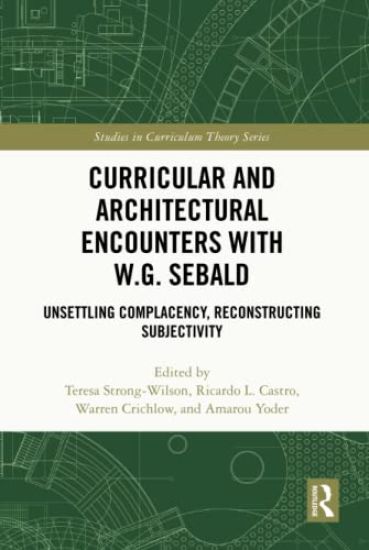
Curricular and Architectural Encounters with W.G. Sebald
This book engages with the writings of W.G. Sebald, mediated by perspectives drawn from curriculum and architecture, to explore the theme of unsettling complacency and confront difficult knowledge around trauma, discrimination and destruction. Moving beyond overly instrumentalist and reductive approaches, the authors combine disciplines in a scholarly fashion to encourage readers to stretch their understandings of currere. The chapters exemplify important, timely and complicated conversations centred on ethical response and responsibility, in order to imagine a more just and aesthetically experienced world. In the analysis of BILDUNG as human formation, the book illuminates the pertinent lessons to be learned from the works of Sebald and provokes further investigations into the questions of memory, grief, and limits of language. Through its juxtaposition of curriculum and architecture, and using the prose of Sebald as a prism, the book revitalizes questions about education and ethics, probes the unsettling of complacency, and enables conversation around difficult knowledge and ethical responsibility, as well as offering hope and resolve.An important intervention in standard approaches to understanding currere, this book provides essential context for scholars and educators with interests in the history of education, curriculum architectural education and practice studies, memory studies, narrative research, Sebaldian studies, and educational philosophy.
Curricular and Architectural Encounters with W.G. Sebald
This book engages with the writings of W.G. Sebald, mediated by perspectives drawn from curriculum and architecture, to explore the theme of unsettling complacency and confront difficult knowledge around trauma, discrimination and destruction. Moving beyond overly instrumentalist and reductive approaches, the authors combine disciplines in a scholarly fashion to encourage readers to stretch their understandings of currere. The chapters exemplify important, timely and complicated conversations centred on ethical response and responsibility, in order to imagine a more just and aesthetically experienced world. In the analysis of BILDUNG as human formation, the book illuminates the pertinent lessons to be learned from the works of Sebald and provokes further investigations into the questions of memory, grief, and limits of language. Through its juxtaposition of curriculum and architecture, and using the prose of Sebald as a prism, the book revitalizes questions about education and ethics, probes the unsettling of complacency, and enables conversation around difficult knowledge and ethical responsibility, as well as offering hope and resolve.An important intervention in standard approaches to understanding currere, this book provides essential context for scholars and educators with interests in the history of education, curriculum architectural education and practice studies, memory studies, narrative research, Sebaldian studies, and educational philosophy.

W.G. Sebald's Artistic Legacies
When the mind turns more than one would wish towards questions of – as W.G. Sebald puts it – the “natural history of destruction”, comparative consideration by artists and interdisciplinary scholars is directed to the interstices between images, novel, essay, (auto)biography, memorial and travelogue. Artists have been among Sebald’s most prolific interpreters – as they are among the more fearless and holistic researchers on questions concerning what it means never to be able to fix an identity, to tell a migrant’s story, or to know where a historical trauma ends. Sebald has – as this book attests – also given artists and scholars a means to write with images, to embrace ambiguity, and to turn to today’s migrants with empathy and responsibility; as well as to let academic research, creation and institutional engagement blend into or substantially inform one another in order to account for and enable such necessary work in the most diverse contexts.
S.W.A.G (She Wants A Gentlemen)
She's a lady so she wants a gentlemen who treats her like one. Every lady needs a gentlemen who will treat her with respect and care.All Alyssa wants is for someone to treat her right. She had that when she fell in love with Raheem. Being together since high school, she never thought she could love someone else. Now being that college has started things get crazy between Alyssa and Raheem she's starting to wonder if he can be the man she needs him to be.Raheem being the guy he is decided that he no longer had feelings for Alyssa since high school days but he's not ready to let her go, Leading her to believe that everything was okay between them when in reality it wasn't.Is it possible to move on from someone whose had a hold on your heart for so long? Can Josiah step in and mend Alyssa's broken heart Raheem continues to keep breaking? Join this group as they share with you their stories.
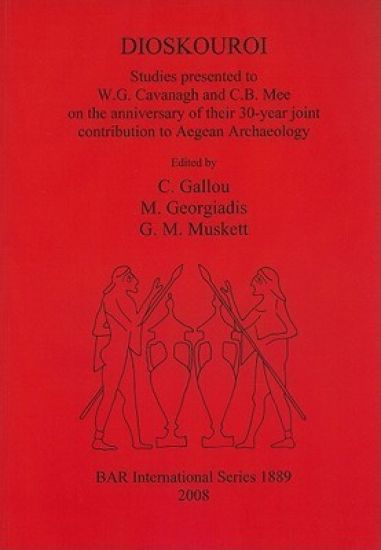
DIOSKOUROI Studies presented to W.G. Cavanagh and C.B. Mee on the anniversary of their 30-year joint contribution to Aegean Archaeology
31 essays on the Bronze Age Aegean which cover a wide range of topics. They are grouped under the following headings: cult and death; Bronze Age material culture; gender; approaches to art; themes of ancient and modern identity; Homer once again; landscape and survey; ancient geography and regional studies; Sparta and Laconia.
Sir Ernest Satow's Private Letters to W.G. Aston and F.V. Dickins: the Correspondence of a Pioneer Japanologist from 1870 to 1918
The distinguished British scholar-diplomat Ernest Mason Satow (1843-1929) was one of the most prominent and pre-eminent Japanologists in the Victorian era when the subject was newly created as Japan began to open its doors to foreigners from the mid-1850s. He shared this honour with Basil Hall Chamberlain (1850-1935) and the two addressees of the letters reproduced here by permission of the U.K. National Archives: co-worker William George Aston (1841-1911) and Frederick Victor Dickins (1838-1915). This book is part of a series in which Ian Ruxton is making some of the extensive Satow Papers publicly available for the first time. It includes an introduction by Professor Peter Kornicki of the East Asia Institute at the University of Cambridge, eight black & white illustrations, 166 annotations, two appendices, a select bibliography and a full index for ease of reference. (xvi + 330 pp.) Reasonably priced for students and researchers. Library of Congress Control Number: 2008901176
Understanding W.G.Sebald

Understanding W.G.Sebald

Mark R. McCulloh

University of South Carolina Press
2003
sidottu
This volume provides a dissection of W.G. Sebald's fiction and his acclaim. A German writer who taught in England for 30 years, he published four novels, first in German and then in English. His work gained even greater acclaim after his death in 2001, just months after the publication of his title ""Austerlitz"". This companion to his fiction investigates the secret behind his universal appeal and explores themes, issues, and influences that dominate the writer's oeuvre. It suggests that Sebald essentially had two literary careers - as his works appeared in German-speaking Europe and then in the English speaking world. It outlines the writer's reception in his homeland and in translation. It illuminates the vast knowledge of European literatures that Sebald drew upon in composing his narratives and also sheds light on the interconnections that lurk beneath the surface of the writer's landscapes and memoirs.
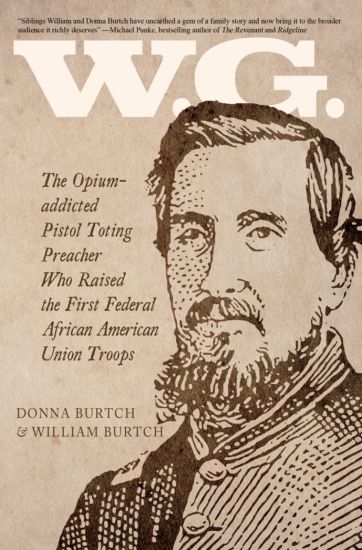
W.G.

W.G.

William Burtch; Donna Burtch

Sunbury Press, Inc.
2022
pokkari
William Gould "W.G." Raymond was a staunch abolitionist and Union officer. A preacher. Under Lincoln's authority, he raised hundreds of Black Union soldiers on the wild streets of D.C., eager to fight for their freedom. Many would go on to battle in perhaps the most important victory of Black troops in the Civil War. The War Department did not support the fledgling 1st District of Columbia Colored Volunteers (later the 1st U.S.C.T.). W.G. was forced to pay for troop provisions and training out of his own pocket, never to be repaid. His challenges were just beginning.