Kirjojen hintavertailu. Mukana 12 564 204 kirjaa ja 12 kauppaa.

Kirjahaku

Etsi kirjoja tekijän nimen, kirjan nimen tai ISBN:n perusteella.

1000 tulosta hakusanalla GEORGE B. MCCLELLAN

Treading Softly

Treading Softly

George B. Clark

Praeger Publishers Inc
2001
sidottu
From the mid-19th century to the early Cold War, the United States has a long history with China, and that interaction has not always been positive or productive. This brief history of foreign intervention in China, viewed through the experiences of the United States Marines, examines how the occupying powers dealt with a fellow sovereign nation. In many cases this involved the partition or outright absorption of Chinese territory through naked aggression. Clark contends that, considering the past two centuries, the Chinese have good reason to distrust all foreigners, and he urges the pursuit of a badly needed rapprochement.This is, however, also the story of the evolution of the Marine Corps as a separate service. Although an occupying force, the Marines did make considerable efforts to earn the friendship of the Chinese people. Always on the brink of extinction due to budgetary cuts and the enmity of the army and navy, the Marines managed to perform an onerous and difficult duty in a foreign land. With a resurgent China constantly testing the United States, a fellow Pacific Rim nation, every policymaker should be well aware of the often difficult history that we share and the mistakes that have been made in the past.

Into Wild Mongolia

Into Wild Mongolia

George B. Schaller

Yale University Press
2020
sidottu
Explore the wonders of wild Mongolia through the eyes of a distinguished field biologist Mongolia became a satellite of the Soviet Union in the mid-1920s, and for nearly seven decades it effectively closed its doors to the outside world. Biologist George Schaller, who first visited the country in 1989, was one of the first Western scientists allowed to study and assess the conservation status of Mongolia’s many unique, native wildlife species. Schaller made a number of trips from 1989 to 2018 in collaboration with Mongolian and American scientists, witnessing Mongolia’s recovery and transition to a market economy after the collapse of the Soviet Union. This informative and fascinating new book provides a firsthand account of Schaller’s time in this little-known and remote country, where he studied and helped develop conservation initiatives for the snow leopard, Gobi bear, wild camel, and Mongolian gazelle, among other species. Featuring magnificent photographs from his travels, the book offers a critical, at times inspiring contribution for those who treasure wildlife, as well as a fresh perspective on the natural beauty of the region, which encompasses steppes, mountains, and the Gobi Desert.
An Ibsen Companion

An Ibsen Companion

George B. Bryan

Greenwood Press
1984
sidottu
"This book will be useful to students of Ibsen and therefore belongs in the reference collections of all but the smallest public and academic libraries. . . . In all respects admirable." Reference Books Bulletin
Tumors of the Ear and Lateral Skull Base: Part 1, An Issue of Otolaryngologic Clinics of North America
The Editors for this issue of Otolaryngologic Clinics, Dr George Wanna and Dr Matthew Luke Carlson, envisioned a publication that reviews the evaluation and management of common ear and lateral skull base tumors. Intended audience includes Otologists, Neurotologists, General otolaryngologists and Neurosurgeons alike. The development of management of lateral skull base tumors has been rapid, in the past 40 years there has been a tremendous shift toward conservative therapy for benign lesions. Focused chapters review specific pathologies plus a chapter focused on stereotactic radiotherapy. Topics written by reputed leaders in the field of Otology and skull base tumors include: Imaging of temporal bone lesions; Squamous cell carcinoma of the temporal bone; Glomus tympanicum; Adenomatous tumors of the middle ear; Intralabyrinthine schwannomas; Vestibular schwannoma; Neurofibromatosis2 (including ABI and CI); Non-schwannoma tumors of the CPA; Glomus jugulare; Endolymphatic sac tumors; Non-paraganglioma jugular foramen tumors; Primary tumors of the facial nerve; Cholesterol granuloma and other petrous apex lesions; Stereotactic radiosurgery for tumors of the lateral skull base; Pediatric temporal bone malignancy; and Historical perspective on evolution in management of lateral skull base tumors.
Evaluating Teachers and Administrators

Evaluating Teachers and Administrators

George B. Redfern

Routledge
2019
sidottu
Stressing the importance of using evaluation as a means to improve teacher and administrator performance, Dr. Redfern provides a practical guide to conducting an evaluation and using its results. He thoroughly describes the anatomy of the evaluation process, outlines the materials needed, and covers such often-neglected topics as evaluation of substandard performance, assessment of the performance of administrators and supervisors, evaluation as an administrative tool in education management, and the potential pitfalls inherent in the evaluation process. The book closes with detailed suggestions for developing or revising programs for personnel evaluation.
Evaluating Teachers and Administrators

Evaluating Teachers and Administrators

George B. Redfern

Routledge
2020
nidottu
Stressing the importance of using evaluation as a means to improve teacher and administrator performance, this book provides a practical guide to conducting an evaluation and using its results. It describes the anatomy of the evaluation process and outlines the materials needed for school systems.
Linear Programming 1

Linear Programming 1

George B. Dantzig; Mukund N. Thapa

Springer-Verlag New York Inc.
1997
sidottu
By George B. Dantzig LINEAR PROGRAMMING The Story About How It Began: Some legends, a little about its historical sign- cance, and comments about where its many mathematical programming extensions may be headed. Industrial production, the ?ow of resources in the economy, the exertion of military e?ort in a war, the management of ?nances—all require the coordination of interrelated activities. What these complex undertakings share in common is the task of constructing a statement of actions to be performed, their timing and quantity(calledaprogramorschedule), that, ifimplemented, wouldmovethesystem from a given initial status as much as possible towards some de?ned goal. While di?erences may exist in the goals to be achieved, the particular processes, and the magnitudes of e?ort involved, when modeled in mathematical terms these seemingly disparate systems often have a remarkably similar mathematical str- ture. The computational task is then to devise for these systems an algorithm for choosing the best schedule of actions from among the possible alternatives. The observation, in particular, that a number of economic, industrial, ?nancial, and military systems can be modeled (or reasonably approximated) by mathem- ical systems of linear inequalities and equations has given rise to the development of the linear programming ?eld.
Linear Programming 2

Linear Programming 2

George B. Dantzig; Mukund N. Thapa

Springer-Verlag New York Inc.
2003
sidottu
Linear programming represents one of the major applications of mathematics to business, industry, and economics. It provides a methodology for optimizing an output given that is a linear function of a number of inputs. George Dantzig is widely regarded as the founder of the subject with his invention of the simplex algorithm in the 1940's. This second volume is intended to add to the theory of the items discussed in the first volume. It also includes additional advanced topics such as variants of the simplex method; interior point methods (early and current methods), GUB, decomposition, integer programming, and game theory. Graduate students in the fields of operations research, industrial engineering and applied mathematics will find this volume of particular interest.
Physics With Illustrative Examples From Medicine and Biology

Physics With Illustrative Examples From Medicine and Biology

George B. Benedek; I.M. London; Felix M.H. Villars

Springer-Verlag New York Inc.
2000
sidottu
A reissue of a classic book, corrected, edited, and typeset, to be published in the Biological Physics Series. Intended for undergraduate courses in biophysics, biological physics, physiology, medical physics, and biomedical engineering, this book is an introduction to statistical physics with examples and problems from the medical and biological sciences. Topics include the elements of the theory of probability, Poisson statistics, thermal equilibrium, entropy and free energy, and the second law of thermodynamics. Chapters include problems and references. The book can be used as a supplement to standard introductory physics courses, and as a text for medical schools, medical physics courses, and biology departments. The three volumes combined present all the major topics in physics. Originally published in 1974 from the authors's typescript, this reissue will be edited, corrected, typeset, the art redrawn, and an index added. These books are being reissued by Springer in the Biological Physics Series in response to frequent requests to provide these texts to satisfy the growing need among students and practitioners in the medical and biological sciences with a working knowledge of the physical sciences. The books are also in demand in physics departments either as supplements to traditional intro texts or as main text for those departments offering courses with biological or medical physics orientation. A solutions manual will be available. The authors are recognized experts in the field, and are under contract for an upperlevel/grad text in biological physics. Benedeck was the recepient of the 1995 Irving Lanmuir Prize from the American Physical Society for Chemical Physics, and the 1994 Biological Physics Prize by the American Physical Society.
Physics With Illustrative Examples From Medicine and Biology

Physics With Illustrative Examples From Medicine and Biology

George B. Benedek; I.M. London; Felix M.H. Villars

Springer-Verlag New York Inc.
2000
sidottu
A reissue of a classic book, corrected, edited, and typeset, to be published in the Biological Physics Series. Intended for undergraduate courses in biophysics, biological physics, physiology, medical physics, and biomedical engineering, this book is an introduction to mechanics with examples and problems from the medical and biological sciences. The book covers standard topics of kinematics, dynamics,statics, momentum, and feeedback, control and stability but with emphasis on physical and biological systems. Chapters include problems and references. The book can be used as a supplement to standard introductory physics courses, and as a text for medical schools, medical physics courses, and biology departments. The three volumes combined present all the major topics in physics. Originally published in 1974 from the authors's typescript, this reissue will be edited, corrected, typeset, the art redrawn, and an index added. These books are being reissued by Springer in the Biological Physics Series in response to frequent requests to provide these texts to satisfy the growing need among students and practitioners in the medical and biological sciences with a working knowledge of the physical sciences. The books are also in demand in physics departments either as supplements to traditional intro texts or as main text for those departments offering courses with biological or medical physics orientation. A solutions manual will be available. The authors are recognized experts in the field, and are under contract for an upperlevel/grad text in biological physics. Benedeck was the recepient of the 1995 Irving Lanmuir Prize from the American Physical Society for Chemical Physics, and the 1994 Biological Physics Prize by the American Physical Society.
Physics With Illustrative Examples From Medicine and Biology

Physics With Illustrative Examples From Medicine and Biology

George B. Benedek; I.M. London; Felix M.H. Villars

Springer-Verlag New York Inc.
2000
sidottu
The field of biological physics is a broad, multidisciplinary, and dynamic one, touching on many areas of research in physics, biology, chemistry and medicine. New findings are published in a large number of publications within these disci­ plines, making it difficult for students and scientists working in biological physics to keep up with advances occurring in disciplines other than their own. The Bi­ ological Physics Series is intended therefore to be a comprehensive one covering a broad range of topics important to the study of biological physics. Its goal is to provide scientists and engineers with text books, monographs and reference books to address the growing need for information. Books in the Biological Physics Series will emphasize frontier areas of science including molecular, membrane, and mathematical biophysics; photosynthetic en­ ergy harvesting and conversion; information processing; physical principles of ge­ netics; sensory communications; automata networks, neural networks, and cellu­ lar automata. Equally important will be coverage of current and potential applied aspects of biological physics such as biomolecular electronic components and de­ vices, biosensors, medicine, imaging, physical principles of renewable energy pro­ duction, and environmental control and engineering. We are fortunate to have a distinguished roster of consulting editors on the Editorial Board, reflecting the breadth of biological physics. We believe that the Biological Physics Series can help advance the knowledge in the field by providing a home for publications in the field and that scientists and practitioners from many disciplines will find much to learn from the upcoming volumes.
Patricide in the House Divided

Patricide in the House Divided

George B. Forgie

WW Norton Co
1981
nidottu
George B. Forgie argues that the crisis of the Union was decisively structured by one obvious, overbearing fact: the dominant figures in American public life in the 1850s were born in the early Republic. They were raised to think of its founders as immortal fathers whom they must imitate, themselves as brothers, and the Union as an inherited house to be preserved.
Introduction to Plant Diseases

Introduction to Plant Diseases

George B. Lucas; Lee Campbell

Chapman and Hall
1992
nidottu
Every year we see a remarkable increase in scientific knowledge. We are learning more each day about the world around us, about the numerous biological organisms of the biosphere, about the physical and chemical processes that shaped and continue to change our planet. The cataloging, retrieval, dissemination, and use of this new information along with the continued development of new computer technology provide some of the most challenging problems in science as we enter the Information Age. With the explosion of knowledge in science, it is especially important that students in introductory courses learn not only the basic material of a subject, but also about the newest developments in that subject. With this goal in mind, we have prepared a second edition of Introduction to Plant Diseases: Identification and Management. We prepared this edition with the same general purpose that we had for the first edition - to provide practical, up-to-date information that helps in the successful management of diseases on food, fiber, and landscape plants for students who do not have a strong background in the biological sciences. We included new information on (1) the precise identification of diseases and the pathogens that cause them, (2) the development of epidemics of plant diseases, (3) the application of biotechnology in plant pathology, (4) the use of alternative methods of crop production and disease management that help protect the environment, and (5) diseases that have become more important since the first edition was published.
Introduction to Plant Diseases: Identification and Management

Introduction to Plant Diseases: Identification and Management

George B. Lucas; C.L. Campbell; L.T. Lucas

Van Nostrand Reinhold Inc.,U.S.
1998
nidottu
This book provides practical, up-to-date information that helps in the successful management of diseases on food, fibre and landscape plants for students who do not have a strong background in the biological sciences. It is largely revised to reflect the recent problems in conventional agriculture with an environmental emphasis and to include the latest techniques in biotechnology and genetic engineering. This edition includes information on the more precise indentification of diseases and the pathogens that cause them, the development of epidermics of plant diseases, the application of biotechnology in plant pathology and the use of alternative methods of crop production and disease management. This book should be of interest to agricultural consultants; chemical company representatives; sales personnel; courses in biological sciences and agriculture in high schools; technical colleges.
Onboarding

Onboarding

George B. Bradt; Mary Vonnegut

John Wiley Sons Inc
2009
sidottu
A guide to getting new employees recruited, oriented, and productive—FAST "Onboarding," a growing trend in the business community, is a focused methodology that gets people in new roles up to speed quickly and efficiently. This book guides you through a process that enables you to recruit, orient, and enable your new employees to get the job done. Learn how to inspire and encourage your new employees to deliver better results faster. George Bradt and Mary Vonnegut’s Onboarding helps ensure that your new employees are productive and efficient from day one. You’ll learn how to help them assimilate into your corporate culture and accelerate their learning. Onboarding is one of the hottest trends in businessThis is the first book about onboardingGeorge Bradt is a leading speaker and consultant, and the author of The New Leader’s 100-Day Action Plan For business leaders and managers who want well-trained, responsive, efficient, and effective employees, Onboarding helps you get the best from your new employees.
Indoor Plants

Indoor Plants

George B. Briggs; Clyde L. Calvin

John Wiley Sons Inc
1986
nidottu
This comprehensive, one-volume source covers the identification, culture, and use of indoor foliage plants. The book's unique quality comes from the authors' blending of botanical, horticultural, and landscape architectural perspectives. Presents detailed information on nomenclature, identification principles, plant growth and development, propagation, and aspects of soils, fertilizers, and climate. Also covers plant care and indoor plant design principles. Three major chapters--Climate, Insects and Diseases, and Design--are provided by authorities in the field who specialize in these areas. Concluding chapters offer specific information on major indoor plant groups and the 150 most popular plants. Includes over 300 original drawings commissioned by a horticultural artist.
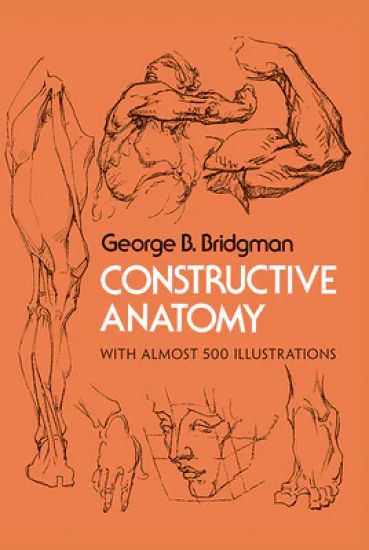
Constructive Anatomy

Constructive Anatomy

George B. Bridgman

Dover Publications Inc.
2000
nidottu
"Excellent. The most valuable, detailed anatomical studies (which are also beautifully drawn) of all parts of the figure." -- American Artist"The best book on artist's anatomy available anywhere." -- Art Students League NewsCountless artists and students since the 1920s have used this and other books by George B. Bridgman (for nearly 50 years a teacher at the Art Students League in New York) for a solid foundation and understanding of human anatomy. They have found, and continue to find, that his unique way of discovering the vitalizing forces in the human form and realizing them in drawing carries the student pleasantly over one of art's most severe hurdles. Bridgman's superb anatomical sketches, of which there are nearly 500 in the book, also bring clearly to fruition his lucid theories of how to draw the human body in its structure and its complex movements.Constructive Anatomy, an anatomical reference guide for the working artist, sculptor, and student, graphically shows important parts of the human body, both in motion and in repose -- hand, wrist, thumb, fingers, forearm, arm, armpit, shoulder, neck, head, eye, nose, ear, mouth, chin, trunk (front, side, and back), pelvis, hip, thigh, leg, knee, ankle, foot, and toes. Drawings of bone and muscle structure of the working of the joints and the interrelation of the various parts of the body are mainly concerned with movement of all sorts -- movements that are described in detail as well as illustrated. The bending, twisting, and turning, creasing and interlocking of the various parts of the body are represented in drawing as the wedging of masses in specific ways that are clearly defined by Mr. Bridgman.Every artist will save tedious hours of research with this simple but effective approach, and will be delighted with its directness and fervor.
The Human Machine

The Human Machine

George B. Bridgman

Dover Publications Inc.
2003
nidottu
What is the difference between art anatomy and Bridgman's concept of the human machine? The human machine is the body as not only a fixed framework but also as a complex work of art which moves and was designed to move. In over 400 drawings, George B. Bridgman demonstrates the machine through the presentations which made him a gifted lecturer and teacher in his nearly fifty years at the Art Students League in New York and which gave life to drawings by his many students during those years. All skeletal and muscular systems are fully identified, and all are shown in front, back, and side views.The Human Machine begins with the framework of bones. In each section (head, neck, hand, arm, forearm, elbow, trunk, shoulder, back, scapular region, pelvis, hip, thigh, leg, knee, foot, and toe as well as the combinations of the major sections working together), George Bridgman starts with the skeletal components of the system; then he adds the muscles, shows the changes in the muscles as the body moves and, finally, shows the appearance of the bodily section in action. At the title implies, Bridgman, throughout, supplements his anatomical work with comparative drawings of simple machines. The anatomical approach to figure drawing is the foundation for the study of human form, and as in his other books on figure drawing, Bridgman's Life Drawing and The Book of a Hundred Hands, Bridgman's approach to the subject is important and unique. The Human Machine will give students and serious artists the conception of the human structure as the complex of beautiful machines it is, and will show how bone and muscle structures are solely responsible for our movements and for the shapes which we, at various times, display.