
Kirjahaku
Etsi kirjoja tekijän nimen, kirjan nimen tai ISBN:n perusteella.
1000 tulosta hakusanalla Gilles Seban

Sounding the Virtual: Gilles Deleuze and the Theory and Philosophy of Music
Nick Nesbitt
Routledge
2016
nidottu
It is the contention of the editors and contributors of this volume that the work carried out by Gilles Deleuze, where rigorously applied, has the potential to cut through much of the intellectual sedimentation that has settled in the fields of music studies. Deleuze is a vigorous critic of the Western intellectual tradition, calling for a 'philosophy of difference', and, despite its ambitions, he is convinced that Western philosophy fails to truly grasp (or think) difference as such. It is argued that longstanding methods of conceptualizing music are vulnerable to Deleuze's critique. But, as Deleuze himself stresses, more important than merely critiquing established paradigms is developing ways to overcome them, and by using Deleuze's own concepts this collection aims to explore that possibility.

Le Fratricide Ou Gilles De Bretagne (1850)
Joseph Alexis Walsh
KESSINGER PUBLISHING, LLC
2010
pokkari

Notice Historique Sur Saint-Gilles (1862)
Jean Andre Teissonnier
KESSINGER PUBLISHING, LLC
2010
pokkari

Congressman? Stolen by Indians? French nobility? Horse thief? King's Daughters? Brewery founders? How much do you really know about the men and women who created our family?

French philosopher Gilles Deleuze wrote two 'logic' books: Francis Bacon: The Logic of Sensation and The Logic of Sense. However, in neither of these books nor in any other works does Deleuze articulate in a formal way the features of the logic he employs. He certainly does not use classical logic. And the best options for the non-classical logic that he may be implementing are: fuzzy, intuitionist, and many-valued. These are applicable to his concepts of heterogeneous composition and becoming, affirmative synthetic disjunction, and powers of the false. In The Logic of Gilles Deleuze: Basic Principles, Corry Shores examines the applicability of three non-classical logics to Deleuze's philosophy, by building from the philosophical and logical writings of Graham Priest, the world's leading proponent of dialetheism. Through so doing, Shores argues that Deleuze's logic is best understood as a dialetheic, paraconsistent, many-valued logic.

French philosopher Gilles Deleuze wrote two 'logic' books: Francis Bacon: The Logic of Sensation and The Logic of Sense. However, in neither of these books nor in any other works does Deleuze articulate in a formal way the features of the logic he employs. He certainly does not use classical logic. And the best options for the non-classical logic that he may be implementing are: fuzzy, intuitionist, and many-valued. These are applicable to his concepts of heterogeneous composition and becoming, affirmative synthetic disjunction, and powers of the false. In The Logic of Gilles Deleuze: Basic Principles, Corry Shores examines the applicability of three non-classical logics to Deleuze's philosophy, by building from the philosophical and logical writings of Graham Priest, the world's leading proponent of dialetheism. Through so doing, Shores argues that Deleuze's logic is best understood as a dialetheic, paraconsistent, many-valued logic.

The Observations of Gilles Le Bouvier: A Medieval Herald's View of Europe and Its Neighbouring Lands
BLOOMSBURY ACADEMIC
2026
nidottu

The Observations of Gilles le Bouvier
BLOOMSBURY PUBLISHING PLC
2024
sidottu
Translated from the medieval French, this book is a landmark English-language version of the work of Gilles le Bouvier. As the senior herald to King Charles VII, the monarch on the French throne as they advanced to victory in the Hundred Years’ War between England, France and their allies, Gilles le Bouvier was close to the king during a decisive, formative period in France’s history, as well as being a well-known figure from the period. The Observations of Gilles le Bouvier thus delivers a rare glimpse of a singular medieval worldview, offered through the constrained voice of a skilled diplomat carefully and occasionally sharing his opinions to audiences composed of his social superiors.During his lifelong career as a messenger and a diplomat in Charles’s service, Gilles le Bouvier, known as The Berry Herald, travelled far and wide on his master’s behalf. This translated work is a compilation of his observations as he moved around Western Europe, the Mediterranean states and the Black Sea region. Throughout the text, Gilles le Bouvier:* assessed or commented on the lands encompassed by his extensive travels* discussed the peoples he claimed to have encountered, from the honourable Turks to the ‘bad Catholics’ of southern Italy* surveyed the military capabilities of France’s neighbours, allies, enemies and neutral statesExpertly introduced and contextualised by Gideon Brough and Sophie Patrick, this book provides a compelling and unique historical source for understanding life in late-medieval Europe through the eyes of someone who lived it.

The Soul of Marshal Gilles De Raiz - With Some Account of His Life and Times, His Abominable Crimes, And His Expiation
D. B. Wyndham Lewis
READ BOOKS
2010
pokkari

Redemption: an Inspector Gilles Maintenon mystery
Louis Shalako
Createspace Independent Publishing Platform
2014
nidottu

Ce livre (Grand Prix de Litt rature de l'Acad mie fran aise, 1912) raconte l'enfance d'un jeune gar on sensible et craintif, d laiss par ses parents, envoy chez sa tante, propri taire viticole, puis en internat. Ce r cit est crit avec une grande d licatesse d' motion et dans un style tr s pur.

The Horrific Crimes of Gilles de Rais Revisited
Jack Smith
Createspace Independent Publishing Platform
2016
pokkari
Gille de Rais has been described as one of the most horrific serial killer of the Middle Ages or was he? Revisiting Gilles de Rais crimes.La Roche-Bernard, France. September, 1438 Peronne Loessart knew that she should feel honored, both for herself and on her young son's behalf. But she was still in a state of unease bordering on fear. The Baron de Rais and his entourage were in her town, stopping at the hotel of Jean Colin, which was in the immediate neighborhood of Madame Loessart's home. One of the Baron's men, a man named Poitou, had spied her ten-year-old son and approached her about engaging the boy as his page. Young Loessart often drew such attention. He was an uncommonly beautiful child, with golden hair and expressive blue eyes. But this was the first time that he had come to the notice of a potential patron. Poitou, whose real name was tienne Corrillaut, went to Madame Loessart and offered her four pounds for the boy's services, with an added bonus of one hundred sous for a new dress. He also promised to continue the child's education at a prestigious institution. Although distressed at the thought of being parted from her son, Madame Loessart finally agreed. She knew that he had limited opportunities for advancement in La Roche-Bernard. Poitou also gave her his word that the boy would be well provided for. She believed it. Gilles de Rais was the Marshal of France, a great man who had helped Jeanne d'Arc bring about the victory at Orl ans. A regal escort preceded him wherever he went and trumpeters announced his presence at each destination. His ostentatious display of wealth and pageantry turned heads and inspired both awe and adoration. Now her son would have the chance to benefit from such glory. A pony was purchased from the hotel owner for the boy to ride, and the Baron's entourage left for his castle at Machecoul the following day. There was probably a tearful goodbye, accompanied by promises to send messages and see each other soon. Despite the excellent opportunity she appeared to be giving her son, Madame Loessart remained anxious. Perhaps separation anxiety was taking hold. Maybe the rumors that had been circulating lately now seemed more plausible. Whatever the reason, she suddenly ran after the departing party. One of the Baron's servants intercepted the distraught woman and held her back, reminding her that a bargain had been struck. Gilles de Rais did not respond to her pleas. Instead, he spoke to the servant restraining her. "He (the child) is well chosen. He is as beautiful as an angel." Finally Madame Loessart calmed down, and the Baron's party resumed its journey. Two years passed. The Baron's servants passed through the village once during that time, although young Loessart was not with them. On demanding news of her son, the men informed her that the boy was either at Tiffauges or Pouzauges. The truth was that he was long dead. Scroll back up and grab your copy today
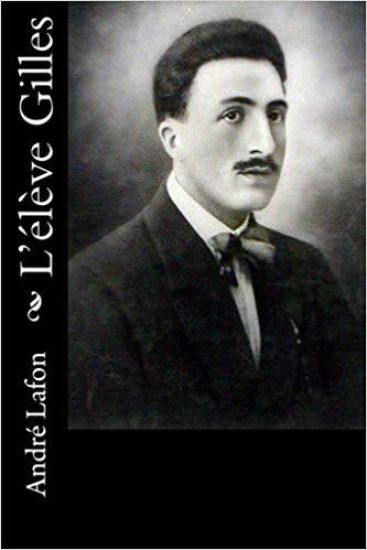

R cit de l'enfance d'un jeune gar on sensible et craintif, d laiss par ses parents, envoy chez sa tante, propri taire viticole, puis en internat, ce texte est crit avec une grande d licatesse d' motion et dans un style tr s pur. Ce livre a re u pour la premi re fois le grand de prix litt rature de l'Acad mie Fran aise en 1912.

Elye of Saint-Gilles
Italica Press
2010
sidottu

Elye of Saint-Gilles
Italica Press
2010
pokkari

The Martyrdom of Gilles de Rais
Margot K. Juby
Createspace Independent Publishing Platform
2018
nidottu

Chronicle and Annals of Gilles le Muisit
The Boydell Press
2021
sidottu
Gilles li Muisit was the abbot of the Benedictine monastery of St. Martin of Tournai, a city on the north-eastern border of France. This region was a at the centre of Edward III's campaigns in Flanders at the beginning of the Hundred Years War. Le Muisit's chronicle covers events in France and Flanders from the point of view of a well informed contemporary. He kept records of important events from around 1330 onwards, and when he went blind in 1345, he occupied his time by writing up these notes, which were read to him. He then dictated the text to a scribe. An operation for cataracts restored his sight in 1352, but he never managed to revise his text. It consists of a full chronicle up to 1348, and then annals after that. He is a spirited writer, and his comments on fashion (with illuminations) are often quoted; he also has a remarkable passage on how it is impossible for anyone to know what is going on in a battle (apropos of the battle of Crécy), let alone for a historian to produced an accurate account afterwards. He uses some written records, and writes at first hand of the siege of Tournai in 1340. Much of his information comes from the distinguished guests who visited his abbey, but he is very wary about what he hears. 'What they say is partly false, partly true... if I write down things about which I may not be certain, my whole work will be in disrepute'. He is a largely realistic counterweight to the narratives of chivalrous exploits in Jean le Bel and Froissart, who cover the same place and period. And his voice speaks not for the nobility, for whom war represented glory and profit, but for the defenceless and weak who were the main sufferers.