Dieses Buch bietet ein Tutorial über Quantenkommunikationsnetze. Die Autoren erörtern aktuelle Paradigmenwechsel in Kommunikationsnetzen, die erforderlich sind, um die einfachen Transportkonzepte der vorherrschenden Netze um Rechen- und Speicherfunktionen zu ergänzen. Sie zeigen, wie diese "softwarisierten" Lösungen neue Wege beschreiten, um Latenzzeiten zu reduzieren und die Ausfallsicherheit zu erhöhen. Die Autoren erörtern, wie diese Lösungen trotz der ihnen innewohnenden Probleme aufgrund der eingeführten Rechenlatenz und des Energieverbrauchs durch hybride klassisch-quantische Kommunikationsnetze gelöst werden können. Das Buch bringt Quantennetzwerke, Quanteninformationstheorie, Quantencomputer und Quantensimulation zusammen.

Master Microsoft Fabric from basics to advanced architectures with expert guidance to unify, secure, and scale analytics on real-world data platforms Key Features Build a complete data analytics platform with Microsoft Fabric Apply proven architectures, governance, and security strategies Gain real-world insights from five seasoned data experts Purchase of the print or Kindle book includes a free PDF eBook Book DescriptionMicrosoft Fabric is reshaping how organizations manage, analyze, and act on data by unifying ingestion, storage, transformation, analytics, AI, and visualization in a single platform. The Definitive Guide to Microsoft Fabric takes you from your very first workspace to building a secure, scalable, and future-proof analytics environment. You’ll learn how to unify data in OneLake, design data meshes, transform and model data, implement real-time analytics, and integrate AI capabilities. The book also covers advanced topics, such as governance, security, cost optimization, and team collaboration using DevOps and DataOps principles. Drawing on the real-world expertise of five seasoned professionals who have built and advised on platforms for startups, SMEs, and Europe’s largest enterprises, this book blends strategic insight with practical guidance. By the end of this book, you’ll have gained the knowledge and skills to design, deploy, and operate a Microsoft Fabric platform that delivers sustainable business value.What you will learn Understand Microsoft Fabric architecture and concepts Unify data storage and data governance with OneLake Ingest and transform data using multiple Fabric tools Implement real-time analytics and event processing Design effective semantic models and reports Integrate AI and machine learning into data workflows Apply governance, security, and compliance controls Optimize performance and costs at scale Who this book is forThis book is for data engineers, analytics engineers, architects, and data analysts moving into platform design roles. It’s also valuable for technical leaders seeking to unify analytics in their organizations. You’ll need only a basic grasp of databases, SQL, and Python.
Gilbert is excited for a perfect day at the beach . . . until Lola is scared of the water and Gilbert forgets his bathing suit Even after buying a cool new suit that says "Surfer Dude" on it, will Gilbert end up in deep water?
BAM --out falls Gilbert's loose tooth at recess He's so excited for the tooth fairy to come and leave him a surprise. But when Lewis gets jealous and comes up with a sneaky plan, will the tooth fairy fall for it?
"A Gillbert is of no use without a Sullivan" - with those words, W. S. Gillbert summed up his reasons for persisting in his collaberation with Arthur Sullivan despite the combative nature of their relationship. In fact, Micheal Ainger suggests in Gillbert and Sullivan, the pair's success is a direct result of their personality clash, as each partner challenged the other to produce his best work. After exhaustive research into the D'Oyly Carte collection of documents, Ainger offers the most detailed account to date of Gillbert and Sullivan's starkly different backgrounds and long working partnership. Having survived an impoverished and insecure childhood, Gillbert flourished as a financially successful theatre professional, married happily and established himself as a property owner. His sense of proprietorship extended beyond real estate, and he fought tenaciously to protect the integrity of his musical works. Sullivan, the product of a supportive family who nourished his talent, was much less satisfied with stability than his collaborator. His creative self-doubts and self-demands led to nervous and physical breakdowns, but also propelled the team to break the successful mode of their earliest work to produce more ambitious pieces of theatre, including The Mikado and The Yeoman of the Guard. Offering previously unpublished draft librettos and personal letters, this thorough double biography will be an essential addition to the library of any Gillbert and Sullivan fan.
'A Gilbert is of no use without a Sullivan.' With these words, W.S. Gilbert summed up his reasons for persisting in his collaboration with Arthur Sullivan despite the combative nature of their relationship. In fact, Michael Ainger suggests in Gilbert and Sullivan the success of the pair's work is a direct result of their personality clash, as each partner challenged the other to produce his best work. After exhaustive research into the D'Oyly Carte collection of documents, Ainger offers the most detailed account to date of Gilbert and Sullivan's starkly different backgrounds and long working partnership. Having survived an impoverished and insecure childhood, Gilbert flourished as a financially successful theater professional, married happily and established himself as a property owner. His sense of proprietorship extended beyond real estate, and he fought tenaciously to protect the integrity of his musical works. Sullivan, the product of a supportive family who nourished his talent, was much less satisfied with stability than his collaborator. His creative self-doubts and self-demands led to nervous and physical breakdowns, but it also propelled the team to break the successful mode of their earliest work to produce more ambitious pieces of theater, including The Mikado and The Yeoman of the Guards . Offering previously-unpublished draft libretti and personal letters, this thorough double-biography will be an essential addition to the library of any Gilbert and Sullivan fan.
One of the most striking features of the twelfth-century Church was the growing desire of women for a greater role in the monastic life. Contemporary monastic reformers responded to his demand in various ways: some focused their appeal on women, others actively discouraged all contact; but all were agreed on the need to regularise religious life for women. In England this phenomenon is most clearly seen in the emergence of the Gilbertine order, founded by the Lincolnshire priest, Gilbert of Sempringham. The Gilbertines were the only native monastic order in medieval England, and were highly unusual in their provision for both nuns and canons. In the first full-scale study since 1902, Brian Golding provides a comprehensive account of the history of the order from its mid-twelfth century origins up to the early fourteenth century. His detailed analysis of the economy of the Gilbertines reveals much about monastic revenue and organization, and about the order's relations with their lay patrons and benefactors. Dr Golding goes on to show that by 1300 the Gilbertine experiment was largely dead. The founding ideals of a structure in which men and women could live in harmony and order had given way to male domination and the marginalization of the nuns. This stimulating and informative study will be essential reading for all historians of medieval monasticism.
This is the first comprehensive account of the life and work of the distinguished scholar and public figure Gilbert Murray (1866-1957). Sixteen contributors survey his childhood, his work in the theatre and in international relations, his Greek scholarship and contributions on religion and philosophy, his friendships (including those with Bertrand Russell and A. E. Housman), his long commitment to the Home University Library, his radio work, and his involvement with psychic research. The book opens with memoirs by two of his grandchildren. Two biographies of Murray were published in the 1980s, but the range of his activities makes it impossible for a single person to encompass them all adequately. This book, published 50 years after his death, aims to proved a comprehensive reassessment of a remarkable man.
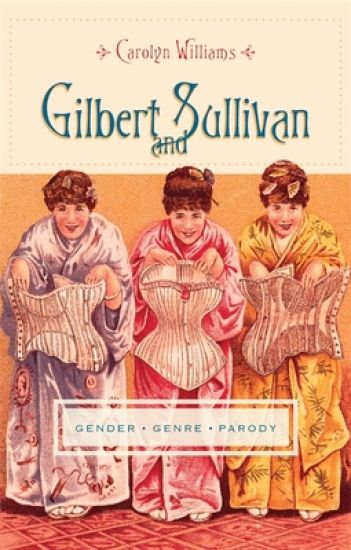
Long before the satirical comedy of The Daily Show and The Colbert Report, the comic operas of W. S. Gilbert and Arthur Sullivan were the hottest send-ups of the day's political and cultural obsessions. Gilbert and Sullivan's productions always rose to the level of social commentary, despite being impertinent, absurd, or inane. Some viewers may take them straight, but what looks like sexism or stereotype was actually a clever strategy of critique. Parody was a powerful weapon in the culture wars of late-nineteenth-century England, and with defiantly in-your-face sophistication, Gilbert and Sullivan proved that popular culture can be intellectually as well as politically challenging. Carolyn Williams underscores Gilbert and Sullivan's creative and acute understanding of cultural formations. Her unique perspective shows how anxiety drives the troubled mind in the Lord Chancellor's "Nightmare Song" in Iolanthe and is vividly realized in the sexual and economic phrasing of the song's patter lyrics. The modern body appears automated and performative in the "Junction Song" in Thespis, anticipating Charlie Chaplin's factory worker in Modern Times. Williams also illuminates the use of magic in The Sorcerer, the parody of nautical melodrama in H.M.S. Pinafore, the ridicule of Victorian aesthetic and idyllic poetry in Patience, the autoethnography of The Mikado, the role of gender in Trial by Jury, and the theme of illegitimacy in The Pirates of Penzance. With her provocative reinterpretation of these artists and their work, Williams recasts our understanding of creativity in the late nineteenth century.
Gilbert the one-eyed cat who lives in a small village in Ireland called Castleisland. He had moved down from Dublin with the O'donnell family. After arriving he made friends with two mice called Paddy and Sheena and also a Jack Russell dog named Terry. The book tells of Gilbert's adventures as well as his squabbles with some nasty rats who have moved into the house.
The first biography of Gilbert Spencer, recounting the life and career of a long-overlooked twentieth-century British artist Gilbert Spencer (1892–1979) was a British painter, muralist, illustrator, teacher, and writer whose career spanned more than six decades. Recognised during his lifetime as one of the leading artists of his generation, his reputation has long been overshadowed by his more famous brother, Stanley. Yet Spencer’s fascination with landscape and his ability to capture everyday life in rural England led to the creation of some of the most poignant artworks of the interwar period. Drawing on a newly discovered archive of personal letters, notebooks, and diaries, this illustrated biography tells Spencer’s story for the first time. Bringing together his major paintings, drawings and illustrations, many never before seen, the book greatly expands our understanding of Spencer. It reassesses his status within twentieth-century British modernism and the revival of the landscape tradition, as well as the important role he played in the reinvigoration of public mural painting. Spencer is also reappraised as one of the most successful art teachers of his time, and his extensive influence on the lives and careers of many twentieth-century artists is explored in detail.
On March 13-14, 2025, the Nuclear and Radiation Studies Board of the National Academies of Sciences, Engineering, and Medicine hosted the most recent Gilbert W. Beebe symposium, with the goal of discussing the applications of artificial intelligence (AI) and machine learning (ML) in the fields of radiation therapy, medical diagnostics, and occupational health and safety. Among other topics, symposium participants discussed the importance of data for AI readiness, multimodal modeling, digital twins, uncertainty quantification and trustworthiness, and bias and ethics as it applies to each of these fields. The Gilbert W. Beebe Symposium was established by the Board on Radiation Effects Research (a predecessor of the Nuclear and Radiation Studies Board) in 2002 to honor the scientific achievements of the late Dr. Gilbert W. Beebe, a distinguished National Cancer Institute radiation epidemiologist who was one of the designers and key implementers of the epidemiology studies of Japanese atomic bomb survivors and a co-founder of the Medical Follow-up Agency. The symposium is used to promote discussions among scientists, federal staff, and other interested parties concerned with radiation health effects.
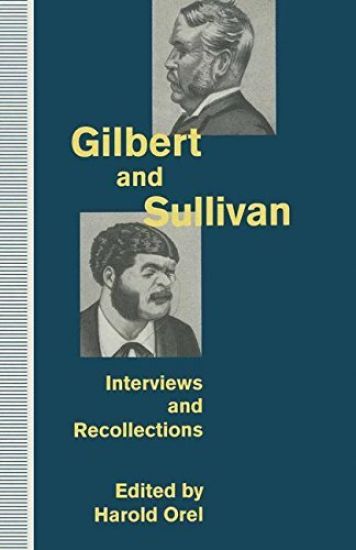
Sir William Schwenk Gilbert and Sir Arthur Sullivan created fourteen comic operas - witty satires set to sparkling music - that instantly won a large and enthusiastic audience and remain immensely popular today. Their talents brought the two men together and their temperaments finally drove them apart. Here, in forty interviews and recollections, is a record of what was said about them during and shortly after their lifetimes by friends, musicians, theatrical managers, singers, actors, and actresses, journalists and authors. For Gilbert and Sullivan devotees everywhere, this entertaining collection will provide fresh insights into the careers and collaborative achievements of one of the most successful - and enduring - enterprises of Victorian theatre.
Making use of archival resources in the United Kingdom and the United States, Regina B. Oost examines advertisements, promotional materials, and programs, as well as letters, diaries, and account books, to reconstruct the ways in which Richard D'Oyly Carte, W.S. Gilbert, and Arthur Sullivan attracted and shaped the expectations of theatergoers. Her findings place the Savoy operas in the context of other West End productions, considering similarities between Carte's promotional methods and those of managers Henry Irving, John Hollingshead, and Marie and Squire Bancroft. While all of these managers astutely understood patronage of a middle-class audience to be key to their success, the Savoy collaborators made strategic use of circumstances unique to their situation to distinguish Gilbert and Sullivan operas from contemporary theatrical fare. From Trial by Jury (1875) through The Grand Duke (1896), the Savoy operas celebrated the commodity culture beloved of the urban middle classes, validated a moral code that secured the social privileges audience members cherished, and ultimately provided a new model of British national identity that replaced the agrarian ideal espoused by earlier generations. Written in admirably accessible and jargon-free prose, Oost's book will appeal to scholars of theater history, literature, music, and popular culture, as well as general readers interested in Gilbert and Sullivan and the history of the D'Oyly Carte Opera Company.