
Kirjahaku
Etsi kirjoja tekijän nimen, kirjan nimen tai ISBN:n perusteella.
1000 tulosta hakusanalla Gordon Kipling
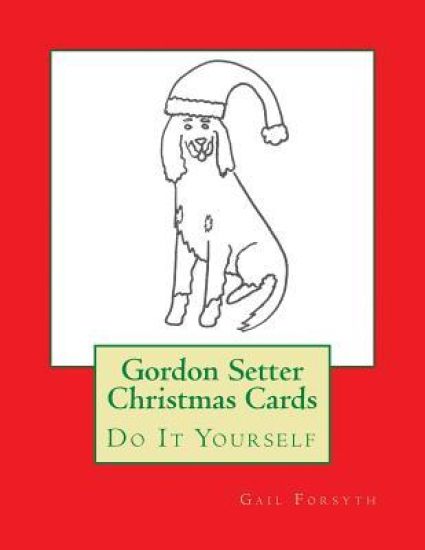
Gordon Setter Christmas Cards: Do It Yourself
Gail Forsyth
Createspace Independent Publishing Platform
2015
nidottu
What I See Is What You Get: The Complete Poetical Works of Gordon P. Bois
Gordon P. Bois
Createspace Independent Publishing Platform
2011
nidottu

The 5th: Poetics by Gordon P. Bois
Gordon P. Bois
Createspace Independent Publishing Platform
2015
nidottu


Multiplicity: Poetry by Gordon P. Bois
Gordon P. Bois
Createspace Independent Publishing Platform
2009
nidottu
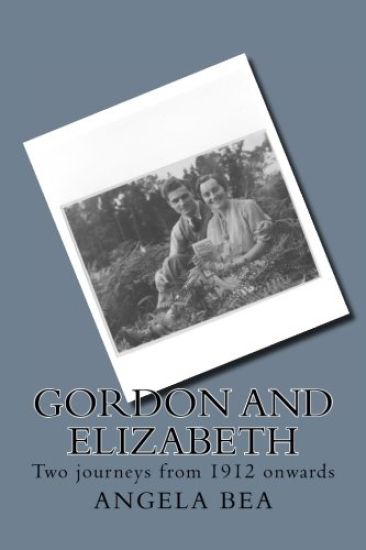
Gordon and Elizabeth: Two journeys from 1912 onwards
Gordon Green; Ruby Elizabeth Boorer; Angela Bea
Createspace Independent Publishing Platform
2015
nidottu

Four delightful short stories for the younger reader by a bestselling author.Gordon the Nervous Ghost: meet Gordon who haunts a school although he's not very good at it because he's scared of the children, but it's with the children's help that Gordon finally learns to haunt properly.Obo the Space Animal: meet Obo who lives on a space station but nobody has any use for him until Sam teaches him to play football.Roland the Short Giant: meet Roland who everybody laughs at because he is so short until he meets Obadiah who shoots him in the stomach with an arrow and Monty who teaches him to fight.Tick, Tock and Toby: meet Tick and Toby but not Tock because Tock has gone missing so the clock no longer works properly.

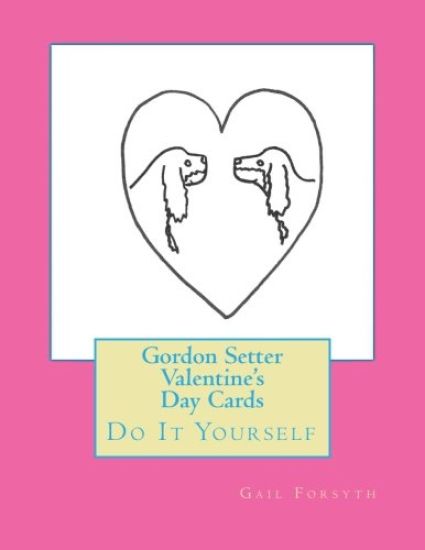
Gordon Setter Valentine's Day Cards: Do It Yourself
Gail Forsyth
Createspace Independent Publishing Platform
2016
nidottu
Let your imagination and creativity soar with these cute do-it-yourself Gordon Setter dog Valentine's Day paper cards. A fun Valentine's Day activity for all ages, sure to create lasting memories. Kids and animals just go together, especially if it's their favorite. Each book has 12 paper cards to color - 2 different designs. The pictures are hand drawn and the child is encouraged to draw more items on each card, along with any special markings that they like, truly making them one-of-a-kind. The inside of six of the cards reads "Be Mine, Valentine" and the other six cards read " You're Special". There are 12 envelopes to color, address, cut out and fold, adding to the fun. You'll find a Valentine's Day List to keep track of who you have given a Valentine card to. Fun for all ages.

Kit & Caboodle: The Writings of Gordon P. Bois - Volume One
Gordon P. Bois
Createspace Independent Publishing Platform
2016
nidottu

Good food fast from the global superstar chef.

Benita: An African Romance, by H. Rider Haggard ILLUSTRATED: Gordon Browne--Gordon Frederick Browne (15 April 1858 - 27 May 19
Gordon Browne; H. Rider Haggard
Createspace Independent Publishing Platform
2016
nidottu
Facing death; or, The hero of the Vaughan pit; a tale of the coal mines: By G.A. Henty and illustrations By Gordon Frederick Browne (15 April 1858 - 2
Gordon Browne; G. a. Henty
Createspace Independent Publishing Platform
2016
nidottu

Sweetheart travellers: a child's book for children, for women, and for men: By S. R. Crockett, illustrated By Gordon Frederick Browne (15 Apr
Gordon Browne; W. H. C. Groome; S. R. Crockett
Createspace Independent Publishing Platform
2016
nidottu
Samuel Rutherford Crockett (24 September 1859 - 16 April 1914), who published under the name "S. R. Crockett", was a Scottish novelist.He was born at Duchrae, Balmaghie, Kirkcudbrightshire, on 24 September 1859, the illegitimate son of dairymaid Annie Crocket. He was raised on his grandfather's Galloway farm, won a bursary to Edinburgh University in 1876, and graduated from there during 1879.After some years of travel, he became in 1886 minister of Penicuik. During that year he produced his first publication, Dulce Cor (Latin: Sweet Heart), a collection of verse under the pseudonym Ford Brereton. He eventually abandoned the Free Church ministry for full-time novel-writing in 1895.The success of J. M. Barrie and the Kailyard school of sentimental, homey writing had already created a demand for stories in Lowland Scots, when Crockett published his successful story of The Stickit Minister in 1893.It was followed by a rapidly produced series of popular novels frequently featuring the history of Scotland or his native Galloway. Crockett made considerable sums of money from his writing and was a friend and correspondent of R. L. Stevenson, but his later work has been criticised as being over-prolific and feebly sentimental.Crockett's connection with Kailyard is now beginning to be acknowledged as nebulous at best, as evidenced by a re-appraisal of the whole Kailyard concept by writers such as Andrew Nash.In 1900, Crockett wrote a booklet published by the London camera manufacturer, Newman & Guardia, comparing cameras favourably to pen and pencil and explaining how he encountered the N and G advertisement.Crockett was well travelled in Europe and beyond, spending time in most European countries and he wrote several novels of European history including The Red Axe (1898), A Tatter of Scarlet (1913), and the non fiction The Adventurer in Spain (1903) which holds its own against Robert Louis Stevenson's travel writing.He died in France on 16 April 1914. The subsequent outbreak of the First World War meant a delay in his remains being buried in his home kirkyard at Balmaghie. A memorial to him was erected in Laurieston by public subscription in 1932........... Gordon Frederick Browne (15 April 1858 - 27 May 1932) was an English artist and children's book illustrator in the late 19th century and early 20th century. He was born in Banstead, the younger son of notable book illustrator Hablot Knight Browne (who as "Phiz" illustrated books by Charles Dickens). He studied art at the Heatherley School of Fine Art and South Kensington Schools and started to receive professional commissions while still at college.............. William Henry Charles Groome (1854-1913).............
The adventurer in Spain (1903), By S.R.Crockett, illustrations By Gordon Browne: Samuel Rutherford Crockett (24 September 1859 - 16 April 1914), was a
Gordon Browne; S. R. Crockett
Createspace Independent Publishing Platform
2016
nidottu
Samuel Rutherford Crockett (24 September 1859 - 16 April 1914), who published under the name "S. R. Crockett", was a Scottish novelist.He was born at Duchrae, Balmaghie, Kirkcudbrightshire, on 24 September 1859, the illegitimate son of dairymaid Annie Crocket. He was raised on his grandfather's Galloway farm, won a bursary to Edinburgh University in 1876, and graduated from there during 1879. After some years of travel, he became in 1886 minister of Penicuik. During that year he produced his first publication, Dulce Cor (Latin: Sweet Heart), a collection of verse under the pseudonym Ford Brereton. He eventually abandoned the Free Church ministry for full-time novel-writing in 1895.The success of J. M. Barrie and the Kailyard school of sentimental, homey writing had already created a demand for stories in Lowland Scots, when Crockett published his successful story of The Stickit Minister in 1893.It was followed by a rapidly produced series of popular novels frequently featuring the history of Scotland or his native Galloway. Crockett made considerable sums of money from his writing and was a friend and correspondent of R. L. Stevenson, but his later work has been criticised as being over-prolific and feebly sentimental.Crockett's connection with Kailyard is now beginning to be acknowledged as nebulous at best, as evidenced by a re-appraisal of the whole Kailyard concept by writers such as Andrew Nash.In 1900, Crockett wrote a booklet published by the London camera manufacturer, Newman & Guardia, comparing cameras favourably to pen and pencil and explaining how he encountered the N and G advertisement. Crockett was well travelled in Europe and beyond, spending time in most European countries and he wrote several novels of European history including The Red Axe (1898), A Tatter of Scarlet (1913), and the non fiction The Adventurer in Spain (1903) which holds its own against Robert Louis Stevenson's travel writing. He died in France on 16 April 1914. The subsequent outbreak of the First World War meant a delay in his remains being buried in his home kirkyard at Balmaghie. A memorial to him was erected in Laurieston by public subscription in 1932....... Gordon Frederick Browne (15 April 1858 - 27 May 1932) was an English artist and children's book illustrator in the late 19th century and early 20th century. He was born in Banstead, the younger son of notable book illustrator Hablot Knight Browne (who as "Phiz" illustrated books by Charles Dickens). He studied art at the Heatherley School of Fine Art and South Kensington Schools and started to receive professional commissions while still at college. From the 1880s, Browne was one of Britain's most prolific illustrators, his work appearing in newspapers, magazines and many books by children's authors including Frederic William Farrar, G.A. Henty, Juliana Horatia Ewing, Andrew Lang, Talbot Baines Reed, L. T. Meade, Catherine Christian and E. Nesbit. Browne worked in watercolour and pen and ink. He was a member of the Royal Institute of Painters in Water Colours (RI) and the Royal Society of British Artists (RBA).He died in Richmond, London in 1932.............

Under Drake's flag; a tale of the Spanish Main. With twelve full-page illus. by: Gordon Browne
Gordon Browne; G. a. Henty
Createspace Independent Publishing Platform
2016
nidottu

Under Drake's flag; a tale of the Spanish Main. With twelve full-page illus. by: : Gordon Browne--Gordon Frederick Browne (15 April 1858 - 27 May 1932
Gordon Browne; G. a. Henty
Createspace Independent Publishing Platform
2016
nidottu
George Alfred Henty (8 December 1832 - 16 November 1902) was a prolific English novelist and war correspondent.He is best known for his historical adventure stories that were popular in the late 19th century. His works include The Dragon & The Raven (1886), For The Temple (1888), Under Drake's Flag (1883) and In Freedom's Cause (1885).G. A. Henty was born in Trumpington, near Cambridge. He was a sickly child who had to spend long periods in bed. During his frequent illnesses he became an avid reader and developed a wide range of interests which he carried into adulthood. He attended Westminster School, London, and later Gonville and Caius College, Cambridge, where he was a keen sportsman. He left the university early without completing his degree to volunteer for the Army Hospital Commissariat when the Crimean War began. He was sent to the Crimea and while there he witnessed the appalling conditions under which the British soldier had to fight. His letters home were filled with vivid descriptions of what he saw. His father was impressed by his letters and sent them to The Morning Advertiser newspaper which printed them. This initial writing success was a factor in Henty's later decision to accept the offer to become a special correspondent, the early name for journalists now better known as war correspondents. Shortly before resigning from the army as a captain in 1859 he married Elizabeth Finucane. The couple had four children. Elizabeth died in 1865 after a long illness and shortly after her death Henty began writing articles for the Standard newspaper. In 1866 the newspaper sent him as their special correspondent to report on the Austro-Italian War where he met Giuseppe Garibaldi. He went on to cover the 1868 British punitive expedition to Abyssinia, the Franco-Prussian War, the Ashanti War, the Carlist Rebellion in Spain and the Turco-Serbian War.He also witnessed the opening of the Suez Canal and travelled to Palestine, Russia and India. Henty was a strong supporter of the British Empire all his life; according to literary critic Kathryn Castle: "Henty...exemplified the ethos of the new imperialism, and glorified in its successes". 5] Henty's ideas about politics were influenced by writers such as Sir Charles Dilke and Thomas Carlyle.Henty once related in an interview how his storytelling skills grew out of tales told after dinner to his children. He wrote his first children's book, Out on the Pampas in 1868, naming the book's main characters after his children. The book was published by Griffith and Farran in November 1870 with a title page date of 1871. While most of the 122 books he wrote were for children, he also wrote adult novels, non-fiction such as The March to Magdala and Those Other Animals, short stories for the likes of The Boy's Own Paper and edited the Union Jack, a weekly boy's magazine. His children's novels typically revolved around a boy or young man living in troubled times. These ranged from the Punic War to more recent conflicts such as the Napoleonic Wars or the American Civil War. Henty's heroes - which occasionally included young ladies - are uniformly intelligent, courageous, honest and resourceful with plenty of 'pluck' yet are also modest.These virtues have made Henty's novels popular today among many Christians and homeschoolers.Henty usually researched his novels by ordering several books on the subject he was writing on from libraries, and consulting them before beginning writing.Some of his books were written about events (such as the Crimean War) that he witnessed himself. Hence these books are thus written with greater detail as Henty drew upon his first-hand experiences of people, places, and events.On 16 November 1902, Henty died aboard his yacht in Weymouth Harbour, Dorset, leaving unfinished his last novel, By Conduct and Courage, which was completed by his son Captain C.G. Henty......
By sheer pluck: a tale of the Ashanti War, By G.A. Henty and illustrated: By Gordon Frederick Browne (15 April 1858 - 27 May 1932) was
Gordon Browne; G. a. Henty
Createspace Independent Publishing Platform
2016
nidottu
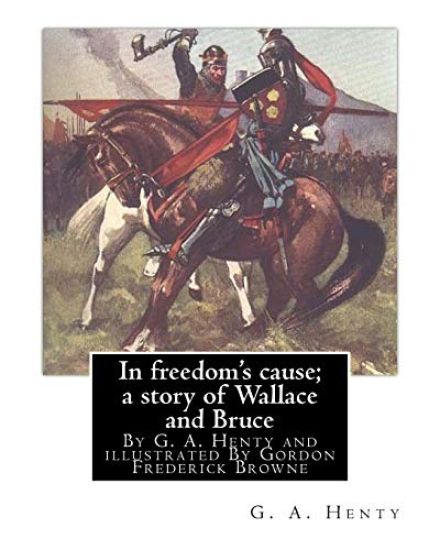
In freedom's cause; a story of Wallace and Bruce, By G. A. Henty: illustrated By Gordon Frederick Browne (15 April 1858 - 27 May 1932) was an English
Gordon Browne; G. a. Henty
Createspace Independent Publishing Platform
2016
nidottu
At the end of the thirteenth century, the oppressed people of Scotland rebelled against their despised English ruler, Edward Longshanks. In Freedom's Cause recounts the Scots' desperate but ultimately triumphant struggle in the face of overwhelming odds - a hard-fought series of battles conducted under the leadership of William Wallace and Robert Bruce. Time has burnished the feats of these great heroes to mythic proportions, but Wallace and Bruce were real people. This gripping tale of courage, loyalty, and ingenuity recounts their deeds within an accurate historical context. Readers join their company alongside a fictional protagonist, young Archie Forbes, whose estates have been wrongfully confiscated. Archie forms a group of scouts to fight alongside the legendary Scottish chieftains (who were memorably portrayed in the film Braveheart) for their country's independence. In Freedom's Cause is one among the many historical novels for young readers by George Alfred Henty. A storyteller who specialized in blending authentic historical facts with exciting fictional characters, Henty produced more than 140 books and achieved a reputation as "The Prince of Storytellers." Immensely popular and widely used in schools for many years, Henty's novels continue to fire young imaginations with their spirited tales of adventure amid exciting historical eras.... George Alfred Henty (8 December 1832 - 16 November 1902) was a prolific English novelist and war correspondent.He is best known for his historical adventure stories that were popular in the late 19th century. His works include The Dragon & The Raven (1886), For The Temple (1888), Under Drake's Flag (1883) and In Freedom's Cause (1885).G. A. Henty was born in Trumpington, near Cambridge. He was a sickly child who had to spend long periods in bed. During his frequent illnesses he became an avid reader and developed a wide range of interests which he carried into adulthood. He attended Westminster School, London, and later Gonville and Caius College, Cambridge, where he was a keen sportsman. He left the university early without completing his degree to volunteer for the Army Hospital Commissariat when the Crimean War began. He was sent to the Crimea and while there he witnessed the appalling conditions under which the British soldier had to fight. His letters home were filled with vivid descriptions of what he saw. His father was impressed by his letters and sent them to The Morning Advertiser newspaper which printed them. This initial writing success was a factor in Henty's later decision to accept the offer to become a special correspondent, the early name for journalists now better known as war correspondents. Shortly before resigning from the army as a captain in 1859 he married Elizabeth Finucane. The couple had four children. Elizabeth died in 1865 after a long illness and shortly after her death Henty began writing articles for the Standard newspaper. In 1866 the newspaper sent him as their special correspondent to report on the Austro-Italian War where he met Giuseppe Garibaldi. He went on to cover the 1868 British punitive expedition to Abyssinia, the Franco-Prussian War, the Ashanti War, the Carlist Rebellion in Spain and the Turco-Serbian War.He also witnessed the opening of the Suez Canal and travelled to Palestine, Russia and India. Henty was a strong supporter of the British Empire all his life; according to literary critic Kathryn Castle: "Henty...exemplified the ethos of the new imperialism, and glorified in its successes". Henty's ideas about politics were influenced by writers such as Sir Charles Dilke and Thomas Carlyle.... Gordon Frederick Browne (15 April 1858 - 27 May 1932) was an English artist and children's book illustrator in the late 19th century and early 20th century........