
Kirjahaku
Etsi kirjoja tekijän nimen, kirjan nimen tai ISBN:n perusteella.
1000 tulosta hakusanalla Gregory Fried
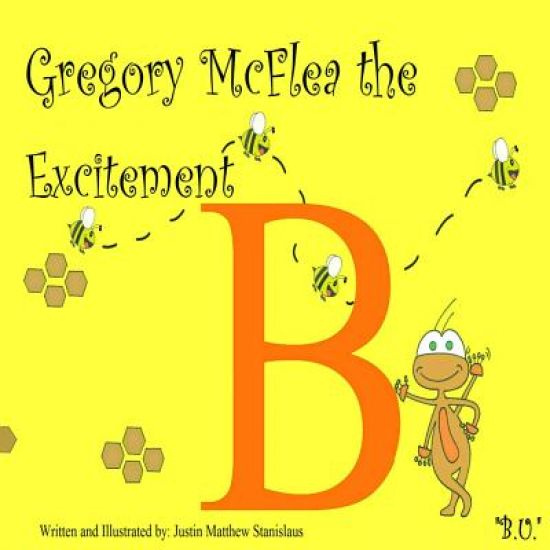
Gregory McFlea the Excitement B
Justin Matthew Stanislaus
Createspace Independent Publishing Platform
2016
nidottu
Gregory McFlea is a bug who is bored with the life of a flea and is obsessed with the letter B. Gregory describes his big adventure from a dog's backside to a buzzing beehive, using a bountiful number of words that begin with the letter B. Join Gregory as he goes through a bugged out transformation from flea to bee, then back again; learning that the best thing you can be is yourself.
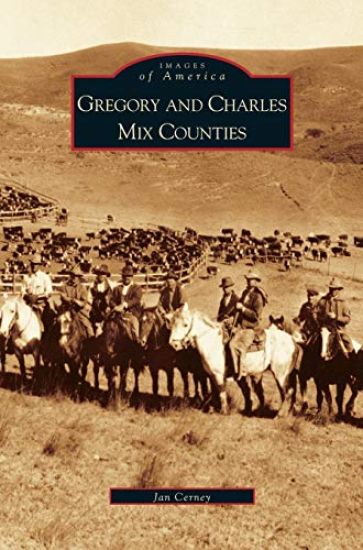
Gregory and Charles Mix Counties
Janice Brozik Cerney; Jan Cerney
Arcadia Publishing Library Editions
2004
sidottu

Gregory Grasshopper Coloring Book
Adrienne Kleinschmidt
Createspace Independent Publishing Platform
2016
nidottu
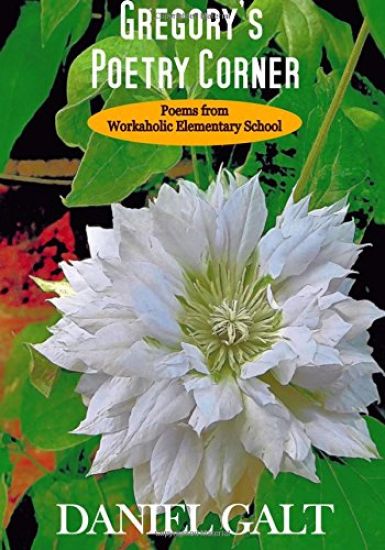
Gregory's Poetry Corner: Poems from Workaholic Elementary School
Daniel Galt
Createspace Independent Publishing Platform
2016
nidottu
Gregory Marshall III: The adventures of me Gregory Marshall
Marie Johnson
Createspace Independent Publishing Platform
2016
nidottu

Even More Rhymes and Reasons: The Third Collection of Poems about Faith, Family, Love and Life Authored by Gregory Tyree
Gregory Tyree
Createspace Independent Publishing Platform
2016
nidottu
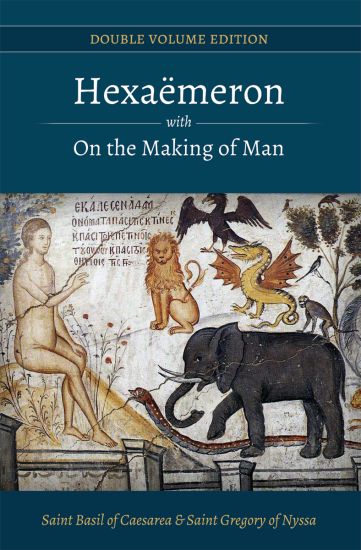
Hexaemeron with On the Making of Man (Basil of Caesarea, Gregory of Nyssa)
Gregory Of Nyssa; Basil of Caesarea
Createspace Independent Publishing Platform
2017
nidottu
A Double Volume Edition of Saint Basil of Cesarea's "Hexaemeron" along with Saint Gregory of Nyssa's "On the Making of Man". This compilation was curated and typeset by Paterikon Publications utilizing the original text and notes from the Second Series of Nicene and Post-Nicene Fathers.
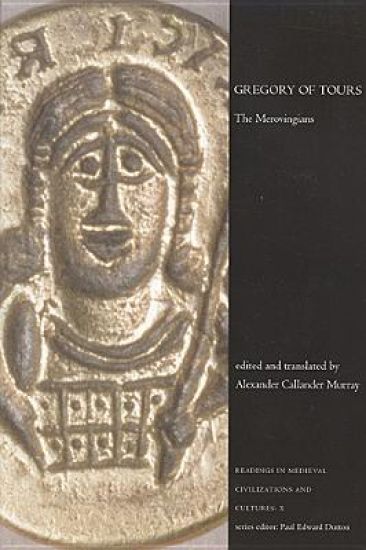
Gregory of Tours
Broadview Press Ltd
2005
pokkari
Georgius Florentius Gregorius, better known to posterity as Gregory, Bishop of Tours, was born about 538 to a highly distinguished Gallo-Roman family in Clermont in the region of Auvergne. Best known for his 10-book Histories (often called the History of the Franks), Gregory left us detailed accounts of his own times as well as those of the early Merovingian kings, known as the "long-haired kings," who united the Franks and took control of most of Gaul in the late fifth and early sixth century. Although he is one of the most important historians of pre-modern times, the complex, apparently disconnected, elements of Gregory's work are often difficult for today's readers to understand. This selected, new translation is composed of extensive sections from Books II to X and follows in a connected narrative the political events of the Histories from the appearance of the first Merovingian kings, Merovech, Childeric, and Clovis to the last years of the reigns of Guntram and Childebert II in the late sixth century. This book is designed to introduce new readers, and even experienced ones, to the political world (secular and ecclesiastical) of sixth-century Gaul and to provide an up-to-date guide to reading the bishop of Tours' fascinating account of his times. Included in this volume are twenty-one drawings by Jean-Paul Laurens, a nineteenth-century French historical artist and interpreter of the Merovingians.
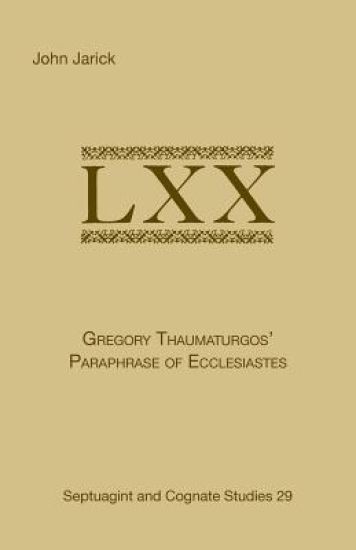
Gregory Thaumaturgo's Paraphrase of Ecclesiastes
John Jarick
Society of Biblical Literature
1990
pokkari
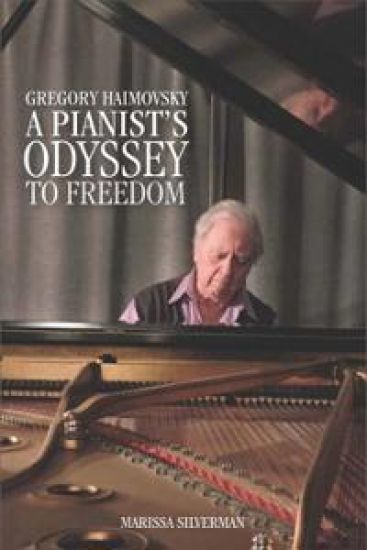
In the bleak cage of the Soviet Union, a brilliant pianist, inspired by the music of Olivier Messiaen, survived and triumphed. This is his story, told partly in his own words. Interlacing material from previously unknown Russian archives, original recordings, photographs, and essays, Gregory Haimovsky: A Pianist's Odyssey to Freedom is the story of an extraordinary Russian concert pianist who, fighting the cultural prohibitions of the USSR, eventually succeeded in performing and recording major works by the prominent French composer Olivier Messiaen. At the lowest point of his life, expelled from Moscow and exiled to a small provincial city, Haimovsky discovered Messiaen's oeuvre uncatalogued and hidden in the library of the Union of Soviet Composers. Haimovsky's intense studies and Soviet premieres of these banned compositions healed and liberated his mind, spirit, and artistic imagination. Messiaen's music also deepened and fueled Haimovsky's fierce personal and musical opposition to Soviet political and cultural doctrines. Told partly in Haimovsky's own words and supplemented by interviews with several performers who worked with him between 1960 and 1972 as well as stories from his correspondence with major Russian artists, writers, and musicians of the time, Marissa Silverman's vivid narrative sheds new light on relationships between twentieth-century Russian music, Soviet politics, and the culture wars that raged during and after Stalin's barbaric rule. Marissa Silverman is Associate Professor of Music at the John J. Cali School of Music, Montclair State University.

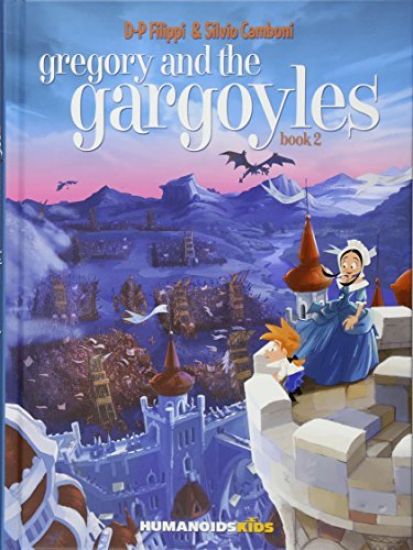
The fantasy adventure trilogy of a young boy’s travels through a long-forgotten world where magic still rules.Young Gregory grows unhappy and restless when his father moves the entire family into an old family home in a new neighborhood. While awake in his bed, a glimmer from the floor attracts Gregory’s attention. He discovers a medallion on which there is a drawing of the great church that sits opposite his new residence. Bullied for being new, and ignored at home, Gregory decides to explore the church and the giant stone statue that rests atop of it. During his visit, the medallion begins to shine intensely and, with a flash, Gregory is hurled back to the 17th century, where gargoyles, sorcerers and magical beings live in harmony and magic.

The fantasy adventure trilogy of a young boy’s travels through a long-forgotten world where magic still rules.Young Gregory grows unhappy and restless when his father moves the entire family into an old family home in a new neighborhood. While awake in his bed, a glimmer from the floor attracts Gregory’s attention. He discovers a medallion on which there is a drawing of the great church that sits opposite his new residence. Bullied for being new, and ignored at home, Gregory decides to explore the church and the giant stone statue that rests atop of it. During his visit, the medallion begins to shine intensely and, with a flash, Gregory is hurled back to the 17th century, where gargoyles, sorcerers and magical beings live in harmony and magic.
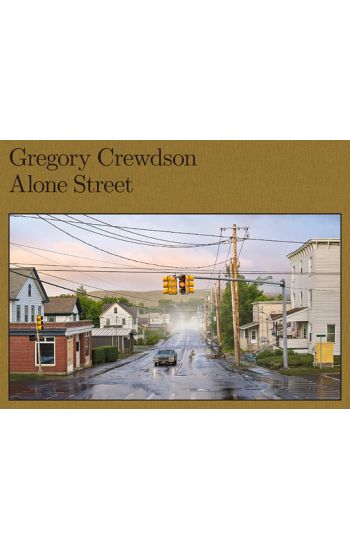
Gregory Crewdson: Alone Street
Aperture
2021
sidottu
Alone Street brings together two major bodies of work by Gregory Crewdson, Cathedral of the Pines (Aperture, 2016) and An Eclipse of Moths (Aperture, 2020), in a single, elegant, and affordable monograph. Both series expand on the artist’s obsessive exploration of the psychogeography of small-town, post-industrial New England and underscore the precision and depth of Crewdson’s unique mode of photographic storytelling. In each image, light, color, and carefully crafted scenography evoke the feeling that, as art historian Alexander Nemerov has astutely described, “all that ever happened in these places seems crystallized in his tableaux, as if the quiet melancholy of Crewdson’s scenes gathered the unruly sorrows and other little-guessed feelings of people long-gone who once stood on those spots.” In addition to the full set of images from each series, Alone Street, presents a selection of behind-the-scenes images and storyboards, revealing the extensive preparation and planning that went into the making of each work.
Gregory Rabassa's Latin American Literature
María Constanza Guzmán
Bucknell University Press
2013
nidottu
This book is a critical study of the work of Gregory Rabassa, translator of such canonical novels as Gabriel Garcìa Márquez's Cien años de soledad, José Lezama Lima's Paradiso, and Julio Cortàzar's Rayuela. During the past five decades, Rabassa has translated over fifty Latin American novels and to this day he is one of the most prominent English translators of literature from Spanish and Portuguese. Rabassa's role was pivotal in the internationalization of several Latin American writers; it led to the formation of a canon and, significantly, to the most prevalent image of Latin American literature in the world. Even though Rabassa's legacy has been widely recognized, the extent of his work's influence and the complexity of the sociocultural circumstances surrounding his practice have remained largely unexamined. In Gregory Rabassa's Latin American Literature: A Translator's Visible Legacy, María Constanza Guzmán examines the translator's conceptions about language, contextualizes his work in terms of the structures and conditions that have surrounded his practice, and investigates the role his translations have played in constructing collective narratives of Latin American literature in the global imaginary. By revisiting and historicizing the translator's practice, this book reveals the scale of Rabassa's legacy. The translator emerges as an active subject in the inter-American literary exchange, an agent bound to history and to the forces involved in the production of culture.