Kirjojen hintavertailu. Mukana 11 509 368 kirjaa ja 12 kauppaa.

Kirjahaku

Etsi kirjoja tekijän nimen, kirjan nimen tai ISBN:n perusteella.

1000 tulosta hakusanalla Gregory Larkin

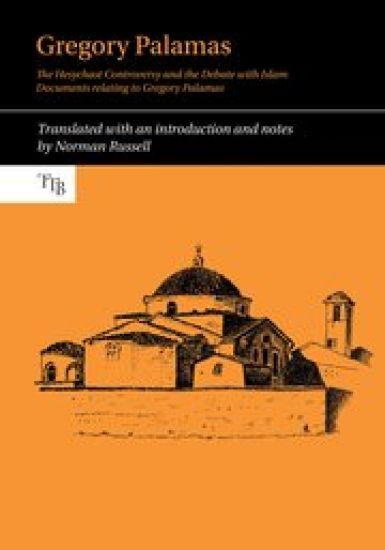
Gregory Palamas

Gregory Palamas

Norman Russell

Liverpool University Press
2020
sidottu
Gregory Palamas, a monk of Mount Athos and metropolitan of Thessalonike from 1347 to 1357, was a leading fourteenth-century Byzantine intellectual. He was the chief spokesman for the hesychasts in the controversy bearing that name, which began when a charge of heresy was laid against him in 1340 and ended with his proclamation as a saint in 1368. Although excellent English translations of some of Palamas’ theological writings are available, very few texts relating to his historical role have yet been translated. This book contains the first English translation of the contemporary Life of Palamas by Philotheos Kokkinos, which is our principal source of biographical information on him. Also translated into English for the first time are the Synodal Tomoi from 1341 to 1368, which chart the progress of the hesychast controversy from the viewpoint of the victors, together with the corpus of material relating to Palamas’ year of captivity among the Turks, which offers a unique insight into conditions for Christians and Muslims in the early Ottoman emirate. The translations, all of which are based on critical texts, are preceded by introductions which set Palamas in his historical context and propose some changes to the conventional chronology of his life.
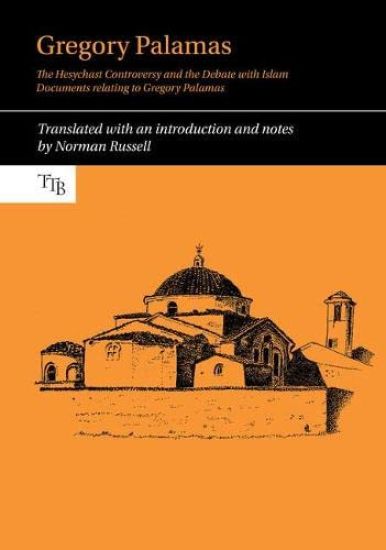
Gregory Palamas

Gregory Palamas

Norman Russell

LIVERPOOL UNIVERSITY PRESS
2022
nidottu
Gregory Palamas, a monk of Mount Athos and metropolitan of Thessalonike from 1347 to 1357, was a leading fourteenth-century Byzantine intellectual. He was the chief spokesman for the hesychasts in the controversy bearing that name, which began when a charge of heresy was laid against him in 1340 and ended with his proclamation as a saint in 1368. Although excellent English translations of some of Palamas’ theological writings are available, very few texts relating to his historical role have yet been translated. This book contains the first English translation of the contemporary Life of Palamas by Philotheos Kokkinos, which is our principal source of biographical information on him. Also translated into English for the first time are the Synodal Tomoi from 1341 to 1368, which chart the progress of the hesychast controversy from the viewpoint of the victors, together with the corpus of material relating to Palamas’ year of captivity among the Turks, which offers a unique insight into conditions for Christians and Muslims in the early Ottoman emirate. The translations, all of which are based on critical texts, are preceded by introductions which set Palamas in his historical context and propose some changes to the conventional chronology of his life.
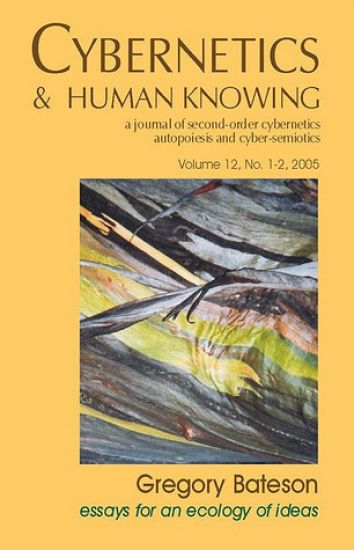
Gregory Bateson

Gregory Bateson

Imprint Academic
2005
pokkari
Gregory Bateson's work continues to touch others in fields as diverse as communication, ecology, anthropology, philosophy, family therapy, education, and mental/spiritual health. The authors in this special issue of Cybernetics & Human Knowing (C&HK) celebrate the Bateson Centennial.
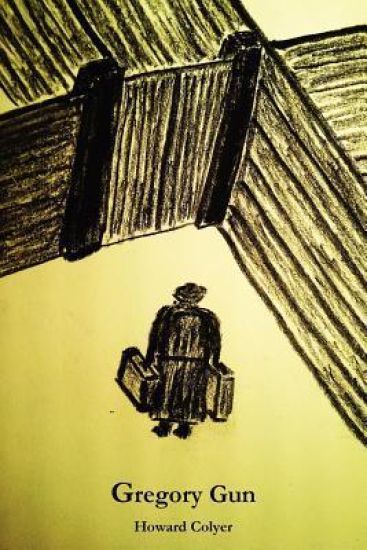
Gregory Gun

Gregory Gun

Howard Colyer

Lulu.com
2019
nidottu
Gregory Gun is devoted to his job and he is made redundant. And then he struggles. But he tries to cope and he fights against his own character; but finally he shuts himself away and becomes a hermit in London, and lives a strange and secret life.
Gregory Cool

Gregory Cool

Caroline Binch

Frances Lincoln Childrens Books
2012
nidottu
When Gregory wakes up on his first day in Tobago with his grandparents, his heart sinks. The food is strange, the sun too hot, his cousin Lennox is on another wave length, and there are none of the televisions, video games and other high-tech gadgets that a cool city-boy takes for granted. How will Gregory adjust to the strange culture? And will he learn to enjoy the lifestyle of the Caribbean?
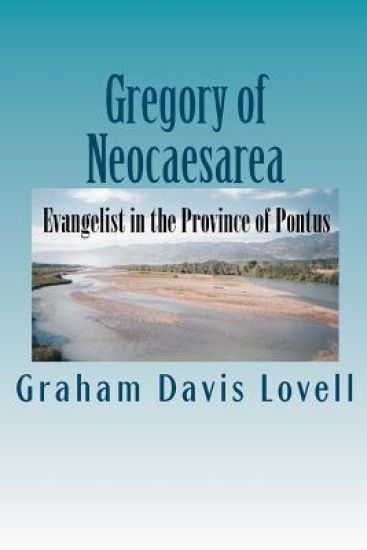
Gregory of Neocaesarea: Evangelist in the Province of Pontus
Gregory of Neocaesarea: aka Gregory Thaumaturgus and Gregory the Wonderworker. Gregory of Neocaesarea was the bishop of the city of Neocaesarea in the Roman province of Pontus, located in Anatolia (modern Turkey). We are well-served with information on Gregory's life, with autobiographical, historical, and legendary material from which to draw. From these sources we can deduce that Gregory was born into a well-placed family in eastern Pontus. Although his father died when he was only 14 years old, his mother ensured he obtained a good Greek education. Not only that, circumstances meant that Gregory studied both Roman laws in Phoenicia and Greek philosophy in Palestine, where he was the student of Origen, the famous Christian philosopher. On returning home to Neocaesarea, Gregory showed himself to be a man of great qualities, and eventually found himself appointed as the leader of the church in that city. Under his leadership, the churches in that region grew from strength to strength. He confronted and overcame the prevailing traditional religion and strongly asserted the claims of the Christian religion. His life and work demonstrate the strength of the Christian Church in the second half of the third century A.D. Gregory is primarily known as a "wonder-worker," and to have converted the people of his region through the impact of the wonders he performed. For modern readers this can be a problem, but does not have to be viewed this way. The introduction of Christianity has changed the way in which Westerners, in particular, view the world. However, our world is quite different from Gregory's world, so in order to understand the impact Gregory had upon his society it is first necessary to try to understand that society. It was very old, and relatively stable, despite the political changes that had taken place in Anatolia over the previous two millennia. While our sources for understanding the traditional society in which Gregory lived are limited, by scanning the whole period we can at least gain some understanding of the circumstances that led the people of the province of Pontus to convert to Christianity, and to abandon their traditional religion. They did this in large numbers, particularly during Gregory's lifetime. In this regard, it is important to realise that Gregory offered the ordinary people of his province a way to escape the limitations of the old ways, and to take on a new "more philosophical" way of life by embracing the teachings of Christ. Gregory faced significant difficulties. His activities were conducted in the full light of the Roman authorities. In this regard, it is useful to track the changes that took place in that empire, and the nature of the inevitable clash between the Church and the Roman Empire. Today there is little recognition of the extent to which Christianity was on the move during the third century A.D., particularly in Anatolia. As a result, we should not view the Church's conflict with the Roman State as an aberration, but rather consider that it reflected the state's response to the challenge Christianity presented to the worldview of the Roman leadership. They believed that the ancient gods of all the peoples of the empire had made Rome great, but the Christians refused to worship these ancient gods, or even to respect them. Gregory fell into the thick of this, facing up to the period of persecution under Emperor Decius (249-251), and then another period of persecution late in the reign of Emperor Valerian (253-259). While Decius' attack appears to have been superficially successful in cowing the Christians, it would also appear that the Church emerged stronger in the following decade than it was before. This particularly applies to Gregory's own region, the province of Pontus.
Gregory Tames His Temper

Gregory Tames His Temper

Anders Grit; Vivi Grit

FUNGOOSE INC.
2024
sidottu
Unleash the power of a Growth Mindset in your child's life Embark on an inspiring journey with "Gregory Tames His Temper," a captivating storybook meticulously crafted to help children navigate the complex emotions of anger while empowering them to achieve their dreams. Through the engaging narrative and practical strategies, children will learn valuable lessons in anger management, emotional regulation, and goal achievement.Meet Gregory, a determined pup with big dreams and a fiery temper. He's set on winning a soccer trophy, but there's one thing holding him back - his anger. Follow Gregory's journey as he learns to tackle his temper tantrums and pursue his dream of winning the soccer trophy.Anger Management for Kids: Practical StrategiesInside this book, Gregory discovers a secret tool against anger - the Traffic Light Rule It's as easy as red, yellow, green: RED: When anger hits, like a red light, Gregory learns to stop and take a deep breath. Count to 10 and feel the calm wash over you.YELLOW: Next, it's time to think. Gregory figures out that getting mad doesn't solve anything. Instead, he thinks of smart ways to deal with his feelings.GREEN: With his anger under control, Gregory is ready to go He's back on the field, playing his best game ever and having a blast with his friends.This book about dog shares valuable lessons in social-emotional learning, responsible decision-making, self-awareness, and relationship skills. It aims to transform obstacles into opportunities and channel anger into energy for greatness.From Learning to Practice: The Anger Management ToolkitThis storybook for children is not just a tale; it's a parent resource and a teacher and therapist toolbox, offering: ★ "Traffic Light Rule" Anger Management Guide★ Discussion Questions for One-On-One & Classroom Conversations★ Interactive Seek & Find Activity★ Creative Expression Coloring Page★ Constant Reinforcement Educational Poster★ Access to the Growth Mindset Parents Community for Continued SupportGregory's story provides practical examples of dealing with anger and big emotions, offering coping skills and strategies for ADHD, stress relief, OCD, and boosting self-esteem. It's a call to acceptance, teaching kids to thrive amidst difficult emotions and life skills.With its focus on social-emotional learning and communication, this book is a must-have in every school library, offering soothing strategies for anxious children.Grab your copy today and start meaningful conversations with your little champions with the mightiest hearts
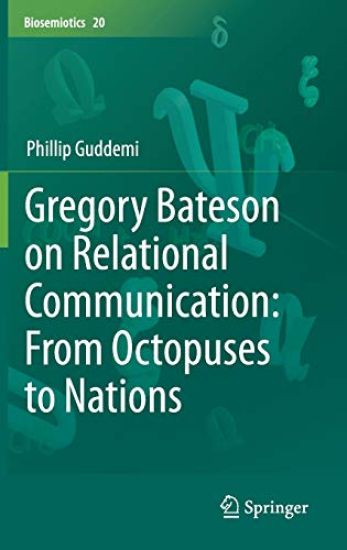
Gregory Bateson on Relational Communication: From Octopuses to Nations
This book develops Gregory Bateson’s ideas regarding “communication about relationship” in animals and human beings, and even nations. It bases itself on Bateson’s theory of relational communication, as he described it in the zoosemiotics of octopus, mammals, birds, and human beings. This theory includes, for example, the roles of metaphor, play, analog and digital communication, metacommunication, and Laws of Form. It is organized around a letter from Gregory Bateson to his fellow cybernetic thinker Warren McCulloch at the time of the Cuban Missile Crisis. In this letter Bateson argued that what we would today call zoosemiotics, including Bateson’s own (previously unpublished) octopus research, should be made a basis for understanding the relationship between the two blocs of the Cold War. Accordingly the book shows how Bateson understood interactive processes in the biosemiotics of conflict and peacemaking, which are analyzed usingexamples from recent animal studies, from primate studies, and from cultural anthropology. The Missile Crisis itself is described in terms of Bateson’s critique of game theory which he felt should be modified by an understanding of the zoosemiotics of relational communication. The book also includes a previously unpublished piece by Gregory Bateson on wolf behavior and metaphor/ abduction.
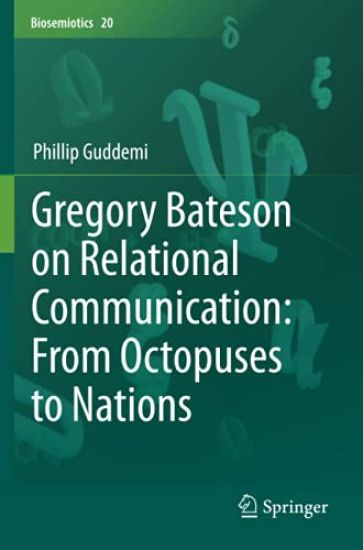
Gregory Bateson on Relational Communication: From Octopuses to Nations
This book develops Gregory Bateson’s ideas regarding “communication about relationship” in animals and human beings, and even nations. It bases itself on Bateson’s theory of relational communication, as he described it in the zoosemiotics of octopus, mammals, birds, and human beings. This theory includes, for example, the roles of metaphor, play, analog and digital communication, metacommunication, and Laws of Form. It is organized around a letter from Gregory Bateson to his fellow cybernetic thinker Warren McCulloch at the time of the Cuban Missile Crisis. In this letter Bateson argued that what we would today call zoosemiotics, including Bateson’s own (previously unpublished) octopus research, should be made a basis for understanding the relationship between the two blocs of the Cold War. Accordingly the book shows how Bateson understood interactive processes in the biosemiotics of conflict and peacemaking, which are analyzed usingexamples from recent animal studies, from primate studies, and from cultural anthropology. The Missile Crisis itself is described in terms of Bateson’s critique of game theory which he felt should be modified by an understanding of the zoosemiotics of relational communication. The book also includes a previously unpublished piece by Gregory Bateson on wolf behavior and metaphor/ abduction.