Kirjojen hintavertailu. Mukana 11 437 080 kirjaa ja 12 kauppaa.

Kirjahaku

Etsi kirjoja tekijän nimen, kirjan nimen tai ISBN:n perusteella.

1000 tulosta hakusanalla Griffiths Graham

Diverting Authorities

Diverting Authorities

Jane Griffiths

Oxford University Press
2014
sidottu
Diverting Authorities examines the glossing of a variety of fifteenth- and sixteenth-century texts by authors including Lydgate, Douglas, Chaloner, Baldwin, Bullein, Harington, and Nashe. It is concerned particularly with the use of glosses as a means for authors to reflect on the process of shaping a text, and with the emergence of the gloss as a self-consciously literary form. One of the main questions it addresses is to what extent the advent of print affects glossing practices. To this end, it traces the transmission of a number of glossed texts in both manuscript and print, but also examines glossing that is integral to texts written with print production in mind. With the latter, it focuses particularly on a little-remarked but surprisingly common category of gloss: glossing that is ostentatiously playful, diverting rather than directing its readers. Setting this in the context of emerging print conventions and concerns about the stability of print, Jane Griffiths argues that---like self-glossing in manuscript---such diverting glosses shape as well as reflect contemporary ideas of authorship and authority, and are thus genuinely experimental. The book reads across medieval-renaissance and manuscript-print boundaries in order to trace the emergence of the gloss as a genre and the way in which theories of authorship are affected by the material processes of writing and transmission.
Modern Music and After

Modern Music and After

Paul Griffiths

Oxford University Press Inc
2011
nidottu
Over three decades, Paul Griffiths's survey has remained the definitive study of music since the Second World War; this fully revised and updated edition re-establishes Modern Music and After as the preeminent introduction to the music of our time. The disruptions of the war, and the struggles of the ensuing peace, were reflected in the music of the time: in Pierre Boulez's radical reformation of compositional technique and in John Cage's development of zen music; in Milton Babbitt's settling of the serial system and in Dmitry Shostakovich's unsettling symphonies; in Karl Stockhausen's development of electronic music and in Luigi Nono's pursuit of the universally human, in Iannis Xenakis's view of music as sounding mathematics and in Luciano Berio's consideration of it as language. The initiatives of these composers and their contemporaries opened prospects that haven't yet stopped unfolding. This constant expansion of musical thinking since 1945 has left us with no singular history of music; Griffiths's study accordingly follows several different paths, showing how and why they converge and diverge. This new edition of Modern Music and After discusses not only the music of the fifteen years that have passed since the previous edition, but also the recent explosion of scholarly interest in the latter half of the Twentieth Century. In particular, the third section of the book, 1980-1990, is expanded to incorporate the variety of responses to the modernist impasse experienced by composers of the time. In addition, a new fourth part, "After Postmodernism: the 1990s and 2000s," examines highly influential composers like Philip Glass and Pierre Boulez as well as such topics as "Modernist Continuation" and "Music and the Internet." For its breadth, wealth of detail, and characteristic wit and clarity, the third edition of Modern Music and After is required reading for the student and the enquiring listener.
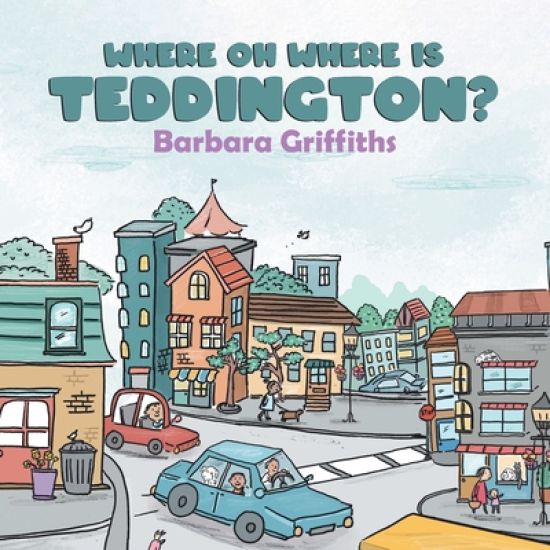
Where Oh Where Is Teddington?

Where Oh Where Is Teddington?

Barbara Griffiths

Tellwell Talent
2020
pokkari
Where Oh Where is Teddington brings a lovely rhyme time and I-Spy opportunity for infants, toddlers and young readers alike. See if you can spot Teddington on each page, and you might see his three little cat friends and poppy flowers if you look closely too What else can you see?
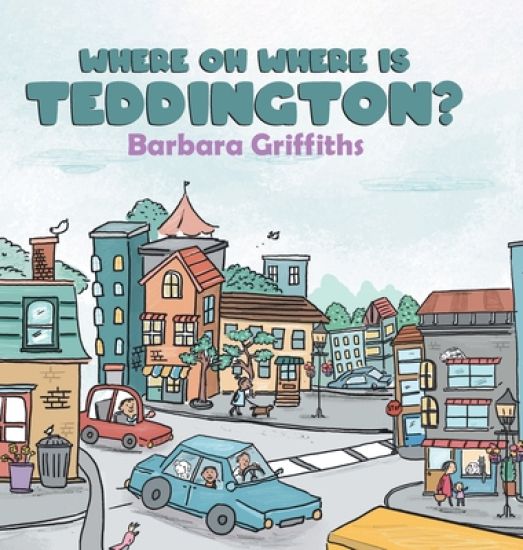
Where Oh Where Is Teddington?

Where Oh Where Is Teddington?

Barbara Griffiths

Tellwell Talent
2020
sidottu
Where Oh Where is Teddington brings a lovely rhyme time and I-Spy opportunity for infants, toddlers and young readers alike. See if you can spot Teddington on each page, and you might see his three little cat friends and poppy flowers if you look closely too What else can you see?
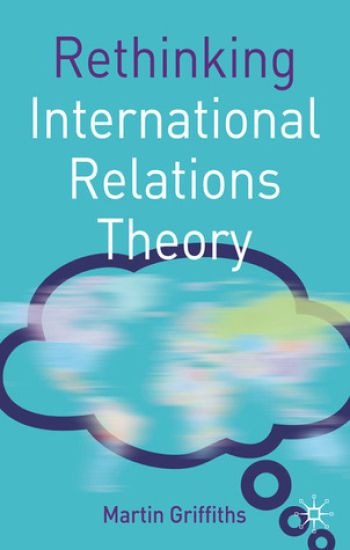
Rethinking International Relations Theory

Rethinking International Relations Theory

Martin Griffiths

Red Globe Press
2011
sidottu
International Relations (IR) theory has seen a proliferation of competing, and increasingly trenchant, worldviews with no consensus on how to evaluate their relative strengths and weakness. This innovative new text provides an original interpretation of how best to navigate the clash of perspectives in contemporary IR theory.The book provides a systematic overview of the main worldviews – such as realism, liberalism, and constructivism – and their associated theoretical underpinnings. Placing liberal internationalism at the heart of the debate, it argues that the main division in IR theory is between liberal internationalism and its critics. Griffiths examines both the strengths and weaknesses of liberal internationalism as a worldview, and also explores the competing worldviews that have been generated by the perceived flaws of this perspective.Examination of crucial policy issues is incorporated throughout the text, restoring the relevance of theory for those who wish to understand those policy issues. Moreover, this book revitalises the raison d'être of contemporary IR theory and shows the role it can play in making sense of the twenty-first century.
Rethinking International Relations Theory

Rethinking International Relations Theory

Martin Griffiths

Red Globe Press
2011
nidottu
International Relations (IR) theory has seen a proliferation of competing, and increasingly trenchant, worldviews with no consensus on how to evaluate their relative strengths and weakness. This innovative new text provides an original interpretation of how best to navigate the clash of perspectives in contemporary IR theory.The book provides a systematic overview of the main worldviews – such as realism, liberalism, and constructivism – and their associated theoretical underpinnings. Placing liberal internationalism at the heart of the debate, it argues that the main division in IR theory is between liberal internationalism and its critics. Griffiths examines both the strengths and weaknesses of liberal internationalism as a worldview, and also explores the competing worldviews that have been generated by the perceived flaws of this perspective.Examination of crucial policy issues is incorporated throughout the text, restoring the relevance of theory for those who wish to understand those policy issues. Moreover, this book revitalises the raison d'être of contemporary IR theory and shows the role it can play in making sense of the twenty-first century.
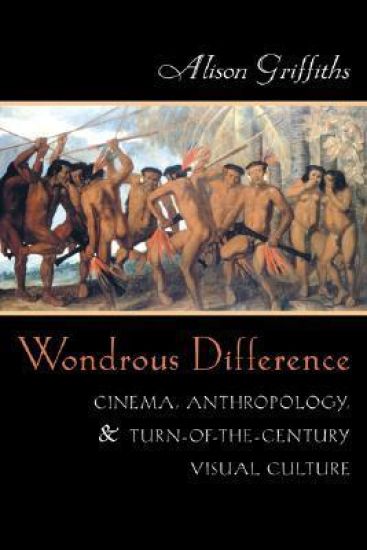
Wondrous Difference

Wondrous Difference

Alison Griffiths

Columbia University Press
2002
sidottu
The ethical and ideological implications of cross-cultural image-making continue to stir debate among anthropologists, film scholars, and museum professionals. This innovative book focuses on the contested origins of ethnographic film from the late nineteenth century to the 1920s, vividly depicting the dynamic visual culture of the period as it collided with the emerging discipline of anthropology and the new technology of motion pictures. Featuring more than 100 illustrations, the book examines museums of natural history, world's fairs, scientific and popular photography, and the early filmmaking efforts of anthropologists and commercial producers to investigate how cinema came to assume the role of mediator of cultural difference at the beginning of the twentieth century.
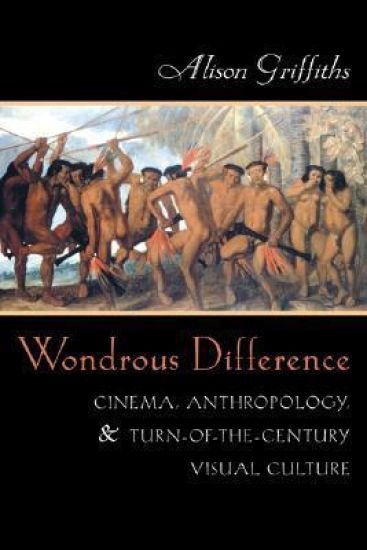
Wondrous Difference

Wondrous Difference

Alison Griffiths

Columbia University Press
2002
pokkari
The ethical and ideological implications of cross-cultural image-making continue to stir debate among anthropologists, film scholars, and museum professionals. This innovative book focuses on the contested origins of ethnographic film from the late nineteenth century to the 1920s, vividly depicting the dynamic visual culture of the period as it collided with the emerging discipline of anthropology and the new technology of motion pictures. Featuring more than 100 illustrations, the book examines museums of natural history, world's fairs, scientific and popular photography, and the early filmmaking efforts of anthropologists and commercial producers to investigate how cinema came to assume the role of mediator of cultural difference at the beginning of the twentieth century.
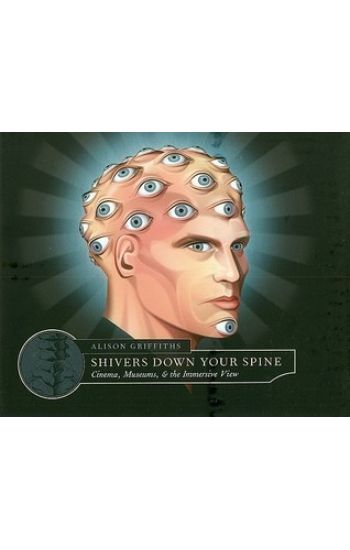
Shivers Down Your Spine

Shivers Down Your Spine

Alison Griffiths

Columbia University Press
2008
sidottu
From the architectural spectacle of the medieval cathedral and the romantic sublime of the nineteenth-century panorama to the techno-fetishism of today's London Science Museum, humans have gained a deeper understanding of the natural world through highly illusionistic representations that engender new modes of seeing, listening, and thinking. What unites and defines many of these wondrous spaces is an immersive view-an invitation to step inside the virtual world of the image and become a part of its universe, if only for a short time. Since their inception, museums of science and natural history have mixed education and entertainment, often to incredible, eye-opening effect. Immersive spaces of visual display and modes of exhibition send "shivers" down our spines, engaging the distinct cognitive and embodied mapping skills we bring to spectacular architecture and illusionistic media. They also force us to reconsider traditional models of film spectatorship in the context of a mobile and interactive spectator. Through a series of detailed historical case studies, Alison Griffiths masterfully explores the uncanny and unforgettable visceral power of the medieval cathedral, the panorama, the planetarium, the IMAX theater, and the science museum. Examining these structures as exemplary spaces of immersion and interactivity, Griffiths reveals the sometimes surprising antecedents of modern media forms, suggesting the spectator's deep-seated desire to become immersed in a virtual world. Shivers Down Your Spine demonstrates how immersive and interactive museum display techniques such as large video displays, reconstructed environments, and touch-screen computer interactives have redefined the museum space, fueling the opposition between public and private, science and spectacle, civic and corporate interests, voice and text, and life and death. In her remarkable study of sensual spaces, Griffiths explains why, for centuries, we keep coming back for more.
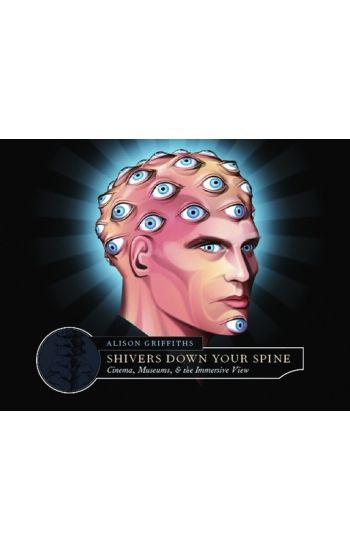
Shivers Down Your Spine

Shivers Down Your Spine

Alison Griffiths

Columbia University Press
2013
pokkari
From the architectural spectacle of the medieval cathedral and the romantic sublime of the nineteenth-century panorama to the techno-fetishism of today's London Science Museum, humans have gained a deeper understanding of the natural world through highly illusionistic representations that engender new modes of seeing, listening, and thinking. What unites and defines many of these wondrous spaces is an immersive view-an invitation to step inside the virtual world of the image and become a part of its universe, if only for a short time. Since their inception, museums of science and natural history have mixed education and entertainment, often to incredible, eye-opening effect. Immersive spaces of visual display and modes of exhibition send "shivers" down our spines, engaging the distinct cognitive and embodied mapping skills we bring to spectacular architecture and illusionistic media. They also force us to reconsider traditional models of film spectatorship in the context of a mobile and interactive spectator. Through a series of detailed historical case studies, Alison Griffiths masterfully explores the uncanny and unforgettable visceral power of the medieval cathedral, the panorama, the planetarium, the IMAX theater, and the science museum. Examining these structures as exemplary spaces of immersion and interactivity, Griffiths reveals the sometimes surprising antecedents of modern media forms, suggesting the spectator's deep-seated desire to become immersed in a virtual world. Shivers Down Your Spine demonstrates how immersive and interactive museum display techniques such as large video displays, reconstructed environments, and touch-screen computer interactives have redefined the museum space, fueling the opposition between public and private, science and spectacle, civic and corporate interests, voice and text, and life and death. In her remarkable study of sensual spaces, Griffiths explains why, for centuries, we keep coming back for more.
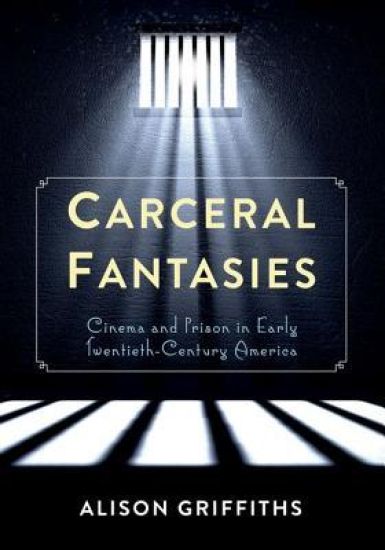
Carceral Fantasies

Carceral Fantasies

Alison Griffiths

Columbia University Press
2016
sidottu
A groundbreaking contribution to the study of nontheatrical film exhibition, Carceral Fantasies tells the little-known story of how cinema found a home in the U.S. penitentiary system and how the prison emerged as a setting and narrative trope in modern cinema. Focusing on films shown in prisons before 1935, Alison Griffiths explores the unique experience of viewing cinema while incarcerated and the complex cultural roots of cinematic renderings of prison life. Griffiths considers a diverse mix of cinematic genres, from early actualities and reenactments of notorious executions to reformist exposes of the 1920s.She connects an early fascination with cinematic images of punishment and execution, especially electrocutions, to the attractions of the nineteenth-century carnival electrical wonder show and Phantasmagoria (a ghost show using magic lantern projections and special effects). Griffiths draws upon convict writing, prison annual reports, and the popular press obsession with prison-house cinema to document the integration of film into existing reformist and educational activities and film's psychic extension of flights of fancy undertaken by inmates in their cells. Combining penal history with visual and film studies and theories surrounding media's sensual effects, Carceral Fantasies illuminates how filmic representations of the penal system enacted ideas about modernity, gender, the body, and the public, shaping both the social experience of cinema and the public's understanding of the modern prison.
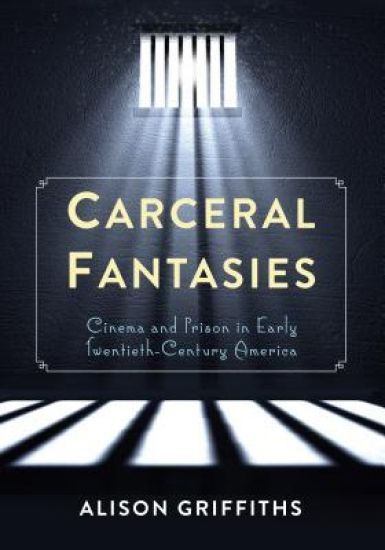
Carceral Fantasies

Carceral Fantasies

Alison Griffiths

Columbia University Press
2019
pokkari
A groundbreaking contribution to the study of nontheatrical film exhibition, Carceral Fantasies tells the little-known story of how cinema found a home in the U.S. penitentiary system and how the prison emerged as a setting and narrative trope in modern cinema. Focusing on films shown in prisons before 1935, Alison Griffiths explores the unique experience of viewing cinema while incarcerated and the complex cultural roots of cinematic renderings of prison life.Griffiths considers a diverse mix of cinematic genres, from early actualities and reenactments of notorious executions to reformist exposés of the 1920s. She connects an early fascination with cinematic images of punishment and execution, especially electrocutions, to the attractions of the nineteenth-century carnival electrical wonder show and Phantasmagoria (a ghost show using magic lantern projections and special effects). Griffiths draws upon convict writing, prison annual reports, and the popular press obsession with prison-house cinema to document the integration of film into existing reformist and educational activities and film's psychic extension of flights of fancy undertaken by inmates in their cells. Combining penal history with visual and film studies and theories surrounding media's sensual effects, Carceral Fantasies illuminates how filmic representations of the penal system enacted ideas about modernity, gender, the body, and the public, shaping both the social experience of cinema and the public's understanding of the modern prison.
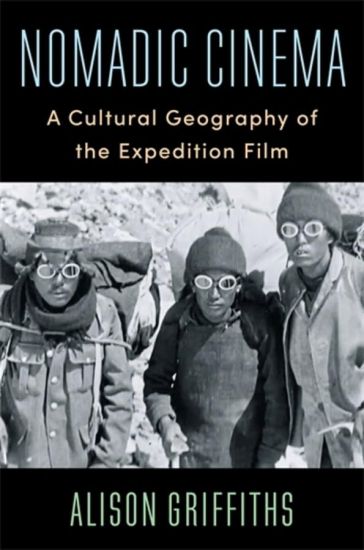
Nomadic Cinema

Nomadic Cinema

Alison Griffiths

Columbia University Press
2025
sidottu
From In Borneo, the Land of the Head-Hunters to The Epic of Everest to Camping Among the Indians, the early twentieth century was the heyday of expedition filmmaking. As new technologies transformed global transportation and opened new avenues for documentation, and as imperialism and capitalism expanded their reach, Western filmmakers embarked on journeys to places they saw as exotic, seeking to capture both the monumental and the mundane. Their films portrayed far-flung locales, the hardships of travel, and the day-to-day lives of Indigenous people through a deeply colonial lens.Nomadic Cinema is a groundbreaking history of these films, analyzing them as visual records of colonialism that also offer new possibilities for recognizing Indigenous histories. Alison Griffiths examines expedition films made in Borneo, Central Asia, Tibet, Polynesia, and the American Southwest, reinterpreting them from decolonial perspectives to provide alternative accounts of exploration. She considers the individuals and institutions—including the American Museum of Natural History—responsible for creating the films, the spectators who sought them out, and the Indigenous intermediaries whose roles white explorers minimized. Ambitious and interdisciplinary, Nomadic Cinema ranges widely, from the roots of expedition films in medieval cartography and travel writing to still-emerging technologies of virtual and augmented reality. Highlighting the material conditions of filmmaking and the environmental footprint left by exploration, this book recovers Indigenous memory and sovereignty from within long-buried sources.
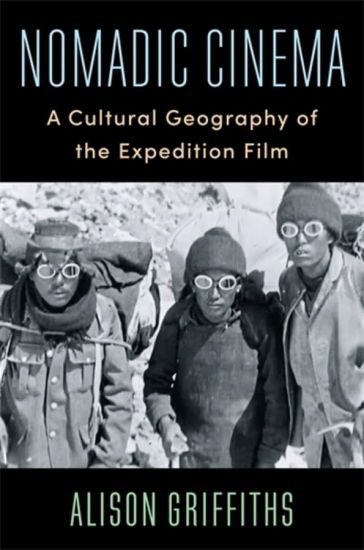
Nomadic Cinema

Nomadic Cinema

Alison Griffiths

Columbia University Press
2025
pokkari
From In Borneo, the Land of the Head-Hunters to The Epic of Everest to Camping Among the Indians, the early twentieth century was the heyday of expedition filmmaking. As new technologies transformed global transportation and opened new avenues for documentation, and as imperialism and capitalism expanded their reach, Western filmmakers embarked on journeys to places they saw as exotic, seeking to capture both the monumental and the mundane. Their films portrayed far-flung locales, the hardships of travel, and the day-to-day lives of Indigenous people through a deeply colonial lens.Nomadic Cinema is a groundbreaking history of these films, analyzing them as visual records of colonialism that also offer new possibilities for recognizing Indigenous histories. Alison Griffiths examines expedition films made in Borneo, Central Asia, Tibet, Polynesia, and the American Southwest, reinterpreting them from decolonial perspectives to provide alternative accounts of exploration. She considers the individuals and institutions—including the American Museum of Natural History—responsible for creating the films, the spectators who sought them out, and the Indigenous intermediaries whose roles white explorers minimized. Ambitious and interdisciplinary, Nomadic Cinema ranges widely, from the roots of expedition films in medieval cartography and travel writing to still-emerging technologies of virtual and augmented reality. Highlighting the material conditions of filmmaking and the environmental footprint left by exploration, this book recovers Indigenous memory and sovereignty from within long-buried sources.
RHS Your Wellbeing Garden

RHS Your Wellbeing Garden

Alistair Griffiths; Matthew Keightley; Annie Gatti; Zia Allaway

DK
2020
sidottu
Your garden could be even better for you.Discover...How certain plants can form a barrier against air and noise pollutionWhich birdsong alleviates anxietyHow plants can help to save energyWhy green is so good for usLearn how connecting with nature can reduce stress and improve wellbeing. You don't even need a garden - even a balcony or houseplants can help to boost your mood. Every recommendation is backed by scientific research, drawn together by the team of RHS scientists and experts. Favourite garden designer at the RHS Chelsea Flower Show Matt Keightley then suggests how to translate the science into ideas for your green space.With this groundbreaking book, find out how, in sometimes very simple ways, you can create an outdoor space that nourishes your mind and body, and is good for our planet too.
How Animals Heal Us

How Animals Heal Us

Jay Griffiths

PENGUIN BOOKS LTD
2025
sidottu
‘A moving, essential book . . . Nobody writes about Nature with more beauty and grace than Jay Griffiths’ Brian EnoFrom celebrated author Jay Griffiths comes a unique and heartfelt insight into the healing nature of our relationship with animalsPet-owners and animal-lovers instinctively know that animals heal. This book offers the evidence, drawing widely on scientific discoveries, history, and Indigenous knowledge.We meet a pot-bellied pig who saved her owner's life, lions who guarded a girl from kidnappers, dolphins and whales rescuing people in danger, and dogs who can smell cancer and phone the Emergency Services.Animal sounds, from insects to birdsong and the purring of cats, are directly medicinal and their presence can heal the pain of loneliness. Animals, including donkeys, can be natural therapists for the hurt psyche, alleviating trauma, fear and depression.In this original, revelatory and exuberant book, Jay Griffiths explores how animals can have a role in every level of healing, from the individual to the collective, guiding us in how we might create societies that are healthier, fairer and kinder. Wolves may be teachers of ethics; monkeys and dogs can object to unfairness and bees take collective decisions. Animals are irresistible medicine for a healthy culture, animating the arts with spectacular vitality and verve, as poetry knows.Open-hearted, playful and wise, How Animals Heal Us puts animals at the heart of a restorative vision of health.‘A wild and vital treasure trove of stories, woven together with Griffiths' s characteristic exuberance and joyfully untamed mind’ Helen Jukes, author of A Honeybee Heart Has Five Opening
Why Rebel

Why Rebel

Jay Griffiths

Penguin Books Ltd
2021
nidottu
'If bravery itself could write, it would write like she does' John BergerWhy rebel?Because our footprint on the Earth has never mattered more than now. How we treat it, in the spirit of gift or of theft, has never been more important.Because we need a politics of kindness, but the very opposite is on the rise. Libertarian fascism, with its triumphal brutalism, its racism and misogyny - a politics that loathes the living world.Because nature is not a hobby. It is the life on which we depend, as Indigenous societies have never forgotten.Only when it is dark enough can you see the stars, and they are lining up now to write rebellion across the skies.From the author of Wild, this passionate, poetic manifesto for urgent rebellion is also a paean to the deep and extraordinary beauty of the natural world.‘Jay Griffiths helped redefine activism for a generation, combining detailed research with a poet’s flair for language. Her works defy categorisation and fizz with original ideas and excitement’ Byline Times'Jay's writing has reduced me to hot throbs of grief; through beauty and subtlety, to the depths of the hurt of these times . . . and what a liberation to express this, to free the space in my chest to feel the love that propels me forwards' Gail Bradbrook'Chewy, erudite, filled with swing: this is a dazzling book, urgent without ever being worthy, a book that crackles. Why Rebel is a Tardis, to read it is to enter the massive, a deep interior that hydrates vocation in a time of trouble' Martin Shaw'This short book is beautifully written, and packs a powerful emotional punch. I found myself welling up as I reached the end. At this desperate moment in human history, Why Rebel is surely part of the wake-up call we need' Prof. Rupert Read'There's a book called Life and Fate and in it, it says that when surrounded by death and destruction the most human thing to do is to engage in an act of kindness. Jay's book is such an act' Roger Hallam