Kirjojen hintavertailu. Mukana 11 627 220 kirjaa ja 12 kauppaa.

Kirjahaku

Etsi kirjoja tekijän nimen, kirjan nimen tai ISBN:n perusteella.

1000 tulosta hakusanalla Griffiths Jay

Rethinking International Relations Theory

Rethinking International Relations Theory

Martin Griffiths

Red Globe Press
2011
sidottu
International Relations (IR) theory has seen a proliferation of competing, and increasingly trenchant, worldviews with no consensus on how to evaluate their relative strengths and weakness. This innovative new text provides an original interpretation of how best to navigate the clash of perspectives in contemporary IR theory.The book provides a systematic overview of the main worldviews – such as realism, liberalism, and constructivism – and their associated theoretical underpinnings. Placing liberal internationalism at the heart of the debate, it argues that the main division in IR theory is between liberal internationalism and its critics. Griffiths examines both the strengths and weaknesses of liberal internationalism as a worldview, and also explores the competing worldviews that have been generated by the perceived flaws of this perspective.Examination of crucial policy issues is incorporated throughout the text, restoring the relevance of theory for those who wish to understand those policy issues. Moreover, this book revitalises the raison d'être of contemporary IR theory and shows the role it can play in making sense of the twenty-first century.
Rethinking International Relations Theory

Rethinking International Relations Theory

Martin Griffiths

Red Globe Press
2011
nidottu
International Relations (IR) theory has seen a proliferation of competing, and increasingly trenchant, worldviews with no consensus on how to evaluate their relative strengths and weakness. This innovative new text provides an original interpretation of how best to navigate the clash of perspectives in contemporary IR theory.The book provides a systematic overview of the main worldviews – such as realism, liberalism, and constructivism – and their associated theoretical underpinnings. Placing liberal internationalism at the heart of the debate, it argues that the main division in IR theory is between liberal internationalism and its critics. Griffiths examines both the strengths and weaknesses of liberal internationalism as a worldview, and also explores the competing worldviews that have been generated by the perceived flaws of this perspective.Examination of crucial policy issues is incorporated throughout the text, restoring the relevance of theory for those who wish to understand those policy issues. Moreover, this book revitalises the raison d'être of contemporary IR theory and shows the role it can play in making sense of the twenty-first century.
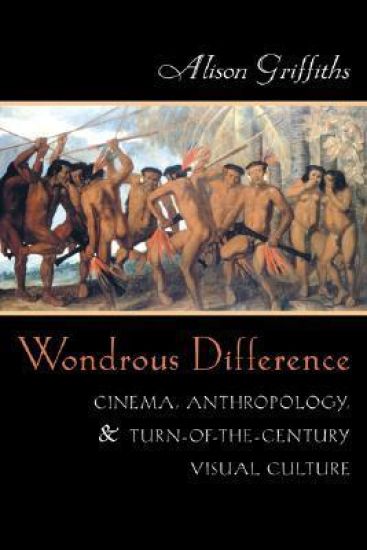
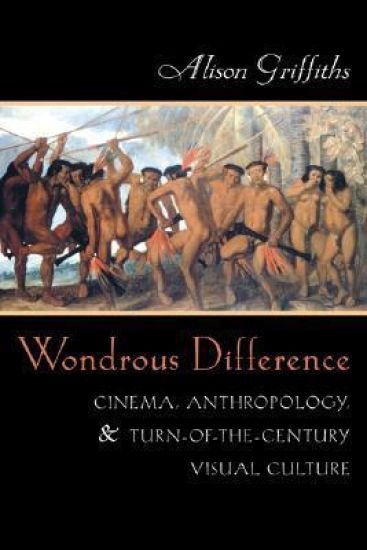
Wondrous Difference

Wondrous Difference

Alison Griffiths

Columbia University Press
2002
sidottu
The ethical and ideological implications of cross-cultural image-making continue to stir debate among anthropologists, film scholars, and museum professionals. This innovative book focuses on the contested origins of ethnographic film from the late nineteenth century to the 1920s, vividly depicting the dynamic visual culture of the period as it collided with the emerging discipline of anthropology and the new technology of motion pictures. Featuring more than 100 illustrations, the book examines museums of natural history, world's fairs, scientific and popular photography, and the early filmmaking efforts of anthropologists and commercial producers to investigate how cinema came to assume the role of mediator of cultural difference at the beginning of the twentieth century.
Wondrous Difference

Wondrous Difference

Alison Griffiths

Columbia University Press
2002
pokkari
The ethical and ideological implications of cross-cultural image-making continue to stir debate among anthropologists, film scholars, and museum professionals. This innovative book focuses on the contested origins of ethnographic film from the late nineteenth century to the 1920s, vividly depicting the dynamic visual culture of the period as it collided with the emerging discipline of anthropology and the new technology of motion pictures. Featuring more than 100 illustrations, the book examines museums of natural history, world's fairs, scientific and popular photography, and the early filmmaking efforts of anthropologists and commercial producers to investigate how cinema came to assume the role of mediator of cultural difference at the beginning of the twentieth century.
Shivers Down Your Spine

Shivers Down Your Spine

Alison Griffiths

Columbia University Press
2008
sidottu
From the architectural spectacle of the medieval cathedral and the romantic sublime of the nineteenth-century panorama to the techno-fetishism of today's London Science Museum, humans have gained a deeper understanding of the natural world through highly illusionistic representations that engender new modes of seeing, listening, and thinking. What unites and defines many of these wondrous spaces is an immersive view-an invitation to step inside the virtual world of the image and become a part of its universe, if only for a short time. Since their inception, museums of science and natural history have mixed education and entertainment, often to incredible, eye-opening effect. Immersive spaces of visual display and modes of exhibition send "shivers" down our spines, engaging the distinct cognitive and embodied mapping skills we bring to spectacular architecture and illusionistic media. They also force us to reconsider traditional models of film spectatorship in the context of a mobile and interactive spectator. Through a series of detailed historical case studies, Alison Griffiths masterfully explores the uncanny and unforgettable visceral power of the medieval cathedral, the panorama, the planetarium, the IMAX theater, and the science museum. Examining these structures as exemplary spaces of immersion and interactivity, Griffiths reveals the sometimes surprising antecedents of modern media forms, suggesting the spectator's deep-seated desire to become immersed in a virtual world. Shivers Down Your Spine demonstrates how immersive and interactive museum display techniques such as large video displays, reconstructed environments, and touch-screen computer interactives have redefined the museum space, fueling the opposition between public and private, science and spectacle, civic and corporate interests, voice and text, and life and death. In her remarkable study of sensual spaces, Griffiths explains why, for centuries, we keep coming back for more.
Shivers Down Your Spine

Shivers Down Your Spine

Alison Griffiths

Columbia University Press
2013
pokkari
From the architectural spectacle of the medieval cathedral and the romantic sublime of the nineteenth-century panorama to the techno-fetishism of today's London Science Museum, humans have gained a deeper understanding of the natural world through highly illusionistic representations that engender new modes of seeing, listening, and thinking. What unites and defines many of these wondrous spaces is an immersive view-an invitation to step inside the virtual world of the image and become a part of its universe, if only for a short time. Since their inception, museums of science and natural history have mixed education and entertainment, often to incredible, eye-opening effect. Immersive spaces of visual display and modes of exhibition send "shivers" down our spines, engaging the distinct cognitive and embodied mapping skills we bring to spectacular architecture and illusionistic media. They also force us to reconsider traditional models of film spectatorship in the context of a mobile and interactive spectator. Through a series of detailed historical case studies, Alison Griffiths masterfully explores the uncanny and unforgettable visceral power of the medieval cathedral, the panorama, the planetarium, the IMAX theater, and the science museum. Examining these structures as exemplary spaces of immersion and interactivity, Griffiths reveals the sometimes surprising antecedents of modern media forms, suggesting the spectator's deep-seated desire to become immersed in a virtual world. Shivers Down Your Spine demonstrates how immersive and interactive museum display techniques such as large video displays, reconstructed environments, and touch-screen computer interactives have redefined the museum space, fueling the opposition between public and private, science and spectacle, civic and corporate interests, voice and text, and life and death. In her remarkable study of sensual spaces, Griffiths explains why, for centuries, we keep coming back for more.
Carceral Fantasies

Carceral Fantasies

Alison Griffiths

Columbia University Press
2016
sidottu
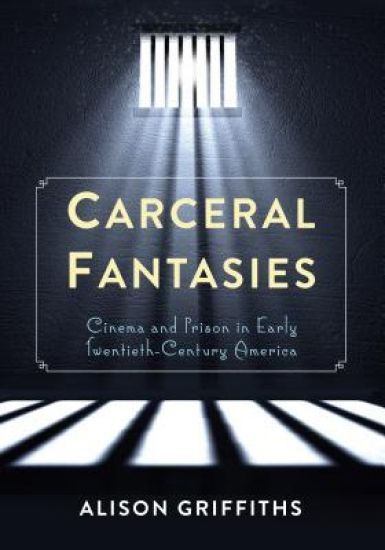
A groundbreaking contribution to the study of nontheatrical film exhibition, Carceral Fantasies tells the little-known story of how cinema found a home in the U.S. penitentiary system and how the prison emerged as a setting and narrative trope in modern cinema. Focusing on films shown in prisons before 1935, Alison Griffiths explores the unique experience of viewing cinema while incarcerated and the complex cultural roots of cinematic renderings of prison life. Griffiths considers a diverse mix of cinematic genres, from early actualities and reenactments of notorious executions to reformist exposes of the 1920s.She connects an early fascination with cinematic images of punishment and execution, especially electrocutions, to the attractions of the nineteenth-century carnival electrical wonder show and Phantasmagoria (a ghost show using magic lantern projections and special effects). Griffiths draws upon convict writing, prison annual reports, and the popular press obsession with prison-house cinema to document the integration of film into existing reformist and educational activities and film's psychic extension of flights of fancy undertaken by inmates in their cells. Combining penal history with visual and film studies and theories surrounding media's sensual effects, Carceral Fantasies illuminates how filmic representations of the penal system enacted ideas about modernity, gender, the body, and the public, shaping both the social experience of cinema and the public's understanding of the modern prison.
Carceral Fantasies

Carceral Fantasies

Alison Griffiths

Columbia University Press
2019
pokkari
A groundbreaking contribution to the study of nontheatrical film exhibition, Carceral Fantasies tells the little-known story of how cinema found a home in the U.S. penitentiary system and how the prison emerged as a setting and narrative trope in modern cinema. Focusing on films shown in prisons before 1935, Alison Griffiths explores the unique experience of viewing cinema while incarcerated and the complex cultural roots of cinematic renderings of prison life.Griffiths considers a diverse mix of cinematic genres, from early actualities and reenactments of notorious executions to reformist exposés of the 1920s. She connects an early fascination with cinematic images of punishment and execution, especially electrocutions, to the attractions of the nineteenth-century carnival electrical wonder show and Phantasmagoria (a ghost show using magic lantern projections and special effects). Griffiths draws upon convict writing, prison annual reports, and the popular press obsession with prison-house cinema to document the integration of film into existing reformist and educational activities and film's psychic extension of flights of fancy undertaken by inmates in their cells. Combining penal history with visual and film studies and theories surrounding media's sensual effects, Carceral Fantasies illuminates how filmic representations of the penal system enacted ideas about modernity, gender, the body, and the public, shaping both the social experience of cinema and the public's understanding of the modern prison.
Nomadic Cinema

Nomadic Cinema

Alison Griffiths

Columbia University Press
2025
sidottu
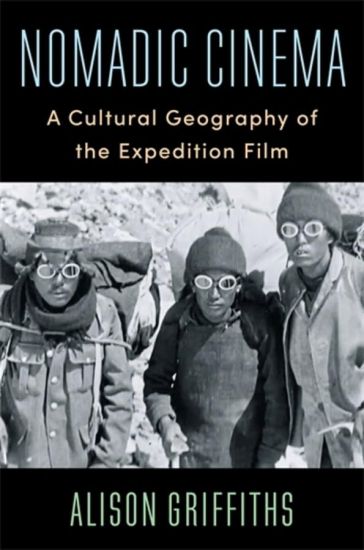
From In Borneo, the Land of the Head-Hunters to The Epic of Everest to Camping Among the Indians, the early twentieth century was the heyday of expedition filmmaking. As new technologies transformed global transportation and opened new avenues for documentation, and as imperialism and capitalism expanded their reach, Western filmmakers embarked on journeys to places they saw as exotic, seeking to capture both the monumental and the mundane. Their films portrayed far-flung locales, the hardships of travel, and the day-to-day lives of Indigenous people through a deeply colonial lens.Nomadic Cinema is a groundbreaking history of these films, analyzing them as visual records of colonialism that also offer new possibilities for recognizing Indigenous histories. Alison Griffiths examines expedition films made in Borneo, Central Asia, Tibet, Polynesia, and the American Southwest, reinterpreting them from decolonial perspectives to provide alternative accounts of exploration. She considers the individuals and institutions—including the American Museum of Natural History—responsible for creating the films, the spectators who sought them out, and the Indigenous intermediaries whose roles white explorers minimized. Ambitious and interdisciplinary, Nomadic Cinema ranges widely, from the roots of expedition films in medieval cartography and travel writing to still-emerging technologies of virtual and augmented reality. Highlighting the material conditions of filmmaking and the environmental footprint left by exploration, this book recovers Indigenous memory and sovereignty from within long-buried sources.
Nomadic Cinema

Nomadic Cinema

Alison Griffiths

Columbia University Press
2025
pokkari
From In Borneo, the Land of the Head-Hunters to The Epic of Everest to Camping Among the Indians, the early twentieth century was the heyday of expedition filmmaking. As new technologies transformed global transportation and opened new avenues for documentation, and as imperialism and capitalism expanded their reach, Western filmmakers embarked on journeys to places they saw as exotic, seeking to capture both the monumental and the mundane. Their films portrayed far-flung locales, the hardships of travel, and the day-to-day lives of Indigenous people through a deeply colonial lens.Nomadic Cinema is a groundbreaking history of these films, analyzing them as visual records of colonialism that also offer new possibilities for recognizing Indigenous histories. Alison Griffiths examines expedition films made in Borneo, Central Asia, Tibet, Polynesia, and the American Southwest, reinterpreting them from decolonial perspectives to provide alternative accounts of exploration. She considers the individuals and institutions—including the American Museum of Natural History—responsible for creating the films, the spectators who sought them out, and the Indigenous intermediaries whose roles white explorers minimized. Ambitious and interdisciplinary, Nomadic Cinema ranges widely, from the roots of expedition films in medieval cartography and travel writing to still-emerging technologies of virtual and augmented reality. Highlighting the material conditions of filmmaking and the environmental footprint left by exploration, this book recovers Indigenous memory and sovereignty from within long-buried sources.
RHS Your Wellbeing Garden

RHS Your Wellbeing Garden

Alistair Griffiths; Matthew Keightley; Annie Gatti; Zia Allaway

DK
2020
sidottu
Your garden could be even better for you.Discover...How certain plants can form a barrier against air and noise pollutionWhich birdsong alleviates anxietyHow plants can help to save energyWhy green is so good for usLearn how connecting with nature can reduce stress and improve wellbeing. You don't even need a garden - even a balcony or houseplants can help to boost your mood. Every recommendation is backed by scientific research, drawn together by the team of RHS scientists and experts. Favourite garden designer at the RHS Chelsea Flower Show Matt Keightley then suggests how to translate the science into ideas for your green space.With this groundbreaking book, find out how, in sometimes very simple ways, you can create an outdoor space that nourishes your mind and body, and is good for our planet too.
Dawn Issue 001

Dawn Issue 001

Jake Griffiths

Lulu.com
2017
pokkari
Dawn takes place a few decades after an infestation of a strange parasite has wiped most of humanity out, we follow Kate a trader and scavenger and she uncovers an unknown group plotting to change her world forever, by destroying the last human city on Earth.
Message From Rhiannon

Message From Rhiannon

Colin Griffiths

Lulu.com
2018
sidottu
There are a thousand secrets hidden in the beautiful mountains of Llanmiskin. At the end of school term, five teenagers go to the mountain to celebrate. Only four return. 10 years later the five have a subliminal message from the supposed dead person. There is going to be a reunion? Will they ever find out what happened on that mountain.
Santa's Christmas Run-In

Santa's Christmas Run-In

Pete Griffiths

Lulu.com
2018
pokkari
Have you ever thought about just what Santa gets up to in the days leading up to Christmas day? Perhaps you've wondered how Santa met his reindeer, or even why the ones that he keeps company with seem to be able to fly - when the ones that you might have bumped into clearly can't? You might even be interested to know what other arrangements Santa had in mind for pulling his sleigh around before he gave the job to a bunch of reindeer? Well ""Santa's Christmas Run-In"" is just for you, with a day by day account of exactly what Santa had to do one particular December so that he could deliver presents to all the children and to you on Christmas day. It all begins one cold, windy night in a snowy field far, far away, when a voice is heard from up high and a big round thing falls with a ""THUMP!"" from out the sky.
Tainted

Tainted

Colin Griffiths

Lulu.com
2017
sidottu
Six-year-old Jenny Williams almost died in the car accident that cruelly claimed the lives of her best friend Lily and LilyOs parents. Her brush with death and her recovery saw Jenny labelled a miracle child. When she was finally released from hospital, her physical scars may have healed, but something sinister was still within her head a shadow on her mind that would eventually grow and dominate her later life. As a teenager, a horrific series of murders would awaken that shadow and that best friend sheOd lost all those years ago loomed high in her mind. Disturbed by the tainting of her mind, Jenny set off in search of a new life. She would soon discover, her old life, though, was not that easy to leave behind. How would Jenny cope with the realisation that she was forever tainted by the past as she becomes one of the most hated teenagers in Britain.