Horatio Alger Jr. January 13, 1832 - July 18, 1899) was a prolific 19th-century American author, best known for his many young-adult novels about impoverished boys and their rise from humble backgrounds to lives of middle-class security and comfort through hard work, determination, courage, and honesty. His writings were characterized by the "rags-to-riches" narrative, which had a formative effect on America during the Gilded Age. All of Alger's juvenile novels share essentially the same theme, known as the "Horatio Alger myth" a teenage boy works hard to escape poverty. Often it is not hard work that rescues the boy from his fate but rather some extraordinary act of bravery or honesty. The boy might return a large sum of lost money or rescue someone from an overturned carriage. This brings the boy-and his plight-to the attention of a wealthy individual. Alger secured his literary niche in 1868 with the publication of his fourth book, Ragged Dick, the story of a poor bootblack's rise to middle-class respectability. This novel was a huge success. His many books that followed were essentially variations on Ragged Dick and featured casts of stock characters: the valiant hard-working, honest youth, the noble mysterious stranger, the snobbish youth, and the evil, greedy squire. In the 1870s, Alger's fiction was growing stale. His publisher suggested he tour the American West for fresh material to incorporate into his fiction. Alger took a trip to California, but the trip had little effect on his writing: he remained mired in the tired theme of "poor boy makes good." The backdrops of these novels, however, became the American West rather than the urban environments of the northeastern United States.
Horatio Alger Jr. January 13, 1832 - July 18, 1899) was a prolific 19th-century American author, best known for his many young adult novels about impoverished boys and their rise from humble backgrounds to lives of middle-class security and comfort through hard work, determination, courage, and honesty. His writings were characterized by the "rags-to-riches" narrative, which had a formative effect on America during the Gilded Age. All of Alger's juvenile novels share essentially the same theme, known as the "Horatio Alger myth" a teenage boy works hard to escape poverty. Often it is not hard work that rescues the boy from his fate but rather some extraordinary act of bravery or honesty. The boy might return a large sum of lost money or rescue someone from an overturned carriage. This brings the boy-and his plight-to the attention of a wealthy individual.
Horatio Alger Jr. January 13, 1832 - July 18, 1899) was a prolific 19th-century American author, best known for his many young adult novels about impoverished boys and their rise from humble backgrounds to lives of middle-class security and comfort through hard work, determination, courage, and honesty. His writings were characterized by the "rags-to-riches" narrative, which had a formative effect on America during the Gilded Age. All of Alger's juvenile novels share essentially the same theme, known as the "Horatio Alger myth" a teenage boy works hard to escape poverty. Often it is not hard work that rescues the boy from his fate but rather some extraordinary act of bravery or honesty. The boy might return a large sum of lost money or rescue someone from an overturned carriage. This brings the boy-and his plight-to the attention of a wealthy individual.
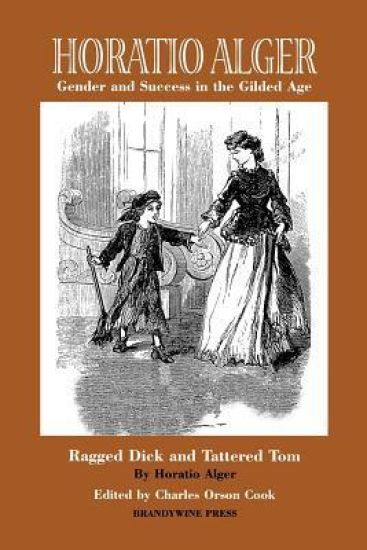
The Horatio Alger myth has worked itself deeply into American culture. Even those who have never read one of his stories and many who could not identify him have come to believe that honest, industrious adolescents can easily rise from poverty to respectability. That conviction has reinforced notions of capitalism and the Protestant work ethic. It has also strengthened a sense of naïve optimism that in America things will always get better. The two stories here, one of which violates convention by featuring a heroine rather than a hero, invite a close examination of how Alger’s fictional protagonists win out. Readers will discover that the often used phrase rags-to-riches does not describe the career of the typical Alger hero, whose progress is rather from adversity to a solid and respectable place in society. A critical introduction examines the ratio of reality to sentimentality in Alger’s work. And since the author intended the stories to be not time-bound but applicable and determinative in all circumstances, the tales invite speculation as to how relevant they are to the changed economic and social circumstances of later times.
Characters: 13 male, 6 female. Various sets. Winner! 2010 New York Musical Theatre Festival Award for Excellence Winner! National Music Theatre Network Award! This charming rags to riches romp with a melodic score follows Ragged Dick, Horatio Alger's first best selling hero, from penniless bootblack to budding Wall Street entrepreneur. His adventures bring him face to face with scheming ex convicts, vicious comic villians, kind benefactors and a world of colorful street characters. Set in the New York Centennial summer of 1876, this full of hopes and dreams musical is perfect for the whole family. "A charming, feel-good musical. The work's tremendous heart and unabashed celebration of Alger's popular stories are in ample evidence in this appealing musical about the rise from rags to riches." - Meredith Lee, Theatermania "SHINE! is one of those wonderful musicals where an audience cares deeply for the hero. Richard Seff's book and Lee Goldsmith's lyrics perfectly capture the Horatio Alger spirit ...Composer Roger Anderson's ballads are strikingly beautiful. As for his up-tempo songs, to call each a toe-tapper would only be 10% accurate ..." - Peter Filichia, The Star-Ledger "Awfully close to the sort of musical that made the form nationally beloved in the Rodgers and Hammerstein era." - Marc Miller, Backstage "Highly tuneful...A friendly show of considerable good humor." - Playbill
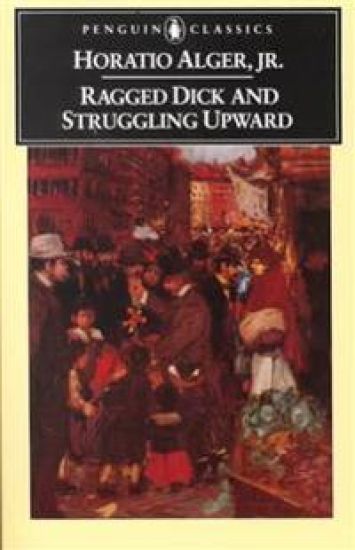
From the 1860's through the 1890s, Horatio Alger wrote hundreds of novels to teach young boys the merits of honesty, hard work, and cheerfulness in the face of adversity. As Carl Bode points out in his introduction, Horatio Alger filled a void in American literature and met scant competition both in the nature and the number of his works. Like his heroes, Alger rose to the top by chance, coincidence, and hard work.The hero of Ragged Dick is a veritable "diamond in the rough"—as innately virtuous as he is streetwise and cocky. Immediately popular with young readers, the novel also appealed to parents, who repsonded to its colorful espousal of the Protestant ethic. Struggling Upward, published nearly thirty years later, followed the same time-tested formulas, and despite critical indifference it, too, had mass appeal.For more than seventy years, Penguin has been the leading publisher of classic literature in the English-speaking world. With more than 1,700 titles, Penguin Classics represents a global bookshelf of the best works throughout history and across genres and disciplines. Readers trust the series to provide authoritative texts enhanced by introductions and notes by distinguished scholars and contemporary authors, as well as up-to-date translations by award-winning translators.
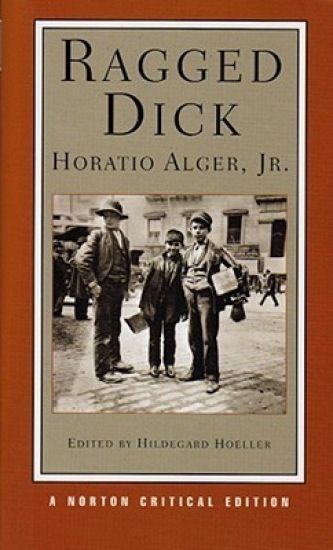
It is canonical as a cultural text, rather than a purely literary one, as this Norton Critical Edition reflects. An extensive “Contexts” section includes maps, photographs, and documents showing how and why Alger used the backdrop of New York City to highlight problems of urban poverty, immigration, and child labor in mid-nineteenth century America. “Criticism” is thematically organized around contemporary reviews and responses, the heated public debate about whether Alger should be available in American public libraries, parodies of and related responses to Alger, and four recent critical essays by Mary Wroth Walsh, Glenn Hendler, Michael Moon, and Hildegard Hoeller.
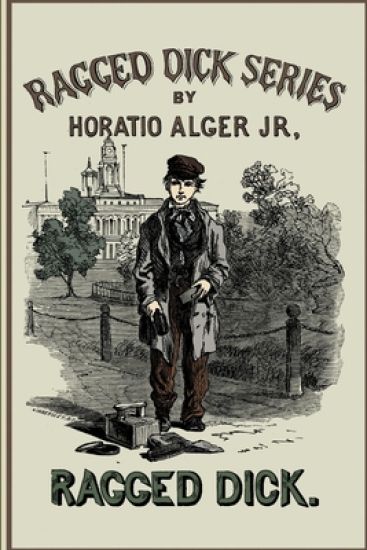
"I ain't knocked round the city streets all my life for nothin'," proclaims Ragged Dick, the fast-talking boy hero of Horatio Alger's classic rags-to-riches tale. Dick is a plucky street boy who smokes, gambles, and speaks ungrammatically--but he is also honest and hardworking, striving not for wealth and status, but for a steady job, a decent place to sleep, and respectability. A quintessential boy's novel of adventure, romance, and coming of age, "Ragged Dick" brings to life the drama and perils of living among other young outcasts in the crowded streets of lower Manhattan. It is at the same time an exhilarating tale of one boy's metamorphosis from a dirty street urchin to a handsome, self-respecting gentleman. With an Introduction by Michael Meyer and a New Afterword by Bryan Waterman