Kirjojen hintavertailu. Mukana 11 342 296 kirjaa ja 12 kauppaa.

Kirjahaku

Etsi kirjoja tekijän nimen, kirjan nimen tai ISBN:n perusteella.

1000 tulosta hakusanalla Hamilton Nigel

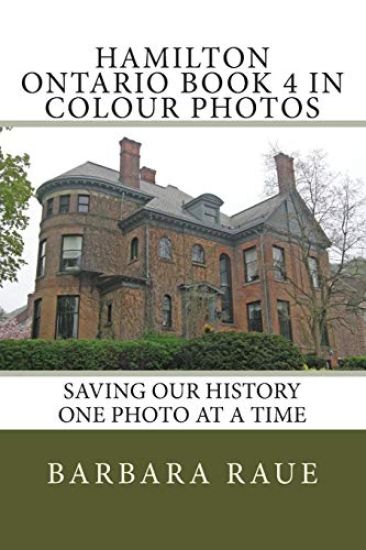
Hamilton Ontario Book 4 in Colour Photos: Saving Our History One Photo at a Time

Hamilton Ontario Book 4 in Colour Photos: Saving Our History One Photo at a Time

Barbara Raue

Createspace Independent Publishing Platform
2015
nidottu
In 1784, thousands of United Empire Loyalists settled in Upper Canada (what is now southern Ontario). They were soon followed by more Americans attracted by the availability of inexpensive, arable land. Large numbers of Iroquois loyal to Britain arrived from the United States and were settled on reserves. Between 1788 and 1793, the townships at the Head-of-the-Lake were surveyed and named.Hamilton, the centre of a densely populated and industrialized region, is located in Southern Ontario on the western part of Lake Ontario. There are over one hundred waterfalls and cascades within the city, most of which are on or near the Bruce Trail as it winds through the Niagara Escarpment.Two steel manufacturing companies, Stelco and Dofasco, were formed in 1910 and 1912, and Procter & Gamble opened a manufacturing plant in 1914. The Pigott Building was the city's first high-rise building constructed in 1929. McMaster University moved from Toronto to Hamilton, an airport was built in 1940, a Studebaker assembly line started in 1948, the Burlington Bay Skyway Bridge was built in 1958, and the first Tim Horton's store opened in 1964.Hamilton is home to the Royal Botanical Gardens, McMaster University and Mohawk College. The Canadian Football League's Hamilton Tiger Cats began playing at the new Tim Hortons Field in 2014, which was built as part of the 2015 Pan American Games which will be jointly hosted by Toronto and Hamilton.On January 1, 2001, the new City of Hamilton was formed through the amalgamation of the former city and six surrounding municipalities.We have lived in Hamilton for more than 40 years; it is here that we raised our three children.
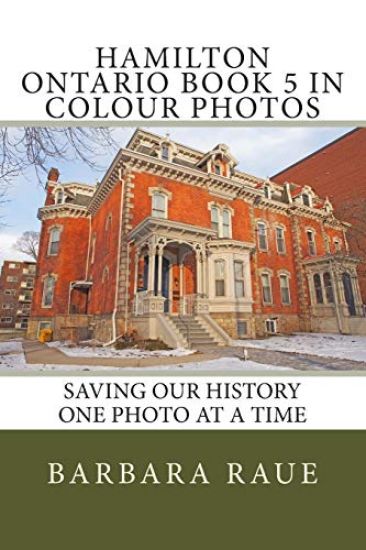
Hamilton Ontario Book 5 in Colour Photos: Saving Our History One Photo at a Time

Hamilton Ontario Book 5 in Colour Photos: Saving Our History One Photo at a Time

Barbara Raue

Createspace Independent Publishing Platform
2015
nidottu
John Ryckman, born in Barton township (where present day downtown Hamilton is), described the area in 1803 as he remembered it: "The city in 1803 was all forest. The shores of the bay were difficult to reach or see because they were hidden by a thick, almost impenetrable mass of trees and undergrowth... Bears ate pigs, so settlers warred on bears. Wolves gobbled sheep and geese, so they hunted and trapped wolves. They also held organized raids on rattlesnakes on the mountainside. There was plenty of game. Many a time have I seen a deer jump the fence into my back yard, and there were millions of pigeons which we clubbed as they flew low."Hamilton, the centre of a densely populated and industrialized region, is located in Southern Ontario on the western part of Lake Ontario. Hamilton Harbour marks the northern limit of the city, and the Niagara Escarpment runs through the middle of the city bisecting it into "upper" and "lower" parts. There are over one hundred waterfalls and cascades within the city, most of which are on or near the Bruce Trail as it winds through the Niagara Escarpment.Two steel manufacturing companies, Stelco and Dofasco, were formed in 1910 and 1912, and Procter & Gamble opened a manufacturing plant in 1914. McMaster University moved from Toronto to Hamilton, an airport was built in 1940, a Studebaker assembly line started in 1948, the Burlington Bay Skyway Bridge was built in 1958, and the first Tim Horton's store opened in 1964.On January 1, 2001, the new City of Hamilton was formed through the amalgamation of the former city and the six municipalities of Stoney Creek, Glanbrook, Ancaster, Dundas, and Flamborough. We have lived in Hamilton for more than 40 years; it is here that we raised our three children.
Hamilton's Hats

Hamilton's Hats

Martine Oborne

Macmillan Children's Books
2018
nidottu
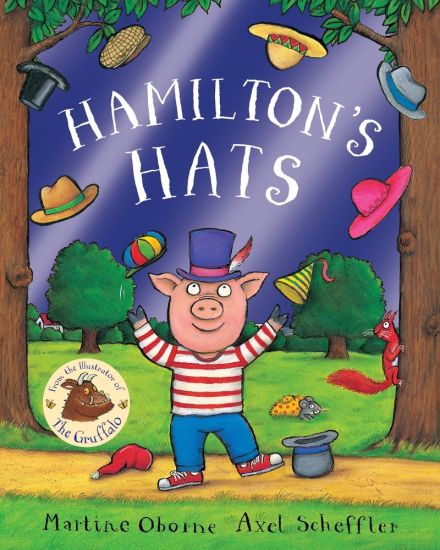
Hamilton the Pig loves hats. He has big hats, small hats, floppy hats and feathery hats. He has so many hats that his mum is worried he is a very vain little pig. Little does she know that Hamilton's favourite hats are about to teach him some very important lessons . . . What will Hamilton do when he meets a cheeky giraffe, a hungry crocodile and some mischievous monkeys who each want to keep one of his hats for themselves?Hamilton's Hats is Martine Oborne's delightfully funny story with a warm message about sharing, perfectly complemented by wonderfully witty illustrations from Axel Scheffler, the award-winning illustrator of The Gruffalo.
Japan today and tomorrow (1914) by Hamilton Wright Mabie

Japan today and tomorrow (1914) by Hamilton Wright Mabie

Hamilton Wright Mabie

Createspace Independent Publishing Platform
2016
nidottu
No attempt is made in this book to describe in detail the Japan of to-day as the traveler sees it in its schools, industries, banking, administration, army and navy organization and activity; reports of the changes and developments of the last sixty years may be found in an increasing literature of information. It is a story of such dramatic interest, of such striking contrasts, of such rapid changes of external occupation, methods of work and habits of life, that it has found many recorders. Never before in historic times has the transformation of a civilization been accomplished with such intrepid intelligence or with such efficiency. Japan has changed occupations, tools and methods,
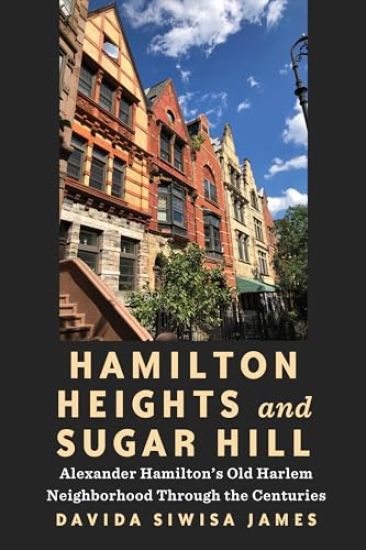
Hamilton Heights and Sugar Hill

Hamilton Heights and Sugar Hill

Davida Siwisa James

FORDHAM UNIVERSITY PRESS
2024
sidottu
Explores four centuries of colonization, land divisions, and urban development around this historic landmark neighborhood in West Harlem It was the neighborhood where Alexander Hamilton built his country home, George Gershwin wrote his first hit, a young Norman Rockwell discovered he liked to draw, and Ralph Ellison wrote Invisible Man. Through words and pictures, Hamilton Heights and Sugar Hill traces the transition of this picturesque section of Harlem from lush farmland in the early 1600s to its modern-day growth as a unique Manhattan neighborhood highlighted by stunning architecture, Harlem Renaissance gatherings, and the famous residents who called it home. Stretching from approximately 135th Street and Edgecombe Avenue to around 165th, all the way to the Hudson River, this small section in the Heights of West Harlem is home to so many significant events, so many extraordinary people, and so much of New York’s most stunning architecture, it’s hard to believe one place could contain all that majesty. Author Davida Siwisa James brings to compelling literary life the unique residents and dwelling places of this Harlem neighborhood that stands at the heart of the country’s founding. Here she uncovers the long-lost history of the transitions to Hamilton Grange in the aftermath of Alexander Hamilton’s death and the building boom from about 1885 to 1930 that made it one of Manhattan’s most historic and architecturally desirable neighborhoods, now and a century ago. The book also shares the story of the LaGuardia High School of Music & Art, one of the fi rst in the nation to focus on arts and music. The author chronicles the history of the James A. Bailey House, as well as the Morris-Jumel Mansion, Manhattan’s oldest surviving residence and famously known as George Washington’s headquarters at the start of the American Revolution. By telling the history of its vibrant people and the beautiful architecture of this lovely, well-maintained historic landmark neighborhood, James also dispels the misconception that Harlem was primarily a ghetto wasteland. The book also touches upon the Great Migration of Blacks leaving the South who landed in Harlem, helping it become the mecca for African Americans, including such Harlem Renaissance artists and luminaries as Thurgood Marshall, Count Basie, Duke Ellington, Mary Lou Williams, Paul Robeson, Regina Anderson Andrews, and W. E. B. Du Bois.
Hamilton Heights and Sugar Hill

Hamilton Heights and Sugar Hill

Davida Siwisa James

FORDHAM UNIVERSITY PRESS
2025
pokkari
Explores four centuries of colonization, land divisions, and urban development around this historic landmark neighborhood in West Harlem It was the neighborhood where Alexander Hamilton built his country home, George Gershwin wrote his first hit, a young Norman Rockwell discovered he liked to draw, and Ralph Ellison wrote Invisible Man. Through words and pictures, Hamilton Heights and Sugar Hill traces the transition of this picturesque section of Harlem from lush farmland in the early 1600s to its modern-day growth as a unique Manhattan neighborhood highlighted by stunning architecture, Harlem Renaissance gatherings, and the famous residents who called it home. Stretching from approximately 135th Street and Edgecombe Avenue to around 165th, all the way to the Hudson River, this small section in the Heights of West Harlem is home to so many significant events, so many extraordinary people, and so much of New York's most stunning architecture, it's hard to believe one place could contain all that majesty. Author Davida Siwisa James brings to compelling literary life the unique residents and dwelling places of this Harlem neighborhood that stands at the heart of the country's founding. Here she uncovers the long-lost history of the transitions to Hamilton Grange in the aftermath of Alexander Hamilton's death and the building boom from about 1885 to 1930 that made it one of Manhattan's most historic and architecturally desirable neighborhoods, now and a century ago. The book also shares the story of the LaGuardia High School of Music & Art, one of the fi rst in the nation to focus on arts and music. The author chronicles the history of the James A. Bailey House, as well as the Morris-Jumel Mansion, Manhattan's oldest surviving residence and famously known as George Washington's headquarters at the start of the American Revolution. By telling the history of its vibrant people and the beautiful architecture of this lovely, well-maintained historic landmark neighborhood, James also dispels the misconception that Harlem was primarily a ghetto wasteland. The book also touches upon the Great Migration of Blacks leaving the South who landed in Harlem, helping it become the mecca for African Americans, including such Harlem Renaissance artists and luminaries as Thurgood Marshall, Count Basie, Duke Ellington, Mary Lou Williams, Paul Robeson, Regina Anderson Andrews, and W. E. B. Du Bois.
Hamilton Cleek, Detective Stories

Hamilton Cleek, Detective Stories

Thomas W. Hanshew

Createspace Independent Publishing Platform
2016
nidottu
Thomas W. Hanshew (1857 - 1914) was an American writer, born in Brooklyn, N. Y. He used, among others, the pen name "Charlotte May Kingsley," and wrote more than 150 novels, some of which were co-authored with his wife, Mary E. Hanshew. Hanshew's best-known creation was the consulting detective Hamilton Cleek, known as "the man of the forty faces" for his incredible skill at disguise. The central figure in dozens of short stories that began to appear in 1910 and were subsequently collected in a series of books, Cleek is based in Clarges Street, London, where he is constantly consulted by Inspector Narkom of Scotland Yard. Hamilton Cleek is laughably unrealistic, at least to the modern reader, not only for his ability to impersonate anyone but for his physical derring-do and his frequent melodramatic encounters with Margot, "Queen of the Apaches", and her partner-in-crime Merode.
Norse stories retold from the Eddas. By: Hamilton Wright Mabie: Mythology, Norse

Norse stories retold from the Eddas. By: Hamilton Wright Mabie: Mythology, Norse

Hamilton Wright Mabie

Createspace Independent Publishing Platform
2016
nidottu
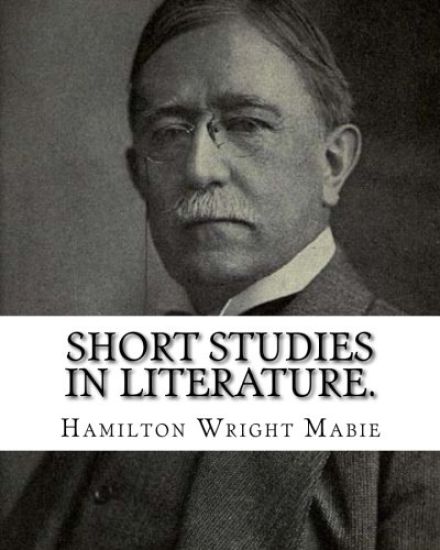
Hamilton Wright Mabie, (December 13, 1846 - December 31, 1916) was an American essayist, editor, critic, and lecturer.He was born at Cold Spring, N. Y. in 1846. Mabie was the youngest child of Sarah Colwell Mabie who was from a wealthy Scottish-English family and Levi Jeremiah Mabie, whose ancestors were Scots-Dutch. They were early immigrants to New Amsterdam, New Netherland about 1647. Due to business opportunities with the opening of the Erie Canal his family moved to Buffalo, New York when he was approaching school age. At the young age of 16 he passed his college entrance examination, but waited a year before he attended Williams College (1867) and the Columbia Law School (1869). While at Williams, Mabie was a member of Alpha Delta Phi fraternity and would serve as the first president of the North-American Interfraternity Conference (formally known as the National Interfraternity Conference He received honorary degrees from his own alma mater, from Union College, and from Western Reserve and Washington and Lee universities. Although he passed his bar exams in 1869 he hated both the study and practice of law. In 1876 he married Jeanette Trivett. In the summer of 1879 he was hired to work at the weekly magazine, Christian Union (renamed The Outlook in 1893), an association that lasted until his death. In 1884, Mabie was promoted to associate editor of the Christian Union and then elected to the Author's Club, whose members included such men of established reputation as George Cary Eggleston, Richard Watson Gilder, Brander Matthews, and Edmund Clarence Stedman. In 1890, a small collection of Mabie's essays which reflected upon life, literature and nature were published as a volume entitled My Study Fire"
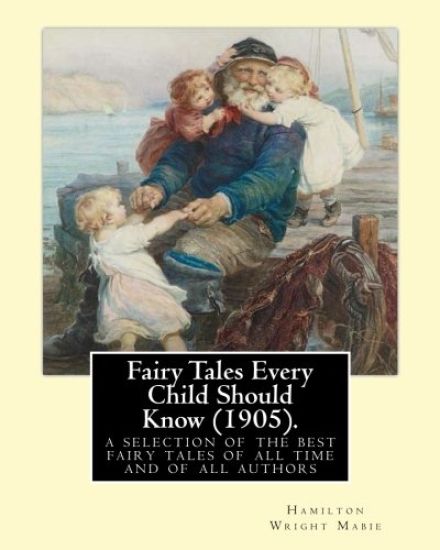
Fairy Tales Every Child Should Know (1905).edited By: Hamilton Wright Mabie: a selection of the best fairy tales of all time and of all authors
The fairy tale is a poetic recording of the facts of life, an interpretation by the imagination of its hard conditions, an effort to reconcile the spirit which loves freedom and goodness and beauty with its harsh, bare and disappointing conditions. It is, in its earliest form, a spontaneous and instinctive endeavor to shape the facts of the world to meet the needs of the imagination, the cravings of the heart. Classics included in this volume include: One Eye, Two Eyes, Three Eyes, The Magic Mirror, The Enchanted Stag, Hansel and Grethel, The Story of Aladdin, This Story of Ali Baba, The Second Voyage of Sinbad the Sailor, The White Cat, The Golden Goose, The Twelve Brothers, The Fair One With the Golden Locks, Tom Thumb, Blue Beard, Cinderella, Puss In Boots, The Sleeping Beauty In the Wood, Jack and The Bean-Stalk . Hamilton Wright Mabie, (December 13, 1846 - December 31, 1916) was an American essayist, editor, critic, and lecturer.He was born at Cold Spring, N. Y. in 1846. Mabie was the youngest child of Sarah Colwell Mabie who was from a wealthy Scottish-English family and Levi Jeremiah Mabie, whose ancestors were Scots-Dutch. They were early immigrants to New Amsterdam, New Netherland about 1647. Due to business opportunities with the opening of the Erie Canal his family moved to Buffalo, New York when he was approaching school age. At the young age of 16 he passed his college entrance examination, but waited a year before he attended Williams College (1867) and the Columbia Law School (1869). While at Williams, Mabie was a member of Alpha Delta Phi fraternity and would serve as the first president of the North-American Interfraternity Conference (formally known as the National Interfraternity Conference He received honorary degrees from his own alma mater, from Union College, and from Western Reserve and Washington and Lee universities. Although he passed his bar exams in 1869 he hated both the study and practice of law. In 1876 he married Jeanette Trivett. In the summer of 1879 he was hired to work at the weekly magazine, Christian Union (renamed The Outlook in 1893), an association that lasted until his death. In 1884, Mabie was promoted to associate editor of the Christian Union and then elected to the Author's Club, whose members included such men of established reputation as George Cary Eggleston, Richard Watson Gilder, Brander Matthews, and Edmund Clarence Stedman. In 1890, a small collection of Mabie's essays which reflected upon life, literature and nature were published as a volume entitled My Study Fire".