Khadija was the first believer, to whom the Prophet Muhammad often turned for advice. At a time when strongmen quickly seized power from any female Muslim ruler, Arwa of Yemen reigned alone for five decades. In nineteenth-century Russia, Mukhlisa Bubi championed the rights of women and girls, and became the first Muslim woman judge in modern history. After the Gestapo took down a Resistance network in Paris, British spy Noor Inayat Khan found herself the only undercover radio operator left in that city. In this unique history, Hossein Kamaly celebrates the lives and achievements of twenty-one extraordinary women in the story of Islam, from the formative days of the religion to the present.
Khadija was the first believer, to whom the Prophet Muhammad often turned for advice. At a time when strongmen quickly seized power from any female Muslim ruler, Arwa of Yemen reigned alone for five decades. In nineteenth-century Russia, Mukhlisa Bubi championed the rights of women and girls, and became the first Muslim woman judge in modern history. After the Gestapo took down a Resistance network in Paris, British spy Noor Inayat Khan found herself the only undercover radio operator left in that city. In this unique history, Hossein Kamaly celebrates the lives and achievements of twenty-one extraordinary women in the story of Islam, from the formative days of the religion to the present.
Arbitrators, unlike judges, are appointed by parties to resolve their transactional disputes. Because of such contractual appointment, arbitrators gain their authority from the parties, and thus must apply the law chosen by the parties to the dispute before them. However, there are overriding mandatory laws of other jurisdictions, that due to their imperative character may claim application to the dispute. The arbitrator, as a private adjudicator, has a duty to resolve a potential conflict that may arise between the law chosen by the parties and another mandatory law(s) that claims application and is not chosen by the parties. Overriding Mandatory Rules in International Commercial Arbitration discusses the applicability of mandatory rules of law in international commercial arbitration and addresses the concerns of the arbitrators and judges at various stages of arbitration and the recognition and enforcement of the award respectively. Legal scholars researching the law applicable in international commercial arbitration will find the answers they require within these pages, as will students. It will also prove helpful to practitioners, including arbitrators, judges and attorneys, as they deal with mandatory rules in practice.
The knowledge of God and worshiping Him is the aim of our life, and we are all the travelers in this journey, but some of us are aware and other are in doubt.This book is about the aim and the map of this journey, based on the work of Attar, one of the highest and well known mystic in the world.Attar explains to us the stages and the conditions of this journey. Originally written in Persian poetry and under the name of "The Conference of the Birds"; the Seven Valleys of Attar is a poetic treatise on the methodology of mysticism.Attar scatters the fragrances of knowledge of God on earth, he burns like a lamp to turn on the candle of our soul, and helping us to find the treasures in our inward.Attar's work is like a necklace of pearls, but Attar scattered every pearl in a different direction, making it hard for a traveler to find the way.This is a free adaptation, compilation and translation of that colossal work, now it is written and codified in simple way and short sentences for easy understanding of the mystic concepts.You see here that necklace of pearls string together, so you can see his work in its order, the simple and naked expressions of this great work.Mysticism is not parable, allegory nor metaphors neither something we cannot understand it, but it makes us wonder because it has a lot of hidden meaning in it.Mysticism is the way of freedom, there is no obligation, pushing or invitation in it. It is a gift from God to us, it means He Loves us. It is the way of our maturity, it is the inner way.
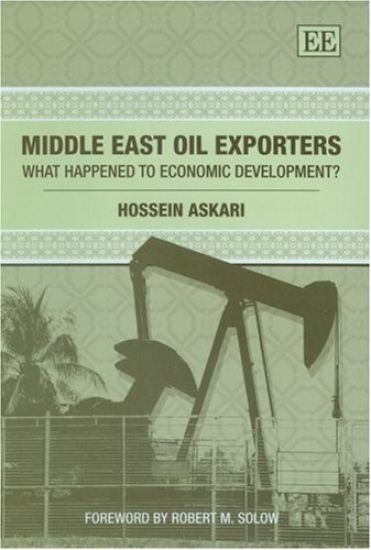
Hossein Askari argues here that economic and social failure in the oil-exporting countries of the Middle East is a result of much more than simply shortcomings in economic policies. He analyzes religion, corruption, instability, wars and foreign interference as factors affecting the region and offers solutions that incorporate Islamic teachings, regional peace efforts, market-oriented economic policies, sound institutions and unselfish policy support from the West.Middle East Oil Exporters presents a detailed picture of the economic structure and a critical survey of the recent economic performance of the Middle East. The focus is especially on the large oil-exporting nations, although the smaller producers are represented as well. The author illustrates how oil has become a crutch to avoid reforms, destroying the work ethic of the region, fuelling corruption and poisoning the social and cultural fabric of society to keep unpopular governments in power. In addition, he provides a view of the social, economic, and political implications of Islamic doctrine. In this context he examines the institutions of governance and determines that they have performed poorly, often in blatant violation of Islamic principles. This in-depth analysis is accompanied by a comprehensive prescription for a turnaround in the Middle East.Hossein Askari's unique and insightful critique is essential reading for students and scholars of the Middle East, as well as policymakers involved in the region. Executives of financial institutions and private corporations will also want to understand the region for their energy needs and as a market for their products and services.
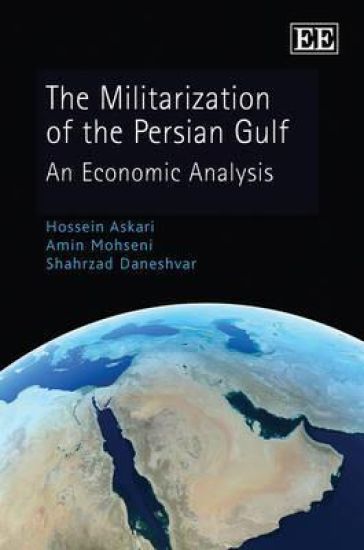
The Persian Gulf is arguably the most militarized region in the world. The authors of this insightful book examine military expenditures, arms imports and military deployment to analyze how and why this came to be. Muslim teachings have much to say about peace, war and economics, and this book explores the ways in which Islamic thought affects military and economic developments.The authors find that heavy militarization is the result of a combination of factors, including oil wealth disparities among the countries in the region, high oil revenues, corruption and foreign interference. The authors detail and discuss these factors, and follow this analysis with an assessment of the effects of high military expenditures - wars, conflicts, regional instability - and their heavy economic toll in retarding development and growth. The book concludes by suggesting ways that military expenditures may be reduced to benefit regional peace, stability and economic prosperity.Scholars and students in economics, political science and international affairs as well as anyone interested in the Middle East will find this book timely and illuminating.
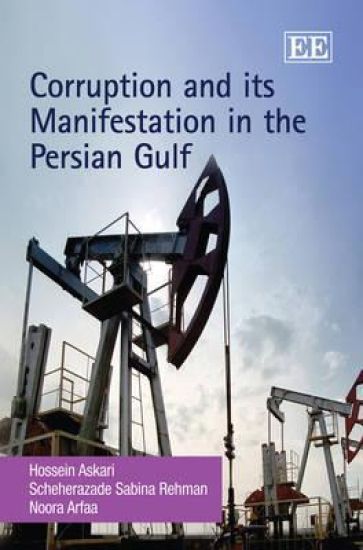
The authors of this timely book investigate various forms and measures of corruption, examine whether corruption is more acute in Persian Gulf countries than elsewhere, and illustrate the unique forms it takes in oil- and natural gas-rich economies. They also analyze the major factors that promote corrupt practices and how they impact economic growth and social development. While corruption is globally pervasive and adversely affects the interests of citizens worldwide, it has perhaps received the most notoriety in developing countries that have an abundance of mineral deposits. Among these developing countries, the oil-exporting countries of the Persian Gulf have received a significant amount of this attention in the popular media. This book argues that for intergenerational equity to be preserved while exploiting oil and gas reserves, other forms of capital must replace their depletion to preserve a constant capital stock. Corruption, wasteful expenditures - such as spending on armament and war - and even productive expenditures - those that enrich individual segments of society - rob much of the world's population. The authors conclude the book by offering a radical solution for containing corruption in natural resource-rich countries. This timely and thought-provoking work will resonate within the academic and business worlds alike. Those interested in Middle Eastern studies, the Persian Gulf, multinational corporations, corporate governance efforts and private NGOs will find this book of particular importance.
This book offers a modern view of process control in the context of today’s technology. It provides innovative chapters on the growth of educational, scientific, and industrial research among chemical engineers. It presents experimental data on thermodynamics and provides a broad understanding of the main computational techniques used for chemical processing. Readers will gain an understanding of the areas of process control that all chemical engineers need to know. The information is presented in a concise and readable format. The information covers the basics and also provides unique topics, such as using a unified approach to model representations, statistical quality control, and model-based control. The methods presented have been successfully applied in industry to solve real problems. Designed as an advanced research guide in process dynamics and control, the book will be useful in chemical engineering courses as well as for the teaching of mechanical, nuclear, industrial, and metallurgical engineering.
Family and the need to have children are among the emotional and expedient rights that are recognized for each couple according to each society. Fertilization or pregnancy in the course of human history has always been natural and without the intervention of external factors, and based on what was realized until a few decades ago, any couple who were incapable of natural fertility and fertilization were considered infertile, but advances in modern science Medicine and the development of its tools have led to the occurrence of some natural complications that prevent some couples from being able to conceive naturally and go through the process of natural reproduction, in some ways treating themselves and the background To provide for childbearing and pregnancy experience (Behjati Ardakani, 2001).According to biology, there is a gap of about seven days from the time of fertilization to the beginning of its replacement in the uterus, and this is the beginning of the fetus in the uterus and pregnancy, and if this does not happen, small infertility has occurred.Of course, regardless of the identification and introduction of infertility syndromes that are different in men and women, in the discussion of artificial insemination, there are different types, which can be called intrauterine and extra uterine fertilization.Rental uterus or surrogate uterus is a very popular term. In this case, the man and woman have fertility, but the woman has a problem with the structure of her uterus or no uterus at all. Therefore, this woman's egg is adjacent to her husband's sperm, and after the formation of an embryo in another woman's uterus, this embryo is replaced and returns to the arms of its original parents after birth.The uterus of some women is not able to go through pregnancy and carry the couple's fetus for various reasons, but it generally lacks the problem of insemination. In this case, the couple asks another woman to keep the fetus in her womb for nine months of pregnancy during a contract, and in short, this process is called surrogate mother, rented mother, or nursemaid. The subject of a rented mother, as mentioned, has no history of narration in the past of Shiite jurisprudence, but there are bubbles - I mean problems - of this subject about fertilization and pregnancy of a woman who was married and had husband but also she was lesbian, or narrations about adultery and The quality and the reasons for it can be visualized. Given the above, the importance of research on the subject of rented uterus is clear. In this article, we will look for a rented womb in Iranian jurisprudence and law.Uterine rental is one of the methods of artificial insemination or in vitro fertilization, which is the most controversial type of artificial insemination according to the principles of our legal jurisprudence. This debate has very wide dimensions that always make the legal community to be more interested in research and study on understanding the various aspects of this issue and the effects and rulings that are imposed on it.
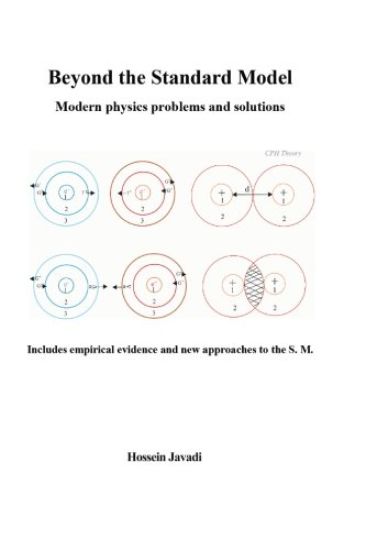
We are faced with a Universe that is atomically integrated, and interwoven, going through un-interrupted evolutionary changes, with human beings and other biological beings as inseparable integral parts. The incredibly unexplainable miracle of the Universe is that it is law-governed, acting as if it were moving completely in accordance with a conscious design. This is a contentious argument that is undeniable by believers, non-believers, and agnostics as well. There is nothing about the Universe that is acting chaotically. We could literally refers to millions of things that we encounter on a daily basis, and we could see that each unfolds according to a relatively regular pattern. Einstein believed that " God does not play dice with the Universe" Laws of the Universe are the secrets of the Universe that have to be discovered, regardless of how they came about, and what philosophical preferences we may hold. The resolution of practical problems, related to everything we do in life, will force us to go through the trouble of discovering these laws. All governments, with different religious orientations, possessing nuclear bombs, had to go through discovering the laws of atomic structures to do it. There are no Christian, Jewish, Islamic nuclear bombs, All bombs are non-religious, made out of the secrets of the Universe. There is no other way. Each science studies certain features or behavior of the Universe. But, it is the human beings, completely atomically integrated, and interwoven with nature, who are attempting to discover these behaviors, and laws. It makes it difficult because, the so-called investigators are inseparable parts of the processes themselves. Nothing in the Universe, beginning with the sub-atomic particles, through the stars, and Planets, can live by itself, for itself, and of itself, including human beings, because of Universal inter-atomic integration. So, how can an entity, machine, or a conscious biological human being, study other entities, or biological beings, in insolation, while itself is an atomic integrant of the entity being studied, and atomically influencing, even modifying the results of the investigation. Theories of knowledge, or epistemology study the relationship between man and nature, while he tries to understand the Universe. Concerning the importance of theory of knowledge, Einstein believed: " I can say with great certainty, that the ablest students, whom I met as a teacher, were deeply interested in theory of knowledge, scientific philosophy. I mean by " ablest students", those who excelled not only in skill, but independence of judgment...". Dialectical materialism has the most fascinating explanation of what this relationship entails. Fredrick Engels, and Validimir Lenin have two different views on epistemology, and I have, in this book, demonstrated that very delicate and distinctive difference, between the two, even though some of their followers believe that the two intellectual giants of the Left completely concur on the issue. They talk about the relationship of man to nature in acquiring knowledge, and what constitutes knowledge and truths, and are there any " absolute truths" in nature, and are they attainable? Can the investigator atomically influence, or even modify the outcome of what is being studied? or is the man only functioning like a camera, taking pictures of the Universe, without ever influencing it as Lenin believed. It is intellectually very disturbing that too many people in this country are completely unaware of it, unless they are educated on scientific philosophy. I spent my entire adult life dealing with this seemingly simple, but yet profound issue, which no serious scientist can afford to ignore, and no meaningful scientific study could be performed. I made a comparative analysis between Engles' s and Lenin's theory of knowledge, and a critique of Lenin's theory of knowledge, some forty years ago when I was a student at L. A Cal State Universi
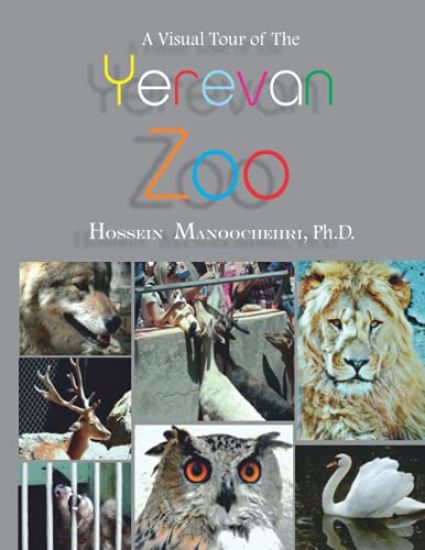
Animals, such as monkeys, baboons, vultures, owls, wolves, tigers, crocodiles, lions, and many others, are part of the environment of mankind. Their numbers, however, shrink day by day as mankind has occupied all major living lands of the earth. For a good reason, however, some wild and tamed members of the animal kingdom are kept and protected at different zoos in different countries, which are visited by many people to make tourism and traveling meaningful. Furthermore, zoos may be regarded as a good option to prevent the endangered species from extinction (--The modern man can afford such challenge to protect and to save the endangered animals).This volume displays the animals' life in the Yerevan Zoo. Animal images collected, in this 3rd edition, include squirrel monkeys, deers, tortoises, horses, camels, wolf, slender-tailed meerkats, bears, lynx, baboons, vultures, eagle, owl, peafowls, pheasant, elephant, jaguar, lions, and more. Finally, in this volume images of main animals, that are kept in the Yerevan Zoo, are displayed for all those who care about animals and who would like to see what they look like in this part of the world.
This book explains a perspective on the system of justice that emerges in Islam if rules are followed and how the Islamic system is differentiated from the conventional thinking on justice. It examines conceptions of justice from the Enlightenment to Bentham to Rawls to contemporary philosophers including Sen, Cohen, Nussbaum, and Pogge. The authors present the views of twentieth century Muslim thinkers on justice who see Muslims upholding rituals but not living according to Qur’anic rules. It provides empirical surveys of the current state of justice in Muslim countries analyzing the economic, social, and political state of affairs. The authors conclude by assessing the state of justice-injustice in Muslim countries and highlighting areas in need of attention for justice to prevail.








![?? ?????? ????? ??]????](/covers/9782366122886.jpg)