Kirjojen hintavertailu. Mukana 12 595 353 kirjaa ja 12 kauppaa.

Kirjahaku

Etsi kirjoja tekijän nimen, kirjan nimen tai ISBN:n perusteella.

1000 tulosta hakusanalla Irving P. Herman

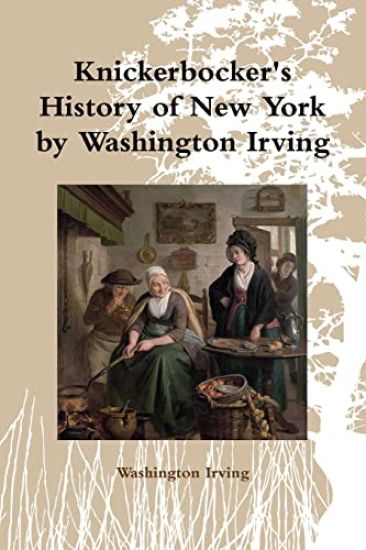
Knickerbocker's History of New York by Washington Irving
Knickerbocker's History of New York is a satire on self-important local history and contemporary politics. Prior to its publication, Irving started a hoax akin to today's viral marketing campaigns; he placed a series of missing person adverts in New York newspapers seeking information on Diedrich Knickerbocker, a crusty Dutch historian who had allegedly gone missing from his hotel in New York City. As part of the ruse, Irving placed a notice-allegedly from the hotel's proprietor-informing readers that if Mr. Knickerbocker failed to return to the hotel to pay his bill, he would publish a manuscript Knickerbocker had left behind.
Henry Irving's Waterloo

Henry Irving's Waterloo

W. D. King

University of California Press
2022
pokkari
In this creative study of history and popular culture, W. D. King ingeniously illustrates how a long-forgotten instance in theatre history can reveal the very process of historical change itself. Late in the nineteenth century, Henry Irving, the leading actor-manager of the English stage, was scathingly attacked by George Bernard Shaw for his popular performance in Conan Doyle's play, A Story of Waterloo. Shaw's review was one of the first onslaughts in a war against the old guard of the English stage, against Victorianism, against England and Empire itself. King's depiction of this event and its aftermath illuminates the period's crucial values and cultural issues, and is presented in a manner that is both convincing and highly entertaining. This title is part of UC Press's Voices Revived program, which commemorates University of California Press’s mission to seek out and cultivate the brightest minds and give them voice, reach, and impact. Drawing on a backlist dating to 1893, Voices Revived makes high-quality, peer-reviewed scholarship accessible once again using print-on-demand technology. This title was originally published in 1993.
Henry Irving's Waterloo

Henry Irving's Waterloo

W. D. King

University of California Press
2022
sidottu
In this creative study of history and popular culture, W. D. King ingeniously illustrates how a long-forgotten instance in theatre history can reveal the very process of historical change itself. Late in the nineteenth century, Henry Irving, the leading actor-manager of the English stage, was scathingly attacked by George Bernard Shaw for his popular performance in Conan Doyle's play, A Story of Waterloo. Shaw's review was one of the first onslaughts in a war against the old guard of the English stage, against Victorianism, against England and Empire itself. King's depiction of this event and its aftermath illuminates the period's crucial values and cultural issues, and is presented in a manner that is both convincing and highly entertaining. This title is part of UC Press's Voices Revived program, which commemorates University of California Press’s mission to seek out and cultivate the brightest minds and give them voice, reach, and impact. Drawing on a backlist dating to 1893, Voices Revived makes high-quality, peer-reviewed scholarship accessible once again using print-on-demand technology. This title was originally published in 1993.
John Irving and Cultural Mourning

John Irving and Cultural Mourning

Bouchra Belgaid

Lexington Books
2010
sidottu
Alone among contemporary American novelists, John Irving seems to bridge the ever-present cultural divide between best-selling fiction and serious literary endeavour. His Irvingnesque style encapsulates the shifting patterns of American culture since the 1960s, expressing a mood of nostalgic melancholy or cultural mourning, which seems to go against ideas of the Postmodern. Indeed, Irving is one of the very few commercial novelists to be taught on university courses, this book is the first full-length study of his writing to situate him within the social, historical and political context of his times. It contends that postmodernism derives from the political failure of the sixties and a narcissistic obsession with the composition of the self. This narcissism is at the same time what Freud labels as cultural melancholia, the mourning of a lost ideal self-image. Just as nostalgia appears as narcissistic history, this lost self-image conjures up the figure of the Dead Father and the Father's Law, a figure which Irving's prose obsessively pursues.
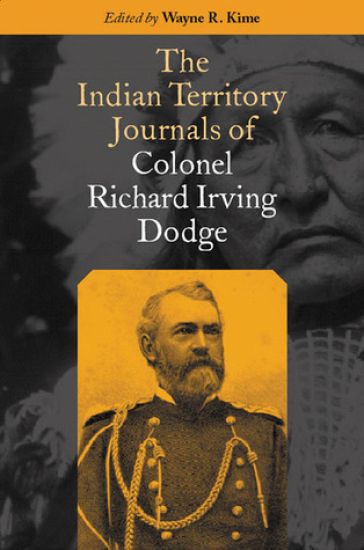
The Indian Territory Journals of Colonel Richard Irving Dodge

The Indian Territory Journals of Colonel Richard Irving Dodge

Richard Irving Dodge

University of Oklahoma Press
2000
sidottu
In these journals, Colonel Richard Irving Dodge, a well-known chronicler of western history and an authority on Plains Indians, provides an important account of conditions in Indian Territory from 1878 to 1880, a period of rapid transition.The Cheyenne-Arapaho reservation in present-day western Oklahoma was the center of Dodge's activity. His writings offer a firsthand record of the 1878 retreat of the Northern Cheyenne, the conditions endured by Indians who remained on the reservation, and the jurisdictional conflicts between Army personnel and representatives of the Office of Indian Affairs.These journals also provide insight into Dodge's character, with reports of his official duties as a military man and of several landmark events in his family life. Extensive commentaries and notes by Wayne R. Kime provide further detail, including a history of Cantonment North Fork Canadian River, a six-company post Dodge established and commanded in the region.
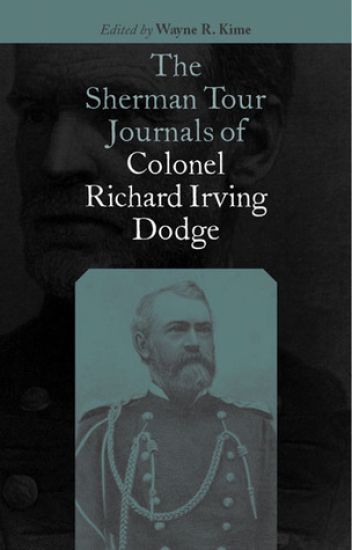
The Sherman Tour Journals of Colonel Richard Irving Dodge

The Sherman Tour Journals of Colonel Richard Irving Dodge

Richard Irving Dodge

University of Oklahoma Press
2002
sidottu
In summer 1883, General William Tecumseh Sherman took Colonel Richard Irving Dodge, his former aide-de-camp, with him on a 10,000-mile inspection tour across the northern tier of territories, on to the Pacific Northwest, south through California, and east through the Southwest to Denver. Dodge had no idea his journals would ever become public, so he wrote openly about his companions and their interactions, terrain and natural wonders, conditions of military posts, life in civilian communities, and what the future seemed to hold for the region and its changing population.