Hayford, an African Nationalist, argues that the preservation of the indigenous land tenure system was vital if the values of pre-colonial Africa was to be maintained. First published in 1913.
When Professor J.E. Roberts was first employed at the then Cancer Hospital (Free) in 1932, the words medical and physics were rarely joined together. Meandering in Medical Physics presents an account of Professor Roberts's experiences in professional life, both in the United Kingdom and overseas. It documents the early history of medical physics and provides insight into the very basic equipment and working conditions well known to hospital physicists not long ago. Enhanced by archived photographs from the British Institute of Radiology, the book will entertain, enlighten, and educate.
With the French Revolution raging across the channel, there was much alarm in Britain in 1797. When the French invading force landed at Fishguard in Pembrokeshire on 22 February, the last invasion of mainland Britain had begun. This book presents a study of the last invasion, assesses the contemporary evidence and sets events in their context.
If you have collected Transformers*TM action figures and think you have it all, this book will open your eyes! Over 1,000 stunning color images display the vast armada of Transformers collectibles beyond the action figures. The volume includes PVC figures and cold cast porcelain busts, arts and crafts, battery operated toys, birthday party decorations and favors, clothing, comics, DVDs, puzzles, radios, videos, and walkie-talkies, all with a Transformers theme. The engaging text draws the reader easily and quickly into each chapter and the captions provide current values for the items displayed. This book is a must for every Transformers fan, whether you have been following them since the 1980s or have just discovered their heroic exploits today!
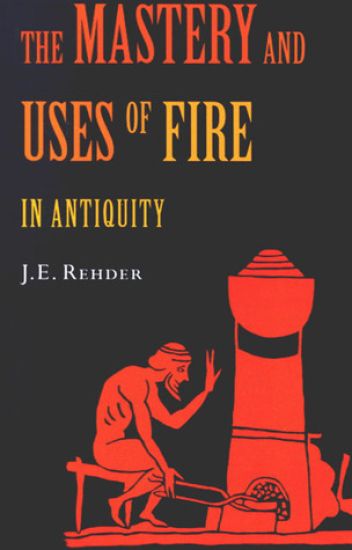
Because pyrotechnology was considered a demeaning craft, there is very little about its practice in ancient texts; our knowledge of early developments is based almost entirely on interpretation of artifacts recovered by archaeology during the past century and a half. Literature in archaeology and anthropology, however, tends to concentrate on the artifact found rather than on how it was produced - on the pot or spearhead rather than the kiln or furnace. There is thus surprisingly little information on the practice and importance of pyrotechnology. The Mastery and Uses of Fire in Antiquity, written by an engineer with fifty years of experience in industrial research and pyrotechnology, rectifies this lack. J.E. Rehder covers the kinds of furnaces, the nature of the fuel used, and the productions created - fired clay, lime from limestone, metals from the reduction of ores, and glass from sand. He also shows convincingly that previous arguments that early deforestation resulted from furnace use cannot be supported. The Mastery and Uses of Fire in Antiquity provides much-needed information for anyone interested in archaeology, anthropology, and pyrotechnology.
This collection of essays is the fruit of about fifteen years of discussion and research by James Force and me. As I look back on it, our interest and concern with Newton's theological ideas began in 1975 at Washington University in St. Louis. James Force was a graduate student in philosophy and I was a professor there. For a few years before, I had been doing research and writing on Millenarianism and Messianism in the 17th and 18th centuries, touching occasionally on Newton. I had bought a copy of Newton's Observations upon the Prophecies of Daniel, and the Apocalypse of St. John for a few pounds and, occasionally, read in it. In the Spring of 1975 I was giving a graduate seminar on Millenarian and Messianic ideas in the development of modem philosophy. Force was in the seminar. One day he came very excitedly up to me and said he wanted to write his dissertation on William Whiston. At that point in history, the only thing that came to my mind about Whiston was that he had published a, or the, standard translation of Josephus (which I also happened to have in my library. ) Force told me about the amazing views he had found in Whiston's notes on Josephus and in some of the few writings he could find in St. Louis by, or about, Whiston, who was Newton's successor as Lucasian Professor of mathematics at Cambridge and who wrote inordinately on Millenarian theology.
In my early years I was constituted in the exacting imperatives of philosophical analysis. That stern face is present in the composition of the Newton essays chosen here for republication. It is my hope that potential readers will be patient with the old Adam of analysis, and seize the portrait of Newton's intellec tual world presented in these essays. It is gratifying for me to acknowledge the encouragement of Robert Butts and John Nicholas of the University of Western Ontario, intellectual comrades in arms. It was at Western that I began my intellectual journey, and many of the present members of the Philosophy Department remain my friends and mentors. I thank also Marta Spranzi Zuber who long ago believed in the merit of my Newton scholarship. But most important to me is the sustaining encouragement of Professor Barbara Tuchanska, who shares my vision of the historicity of scientific thought. It is a pleasure to express my gratitude for membership, over twenty years, in the Department of History and Philosophy of Science at the University of Pittsburgh. It is the mecca for one who seeks to understand. J. E.
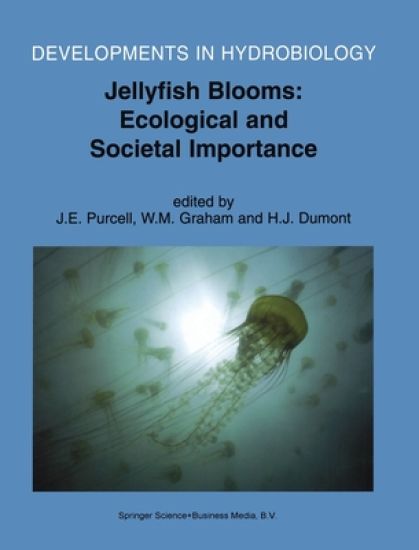
Jellyfish, a group that includes scyphomedusae, hydromedusae, siphonophores and ctenophores, are important zooplankton predators throughout the world's estuaries and oceans. These beautiful creatures have come to public attention as featured exhibits in aquaria and in news headlines as invaders and as providers of genes used in biomedical research. Nevertheless, jellyfish are generally considered to be nuisances because they interfere with human activities by stinging swimmers, clogging power plant intakes and nets of fishermen and fish farms, and competing with fish and eating fish eggs and larvae. There is concern that environmental changes such as global warming, eutrophication, and over-fishing may result in increased jellyfish populations. The literature reviews and research papers in this volume explore the interactions between jellyfish and humans. Papers cover: the medical aspects of jellyfish stings; jellyfish as human food and jellyfish fisheries; interactions of jellyfish and fish; effects of environmental changes on jellyfish; effects of introduced ctenophores on the Black Sea ecosystem; factors causing increases or concentrations of jellyfish; and others aspects of jellyfish ecology. This is an important reference for students and professional marine biologists, oceanographers, fishery scientists, and aquarists.
A typical subsystem found in almost all aircraft and space vehicles consists of beam, plate and/or shell elements attached to each other in a rigid or flexible manner. Due to limitations on their weights, the elements themselves must be highly flexible, and due to limitations on their initial configuration (i.e., before deployment), those aggregates often have to contain several links so that the substructure may be unfolded or telescoped once it is deployed. The defining philosophy of this monograph is that in order to understand completely the dynamic response of such a complex elastic structure, it is not sufficient to consider only its global motion but also necessary to take into account the flexibility of individual elements and the interaction and transmission of elastic effects such as bending, torsion, and axial deformations at junctions where members are connected to each other. Therefore, the purposes of this monograph are: to derive distributed parameter models of the transient behavior of some or all of the state and interval variables which describe the dynamic response of multiple-link flexible structures such as trusses, frames, robot arms, solar panels, antennae and deformable mirrors, based on the principles of continuum mechanics and under reasonable constraints on the geometry of the admissible deformations; to provide rigorous mathematical analyses of the resulting models; and to develop control theoretic properties of multiple-link flexible structures based on the control theoretic properties of the models. The modelling and analysis of these complicated and realistic structural configurations should be of interest to a diverse group of applied mathematicians, structural, aeronautical, aerospace, and mechanical engineers and to advanced graduate students working on such problems.
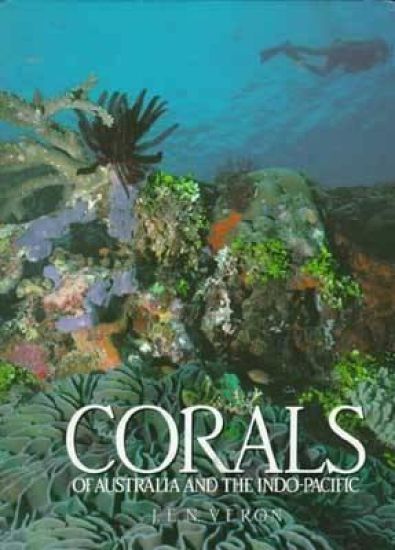
The first reference of its kind, this book represents good biology, well-founded systematics, accessible biogeography, geological history of corals, and one of the finest collections of coral photographs to be found anywhere. Hailed as the single most important reference on reef corals, this book is useful in describing corals in all areas of Oceania and Southeast Asia. It provides a means of identifying almost 1,000 species of coral, a reliable nomenclature, up-to-date information on distribution and abundance, and authoritative notes on structure and biology.
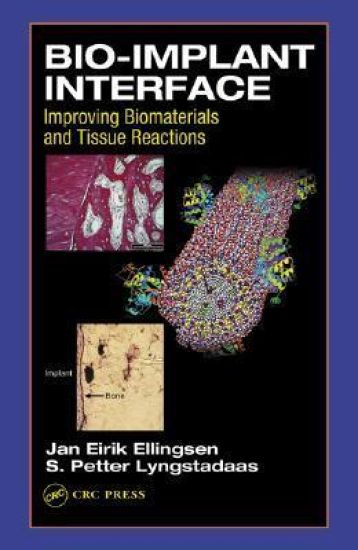
Achieving good clinical outcomes with implanted biomaterials depends upon achieving optimal function, both mechanical and biological, which in turn depends upon integrating advances realized in biological science, material science, and tissue engineering. As these advances push back the frontiers of biomaterial medicine , the control and patterning of bio-implant interface reactions will have a tremendous impact on future design and prospects of implant treatments. Bio-Implant Interface: Improving Biomaterials and Tissue Reactions brings together a remarkable panel of scientists to present the state-of-the-art in our understanding of interactions at the interface between biomaterials and living tissue. Much of the focus is on the importance of the implant surface's topography and chemistry to its interaction with the biological environment. Biomineralization along with the biological content of the interface and its role in directing cellular response along desired pathways also receive particular attention. The pursuit of new and better designs for improved biocompatibility and patient response to implants continues to challenge clinicians and scientists alike. This book offers a unique opportunity to bring yourself up-to-date on recent advances in the field and new strategies for controlling the bio-implant interface.
The use of a widely accepted diagnostic classification is vital for the effective treatment of psychiatric patients, and is essential in research.This pocket-book version of Chapter V of the 10th revision of the International Classification of Diseases and Related Health Problems (ICD-10) will facilitate both practice and research. It provides a quickly accessible and easy-to-use source of information about the new classification. The book has been compiled with a range of users in mind, including psychiatrists of all grades of seniority and experience, researchers, medical records staff and data analysts. Managers and other non-medically qualified mental health professionals will also find it useful. Compiled by a psychiatrist, this pocket-book is practical and clinical in its approach, and brings together in one place all major aspects of the description and diagnosis of psychiatric disorders.
This reference is a guide to the concepts, technology, uses, costs and vocabulary of fractional T-1 services. The book illustrates fractional T-1 capabilities and limitations by explaining basic T-1 networking, common fractional T-1 access methods, equipment interfacing and troubleshooting. The text describes the advantages to be gained with these services, the various service alternatives and the cost/benefit considerations.
Long considered the definitive biography of the great Tudor Queen, this scholarly and immensely readable book won the James Tait Black Memorial Prize for Biography and has been translated into nine languages.