Kirjojen hintavertailu. Mukana 11 529 976 kirjaa ja 12 kauppaa.

Kirjahaku

Etsi kirjoja tekijän nimen, kirjan nimen tai ISBN:n perusteella.

1000 tulosta hakusanalla J.M. Coetzee

Summertime

Summertime

J. M. Coetzee

PENGUIN BOOKS
2010
nidottu
"Not since Disgrace, has he written with such urgency and feeling." -The New Yorker J.M. Coetzee's latest novel, The Schooldays of Jesus, is now available from Viking. Late Essays: 2006-2016 will be available January 2018. Nobel Prize-winning author J. M. Coetzee's new book follows a young biographer as he works on a book about the late writer, John Coetzee. The biographer embarks on a series of interviews with people who were important to Coetzee during the period when he was "finding his feet as a writer"-in his thirties and sharing a run-down cottage in the suburbs of Cape Town with his widowed father. Their testimonies create an image of an awkward, reserved, and bookish young man who finds it difficult to connect with the people around him. An innovative and inspired work of fiction-incisive, elegant, and often surprisingly funny- Summertime allows one of the most revered writers of our time to imagine his own life with a critical and unsparing eye.
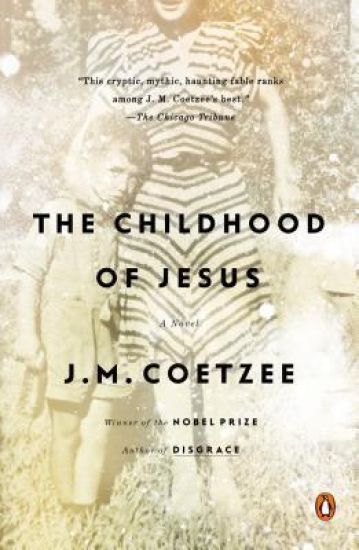
The Childhood of Jesus

The Childhood of Jesus

J. M. Coetzee

Penguin Publishing Group
2014
nidottu
From the Nobel Prize-winning author of Waiting for the Barbarians, The Life & Times of Michael K and Disgrace. Nobel laureate and two-time Booker Prize winner J. M. Coetzee returns with a haunting and surprising novel about childhood and destiny that is sure to rank with his classic novels. Separated from his mother as a passenger on a boat bound for a new land, David is a boy who is quite literally adrift. The piece of paper explaining his situation is lost, but a fellow passenger, Sim n, vows to look after the boy. When the boat docks, David and Sim n are issued new names, new birthdays, and virtually a whole new life. Strangers in a strange land, knowing nothing of their surroundings, nor the language or customs, they are determined to find David's mother. Though the boy has no memory of her, Sim n is certain he will recognize her at first sight. "But after we find her," David asks, "what are we here for?" An eerie allegorical tale told largely through dialogue, The Childhood of Jesus is a literary feat--a novel of ideas that is also a tender, compelling narrative. Coetzee's many fans will celebrate his return while new readers will find The Childhood of Jesus an intriguing introduction to the work of a true master.
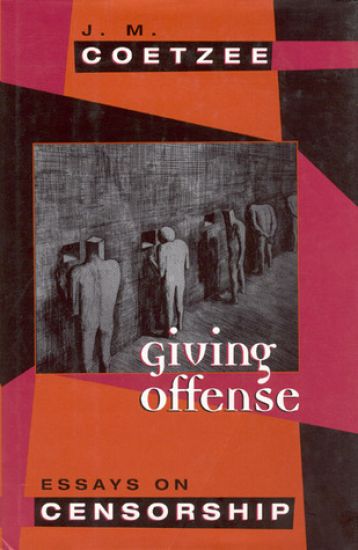
Giving Offense

Giving Offense

J. M. Coetzee

University of Chicago Press
1996
sidottu
This text presents an analysis of censorship from the perspective of a writer who has lived and worked under its shadow. The essays collected here attempt to understand the passion that plays itself out in acts of silencing and censoring. Subscribing neither to the myth of the writer as a moral giant nor to that of the writer as persecuted innocent, Coetzee argues that a destructive dynamic of belligerence and escalation tends to overtake the rivals in any field ruled by censorship. Ranging from Osip Mandelstam being commanded to compose an ode in praise of Stalin to Breyten Breytenbach writing poems under and for the eyes of his prison guards, the book focuses on the ways authors have historically responded to censorship. It also analyzes the arguments of Catharine MacKinnon for the suppression of pornography and traces the operations of the old South African censorship system. Finally, Coetzee delves into the early history of apartheid and criticizes the blankness of contemporary political science in its efforts to address the deeper motives behind apartheid. Winner of the Booker Prize for "The Life and Times of Michael K." , Coetzee has also written seven novels, including "The Master of Petersburg", and two books of criticism.
Giving Offense

Giving Offense

J. M. Coetzee

University of Chicago Press
1997
nidottu
This is an analysis of censorship from the perspective of one who has lived and worked under its shadow. The essays collected here attempt to understand the passion that plays itself out in acts of silencing and censoring. Coetzee argues that a destructive dynamic of belligerence and escalation tends to overtake the rivals in any field ruled by censorship. From Osip Mandelstam commanded to compose an ode in praise of Stalin, to Breyten Breytenbach writing poems under and for the eyes of his prison guards, to Aleksander Solzhenitsyn engaging in a trial of wits with the organs of the Soviet state, the book focuses on the ways authors have historically responded to censorship. It also analyzes the arguments of Catharine MacKinnon for the suppression of pornography and traces the operations of the old South African censorship system.
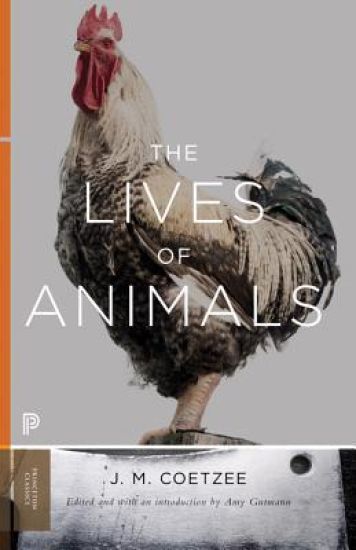
The Lives of Animals

The Lives of Animals

J. M. Coetzee

Princeton University Press
2016
pokkari
The idea of human cruelty to animals so consumes novelist Elizabeth Costello in her later years that she can no longer look another person in the eye: humans, especially meat-eating ones, seem to her to be conspirators in a crime of stupefying magnitude taking place on farms and in slaughterhouses, factories, and laboratories across the world. Costello's son, a physics professor, admires her literary achievements, but dreads his mother's lecturing on animal rights at the college where he teaches. His colleagues resist her argument that human reason is overrated and that the inability to reason does not diminish the value of life; his wife denounces his mother's vegetarianism as a form of moral superiority. At the dinner that follows her first lecture, the guests confront Costello with a range of sympathetic and skeptical reactions to issues of animal rights, touching on broad philosophical, anthropological, and religious perspectives. Painfully for her son, Elizabeth Costello seems offensive and flaky, but--dare he admit it?--strangely on target. In this landmark book, Nobel Prize-winning writer J. M. Coetzee uses fiction to present a powerfully moving discussion of animal rights in all their complexity. He draws us into Elizabeth Costello's own sense of mortality, her compassion for animals, and her alienation from humans, even from her own family. In his fable, presented as a Tanner Lecture sponsored by the University Center for Human Values at Princeton University, Coetzee immerses us in a drama reflecting the real-life situation at hand: a writer delivering a lecture on an emotionally charged issue at a prestigious university. Literature, philosophy, performance, and deep human conviction--Coetzee brings all these elements into play. As in the story of Elizabeth Costello, the Tanner Lecture is followed by responses treating the reader to a variety of perspectives, delivered by leading thinkers in different fields. Coetzee's text is accompanied by an introduction by political philosopher Amy Gutmann and responsive essays by religion scholar Wendy Doniger, primatologist Barbara Smuts, literary theorist Marjorie Garber, and moral philosopher Peter Singer, author of Animal Liberation. Together the lecture-fable and the essays explore the palpable social consequences of uncompromising moral conflict and confrontation.
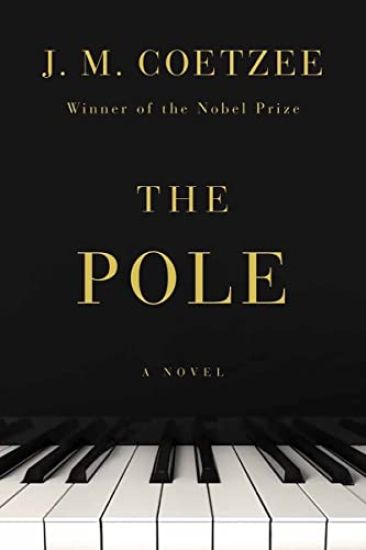
The Pole

The Pole

J. M. Coetzee

Liveright Publishing Corporation
2023
sidottu
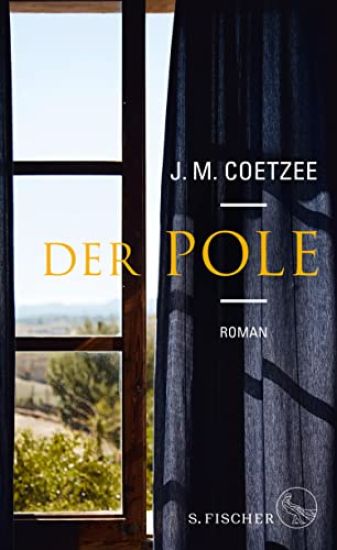
Renowned for his sparse yet powerful prose, J. M. Coetzee is unquestionably among the most influential--and provocative--authors of our time. With characteristic insight and a "brittle wit that forces our attention on the common terrors we don't want to think about" (Washington Post), Coetzee here challenges us to interrogate our preconceptions not only of love, but of truth itself.Exacting yet unpredictable, pithy yet complex, Coetzee's The Pole tells the story of Wittold Walccyzkiecz, a vigorous, extravagantly white-haired pianist and interpreter of Chopin who becomes infatuated with Beatriz, a stylish patron of the arts, after she helps organize his concert in Barcelona. Although Beatriz, a married woman, is initially unimpressed by Wittold and his "gleaming dentures," she soon finds herself pursued and ineluctably swept into his world. As the journeyman performer sends her countless letters, extends invitations to travel, and even visits her husband's summer home in Mallorca, their unlikely relationship blossoms, though only on Beatriz's terms.The power struggle between them intensifies, eventually escalating into a full-fledged battle of the sexes. But is it Beatriz who limits their passion by paralyzing her emotions? Or is it Wittold, the old man at his typewriter, trying to force into life his dream of love? Reinventing the all-encompassing love of the poet Dante for his Beatrice, Coetzee exposes the fundamentally enigmatic nature of romance, showing how a chance meeting between strangers--even "a Pole, a man of seventy, a vigorous seventy," and a stultified "banker's wife who occupies her days in good works"--can suddenly change everything.Reminiscent of James Joyce's "The Dead" in its exploration of love and loss, The Pole, with lean prose and surprising feints, is a haunting work, evoking the "inexhaustible palette of sensations, from blind love to compassion" (Berna Gonz lez Harbour, El Pa s) typical of Coetzee's finest novels.
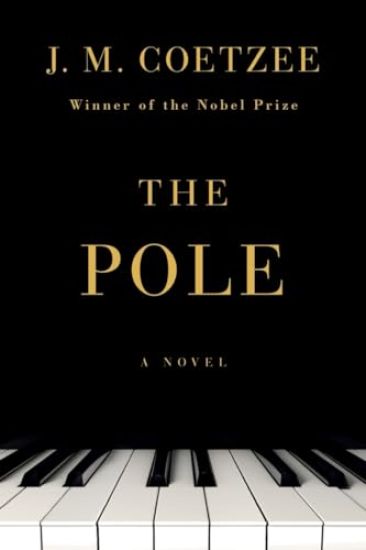
The Pole

The Pole

J. M. Coetzee

Liveright Publishing Corporation
2024
nidottu
Renowned for his sparse yet powerful prose, J. M. Coetzee is unquestionably among the most influential--and provocative--authors of our time. With characteristic insight and a "brittle wit that forces our attention on the common terrors we don't want to think about" (Washington Post), Coetzee here challenges us to interrogate our preconceptions not only of love, but of truth itself.Exacting yet unpredictable, pithy yet complex, Coetzee's The Pole tells the story of Wittold Walccyzkiecz, a vigorous, extravagantly white-haired pianist and interpreter of Chopin who becomes infatuated with Beatriz, a stylish patron of the arts, after she helps organize his concert in Barcelona. Although Beatriz, a married woman, is initially unimpressed by Wittold and his "gleaming dentures," she soon finds herself pursued and ineluctably swept into his world. As the journeyman performer sends her countless letters, extends invitations to travel, and even visits her husband's summer home in Mallorca, their unlikely relationship blossoms, though only on Beatriz's terms.The power struggle between them intensifies, eventually escalating into a full-fledged battle of the sexes. But is it Beatriz who limits their passion by paralyzing her emotions? Or is it Wittold, the old man at his typewriter, trying to force into life his dream of love? Reinventing the all-encompassing love of the poet Dante for his Beatrice, Coetzee exposes the fundamentally enigmatic nature of romance, showing how a chance meeting between strangers--even "a Pole, a man of seventy, a vigorous seventy," and a stultified "banker's wife who occupies her days in good works"--can suddenly change everything.Reminiscent of James Joyce's "The Dead" in its exploration of love and loss, The Pole, with lean prose and surprising feints, is a haunting work, evoking the "inexhaustible palette of sensations, from blind love to compassion" (Berna Gonz lez Harbour, El Pa s) typical of Coetzee's finest novels.
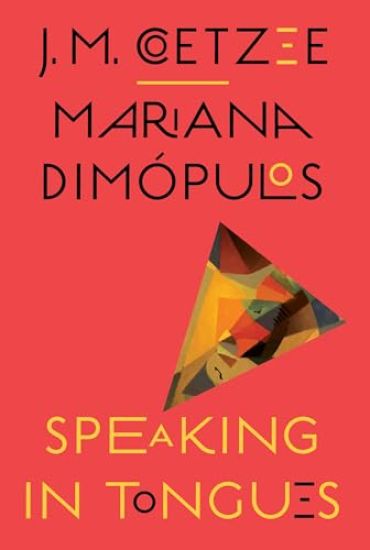
Speaking in Tongues

Speaking in Tongues

J. M. Coetzee; Mariana Dimópulos

Liveright Publishing Corporation
2025
sidottu
Language, historically speaking, has always been slippery. Two dictionaries provide two different maps of the universe: which one is true, or are both false? Speaking in Tongues--taking the form of a dialogue between Nobel laureate novelist J. M. Coetzee and eminent translator Mariana Dim pulos--examines some of the most pressing linguistic issues that plague writers and translators well into the twenty-first century. The authors address questions that we must answer in order to understand contemporary society. They inquire if one can truly love an acquired language, and they question why certain languages, like Spanish, have gender differences built into them. They examine the threat of monolingualism and ask how we can counter, if at all, the global spread of the English language, which seems to maraud like a colonial power. They question whether it should be the duty of the translator to remove morally objectionable, misogynistic, or racist language. And in the conclusion, Coetzee even speculates whether it's only mathematics that can tell the truth about everything. Drawing from decades of experience in the craft of language, both Dim pulos and Coetzee face the reality, as did Walter Benjamin over a century ago in his seminal essay "The Task of the Translator," that when it comes to self-expression, some things will always get lost in translation. Speaking in Tongues finally emerges as an engaging and accessible work of philosophy, shining a light on some of the most important linguistic and philological issues of our time.
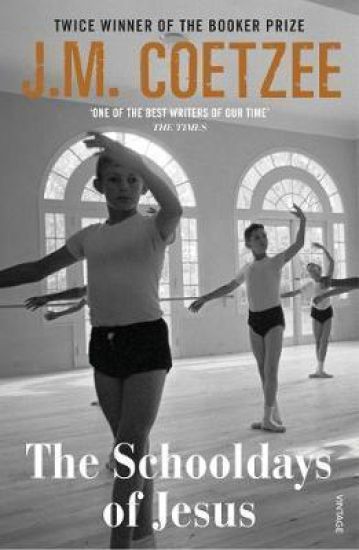
Schooldays of Jesus

Schooldays of Jesus

J. M. Coetzee

Random House UK
2017
pokkari
LONGLISTED FOR THE MAN BOOKER PRIZE 2016Selected as a Book of the Year 2016 in the Observer and Daily TelegraphWhen you travel across the ocean on a boat, all your memories are washed away and you start a completely new life.
Leben und Zeit des Michael K.

Leben und Zeit des Michael K.

J. M. Coetzee

S. Fischer Verlag
1997
pokkari
Der Titelheld, der seine Zeit nicht versteht und nichts mit ihr zu tun haben will, macht sich davon. In der Stadt tobt der Aufstand, es kommt zu Plünderungen und Schießereien, Macht und Gegenmacht spielen ihr blutiges Spiel. Michael K., einer der Ärmsten unter den Armen, flieht aufs Land. In einer verlassenen Farm lebt er ein Leben jenseits der Zivilisation. Er lebt von Tieren, die er mit der Hand erhaschen, von Pflanzen, die er unter großen Mühen ziehen kann, ein Robinson am Rande der modernen Welt. Coetzees Ballade über diesen unmöglichen Sonderling, der mit seiner Behauptung einer eigenen Zeit die Zeit herausfordert, hat wegen ihrer Aufrichtigkeit Leser in der ganzen Welt gefunden. Für diesen Roman erhielt J. M. Coetzee 1983 den Booker Award, den bedeutendsten englischen Literaturpreis.
Im Herzen des Landes

Im Herzen des Landes

J. M. Coetzee

S. Fischer Verlag
1997
pokkari
Erstickend im Stumpfsinn des kolonialen Südafrika zur Zeit der Apartheid, gefangen mit seinen schwarzen Leibeigenen in einem Netz gegenseitiger Unterdrückungen, Bespitzelung und Verdächtigung, sucht ein verwitweter, weißer Schafzüchter private Erlösung in den Armen einer Geliebten. Sie ist schwarz, und sie ist die blutjunge Frau seines Vorarbeiters. Diese Verletzung der Rassenschranken markiert das Ende des unsicheren feudalen Friedens. Seine verbitterte, ledig gebliebene Tochter sinnt auf blutige Rache und führt sie auch aus. Oder spielt sie alles nur in Gedanken durch? Ist diese schmerzhafte Geschichte nur die Ausgeburt einer rachsüchtigen Phantasie? Die Deutung dieser 266 tagebuchartigen Aufschreibungen bleibt dem Leser überlassen.
Die jungen Jahre

Die jungen Jahre

J. M. Coetzee

FISCHER Taschenbuch
2004
pokkari
In "Die jungen Jahre" setzt der große südafrikanische Romancier J.M. Coetzee seine mit "Der Junge" begonne Autobiographie fort. "Im richtigen Leben, so scheint es, kann er nur eins richtig: unglücklich sein", lautet das Fazit den jungen Studenten. Anfang der 60er Jahre kann er der Enge und politischen Situation Südafrikas in seine Traumstadt entrinnen: London. Doch obwohl er als Mathematiker rasch eine Stelle als Programmierer bei IBM findet, gelingt es ihm nicht, heimisch zu werden. Er fühlt sich als Außenseiter und Büromensch, während er sich insgeheim danach sehnt, daß der Dichter in ihm zum Ausbruch kommt oder wenigstens eine schöne Frau ihm ihre Liebe schenkt und ihn so zu unvergänglichen Versen inspiriert.
Warten auf die Barbaren

Warten auf die Barbaren

J. M. Coetzee

S. Fischer Verlag
2002
pokkari
Jahrzehntelang hat der Magistrat die Amtsgeschäfte der winzigen Garnisonsstadt in einem Grenzdistrikt des Reiches geführt, ohne sich von der vermeintlichen Bedrohung durch die "Barbaren", einem benachbarten Nomadenstamm, beirren zu lassen. Als eine Spezialeinheit der Staatspolizei eintrifft, wird er Zeuge grausamster Szenen und gerät in einen Zwiespalt.
Elizabeth Costello

Elizabeth Costello

J. M. Coetzee

S. Fischer Verlag
2006
pokkari
"Ich bin eine alte Frau. Ich habe keine Zeit mehr, zu sagen, was ich nicht meine." Elizabeth Costello, eine 66-jährige australische Romanautorin von internationalem Ansehen - fiktive Spielfigur von J.M. Coetzee - , nutzt Einladungen, als Gastrednerin auf Kongressen, Symposien oder auch schon einmal auf einer Kreuzfahrt aufzutreten, um ihre eigene, gelegentlich schroffe und ethisch rigorose Menschheitsfragen zu manifestieren. Ihre Vorträge z.B. über die Humanwissenschaften in Afrika, die Darstellung des Bösen in der Literatur, das Erotische, Formen des Romans, den Missbrauch der Tiere durch den Menschen - irritieren in ihrer Ratlosigkeit und provozieren. Denn viele von Elizabeths Haltungen gründen nicht in einer intellektuell stringenten Position, sondern im Intuitiven: "Überzeugungen sind nicht die alleinigen ethischen Stützen, die wir haben. Wir können uns auch auf unser Herz verlassen." Zwischen Fiktion und Essay oszillierend, repräsentieren diese Lehrstücke, wie Coetzee seine Erkundungen zu Leben und Meinungen von Elizabeth Costello nennt, eine erzählerisch reizvolle und listige Form des ethischen Diskurses.