Kirjojen hintavertailu. Mukana 11 342 296 kirjaa ja 12 kauppaa.

Kirjahaku

Etsi kirjoja tekijän nimen, kirjan nimen tai ISBN:n perusteella.

1000 tulosta hakusanalla JAMES JOYCE

James Joyce: His First Forty Years

James Joyce: His First Forty Years

Herbert S. Gorman

Literary Licensing, LLC
2013
sidottu
James Joyce: His First Forty Years is a biography written by Herbert S. Gorman that explores the life of the renowned Irish author James Joyce from his birth in 1882 to his departure from Ireland in 1922. The book provides a detailed account of Joyce's early years, including his upbringing in Dublin, his education at Jesuit schools, and his early attempts at writing. Gorman also delves into Joyce's personal life, including his relationships with his family, his wife Nora Barnacle, and his children. The book also examines Joyce's literary influences, including his admiration for Henrik Ibsen and his friendship with the poet W.B. Yeats. Throughout the biography, Gorman provides insights into Joyce's creative process, including his struggles with writer's block and his dedication to his craft. The book also explores the political and social climate of Ireland during Joyce's early years, including the country's struggle for independence and the influence of the Catholic Church. Overall, James Joyce: His First Forty Years is a comprehensive and engaging biography that provides readers with a deeper understanding of one of the most important literary figures of the 20th century.This is a new release of the original 1924 edition.This scarce antiquarian book is a facsimile reprint of the old original and may contain some imperfections such as library marks and notations. Because we believe this work is culturally important, we have made it available as part of our commitment for protecting, preserving, and promoting the world's literature in affordable, high quality, modern editions, that are true to their original work.
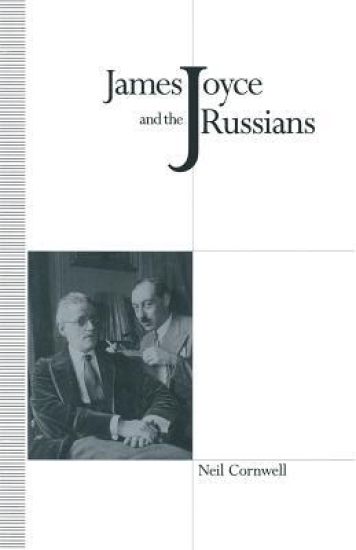
James Joyce and the Russians

James Joyce and the Russians

Neil Cornwell

Palgrave Macmillan
1992
nidottu
This original three-part study examines Russia, Russians and their culture in Joyce's life and establishes a Russian theme running through his work as a whole, from the earliest writings to Finnegans Wake. It discusses contacts and parallels between Joyce and three Russian figures: Bely, Nabokov and Eisenstein (and, more briefly, Pasternak). Thirdly, it details the Soviet reception of Joyce from 1922 until publication of the first Russian Ulysses in 1989, as well as surveying Marxist approaches to Joyce. A full bibliography of Russian and western sources is included.
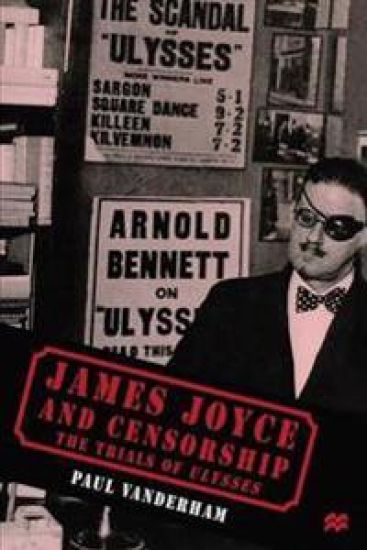
James Joyce and Censorship

James Joyce and Censorship

Paul Vanderham

Palgrave Macmillan
1997
nidottu
James Joyce and Censorship is the first book to tell the fascinating story of the trials of Ulysses. Based on extensive archival research, it is also the first study of the trials to analyze their influence on the reception and composition of Ulysses in the context of Joyce's lifelong struggle with the censors, to evaluate their significance as an important turning point in the history of censorship, and to emphasize their relevance to contemporary debates regarding freedom of literary expression.
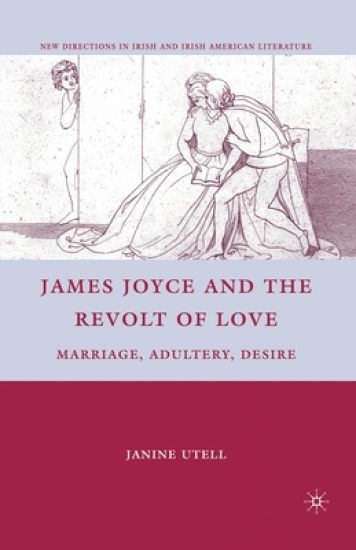
James Joyce and the Revolt of Love

James Joyce and the Revolt of Love

J. Utell

Palgrave Macmillan
2012
nidottu
This study examines the representation of marital and extramarital relations in James Joyce's texts, with reference to context and to Joyce's biography. Utell claims that Joyce uses these relations to imagine a different kind of love, one based in a radical acceptance and a rejection of a utilitarian and sexually repressive stance towards marriage.
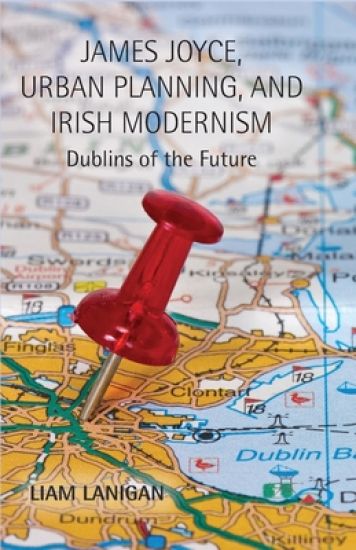
James Joyce, Urban Planning and Irish Modernism
Irish writing in the modernist era is often regarded as a largely rural affair, engaging with the city in fleeting, often disparaging ways, with Joyce cast as a defiant exception. This book shows how an urban modernist tradition, responsive to the particular political, social, and cultural conditions of Dublin, emerged in Ireland at this time.
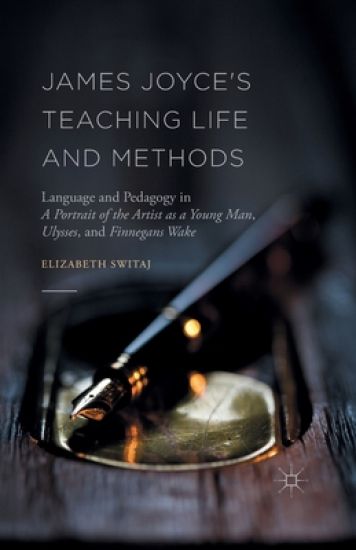
James Joyce's Teaching Life and Methods

James Joyce's Teaching Life and Methods

Elizabeth Switaj

Palgrave Macmillan
2016
nidottu
Before Joyce became famous as writer, he supported himself through his other language work: English-language teaching in Pola, Trieste, and Rome. The importance of James Joyce's teaching, however, has been underestimated until now. The very playfulness and unconventionality that made him a popular and successful teacher has led his pedagogy to be underrated, and the connections between his teaching and his writing have been largely neglected. James Joyce's Teaching Life and Methods reveals the importance in A Portrait of the Artist as a Young Man, Ulysses, and Finnegans Wake of pedagogy and the understanding of language Joyce gained teaching English as a Foreign Language in Berlitz schools and elsewhere.
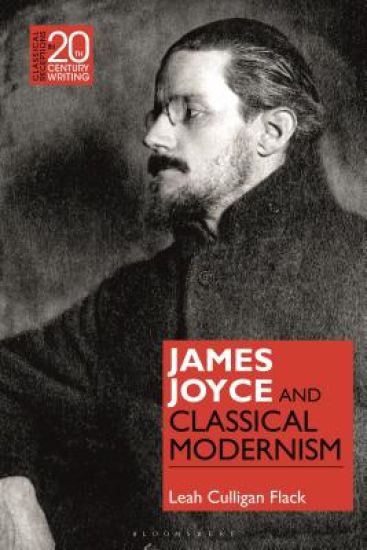
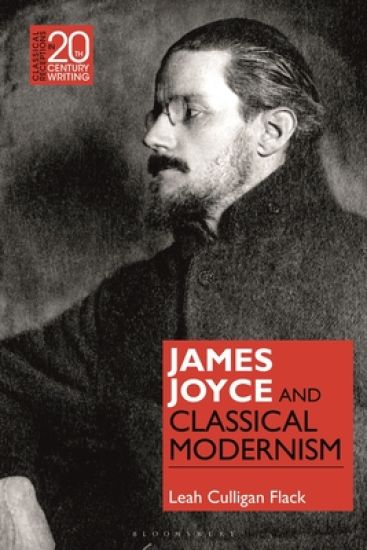
James Joyce and Classical Modernism

James Joyce and Classical Modernism

Leah Culligan Flack

Bloomsbury Academic
2020
sidottu
James Joyce and Classical Modernism contends that the classical world animated Joyce’s defiant, innovative creativity and cannot be separated from what is now recognized as his modernist aesthetic. Responding to a long-standing critical paradigm that has viewed the classical world as a means of granting a coherent order, shape, and meaning to Joyce’s modernist innovations, Leah Flack explores how and why Joyce’s fiction deploys the classical as the language of the new. This study tracks Joyce’s sensitive, on-going readings of classical literature from his earliest work at the turn of the twentieth century through to the appearance of Ulysses in 1922, the watershed year of high modernist writing. In these decades, Joyce read ancient and modern literature alongside one another to develop what Flack calls his classical modernist aesthetic, which treats the classical tradition as an ally to modernist innovation. This aesthetic first comes to full fruition in Ulysses, which self-consciously deploys the classical tradition to defend stylistic experimentation as a way to resist static, paralyzing notions of the past. Analysing Joyce's work through his career from his early essays, Flack ends by considering the rich afterlives of Joyce’s classical modernist project, with particular attention to contemporary works by Alison Bechdel and Maya Lang.
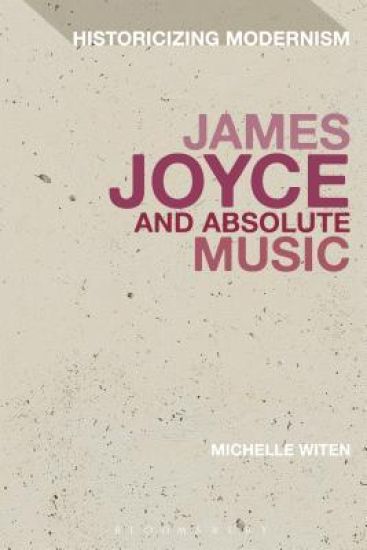
James Joyce and Absolute Music

James Joyce and Absolute Music

Michelle Witen

Bloomsbury Academic
2018
sidottu
Drawing on draft manuscripts and other archival material, James Joyce and Absolute Music, explores Joyce’s deep engagement with musical structure, and his participation in the growing modernist discourse surrounding 19th-century musical forms. Michelle Witen examines Joyce’s claim of having structured the “Sirens” episode of his masterpiece, Ulysses, as a fuga per canonem, and his changing musical project from his early works, such as Dubliners and A Portrait of the Artist as a Young Man. Informed by a deep understanding of music theory and history, the book goes on to consider the “pure music” of Joyce’s final work, Finnegans Wake. Demonstrating the importance of music to Joyce, this ground-breaking study reveals new depths to this enduring body of work.
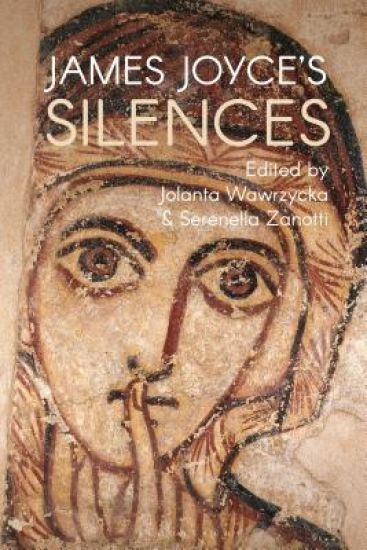
James Joyce's Silences

James Joyce's Silences

Bloomsbury Academic
2018
sidottu
In this landmark book, leading international scholars from North America, Europe and the UK offer a sustained critical attention to the concept of silence in Joyce’s writing. Examining Joyce’s major works, including Ulysses, Portrait of the Artist as a Young Man and Finnegans Wake, the critics present intertextual and comparative interpretations of Joyce’s deployment of silence as a complex overarching narratological strategy.Exploring the many dimensions of what is revealed in the absences that fill his writing, and the different roles – aesthetic, rhetorical, textual and linguistic – that silence plays in Joyce’s texts, James Joyce’s Silences opens up important new avenues of scholarship on the great modernist writer.This volume is of particular interests to all academics and students involved in Joyce and Irish studies, modernism, comparative literature, poetics, cultural studies and translation studies.
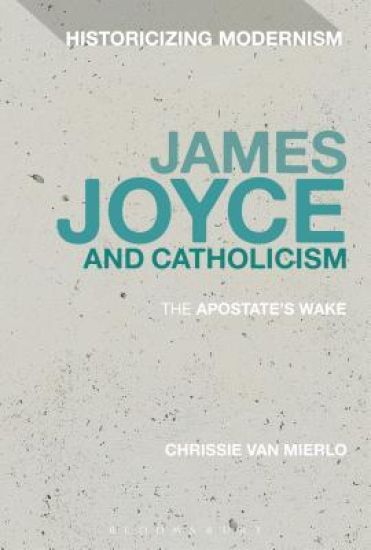
James Joyce and Catholicism

James Joyce and Catholicism

Chrissie Van Mierlo

Bloomsbury Academic
2019
nidottu
James Joyce and Catholicism is the first historicist study to explore the religious cultural contexts of Joyce's final masterpiece. Drawing on letters, authorial manuscripts and other archival materials, the book works its way through a number of crucial themes; heresy, anticlericalism, Mariology, and others. Along the way, the book considers Joyce's vexed relationship with the Catholic Church he was brought up in, and the unique forms of Catholicism that blossomed in Ireland at the turn of the last century, and during the first years of the Irish Free State.
James Joyce and Absolute Music

James Joyce and Absolute Music

Michelle Witen

Bloomsbury Academic
2019
nidottu
Drawing on draft manuscripts and other archival material, James Joyce and Absolute Music, explores Joyce’s deep engagement with musical structure, and his participation in the growing modernist discourse surrounding 19th-century musical forms. Michelle Witen examines Joyce’s claim of having structured the “Sirens” episode of his masterpiece, Ulysses, as a fuga per canonem, and his changing musical project from his early works, such as Dubliners and A Portrait of the Artist as a Young Man. Informed by a deep understanding of music theory and history, the book goes on to consider the “pure music” of Joyce’s final work, Finnegans Wake. Demonstrating the importance of music to Joyce, this ground-breaking study reveals new depths to this enduring body of work.
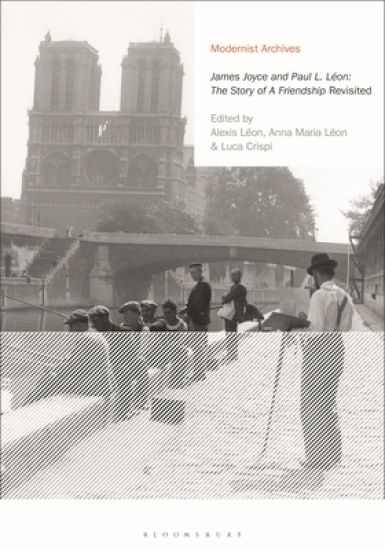
'James Joyce and Paul L. Léon: The Story of a Friendship' Revisited
James Joyce spent the last decade of his life in Paris, struggling to finish his great final work Finnegans Wake amidst personal and financial hardship and just as Europe was being engulfed by the rising tide of fascism. Bringing together new archival discoveries and personal accounts, this book explores one of the central relationships of his final years: that with his friend, confidant and adviser Paul L. Léon. Providing first-hand accounts of Joyce’s Paris circle – which included Samuel Beckett and Vladimir Nabokov – the book makes available again the text of Lucie (Léon) Noel’s personal memoir of the relationship between her husband and the Irish writer (published as James Joyce and Paul L. Léon: The Story of Friendship in 1950), including his valiant rescue of Joyce’s Paris archives from occupying Nazi forces. The book also collects for the first time Leon’s clandestine letters to his wife from August to December 1941, chronicling his desperate state of body and mind while interned in Drancy, France’s main Nazi transit camp, and then in Compiègne, just before he was deported to Auschwitz-Birkenau. Joyce died suddenly on 13 January 1941 in Zurich and Léon was murdered by the Nazis on 4 April 1942 in Silesia. Annotated throughout with contextual commentary by Luca Crispi and Mary Gallagher, this is an essential resource for scholars of James Joyce and of the literary culture of Paris in the 1930s and first years of World War II in France.
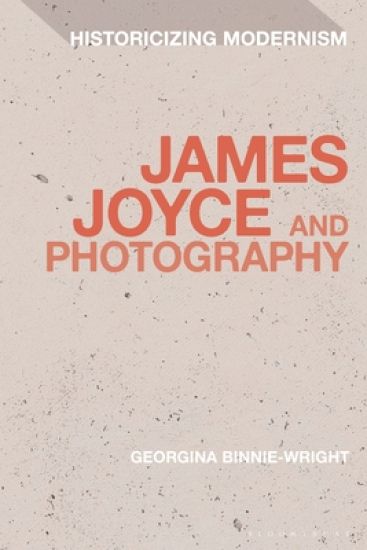
James Joyce and Photography

James Joyce and Photography

Georgina Binnie-Wright

BLOOMSBURY PUBLISHING PLC
2022
sidottu
James Joyce and Photography is the first book to explore in-depth James Joyce's personal and professional engagement with photography. Photographs, photographic devices and photographically-inspired techniques appear throughout Joyce’s work, from his narrator's furtive proto-photographic framing in Silhouettes (c. 1897), to the aggressively-minded 'Tulloch-Turnbull girl with her coldblood kodak' in Finnegans Wake (1939).Through an exploration of Joyce's manuscripts and photographic and newspaper archival material, as well as the full range of his major works, this book sheds new light on his sustained interest in this visual medium. This project takes Joyce’s intention in Dubliners (1914) to ‘betray the soul of that hemiplegia or paralysis which many consider a city’ as key to his interaction with photography, which in his literature occupies a dual position between stasis and innovation.
James Joyce's Silences

James Joyce's Silences

Bloomsbury Academic
2019
nidottu
In this landmark book, leading international scholars from North America, Europe and the UK offer a sustained critical attention to the concept of silence in Joyce’s writing. Examining Joyce’s major works, including Ulysses, Portrait of the Artist as a Young Man and Finnegans Wake, the critics present intertextual and comparative interpretations of Joyce’s deployment of silence as a complex overarching narratological strategy.Exploring the many dimensions of what is revealed in the absences that fill his writing, and the different roles – aesthetic, rhetorical, textual and linguistic – that silence plays in Joyce’s texts, James Joyce’s Silences opens up important new avenues of scholarship on the great modernist writer.This volume is of particular interests to all academics and students involved in Joyce and Irish studies, modernism, comparative literature, poetics, cultural studies and translation studies.
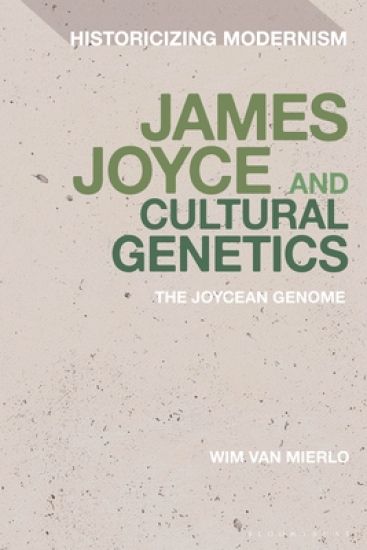
James Joyce and Cultural Genetics

James Joyce and Cultural Genetics

Wim Van Mierlo

BLOOMSBURY PUBLISHING PLC
2023
sidottu
As a genetic study, this book uncovers the creative DNA of James Joyce’s oeuvre by looking at the cultural forces that shaped him and that he in turn shaped in the creation of his books, developing a two-way relationship with history, memory and national identity. Following his development as an author, it revisits and redirects Joyce’s attitudes towards the Irish Revival. From Chamber Music, through Ulysses to Finnegans Wake Joyce sought to define a cultural identity that went, in many respects, against the mainstream, but that nonetheless belonged to the wider Revivalist project with which it shared certain characteristics and aspirations. Joyce’s historical and genealogical imagination is read through a careful investigation of the cultural materials that went into his work. Based on evidence from his personal library and the extensive archive of reading notes, ideas, sketches and drafts, this book investigates how Joyce used, absorbed and repurposed these materials creatively in his writing; it does so by bringing for the first time the methods of genetic criticism into the domain of cultural memory and the sociology of the text. Thus this books defines “cultural genetics” as an exploration of the textual material that are Joyce’s sources interacts with the culture that produced and received them.
James Joyce and Classical Modernism

James Joyce and Classical Modernism

Leah Culligan Flack

Bloomsbury Academic
2021
nidottu
James Joyce and Classical Modernism contends that the classical world animated Joyce’s defiant, innovative creativity and cannot be separated from what is now recognized as his modernist aesthetic. Responding to a long-standing critical paradigm that has viewed the classical world as a means of granting a coherent order, shape, and meaning to Joyce’s modernist innovations, Leah Flack explores how and why Joyce’s fiction deploys the classical as the language of the new. This study tracks Joyce’s sensitive, on-going readings of classical literature from his earliest work at the turn of the twentieth century through to the appearance of Ulysses in 1922, the watershed year of high modernist writing. In these decades, Joyce read ancient and modern literature alongside one another to develop what Flack calls his classical modernist aesthetic, which treats the classical tradition as an ally to modernist innovation. This aesthetic first comes to full fruition in Ulysses, which self-consciously deploys the classical tradition to defend stylistic experimentation as a way to resist static, paralyzing notions of the past. Analysing Joyce's work through his career from his early essays, Flack ends by considering the rich afterlives of Joyce’s classical modernist project, with particular attention to contemporary works by Alison Bechdel and Maya Lang.