Kirjojen hintavertailu. Mukana 12 020 039 kirjaa ja 12 kauppaa.

Kirjahaku

Etsi kirjoja tekijän nimen, kirjan nimen tai ISBN:n perusteella.

1000 tulosta hakusanalla JAMES W. LEE

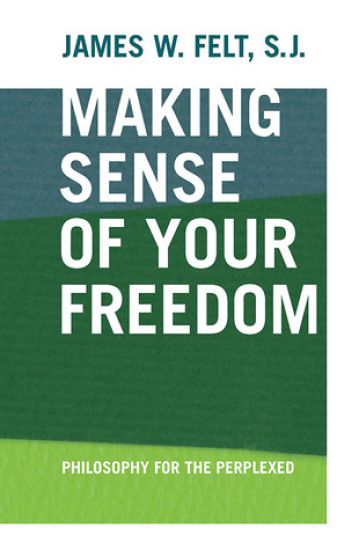
Making Sense of Your Freedom

Making Sense of Your Freedom

James W. Felt

University of Notre Dame Press
2005
nidottu
Written for general readers and students, this book provides an accessible and brief metaphysical defense of freedom. James W. Felt, S.J., invites his audience to consider that we are responsible for what we do precisely because we do it freely. His perspective runs counter to the philosophers who argue that the freedom humans feel in their actions is merely an illusion. Felt argues in detail that there are no compelling reasons for thinking we are not free, and very strong ones for thinking that we are. The view that Felt develops parallels that of the French philosopher Henri Bergson (1859–1941). In the course of his analysis, Felt considers determinism, compatibilism, agency, and the problem of evil. Featuring an updated suggested reading list, this clearly and engagingly written introductory work is ideal for the undergraduate classroom.

Human Knowing

Human Knowing

James W. Felt

University of Notre Dame Press
2005
sidottu
Human Knowing is a clearly written, brief introduction that guides the reader through an exploration of sense perception, ordinary knowing, scientific knowing, and philosophic knowing. This journey culminates in a justification of philosophy as a genuine form of knowing and thus a natural prelude to metaphysics. Though Felt manages to avoid technical language, the development of his argument is a genuine exercise in philosophic thinking. The outcome is a contemporary expression of a position similar to that of Thomas Aquinas, significantly enriched by insights from Bergson, Whitehead, and phenomenology. This book is accessible, smart, and refreshing. Any interested general reader or student will profit from reading it.
Human Knowing

Human Knowing

James W. Felt

University of Notre Dame Press
2005
nidottu
Human Knowing is a clearly written, brief introduction that guides the reader through an exploration of sense perception, ordinary knowing, scientific knowing, and philosophic knowing. This journey culminates in a justification of philosophy as a genuine form of knowing and thus a natural prelude to metaphysics. Though Felt manages to avoid technical language, the development of his argument is a genuine exercise in philosophic thinking. The outcome is a contemporary expression of a position similar to that of Thomas Aquinas, significantly enriched by insights from Bergson, Whitehead, and phenomenology. This book is accessible, smart, and refreshing. Any interested general reader or student will profit from reading it.
Aims

Aims

James W. Felt

University of Notre Dame Press
2007
nidottu
In Aims: A Brief Metaphysics for Today, James W. Felt turns his attention to combining elements of Thomas Aquinas's metaphysics, especially its deep ontology, with Alfred North Whitehead's process philosophy to arrive at a new possibility for metaphysics. In his distinctive style, Felt concisely pulls together the strands of epistemology, ontology, and teleology, synthesizing these elements into his own "process-enriched Thomism." Aims does not simply discuss the strengths and weaknesses of each philosopher's position, but blends the two into a cohesive argument based on principles derived from immediate experience. Felt arrives at what he calls a "Whiteheadian-type solution,"appealing to his original concept of the "essential aim"as necessary for understanding our existence in a coherent yet unique world. This concise, finely crafted discussion provides a thoroughly teleological, value-centered approach to metaphysics. Aims, an experiment in constructive metaphysics, is a thorough and insightful project in modern philosophy. It will appeal to philosophers and students of philosophy interested in enriching their knowledge of contemporary conceptions of metaphysics.
Adventures in Unfashionable Philosophy

Adventures in Unfashionable Philosophy

James W. Felt

University of Notre Dame Press
2009
nidottu
Throughout more than forty years of distinguished teaching and scholarship, James W. Felt has been respected for the clarity and economy of his prose and for his distinctive approach to philosophy. The seventeen essays collected in Adventures in Unfashionable Philosophy reflect Felt's encounters with fundamental philosophical problems in the spirit of traditional metaphysics but updated with modern concerns. Among the main themes of the volume are: the enrichment of Thomistic philosophy through engagement with modern philosophers, Whitehead and Bergson, in particular; considerations of metaphysical method and its effect on philosophic conclusions; the development of a nuanced epistemological realism; and the relation of possibility to actuality and of time to experience.
Making Sense of Your Freedom

Making Sense of Your Freedom

James W. Felt

University of Notre Dame Press
2005
sidottu
Written for general readers and students, this book provides an accessible and brief metaphysical defense of freedom. James W. Felt, S.J., invites his audience to consider that we are responsible for what we do precisely because we do it freely. His perspective runs counter to the philosophers who argue that the freedom humans feel in their actions is merely an illusion. Felt argues in detail that there are no compelling reasons for thinking we are not free, and very strong ones for thinking that we are. The view that Felt develops parallels that of the French philosopher Henri Bergson (1859–1941). In the course of his analysis, Felt considers determinism, compatibilism, agency, and the problem of evil. Featuring an updated suggested reading list, this clearly and engagingly written introductory work is ideal for the undergraduate classroom.

Aims

Aims

James W. Felt

UNIVERSITY OF NOTRE DAME PRESS
2022
sidottu
In Aims: A Brief Metaphysics for Today, James W. Felt turns his attention to combining elements of Thomas Aquinas's metaphysics, especially its deep ontology, with Alfred North Whitehead's process philosophy to arrive at a new possibility for metaphysics. In his distinctive style, Felt concisely pulls together the strands of epistemology, ontology, and teleology, synthesizing these elements into his own "process-enriched Thomism." Aims does not simply discuss the strengths and weaknesses of each philosopher's position, but blends the two into a cohesive argument based on principles derived from immediate experience. Felt arrives at what he calls a "Whiteheadian-type solution,"appealing to his original concept of the "essential aim"as necessary for understanding our existence in a coherent yet unique world. This concise, finely crafted discussion provides a thoroughly teleological, value-centered approach to metaphysics. Aims, an experiment in constructive metaphysics, is a thorough and insightful project in modern philosophy. It will appeal to philosophers and students of philosophy interested in enriching their knowledge of contemporary conceptions of metaphysics.
Blacks and the Quest for Economic Equality

Blacks and the Quest for Economic Equality

James W. Button; Barbara A. Rienzo; Sheila L. Croucher

Pennsylvania State University Press
2009
sidottu
The civil rights movement of the 1960s improved the political and legal status of African Americans, but the quest for equality in employment and economic well-being has lagged behind. Blacks are more than twice as likely as whites to be employed in lower-paying service jobs or to be unemployed, are three times as likely to live in poverty, and have a median household income barely half of that for white households. What accounts for these disparities, and what possibilities are there for overcoming obstacles to black economic progress? This book seeks answers to these questions through a combined quantitative and qualitative study of six municipalities in Florida.Factors impeding the quest for equality include employer discrimination, inadequate education, increasing competition for jobs from white females and Latinos, and a lack of transportation, job training, affordable childcare, and other sources of support, which makes it difficult for blacks to compete effectively. Among factors aiding in the quest is the impact of black political power in enhancing opportunities for African Americans in municipal employment.The authors conclude by proposing a variety of ameliorative measures: strict enforcement of antidiscrimination laws; public policies to provide disadvantaged people with a good education, adequate shelter and food, and decent jobs; and self-help efforts by blacks to counter self-destructive attitudes and activities.
Blacks and the Quest for Economic Equality

Blacks and the Quest for Economic Equality

James W. Button; Barbara A. Rienzo; Sheila L. Croucher

Pennsylvania State University Press
2013
pokkari
The civil rights movement of the 1960s improved the political and legal status of African Americans, but the quest for equality in employment and economic well-being has lagged behind. Blacks are more than twice as likely as whites to be employed in lower-paying service jobs or to be unemployed, are three times as likely to live in poverty, and have a median household income barely half of that for white households. What accounts for these disparities, and what possibilities are there for overcoming obstacles to black economic progress? This book seeks answers to these questions through a combined quantitative and qualitative study of six municipalities in Florida.Factors impeding the quest for equality include employer discrimination, inadequate education, increasing competition for jobs from white females and Latinos, and a lack of transportation, job training, affordable childcare, and other sources of support, which makes it difficult for blacks to compete effectively. Among factors aiding in the quest is the impact of black political power in enhancing opportunities for African Americans in municipal employment.The authors conclude by proposing a variety of ameliorative measures: strict enforcement of antidiscrimination laws; public policies to provide disadvantaged people with a good education, adequate shelter and food, and decent jobs; and self-help efforts by blacks to counter self-destructive attitudes and activities.
Alien Winds

Alien Winds

James W. Tollefson

Praeger Publishers Inc
1989
sidottu
Alien Winds presents the first critical analysis of U.S. refugee processing centers in Southeast Asia. Based on twenty months of work in refugee camps from 1983-1986 and an analysis of documents obtained under the Freedom of Information Act, this book challenges the widely held view that the refugee education program results in successful resettlement. The author contends that in its zeal to Americanize Southeast Asians, this program seeks to replace ties to their traditional community with a commitment to the myths of American success ideology and the moral principle of self-sufficiency. He concludes that the program actually disempowers the refugees by robbing them of their sense of community, and often their dignity. Without regard to skills or education, it prepares refugees for long term employment in dead end minimum wage jobs. Of particular interest to teachers of English as a second language and scholars in the fields of education, sociology, anthropology, and Southeast Asian studies, Alien Winds concludes with recommendations for overseas centers and domestic resettlement programs.From its inception the U.S. refugee resettlement program faced difficult questions: What are the main difficulties facing Southeast Asians in the United States? What do refugees need to know in order to resettle successfully? How should successful resettlement be defined? Should there be different notions of success for different groups of people? What values do Americans share? Must newcomers adopt these values? Alien Winds examines the American answers to these questions as they are formulated and conveyed to the refugees. It also explores the sources of these answers. To this end it examines important assumptions about immigrants that originated in educational programs during the early part of this century. It further explores the aims and structures of the organizations which created and operate the processing centers. Finally, Alien Winds analyzes the role of the refugee program in America's shared memory of Vietnam.
The President as Party Leader

The President as Party Leader

James W. Davis

Praeger Publishers Inc
1992
nidottu
In spite of all that has been written on the U.S. presidency, no book before this has come forth in the 20th century on the president as party leader. A respected senior scholar, James W. Davis has studied the presidency for more than 40 years and has been on the campaign trail with candidates and incumbents and at national party meetings. He has written a lively text that is tailor-made for courses on the presidency, political parties, and elections. This is good reading for everyone who is interested in American government and politics and who wants to understand what makes a president a strong leader. This history and political analysis shows how presidents and political parties need each other and demonstrates why presidents must understand and be immersed in the political process to be effective. The text examines the emergence of the party leader through nominating and general election campaigns, presidential and congressional party interaction, eras of divided government, as well as the relationship between the president and the party's national committee. It also presents the role of the presidential party and of the president in his public roles and then discusses reforms that may strengthen the president as an executive and as a party leader.
The American Presidency, 2nd Edition

The American Presidency, 2nd Edition

James W. Davis

Praeger Publishers Inc
1995
sidottu
This is a thoroughly revised, in-depth analysis of the American presidency by a major scholar in the field. The main goal of the text is to explain how the president's ability to implement policy is circumscribed by several major factors: *the Madisonian separation of powers; *the decentralized power structure in Congress; *the number of cross-party coalitions needed to pass legislation; *a slow-moving federal bureaucracy; and *the powerful influence of special interest groups opposed to many presidential initiatives.Included in this second edition is coverage of the first two years of the Clinton presidency and a special chapter on the emergence of the presidential branch—the White House staff—and its displacement of the cabinet and the executive departments as the foremost decision-making agents in the federal government (a unique chapter not found in other texts). Since highly unstable relations between the president and congress have become the hallmark of our national government, especially in this era of divided government, a new chapter on the president and congress has been added to the text. The growing role of the vice president, an original chapter in the first edition, has been expanded and updated to include the Gore vice presidency. The chapter on proposed reforms of the presidency received wide approval in the first edition. In the second edition special attention is devoted to the proposal to abolish the Electoral College and replace it with direct election of the president. This edition focuses heavily on the activist presidential leadership of the modern presidency, but notes its perishable nature. High presidential approval ratings, as George Bush demonstrated, cannot be stockpiled or deposited in the bank, to be drawn upon later.Along the way the author makes several major points: 1. the excessive demands that the American public imposes on its presidents threaten to turn the nation's highest office into a series of one-term presidents; 2. the decline of political parties as vehicles for mobilizing presidential support has forced the nation's chief executive to go over the heads of congress and directly to the public to solicit support for his policies; and 3. the emerging dangers of electronic democracy and national referenda and the potential rise of a plebiscitary president all pose more imminent threats to our shared powers system than most presidential-watchers have been willing to concede.
The American Presidency, 2nd Edition

The American Presidency, 2nd Edition

James W. Davis

Praeger Publishers Inc
1995
nidottu
This is a thoroughly revised, in-depth analysis of the American presidency by a major scholar in the field. The main goal of the text is to explain how the president's ability to implement policy is circumscribed by several major factors: *the Madisonian separation of powers; *the decentralized power structure in Congress; *the number of cross-party coalitions needed to pass legislation; *a slow-moving federal bureaucracy; and *the powerful influence of special interest groups opposed to many presidential initiatives.Included in this second edition is coverage of the first two years of the Clinton presidency and a special chapter on the emergence of the presidential branch—the White House staff—and its displacement of the cabinet and the executive departments as the foremost decision-making agents in the federal government (a unique chapter not found in other texts). Since highly unstable relations between the president and congress have become the hallmark of our national government, especially in this era of divided government, a new chapter on the president and congress has been added to the text. The growing role of the vice president, an original chapter in the first edition, has been expanded and updated to include the Gore vice presidency. The chapter on proposed reforms of the presidency received wide approval in the first edition. In the second edition special attention is devoted to the proposal to abolish the Electoral College and replace it with direct election of the president. This edition focuses heavily on the activist presidential leadership of the modern presidency, but notes its perishable nature. High presidential approval ratings, as George Bush demonstrated, cannot be stockpiled or deposited in the bank, to be drawn upon later.Along the way the author makes several major points: 1. the excessive demands that the American public imposes on its presidents threaten to turn the nation's highest office into a series of one-term presidents; 2. the decline of political parties as vehicles for mobilizing presidential support has forced the nation's chief executive to go over the heads of congress and directly to the public to solicit support for his policies; and 3. the emerging dangers of electronic democracy and national referenda and the potential rise of a plebiscitary president all pose more imminent threats to our shared powers system than most presidential-watchers have been willing to concede.
The Rope, The Chair, and the Needle

The Rope, The Chair, and the Needle

James W. Marquart; Sheldon Ekland-Olson; Jonathan R. Sorensen

University of Texas Press
1998
pokkari
In late summer 1923, legal hangings in Texas came to an end, and the electric chair replaced the gallows. Of 520 convicted capital offenders sentenced to die between 1923 and 1972, 361 were actually executed, thus maintaining Texas’ traditional reputation as a staunch supporter of capital punishment.This book is the single most comprehensive examination to date of capital punishment in any one state, drawing on data for legal executions from 1819 to 1990. The authors show persuasively how slavery and the racially biased practice of lynching in Texas led to the institutionalization and public approval of executions skewed according to race, class, and gender, and they also track long-term changes in public opinion up to the present.The stories of the condemned are masterfully interwoven with fact and interpretation to provide compelling reading for scholars of law, criminal justice, race relations, history, and sociology, as well as partisans on both sides of the debate.
A Storied Wilderness

A Storied Wilderness

James W. Feldman; William Cronon

University of Washington Press
2013
pokkari
The Apostle Islands are a solitary place of natural beauty, with red sandstone cliffs, secluded beaches, and a rich and unique forest surrounded by the cold, blue waters of Lake Superior. But this seemingly pristine wilderness has been shaped and reshaped by humans. The people who lived and worked in the Apostles built homes, cleared fields, and cut timber in the island forests. The consequences of human choices made more than a century ago can still be read in today's wild landscapes.A Storied Wilderness traces the complex history of human interaction with the Apostle Islands. In the 1930s, resource extraction made it seem like the islands' natural beauty had been lost forever. But as the island forests regenerated, the ways that people used and valued the islands changed - human and natural processes together led to the rewilding of the Apostles. In 1970, the Apostles were included in the national park system and ultimately designated as the Gaylord Nelson Wilderness.How should we understand and value wild places with human pasts? James Feldman argues convincingly that such places provide the opportunity to rethink the human place in nature. The Apostle Islands are an ideal setting for telling the national story of how we came to equate human activity with the loss of wilderness characteristics, when in reality all of our cherished wild places are the products of the complicated interactions between human and natural history.Watch the book trailer: https://www.youtube.com/watch?v=frECwkA6oHs
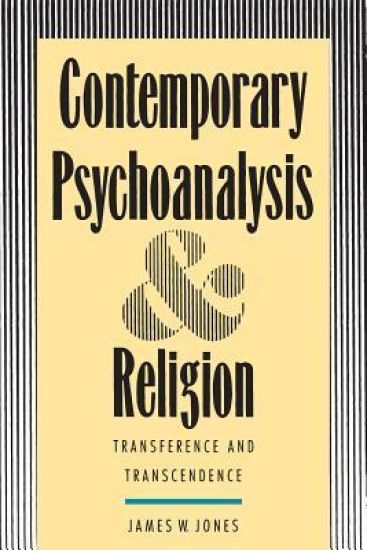
Contemporary Psychoanalysis and Religion

Contemporary Psychoanalysis and Religion

James W. Jones

Yale University Press
1993
pokkari
The psychoanalytic study of religion has until now been dominated by a Freudian perspective that views the religious experience as a one-way transference, where the devotee projects his instinctually based childhood wishes, fears, and behaviors onto a religious construct. In this path-breaking book, James W. Jones, a clinical psychologist and professor of religion, challenges this view. Building on more recent theories in which the self is construed as a matrix of internalized relationships, he investigates ways in which religious beliefs, practices, and experiences reflect the structure of the relational self. Drawing on both theory and practice, Jones not only reviews the relevant psychoanalytic literature but also illustrates his thesis with an in-depth discussion of four clinical cases. He examines models of transference since Freud by Fairbairn, Kohut, Gill, and Roland, and he describes previous applications of psychoanalysis to religion by Rizzuto, Winnicott, and Kohut. He concludes by discussing the nature of religion, bringing such theologians, philosophers, and psychoanalysts as Otto, Bollas, Tillich, and Buber into a multi-disciplinary dialogue. The book will give the scholar and student of religious studies the latest psychoanalytic theories and demonstrate their relevance for religious studies. It will also help the clinician grasp the role of religion in human life.
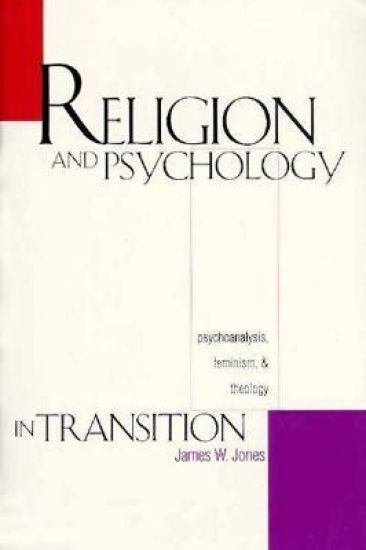
Religion and Psychology in Transition

Religion and Psychology in Transition

James W. Jones

Yale University Press
1997
sidottu
In this thought-provoking book, clinical psychologist and professor of religious studies James W. Jones presents a dialogue between contemporary psychoanalytic thinking and contemporary theology. He sheds new light on the interaction of religion and psychology by viewing it from the perspective of world religions, providing an epistemological framework for the psychology of religion that draws on contemporary philosophy of science, and bringing out the importance of gender as a category of analysis. Developments in psychoanalysis provide new resources for theological reflection, Jones contends. The Freudian view that human nature is isolated and instinctual has shifted to a vision of the self as constituted in and through relationships. Jones uses this relational model of human nature to explore the convergence between contemporary psychoanalysis, feminist theorizing, and themes in religious thought found in a variety of traditions. He also critiques the reductionism inherent in Freud's discussion of religion and proposes nonreductionistic and genuinely psychoanalytic ways for psychoanalysis to treat religious topics. For therapists, psychologists, theologians, and others interested in spiritual or psychological issues, Jones offers illuminating clinical material and insightful analysis.
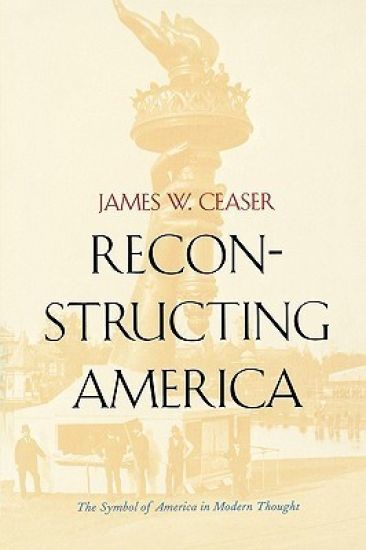
Reconstructing America

Reconstructing America

James W. Ceaser

Yale University Press
2000
pokkari
For too many people, America has become the primary symbol of all that is grotesque, deadening, and oppressive—or, as Heidegger once put it, the "emerging monstrousness of modern times." This image of a degenerate America, constructed by European intellectuals, has been gradually accepted within the United States, for America is now under siege by its own philosophers, literary critics, and postmodern thinkers. It is time, says James Ceaser in this provocative book, to take America back, to reaffirm confidence in our principles, and to remind ourselves that the real Americas opposed to the symbolic one has forged a system of liberal democratic government that has shaped the destiny of the modern world.With wit and passion, Ceaser traces the origins of the negative images of America, beginning with French scientists in the middle of the eighteenth century who viewed the country as a land of racial and physical degeneracy, and continuing with German thinkers from Hegel to Nietzsche, Spengler, and Heidegger, who viewed America as culturally inferior and a technological wasteland. Ceaser puts these critics of America in a dialogue with the country’s defenders—among them Alexander Hamilton, Alexis de Tocqueville, and Leo Strauss. By revealing the sources of the hostility to America, Ceaser undermines the position of its present attackers. He contends that only if we reassert political science rather than cultural and literary criticism as the proper intellectual discipline to direct politics will we free the real America from the symbolic America and vindicate its name.
Genetic Manipulation of Woody Plants

Genetic Manipulation of Woody Plants

James W. Hanover; Daniel E. Keathley

Kluwer Academic/Plenum Publishers
1988
sidottu
This Volume contains the papers presented by twenty-eight invited speakers at the symposium entitled, "Genetic Manipulation of Woody Plants," held at Michigan State University, East Lansing, Michigan, from June 21-25, 1987. Also included are abstracts of contributed poster papers presented during the meeting. That the molecular biology of woody plants is a rapidly expanding field is attested to by the large attendance and high level of enthusiasm generated at the conference. Leading scientists from throughout the world discussed challenging problems and presented new insights into the devel­ opment of in vitro culture systems, techniques for DNA analysis and manipulation, gene vector systems, and experimental systems that will lead to a clearer understanding of gene expression and regulation for woody plant species. The presence at the conference of both invited speakers and other scientists who work with nonwoody plant species also added depth to the discussions and applicability of the information presented at the conference. The editors want to commend the speakers for their well-organized and informative talks, and feel particularly indebted to the late Dr. Alexander Hollaender and others on the planning committee who assist­ ed in the selection of the invited speakers. The committee consisted of David Burger (University of California, Davis), Don J. Durzan (University of California, Davis) , Bruce Haissig (U. S. Department of Agriculture Forest Service), Stanley Krugman (U. S. Department of Agriculture Forest Service) , Ralph Mott (North Carolina State University), Otto Schwarz (Univer.sity of Tennessee, Knoxville), and Roger Timmis (Weyerhaeuser Company).