Kirjojen hintavertailu. Mukana 11 699 587 kirjaa ja 12 kauppaa.

Kirjahaku

Etsi kirjoja tekijän nimen, kirjan nimen tai ISBN:n perusteella.

1000 tulosta hakusanalla Jacques Matter

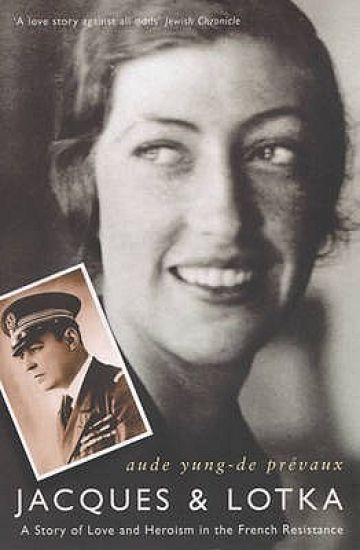
Jacques and Lotka

Jacques and Lotka

Aude Yung-de-Prévaux

Bloomsbury Publishing PLC
2001
nidottu
In 1966, the young Aude Yung-de Prevaux discovered that she was the daughter of the Resistance heroes Jacques and Lotka de Prevaux, of whom she had never heard. In this account she pieces together her parents' story.
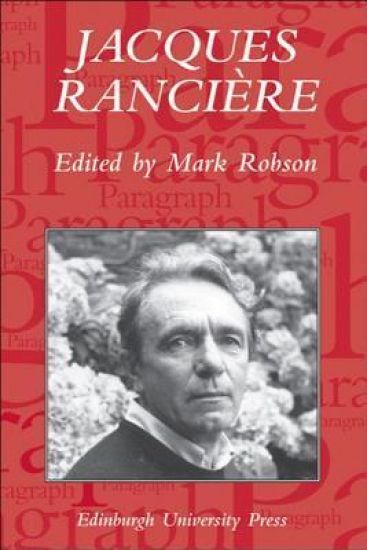
Jacques Ranciere: Aesthetics, Politics, Philosophy
'Aesthetics is not the fateful capture of art by philosophy. It is not the catastrophic overflow of art into politics. It is the originary knot that ties a sense of art to an idea of thought and an idea of the community.' Jacques Ranciere This special issue of Paragraph brings together new essays on the work of Jacques Ranciere by thinkers from a range of disciplines and critical perspectives. In particular, the contributors address topics such as politics, aesthetics, education, literature, historiography, community and the end of philosophy. The volume includes a new piece by Jacques Ranciere. Published as a special issue of the journal Paragraph (28:1)
Jacques-Maritain (1882-1973)

Jacques-Maritain (1882-1973)

Susan M. Power

University Press of America
1997
nidottu
This book explores Maritain's vision of a new Christian commonwealth as an answer to the problems of the postmodern world. His sophisticated, moderate theory of Christian democracy appeals to a broad spectrum of Christian groups in various cultures.
Jacques Ellul

Jacques Ellul

JAI Press Inc.
2000
sidottu
Since his death in 1994, the understanding of Jacques Ellul's significance appears to have deepened considerably. A colloquium devoted to his work in Technique, held six months before his death, drew scholars from all over the world to Bordeaux, France. Four years later, in September 1997, the Penn State University conference on Education and Technology attracted over two hundred participants, most of whom gave evidence of interaction with Ellul's thought. His contribution to the study of the sociology and theology of technology has now been universally acknowledged and built upon. Few scholars seem to appreciate, however, the full scope of his work, especially in areas outside their expertise. One of the goals of this volume is to present the totality of his work, as thoroughly as it can now be established, so that interested persons can explore what he wrote in detail.
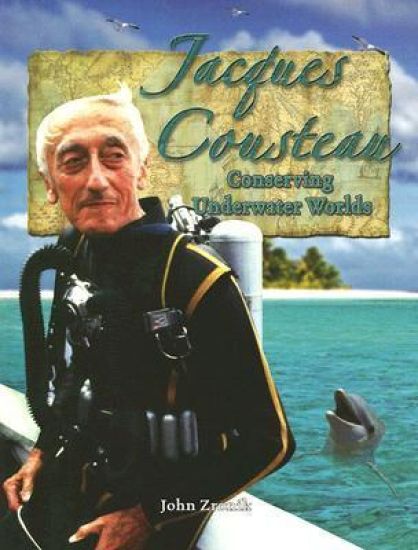
Jacques Cousteau

Jacques Cousteau

John Zronik

Crabtree Publishing Co,Canada
2007
nidottu
This exciting new book details the expeditions of submarining adventurer and inventor Jacques Cousteau. A 20th century explorer, Cousteau documented his many undersea adventures in books and on film and television. Young readers will be fascinated to learn about his research ships and inventions, such as the aqualung, and be inspired by his passion for ocean conservation.
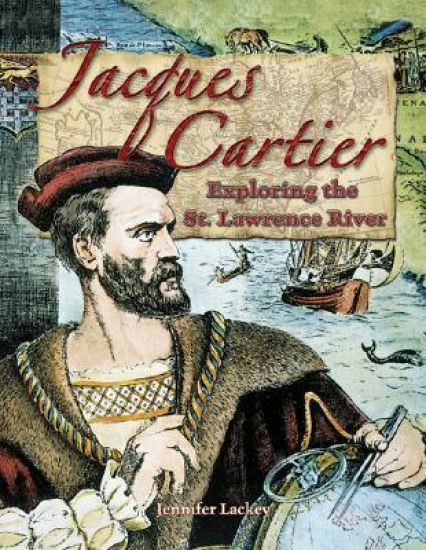
Jacques Cartier

Jacques Cartier

Jennifer Lackey

Crabtree Publishing Co,Canada
2006
nidottu
In 1534, Jacques Cartier departed from St. Malo, France, on a mission to discover the Northwest Passage. While he did not find this elusive sea route, Cartier’s expeditions set up a new era for French colonization in the New World, particularly in the region along the St. Lawrence River. This exciting new book covers Cartier’s three voyages, including his attempts to build colonies, and his interactions with the Native peoples who lived in the regions he explored.
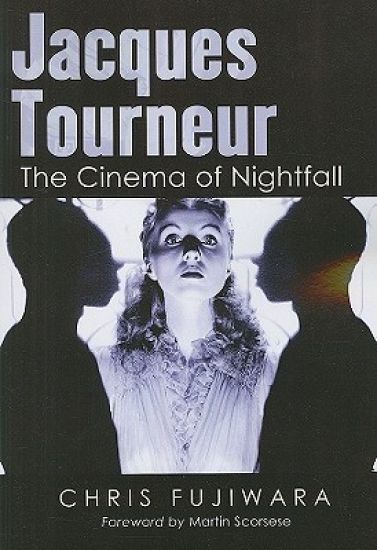
Jacques Tourneur

Jacques Tourneur

Chris Fujiwara

McFarland Co Inc
2011
pokkari
At least three of director Jacques Tourneur's films--Cat People, I Walked with a Zombie and The Leopard Man--are recognized as horror classics. Yet his contributions to these films are often minimized by scholars, with most of the credit going to the films' producer, Val Lewton. A detailed examination of the director's full body of work reveals that those elements most evident in the Tourneur-Lewton collaborations--the lack of monsters and the stylized use of suggested violence--are equally apparent in Tourneur's films before and after his work with Lewton. Mystery and sensuality were hallmarks of his style, and he possessed a highly artistic visual and aural style. This insightful critical study examines each of Tourneur's films, as well as his extensive work on MGM shorts (1936-1942) and in television. What emerges is evidence of a highly coherent directorial style that runs throughout Tourneur's works.
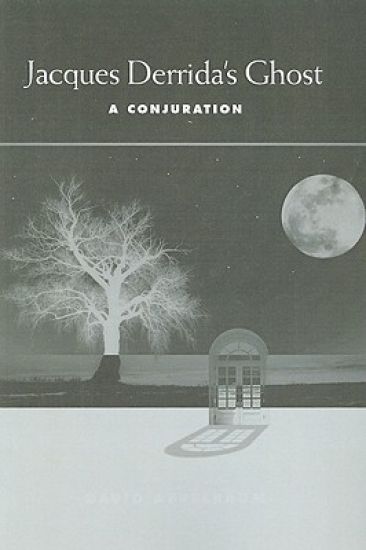
Jacques Derrida's Ghost

Jacques Derrida's Ghost

David Appelbaum

State University of New York Press
2009
pokkari
A spirited reading of Derrida's view of ethics as transcendental and performative.In Jacques Derrida's Ghost, David Appelbaum explores three of Derrida's favorite themes: the other, death, and the work of mourning. He shows how Derrida's unique philosophy, mindful of ghosts, proposes a respectful attitude toward otherness-whether the "other" be corporeal or indeed phantom. Taking up Derrida's concern with performative ethics, Appelbaum examines the possibility of such an ethics of subjectivity within the context of performance.
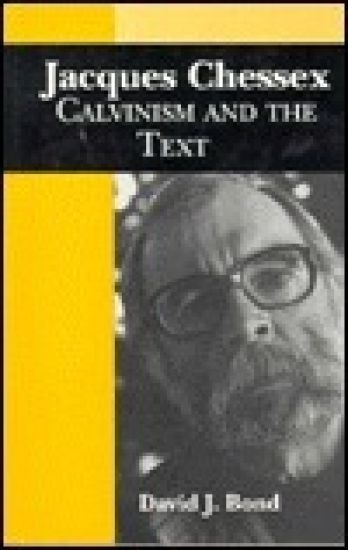
Jacques Chessex

Jacques Chessex

David Bond

University of Toronto Press
1994
sidottu
Despite an impressive body of poems, novels, short stories, and literary criticism; high praise for his writing by French and Swiss critics; and a collection of honours that includes the prestigious Prix Goncourt, awarded for his novel L’Ogre in 1973, Jacques Chessex is relatively unknown outside France and Switzerland. With this book, David J. Bond provides the first comprehensive study of his work in any language-a study that reveals Chessex’s deep ambivalence towards his Calvinist heritage and his efforts to resolve this dilemma through his texts. Born in 1934 in Payerne, in the region of French-speaking Switzerland known as the Vaud, Chessex grew up amid the pervasive influence of the Calvinist church. His writing, which tells of Vaud society and the hypocrisy of many of its leading members, reveals his preoccupation with a rigid morality, sin, remorse, and death. Bond shows that while Chessex uses his texts to escape this heritage and affirm alternative values, particularly sexual pleasure and enjoyment of life, his writing reveals a deep nostalgia for the stability and security of a strict religious system in a world that he finds unstable and even absurd without it. Chessex looks to the text as a univocal organizing principle that might impose order and sense. Bond sees in Chessex’s writing an attempt to find unity in opposing values, to establish contact with others, and to overcome an obsession with death and the passing of time.
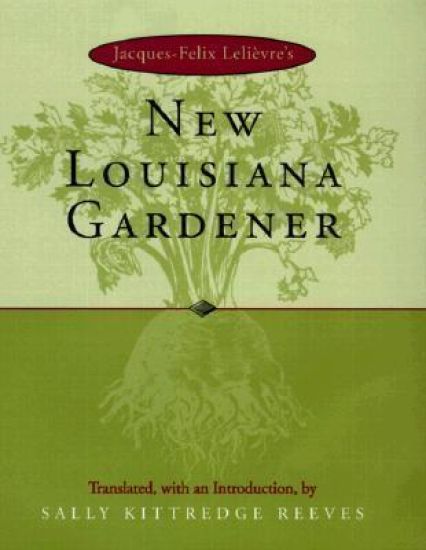
Jacques-Felix Lelièvre's New Louisiana Gardener
Originally published in 1838, Nouveau Jardinier de la Louisiane, by Jacques-Felix Lelièvre, was the first of only two books on Louisiana gardening to be written in the nineteenth century. The book drew upon the confident spirit of eighteenth-century Enlightenment France, forming a bridge from the writings of French horticulturalists to an American audience. Optimistic, ambitious, and progressive, the guide urged gardeners to manage nature by acclimating new species and constantly improving native ones through the application of innovative scientific techniques. Now available in English for the first time as New Louisiana Gardener, this charming period piece and path breaking work can be enjoyed once again by gardening enthusiasts and historians alike.An introduction by Sally Kittredge Reeves gives historical context to the translation that follows, detailing the author's reasons for coming to America and his struggles to make a new life, his employment at and eventual ownership of a bookstore in New Orleans, and his reasons for compiling Nouveau Jardinier and publishing it in Francophile New Orleans.Written over 150 years ago, New Louisiana Gardener offers today's gardener a refreshing connection with other gardening enthusiasts across time. Here, in this delightful historical gem, modern cultivators can escape their fertilizers and tillers and rediscover for a moment the joy of facing Mother Nature with little more than a well-educated pruning knife and a hoe.
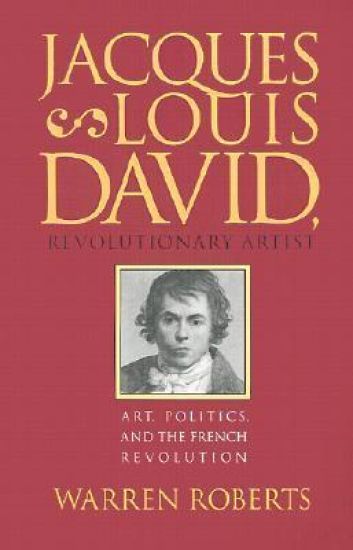
Jacques-Louis David, Revolutionary Artist

Jacques-Louis David, Revolutionary Artist

Roberts Warren

The University of North Carolina Press
1992
nidottu
The lifetime of Jacques-Louis David (1748-1825) coincides with the most tumultuous period in the history of France and much of the Western world. And David's life was closely bound up with the changes that were taking place in French politics, society, and culture. Although most other scholars have focused either on David's artistic activity or on his political career, Warren Roberts examines the connections between these two aspects of his life. Using a historical approach, Roberts provides an interpretation of David's art that illuminates David the man. Roberts presents David's art as a personal record that is an extension of his inner life and a product of historical conditions. David's art, like his character and his actions, cannot be fully understood without understanding the changes that led to and then flowed from the French Revolution. Roberts here considers these changes and their impact on David from the perspectives of the historian and the art historian, and he comes to conclusions that are important for both.
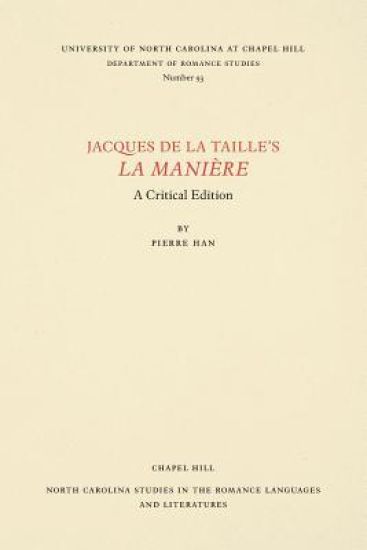
Jacques De La Taille's La Manière

Jacques De La Taille's La Manière

The University of North Carolina Press
1970
nidottu
A critical edition of the literary criticism of Jacques de la Taille, including the original French text, critical footnotes, and introductory essay. The work is primarily a study of quantitative verse in Italy, France, and England during the Renaissance.
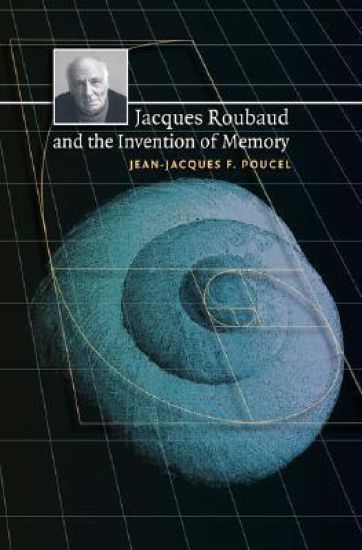
Jacques Roubaud and the Invention of Memory

Jacques Roubaud and the Invention of Memory

The University of North Carolina Press
2006
nidottu
Jean-Jacques Poucel offers a comprehensive introduction to the poetry and novels of Jacques Roubaud, a prominent member of the French experimental group OuLiPo (Ouvroir de Litterature Potentielle, or Workshop of Potential Literature). Poucel argues that the Oulipian practice of writing under constraint provides a new vehicle for literary memory that strengthens the terms by which poetic traditions are transmitted. In addition to situating the importance of Roubaud's work within a broad contemporary context, this study focuses on the specific sites of interest in some of Roubaud's favorite source texts, including troubadour poetry, the tradition of the sonnet and the Canzoniere, Japanese short forms (waka), early surrealist writing, the mathematics of Bourbaki, and the work of Oulipian writers such as Raymond Queneau, Georges Perec, and Italo Calvino.
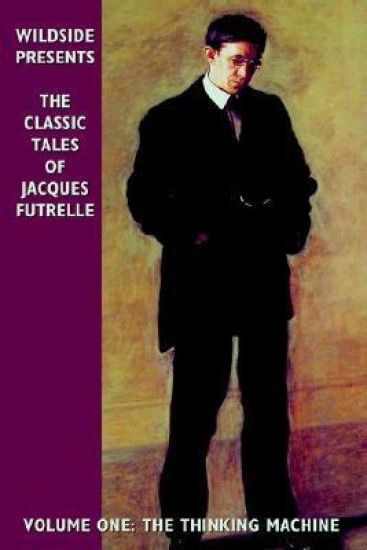
The Classic Tales of Jacques Futrelle

The Classic Tales of Jacques Futrelle

Jacques Futrelle

Wildside Press
2024
sidottu
JACQUES FUTRELLE (1875-1912) is widely considered "the American Sherlock Holmes" for his series of stories about Professor Augustus S. F. X. Van Dusen, who is better known as The Thinking Machine. Van Dusen, a master of logic, believed he could think himself out of any situation-and solve any crime-through the use of his immense intellect. Through dozens of stories, The Thinking Machine solved locked-room puzzles, kidnappings, and more murders than can be easily counted, proving again and again that brain-power is the answer to any problem.
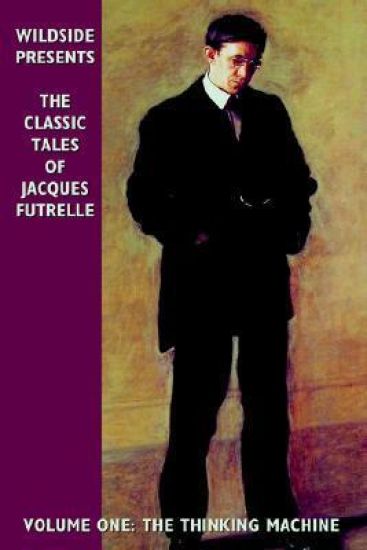
The Classic Tales of Jacques Futrelle

The Classic Tales of Jacques Futrelle

Jacques Futrelle

Wildside Press
2004
pokkari
JACQUES FUTRELLE (1875-1912) is widely considered "the American Sherlock Holmes" for his series of stories about Professor Augustus S. F. X. Van Dusen, who is better known as The Thinking Machine. Van Dusen, a master of logic, believed he could think himself out of any situation-and solve any crime-through the use of his immense intellect. Through dozens of stories, The Thinking Machine solved locked-room puzzles, kidnappings, and more murders than can be easily counted, proving again and again that brain-power is the answer to any problem.
Jacques Maritain

Jacques Maritain

Jude P. Dougherty

The Catholic University of America Press
2003
nidottu
Jacques Maritain, one of the most influential philosophers of the 20th century, was a preeminent interpreter of the thought of Thomas Aquinas and author of more than 50 books in metaphysics, the philosophy of science, aesthetics and social and political philosophy. A giant in his field, he combined his Catholic faith and wide-ranging intellect to address contemporary issues and the many facets of the human experience. In this book, Jude P. Dougherty shares his lifetime interest in and study of Maritain with readers. He offers a complete introduction to Maritain, highlighting Maritain's many contributions to philosophy. Throughout, the reader gains a clear sense of Maritain the man, his relationships with other notable figures of his time, and his engagement in many of the debates of the 20th century. Dougherty's essays offer an appreciation of the perennial value of Maritain's intellect. He follows Maritain's philosophical journey from his early critique on the metaphysics of Henri Bergson to the publication of ""L'Eglise du Christ"" in 1973. Accessible to readers new to Maritain's work and to the Thomistic tradition, this book should be welcomed by seasoned scholars too.
Jacques Lacan's Return to Freud

Jacques Lacan's Return to Freud

Philippe Julien

New York University Press
1994
sidottu
Among the numerous introductions to Lacan published to date in English, Philippe Julien's work is certainly outstanding. Beyond its conceptual clarity the book constitutes an excellent guide to Lacanian psychoanalytic practice. --Andr Patsalides, Psychoanalyst and President, Lacanian School of Psychoanalysis From 1953 to 1980, Jacques Lacan sought to accomplish a return to Freud beyond post- Freudianism. He defined this return as a new convenant with the meaning to the Freudian discovery. Each year through his teaching, he brought about this return. What was at stake in this renewal? Philippe Julien, who joined Lacan's Ecole Freudienne de Paris in 1968, attempts to answer this question. Situtated in the period after-Lacan, Julien shows that Lacan's return to Freud was neither a closing of the Freudian text by responding to questions left unanswered nor a reopening of the text by giving endless new interpretations. Neither dogmatic nor hermeneutic, Lacan's return to Frued was the return of an inevitable discordance between our experience of the unconscious and any attempt to give an account of it. For the unconscious, by its very nature, disappears at the same moment as it is discovered. It is in this sense that the author can claim that Lacan's return to Freud will have been Freudian. Constantly challenging the reader to submit to the rigors of Lacan's sinuous thinking, this penetrating work goes far beyond being a mere introduction. Rendered into elegant English by the American translator, who added numerous footnotes and scholarly references to the French original, this study brings Lacanian scholarship among English readers to a new level of sophistication. Neither dogmatic nor hermeneutic, Lacan's return to Freud was the return of an inevitable discordance between our experience of the unconscious and any attempt to give an account of it. For the unconscious, by its very nature, disappears at the same moment as it is discovered. It is in this sense that the author can claim that Lacan's return to Freud was Freudian.
Jacques Lacan's Return to Freud

Jacques Lacan's Return to Freud

Philippe Julien

New York University Press
1995
pokkari
Among the numerous introductions to Lacan published to date in English, Philippe Julien's work is certainly outstanding. Beyond its conceptual clarity the book constitutes an excellent guide to Lacanian psychoanalytic practice. --Andr Patsalides, Psychoanalyst and President, Lacanian School of Psychoanalysis From 1953 to 1980, Jacques Lacan sought to accomplish a return to Freud beyond post- Freudianism. He defined this return as a new convenant with the meaning to the Freudian discovery. Each year through his teaching, he brought about this return. What was at stake in this renewal? Philippe Julien, who joined Lacan's Ecole Freudienne de Paris in 1968, attempts to answer this question. Situtated in the period after-Lacan, Julien shows that Lacan's return to Freud was neither a closing of the Freudian text by responding to questions left unanswered nor a reopening of the text by giving endless new interpretations. Neither dogmatic nor hermeneutic, Lacan's return to Frued was the return of an inevitable discordance between our experience of the unconscious and any attempt to give an account of it. For the unconscious, by its very nature, disappears at the same moment as it is discovered. It is in this sense that the author can claim that Lacan's return to Freud will have been Freudian. Constantly challenging the reader to submit to the rigors of Lacan's sinuous thinking, this penetrating work goes far beyond being a mere introduction. Rendered into elegant English by the American translator, who added numerous footnotes and scholarly references to the French original, this study brings Lacanian scholarship among English readers to a new level of sophistication. Neither dogmatic nor hermeneutic, Lacan's return to Freud was the return of an inevitable discordance between our experience of the unconscious and any attempt to give an account of it. For the unconscious, by its very nature, disappears at the same moment as it is discovered. It is in this sense that the author can claim that Lacan's return to Freud was Freudian.
Jacques Lacan and the Other Side of Psychoanalysis
This collection is the first extended interrogation in any language of Jacques Lacan's Seminar XVII. Originally delivered just after the Paris uprisings of May 1968, Seminar XVII marked a turning point in Lacan’s thought; it was both a step forward in the psychoanalytic debates and an important contribution to social and political issues. Collecting important analyses by many of the major Lacanian theorists and practitioners, this anthology is at once an introduction, critique, and extension of Lacan’s influential ideas.The contributors examine Lacan’s theory of the four discourses, his critique of the Oedipus complex and the superego, the role of primal affects in political life, and his prophetic grasp of twenty-first-century developments. They take up these issues in detail, illuminating the Lacanian concepts with in-depth discussions of shame and guilt, literature and intimacy, femininity, perversion, authority and revolt, and the discourse of marketing and political rhetoric. Topics of more specific psychoanalytic interest include the role of objet a, philosophy and psychoanalysis, the status of knowledge, and the relation between psychoanalytic practices and the modern university.Contributors. Geoff Boucher, Marie-Hélène Brousse, Justin Clemens, Mladen Dolar, Oliver Feltham, Russell Grigg, Pierre-Gilles Guéguen, Dominique Hecq, Dominiek Hoens, Éric Laurent, Juliet Flower MacCannell, Jacques-Alain Miller, Ellie Ragland, Matthew Sharpe, Paul Verhaeghe, Slavoj Žižek, Alenka Zupancic