
Kirjahaku
Etsi kirjoja tekijän nimen, kirjan nimen tai ISBN:n perusteella.
1000 tulosta hakusanalla James Howe

Franks Bequest
Edward Russell James Gambier Howe; Augustus Wollaston Franks
Palala Press
2018
pokkari
This work has been selected by scholars as being culturally important, and is part of the knowledge base of civilization as we know it. This work was reproduced from the original artifact, and remains as true to the original work as possible. Therefore, you will see the original copyright references, library stamps (as most of these works have been housed in our most important libraries around the world), and other notations in the work.This work is in the public domain in the United States of America, and possibly other nations. Within the United States, you may freely copy and distribute this work, as no entity (individual or corporate) has a copyright on the body of the work.As a reproduction of a historical artifact, this work may contain missing or blurred pages, poor pictures, errant marks, etc. Scholars believe, and we concur, that this work is important enough to be preserved, reproduced, and made generally available to the public. We appreciate your support of the preservation process, and thank you for being an important part of keeping this knowledge alive and relevant.


Higher Education for Business
Robert Aaron Gordon; James Edwin Howell
Columbia University Press
2022
sidottu

The Children's Plutarch: Tales of the Greeks (1910). By: Frederick James Gould, introduction By: W. D. Howells: Frederick James Gould (19 Decem
W. D. Howells; Frederick James Gould
Createspace Independent Publishing Platform
2017
nidottu
Frederick James Gould (19 December 1855 - 6 April 1938) was an English teacher, writer, and pioneer secular humanist. Early life and career: He was born in Brighton, the son of William James Gould and his wife Julia, who were evangelicalist Anglicans.He grew up in London, and at the age of seven was sent to study and sing in the choir at St George's Chapel, Windsor Castle. He then went to school at Chenies, Buckinghamshire, where he became a day and Sunday school teacher. At the age of fifteen, he thought he heard voices in his head exclaiming "How wonderful is the love of God ", following which he studied theology "in a kind of devout fury". However, after he was appointed head teacher at Great Missenden church school in 1877, he began to develop doubts about his own religious faith.In 1879 he moved to London, married, and began working as a teacher in publicly funded board schools in poorer parts of the East End. By the early 1880s he had become actively involved in the Secularist movement.He was transferred from the school in Bethnal Green to Limehouse in 1887, after his published notes in the Secular Review were seen by his employers, the London School Board, and he was exempted from teaching the Bible. He later asked to be allowed to resume Bible teaching, to stress its ethical rather than supernatural elements, but this was refused. William Dean Howells ( March 1, 1837 - May 11, 1920) was an American realist novelist, literary critic, and playwright, nicknamed "The Dean of American Letters". He was particularly known for his tenure as editor of The Atlantic Monthly, as well as for his own prolific writings, including the Christmas story "Christmas Every Day" and the novels The Rise of Silas Lapham and A Traveler from Altruria. Early life and family: William Dean Howells was born on March 1, 1837 in Martinsville, Ohio (now known as Martins Ferry, Ohio) to William Cooper Howells and Mary Dean Howells, the second of eight children. His father was a newspaper editor and printer who moved frequently around Ohio. In 1840, the family settled in Hamilton, Ohio, where his father oversaw a Whig newspaper and followed Swedenborgianism.Their nine years there were the longest period that they stayed in one place. The family had to live frugally, although the young Howells was encouraged by his parents in his literary interests. He began at an early age to help his father with typesetting and printing work, a job known at the time as a printer's devil. In 1852, his father arranged to have one of his poems published in the Ohio State Journal without telling him. Early career: In 1856, Howells was elected as a clerk in the State House of Representatives. In 1858, he began to work at the Ohio State Journal where he wrote poetry and short stories, and also translated pieces from French, Spanish, and German. He avidly studied German and other languages and was greatly interested in Heinrich Heine. In 1860, he visited Boston and met with writers James Thomas Fields, James Russell Lowell, Oliver Wendell Holmes, Sr., Nathaniel Hawthorne, Henry David Thoreau, and Ralph Waldo Emerson. He became a personal friend to many of them, including Henry Adams, William James, Henry James, and Oliver Wendell Holmes, Jr. In 1860 Howells wrote Abraham Lincoln's campaign biography Life Of Abraham Lincoln and subsequently gained a consulship in Venice. He married Elinor Mead on Christmas Eve 1862 at the American embassy in Paris. She was a sister of sculptor Larkin Goldsmith Mead and architect William Rutherford Mead of the firm McKim, Mead, and White. Among their children was architect John Mead Howells..........


Discovery of a Genius: William Dean Howells and Henry James
William Dean Howells; Albert Mordell; Sylvia E. Bowman
Literary Licensing, LLC
2012
nidottu

The Children's Plutarch: Tales of the Greeks. by: Frederick James Gould and William Dean Howells
William Dean Howells; Frederick James Gould
Createspace Independent Publishing Platform
2016
nidottu
Frederick James Gould (19 December 1855 - 6 April 1938) was an English teacher, writer, and pioneer secular humanist.He was born in Brighton, the son of William James Gould and his wife Julia, who were evangelicalist Anglicans. He grew up in London, and at the age of seven was sent to study and sing in the choir at St George's Chapel, Windsor Castle. He then went to school at Chenies, Buckinghamshire, where he became a day and Sunday school teacher. At the age of fifteen, he thought he heard voices in his head exclaiming "How wonderful is the love of God ", following which he studied theology "in a kind of devout fury".However, after he was appointed head teacher at Great Missenden church school in 1877, he began to develop doubts about his own religious faith
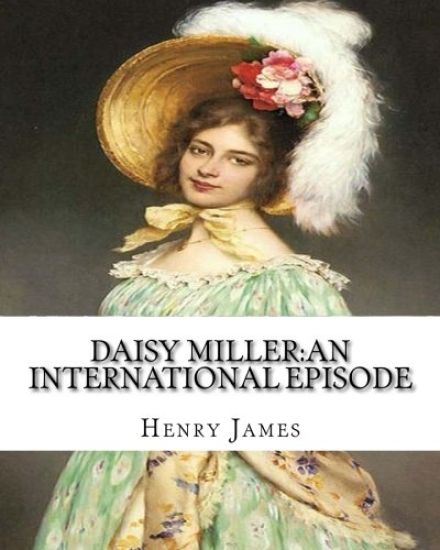
Daisy Miller: an international episode, By Henry James introdutcion By W.D.Howells: William Dean Howells (March 1, 1837 - May 11, 1920)
W. D. Howells; Henry James
Createspace Independent Publishing Platform
2016
nidottu
Daisy Miller is a novella by Henry James that first appeared in Cornhill Magazine in June-July 1878, and in book form the following year. 1] It portrays the courtship of the beautiful American girl Daisy Miller by Winterbourne, a sophisticated compatriot of hers. His pursuit of her is hampered by her own flirtatiousness, which is frowned upon by the other expatriates when they meet in Switzerland and Italy.Plot summary Annie "Daisy" Miller and Frederick Winterbourne first meet in Vevey, Switzerland, in a garden of the grand hotel 2] where Winterbourne is allegedly vacationing from his studies (an attachment to an older lady is rumoured). They are introduced by Randolph Miller, Daisy's 9-year-old brother. Randolph considers their hometown of Schenectady, New York, to be absolutely superior to all of Europe. Daisy, however, is absolutely delighted with the continent, especially the high society she wishes to enter. Winterbourne is at first confused by her attitude, and though greatly impressed by her beauty, he soon determines that she is nothing more than a young flirt. He continues his pursuit of Daisy in spite of the disapproval of his aunt, Mrs. Costello, who spurns any family with so close a relationship to their courier as the Millers have with their Eugenio. She also thinks Daisy is a shameless girl for agreeing to visit the Ch teau de Chillon with Winterbourne after they have known each other for only half an hour. The next day, the two travel to Ch teau de Chillon and although Winterbourne had paid the janitor for privacy, Daisy is not quite impressed. Winterbourne then informs Daisy that he must go to Geneva the next day. Daisy feels disappointment and chaffs him, eventually asking him to visit her in Rome later that year. In Rome, Winterbourne and Daisy meet unexpectedly in the parlor of Mrs. Walker, an American expatriate. Her moral values have adapted to those of Italian society. Rumors about Daisy meeting with young Italian gentlemen make her socially exceptionable under these criteria. Winterbourne learns of Daisy's increasing intimacy with a young Italian of questionable society, Giovanelli, as well as the growing scandal caused by the pair's behavior. Daisy is undeterred by the open disapproval of the other Americans in Rome, and her mother seems quite unaware of the underlying tensions. Winterbourne and Mrs. Walker attempt to persuade Daisy to separate from Giovanelli, but she refuses any help that is offered. One night, Winterbourne takes a walk through the Colosseum and sees a young couple sitting at its center. He realizes that they are Giovanelli and Daisy. Winterbourne, infuriated with Giovanelli, asks him how he could dare to take Daisy to a place where she runs the risk of catching "Roman Fever". Daisy says she does not care and Winterbourne leaves them. Daisy falls ill and dies a few days later.......... Henry James (15 April 1843 - 28 February 1916) was an American-born writer. He is regarded as one of the key figures of 19th-century literary realism. He was the son of Henry James, Sr. and the brother of philosopher and psychologist William James and diarist Alice James. He is best known for a number of novels showing Americans encountering Europe and Europeans. His method of writing from a character's point of view allowed him to explore issues related to consciousness and perception, and his style in later works has been compared to impressionist painting. His imaginative use of point of view, interior monologue and unreliable narrators brought a new depth to narrative fiction....
The american dream and the american nightmare in literature by William D. Howells and Henry James
Carolina Hein
Grin Verlag
2008
pokkari

Preaching the Psalms / J. Clinton Mccann, Jr. & James C. Howell.
J.Clinton McCann
Abingdon Press
2001
pokkari
This book is designed to help preachers find and use the riches of the Psalms for preaching. The authors address the perception that the Psalms often go neglected in preparing for one of the central acts of worship: preaching. McCann and Howell demonstrate that the Psalms offer the preacher broad, rich possibilities for the congregation s engagement with the Scripture. Each chapter concludes with a brief sample."

James's Account of S. H. Long's Expedition, 1819-1820, part 2 (Edition1)
Maud Howe Elliott; Florence Howe Hall
Alpha Editions
2025
nidottu
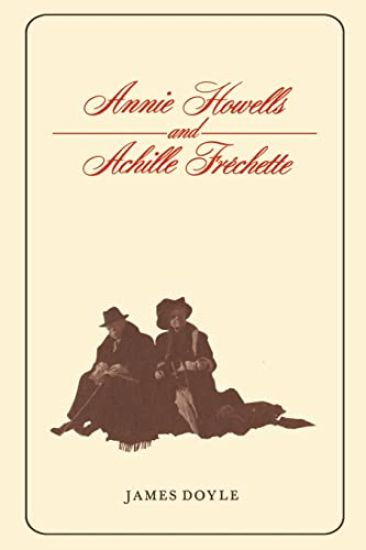
Post-Confederation Ottawa sets the scene for this fascinating biography of a literary couple. The marriage of Annie Howells and Achille Fréchette in 1877 brought together two literary families and two cultural traditions. Annie was the daughter of the US consul in Quebec, William Cooper Howells, and sister of the American novelist William Dean Howells. Achille, a translator for the Canadian House of Commons, was the brother of the French-Canadian poet Louis Fréchette. Both Annie and Achille were authors themselves, and their lives and careers touched frequently Ottawa's political, cultural, and religious life. In Ottawa the Fréchettes established themselves at the centre of a distinguished bilingual circle of politicians, poets, and scholars. Their friends included Wilfrid Laurier, Alphonse Lusignan, and, in later years, Archibald Lampman. Both Fréchettes continued to pursue the literary careers they had begun before their marriage. Annie published a serialized novel and many short stories and articles; Achille's poems continued to appear in various periodicals. Achille also took part as writer and trustee in a bitter debate over separate schools. The many surviving letters between Annie and her brother William cover various topics of mutual interest to Canadians and Americans, reflecting both Canadian and American cultural experience in the late nineteenth and early twentieth centuries.
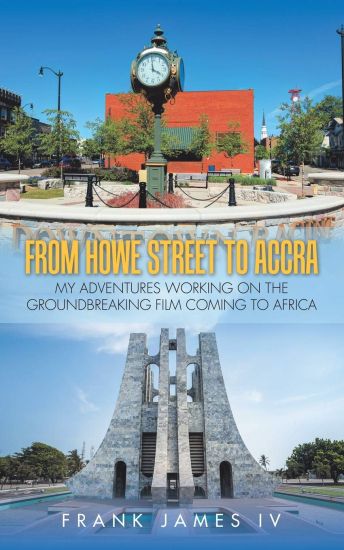
From Howe Street to Accra is a fun, fast paced story of the behind the scenes making of the film Coming to Africa. The book details how an unexperienced journalist wound up being an assistant director on a motion picture. The book also talks about the obstacles that the US based crew had to overcome working in a foreign country. The book also depicts the mental trials a born loner has to overcome to reinvent himself and break out of the prison of his own mind.


This title compares classic star Michael Jordan and contemporary champion LeBron James. From scoring and rebounding to defense and leadership, chapters explore and compare each player's skills on the court. The title also features end-of-chapter fact boxes for side-by-side player comparison, as well as a glossary. It will be up to the reader to decide who is the all-time basketball hero. SportsZone is an imprint of Abdo Publishing Company.

Playmakers introduces young readers to their current heroes on and off the field. LeBron James: Basketball Icon summarizes LeBron James's life and career to date and draw attention to accomplishments beyond his athletic skill as well as career highlights thus far. Short, informative sidebars add to the engaging, easy-to-read text, making Playmakers a hit for any reader in your library SportsZone is an imprint of ABDO Publishing Company.