Kirjojen hintavertailu. Mukana 12 083 983 kirjaa ja 12 kauppaa.

Kirjahaku

Etsi kirjoja tekijän nimen, kirjan nimen tai ISBN:n perusteella.

1000 tulosta hakusanalla James Hutton

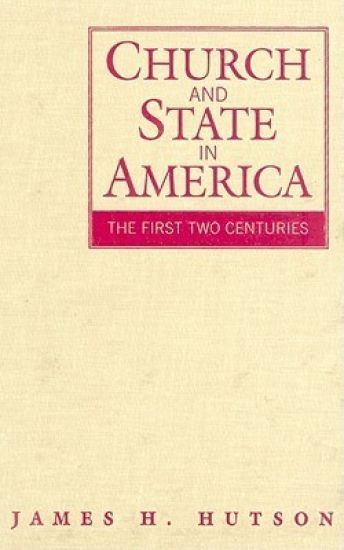
Church and State in America

Church and State in America

James H. Hutson

Cambridge University Press
2007
sidottu
This is an account of the ideas about and public policies relating to the relationship between government and religion from the settlement of Virginia in 1607 to the presidency of Andrew Jackson, 1829–37. This book describes the impact and the relationship of various events, legislative, and judicial actions, including the English Toleration Act of 1689, the First and Second Great Awakenings, the Constitution of the United States, the Bill of Rights, and Jefferson's Letter to the Danbury Baptists. Four principles were paramount in the American approach to government's relation to religion: the importance of religion to public welfare; the resulting desirability of government support of religion (within the limitations of political culture); liberty of conscience and voluntaryism; the requirement that religion be supported by free will offerings, not taxation. Hutson analyzes and describes the development and interplay of these principles, and considers the relevance of the concept of the separation of church and state during this period.
Pennsylvania Politics 1746-1770

Pennsylvania Politics 1746-1770

James H. Hutson

Princeton University Press
2015
pokkari
The Quaker Party's campaign in 1764 to replace Pennsylvania's proprietary government with royal government prefigures, in some ways, the colonies' struggle against George III. This is the key, in James Hutson's analysis, to Pennsylvania politics in the decades before the Revolution. In a lucidly written narrative, he follows the efforts of the Quaker dominated Assembly--outraged by Thomas Penn's inflexible government and representing a society that had matured economically, politically, and socially--to bring about royal government, on Benjamin Franklin's advice, as a less restrictive alternative. Mr. Hutson's interpretation clarifies the major realignment of political parties (Quaker, Presbyterian, and Proprietary) that the movement occasioned, the impact of the frontiersmen (notably the Paxton Boys) on provincial politics, and the role played by important political figures like Franklin. Originally published in 1972. The Princeton Legacy Library uses the latest print-on-demand technology to again make available previously out-of-print books from the distinguished backlist of Princeton University Press. These editions preserve the original texts of these important books while presenting them in durable paperback and hardcover editions. The goal of the Princeton Legacy Library is to vastly increase access to the rich scholarly heritage found in the thousands of books published by Princeton University Press since its founding in 1905.
Pennsylvania Politics 1746-1770

Pennsylvania Politics 1746-1770

James H. Hutson

Princeton University Press
2016
sidottu
The Quaker Party's campaign in 1764 to replace Pennsylvania's proprietary government with royal government prefigures, in some ways, the colonies' struggle against George III. This is the key, in James Hutson's analysis, to Pennsylvania politics in the decades before the Revolution. In a lucidly written narrative, he follows the efforts of the Quaker dominated Assembly--outraged by Thomas Penn's inflexible government and representing a society that had matured economically, politically, and socially--to bring about royal government, on Benjamin Franklin's advice, as a less restrictive alternative. Mr. Hutson's interpretation clarifies the major realignment of political parties (Quaker, Presbyterian, and Proprietary) that the movement occasioned, the impact of the frontiersmen (notably the Paxton Boys) on provincial politics, and the role played by important political figures like Franklin. Originally published in 1972. The Princeton Legacy Library uses the latest print-on-demand technology to again make available previously out-of-print books from the distinguished backlist of Princeton University Press. These editions preserve the original texts of these important books while presenting them in durable paperback and hardcover editions. The goal of the Princeton Legacy Library is to vastly increase access to the rich scholarly heritage found in the thousands of books published by Princeton University Press since its founding in 1905.
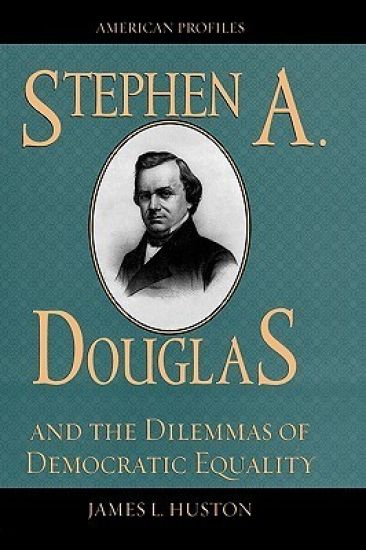
Stephen A. Douglas and the Dilemmas of Democratic Equality

Stephen A. Douglas and the Dilemmas of Democratic Equality

James L. Huston

Rowman Littlefield Publishers
2006
sidottu
Perhaps best known for his debates with Abraham Lincoln and his role in introducing the controversial Kansas-Nebraska Act, Stephen A. Douglas was a central character in the political firestorm that culminated in the American Civil War. In this engaging new biography, James L. Huston explores the life, ideology, and historical importance of America's "Little Giant." Born in 1813, Douglas came of age during the great democratization of American life. This was a time when egalitarianism became the national creed and President Andrew Jackson stood forth as its champion. Huston sets Douglas in this social and political milieu, and examines the unfolding of the principles of democracy in and through his life. Douglas's political career as a state legislator, U.S. Congressman, and ultimately U.S. Senator from Illinois placed him at the center of the struggle over the meaning of democracy and equality at both the state and national level. The renown that his debates of 1858 with Lincoln of the Republican Party garnered is but an emblem of the status that Douglas had as a leader of the Democratic Party and as the representative of a specific interpretation of the Jacksonian legacy of democratic populism. Huston places Douglas's life within the current historiographical controversies regarding the antebellum period and updates our understanding of the role that Douglas played in the creation of the Illinois Democratic party, the development of the ideals of Manifest Destiny, the struggle over slavery's extension into the West, the meaning of popular sovereignty, and the legitimacy of peaceful secession. Extensively researched and carefully documented, the book guides readers to original archival materials via a detailed bibliography and a section on the sources of Douglas's more famous statements. Huston's impressive work is a novel and lively presentation that shows Douglas to be a figure paradigmatic of the political complexities of the United States during the antebellum era.
Violet Storm

Violet Storm

James A. Huston; Anne Marshall Huston

AuthorHouse
2002
sidottu
After the Civil War, Violet and her husband, upon his return from the Confederate Navy, become partners in restoring their South Carolina plantation and in ventures in mercantile trade and railroads during years of Yankee occupation and Car
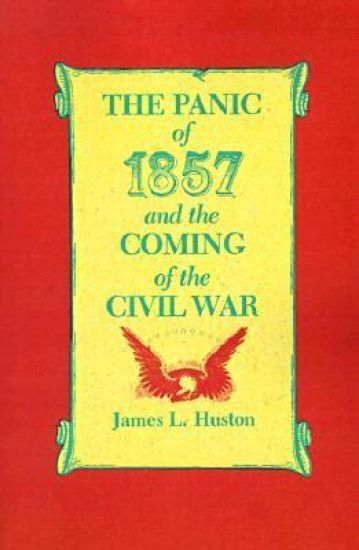
The Panic of 1857 and the Coming of the Civil War

The Panic of 1857 and the Coming of the Civil War

James L. Huston

Louisiana State University Press
1999
nidottu
In the autumn of 1857, sustained runs on New York banks led to a panic atmosphere that affected the American economy for the next two years. In The Panic of 1857 and the Coming of the Civil War, James L. Huston presents an exhaustive analysis of the political, social and intellectual repercussions of the Panic and shows how it exacerbated the conflict between North and South.The panic of 1857 initiated a general inquiry between free traders and protectionists into the deficiencies of American economic practices. A key aspect of this debate was the ultimate fate of the American worker, an issue that was given added emphasis by a series of labor demonstrations and strikes. In an attempt to maintain the material welfare of laborers, northerners advocated a program of high tariffs, free western lands, and education. But these proposals elicited the opposition of southerners, who believed that such policies would not serve the needs of the slaves system. Indeed, many people of the period saw the struggle between North and South as an economic one whose outcome would determine whether laborers would be free and well paid or degraded and poor. Politically, the Panic of 1857 resurrected economic issues that had characterized the Whig-Democratic party system prior to the 1850s. Southerners, observing the collapse of northern banks, believed that they could continue to govern the nation by convincing northern propertied interests that sectionalism had to be ended in order to ensure the continued profitability of intersectional trade. In short, they hoped for a marriage between the Yankee capitalist and the southern plantation owner.However, in northen states, the Panic had made the Whig program of high tariffs, a national bank, and internal improvements popular with distressed members of the community. The country's old-line Whigs and nativists were particularly affected by the state of economic affairs. When Republicans moved to adopt a portion of the old Whig program, conservatives found the attraction irresistible. By maintaining their new coalition with conservatives and by exploiting the weaknesses of the Buchanan administration, the Republicans managed to capture the presidency in 1860.No other book examines in such detail the political ramifications of the Panic of 1857. By explaining how the economic depression influenced the course of sectional debate, Huston has made an important and much-needed contribution to Civil War historiography.
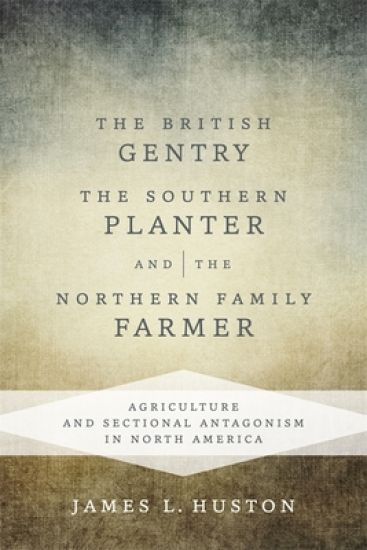
The British Gentry, the Southern Planter, and the Northern Family Farmer
Drawing on the history of the British gentry to explain the contrasting sentiments of American small farmers and plantation owners, James L. Huston's expansive analysis offers a new understanding of the socioeconomic factors that fueled sectionalism and ignited the American Civil War. This groundbreaking study of agriculture's role in the war defies long-held notions that northern industrialization and urbanization led to clashes between North and South. Rather, Huston argues that the ideological chasm between plantation owners in the South and family farmers in the North led to the political eruption of 1854-56 and the birth of a sectionalized party system. Huston shows that over 70 percent of the northern population-by far the dominant economic and social element-had close ties to agriculture. More invested in egalitarianism and personal competency than in capitalism, small farmers in the North operated under a free labor ideology that emphasized the ideals of independence and mastery over oneself. The ideology of the plantation, by contrast, reflected the conservative ethos of the British aristocracy, which was the product of immense landed inequality and the assertion of mastery over others. By examining the dominant populations in northern and southern congressional districts, Huston reveals that economic interests pitted the plantation South against the small-farm North. The northern shift toward Republicanism depended on farmers, not industrialists: While Democrats won the majority of northern farm congressional districts from 1842 to 1853, they suffered a major defection of these districts from 1854 to 1856, to the antislavery organizations that would soon coalesce into the Republican Party. Utilizing extensive historical research and close examination of the voting patterns in congressional districts across the country, James Huston provides a remarkable new context for the origins of the Civil War.
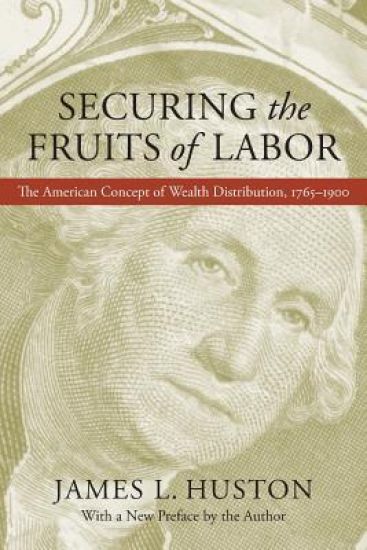
Securing the Fruits of Labor

Securing the Fruits of Labor

James L. Huston

Louisiana State University Press
2015
nidottu
In his comprehensive study of the economic ideology of the early republic, James L. Huston argues that Americans developed economic attitudes during the Revolutionary period that remained virtually unchanged until the close of the nineteenth century. Viewing Europe's aristocratic system, early Americans believed that the survival of their new republic depended on a fair distribution of wealth, brought about through political and economic equality. The concepts of wealth distribution formulated in the Revolutionary period informed works on nineteenth-century political economy and shaped the ideology of political parties. Huston reveals how these ideas influenced debates over reform, working-class agitation, political participation, territorial expansion, banking, tariffs, slavery, public land disposition, and corporate industrialism. Securing the Fruits of Labor is a masterful study of American beliefs about wealth distribution over one and a half centuries.
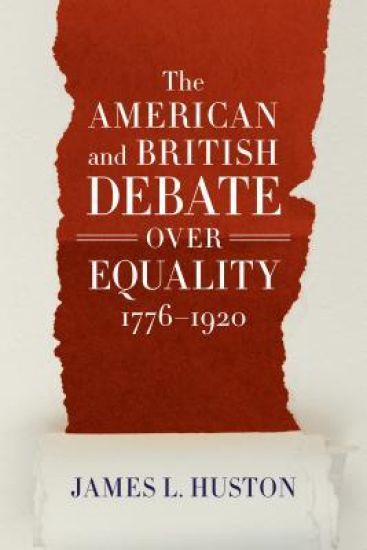
The American and British Debate Over Equality, 1776-1920

The American and British Debate Over Equality, 1776-1920

James L. Huston

Louisiana State University Press
2017
sidottu
Historians have long contested the degree to which the central tenet of the Declaration of Independence- that all men are created equal- has manifested itself in American society and national policy. According to James L. Huston, many historians have focused too intently on class differences, slavery, and inequalities arising from ethnicity, sexuality, and gender, while overlooking important areas where notions of equality flourished during the century and a half after the Declaration's signing. In The American and British Debate Over Equality, 1776- 1920, Huston examines the egalitarian communities in rural northern America, particularly those enclaves that differed from the openly aristocratic cities and towns of the British Isles. In the aftermath of the American Revolution, British and American writers alike recognized that a growing philosophical rift divided the two nations: whereas Great Britain continued to embrace the inequality of its hierarchical class system, the United States professed allegiance to democratic ideals of equality- limited though these were by racial and gender norms of the day. Huston argues that the two countries engaged in an intellectual debate during the next century and a half over which ideal- equality or inequality- worked best in promoting social stability, political hegemony, and economic success. Exploring the effects of equality and inequality on many aspects of American life, he examines civil behavior, social customs, treatment of others, politics, education, religion, economic opportunity, and general public optimism. Drawing from decades of publications by American and British writers, Huston reveals the rhetorical strategies contemporary observers employed in defending or rejecting the organization of a society around broader notions of human equality. The American and British Debate Over Equality, 1776- 1920 informs the modern debate over equality and inequality, not by theorizing and philosophizing, but by offering a glimpse into the practical applications of a functioning egalitarian society as compared to one that extolled monarchy and institutionalized inequality.
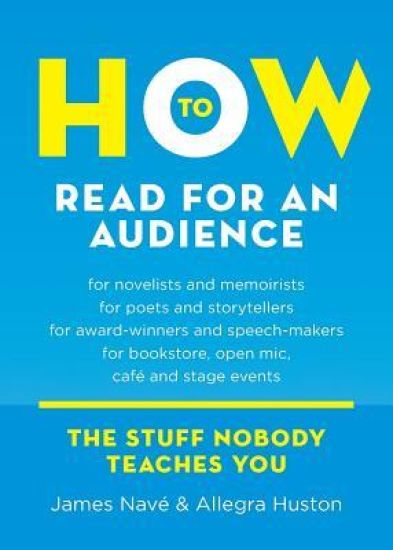
How to Read for an Audience

How to Read for an Audience

James Navé; Allegra Huston

Twice 5 Miles
2018
pokkari
How to Read for an Audience is the first book designed to teach writers how to present their work in public. Short yet packed with information, this indispensable guide advises you how to choose your material, how to prepare, and how to make your bookstore reading or open mic a powerful promotion of your work. Nervous? Feeling unprepared or overwhelmed? Worry no more James Nav and Allegra Huston, a performance poet/creativity coach and a novelist/editor, share their decades of combined experience in an easy-to-read guide that will increase both your comfort level and your skill in reading for an audience. You might even come to enjoy it "Bursting with outstanding insights and fresh ideas . . . should be required reading for all writers, as well as all creative writing teachers and students. Whether you're a newbie beginner or a well-seasoned pro, this book will make you a better reader and writer." --Kate Christensen, PEN/Faulkner Award-winning novelist and former teacher at Iowa Writers Workshop"Deft, clear and charming . . . This series promises to immediately fill a tremendous need in the lives of those of who still live and die by the book." --Jonathan Lethem, NYT bestselling novelist and Roy E. Disney '51 Chair in Creative Writing, Pomona College"James Nav 's help is practical, unique and gets to the psychological core. He is encouraging in that most helpful sense: he shows you how to find your courage." - Greg Palast, investigative journalist and NYT bestselling author
Biography of a Battalion

Biography of a Battalion

James A. Huston

Literary Licensing, LLC
2011
sidottu
""Biography Of A Battalion"" by James A. Huston is a historical non-fiction book that chronicles the experiences of a battalion during World War II. The book provides a detailed account of the battalion's formation, training, deployment, and combat operations in Europe. Huston draws on primary sources such as letters, diaries, and official records to provide a vivid and compelling narrative of the battalion's journey. The book covers the battalion's involvement in major battles such as the Normandy invasion, the Battle of the Bulge, and the liberation of concentration camps. Through the stories of individual soldiers, Huston also explores the human side of war, including the challenges of leadership, the impact of combat on mental health, and the bonds of camaraderie that develop between soldiers. Overall, ""Biography Of A Battalion"" is a fascinating and engaging read that provides a unique perspective on the experiences of American soldiers during World War II.This scarce antiquarian book is a facsimile reprint of the old original and may contain some imperfections such as library marks and notations. Because we believe this work is culturally important, we have made it available as part of our commitment for protecting, preserving, and promoting the world's literature in affordable, high quality, modern editions, that are true to their original work.