Kirjojen hintavertailu. Mukana 11 342 296 kirjaa ja 12 kauppaa.

Kirjahaku

Etsi kirjoja tekijän nimen, kirjan nimen tai ISBN:n perusteella.

1000 tulosta hakusanalla James R Cook

Moral Development

Moral Development

James R. Rest

Praeger Publishers Inc
1986
sidottu
This book focuses on a theoretical framework (the Four-Component Model) and evaluations of the Defining Issues Test (DIT) developed by Rest and his coworkers. The authors assess their own work with the DIT and that of hundreds of other investigators. Among their conclusions are: formal education is correlated with moral judgment; there is evidence for Kohlberg's higher stages; moral education programs produce modest gains, and, there are no sex differences. The book is important for libraries wishing a complete collection on moral development. Choice
Regulating the Regulators

Regulating the Regulators

James R. Bowers

Praeger Publishers Inc
1990
sidottu
Increasingly, state regulations are implemented and exercised by the administrative discretion of state bureaucracies. This increased rulemaking activity threatens to rival, or even replace, state legislatures as the principal source of new laws emanating from state government. To combat this, state legislatures now routinely seek to regain their preeminence as lawmakers by overseeing administrative rulemaking authority. This oversight is frequently conducted through a process known as rules review. The process, a systematic form of legislative oversight, encourages the responsible exercise of rulemaking authority by requiring legislative scrutiny of proposed regulations prior to final adoption by the issuing agency. Regulating the Regulators presents an introduction to rules review. James R. Bowers examines this process through an in depth case study of the Illinois General Assembly.Regulating the Regulators presents an introduction to this important and widely used method of oversight by state legislatures. The author poses three basic questions about rules review that previous works have not asked: Why is a state legislature likely to incorporate rules reviews in its oversight arsenal? What is the substance and nature of rules review likely to be? What factors are likely to contribute to agency responsiveness to rules review? These questions are examined through an in depth case study of the rules review process in the Illinois General Assembly. From this case study, Regulating the Regulator develops a number of analytic generalizations upon which future research and a more general understanding of rules review can be built. Students of both legislative an administrative process, as well as state legislators and state level public administrators, will find Regulating the Regulators a valuable source of information. This book is particularly well-suited for upper-level undergraduate and graduate courses in state governement and politics, administrative process, regulatory politics, and administrative theory.
United States Overseas Basing

United States Overseas Basing

James R. Blaker

Praeger Publishers Inc
1990
sidottu
Maintaining that enhanced national security and successful foreign policy depend on the capacity to sustain military forces abroad, this book provides a framework for dealing with the tough decisions about overseas basing that will emerge during the remainder of this century. The author argues that what is most important to national security and the optimum performance of individual bases is the capacity of the full basing system to move and employ military forces. Presenting a global, systems perspective for all overseas basing, he demonstrates that the value of individual bases depends on their ability to interact with each other. This system describes the bases as points in an integrated network and defines the utility of a given base not only in terms of the functions that base performs for the region in which it is located, but also in terms of how it fits with and contributes to the entire basing system. The book begins with a brief history and overview of the current basing system. Then, moving beyond the basic questions regarding overseas basing in the future--How much basing is enough? Where should overseas bases exist? Which ones are most vital?--the author looks at the current crises in the basing system and reviews practical solutions that might be applied for better use of the bases. Students and scholars of foreign policy, as well as policy makers and military strategists, will find valuable ideas in this important new book.
Napoleon Conquers Austria

Napoleon Conquers Austria

James R. Arnold

Praeger Publishers Inc
1995
sidottu
This is the first English language account of the 1809 campaign for Vienna to weave stories of individual persons into the larger motif of the struggle to dominate Europe. The book explores three themes: the decline of Napoleon's powers, the rise of German nationalism, the end of the era of cavalry dominance of the battlefield and the ascendance of artillery. The campaign for Vienna led to Napoleon's first defeat on the battlefield. In May, Napoleon sat with his defeated army at the end of a long and imperiled line of communications. At the moment of crisis, he displayed his formidable talents and prepared a masterful counterstroke. The Battle of Wagram—a battle of unprecedented lethality—was a triumph for Napoleon and led to a peace which he dictated. In 1809 the world's undisputed military genius—Napoleon Bonaparte—confronted his implacable continental foe, the Hapsburg Empire. During the Vienna campaign of that year, Napoleon suffered his first defeat since becoming Emperor, but rebounded to win Wagram, a battle of unprecedented lethality. Referring to the strategic importance of the battles he fought, Napoleon reflected: My power is dependent on my glory, and my glory on my victories. My power would fall if I did not base it on still more glory and still more victories. Conquest made me what I am; conquest alone can keep me there. Even in the midst of a life and death campaign struggle against Austria, Napoleon continued to make nearly every decision of state on a daily basis. During his bath, while being shaved, when eating his meals, aides presented petitions and requests for his tireless attention: a second lieutenant asks to retain his French citizenship while serving in the Dutch army? Granted. Emperor Alexander I of Russia asks that an English prisoner of war who is a relative of his personal surgeon be released? Granted. If genius lies in the attention to detail, here was genius at work. The sun rose on April 24, 1809, to illuminate a continent at war. From Poland to Spain, some 600,000 soldiers awakened to duty. Nowhere was the concentration of forces greater than in the Danube Valley where Napoleon had determined to launch his blow against the Austrian Generalissimus, Erzherzog (Archduke) Karl. If Karl triumphed, most of Europe stood poised to pounce. Napoleon and the French Empire would be attacked from all quarters. If Karl failed, all Europe—except England and perhaps Portugal and Spain—would make whatever accommodations were necessary to survive under Napoleonic hegemony. The ensuing campaign led to Napoleon's first defeat at Aspern-Essling. So, at the end of May, Napoleon sat with his battered army at the end of a long and imperiled line of communications while Europe erupted around him. Yet, at the moment of supreme crisis, Napoleon displayed his formidable talents and prepared a masterful counterstroke. French and Austrian alike suffered horrific losses at Wagram, but at battle's end, Napoleon's commanding presence produced a French triumph. It was a victory so complete that the Emperor forced Austria into unwilling alliance and even took the daughter of the Austrian Kaiser to be his new wife. For one last time, the French conqueror redrew Europe's map.
Economics and National Strategy in the Information Age

Economics and National Strategy in the Information Age

James R. Golden

Praeger Publishers Inc
1994
sidottu
The Information Age has dawned at the same time the global political system is in transition. High technology performance and economic productivity are converging across the major developed regions of North America, East Asia, and Europe. If U.S. economic, military, and political leadership is to continue, it must depend more on flexible adaptation to the new technical and organizational realities and less on technological dominance. The heart of this adaptation lies in the evolution of a national technology policy that emphasizes market forces and the exploitation of network linkages within and among commercial and military organizations.
Pro-Choice and Anti-Abortion

Pro-Choice and Anti-Abortion

James R. Bowers

Praeger Publishers Inc
1994
sidottu
Bowers argues that, when correctly interpreted and applied, the Constitution and the theory of liberty on which it is based require government to reject the conventional pro-choice and anti-abortion perspectives as too extreme and incomplete. Instead, this book sets forth a position that government is constitutionally obligated to approach abortion policy from a middle perspective. Relying on a jurisprudence of original theory, Pro-Choice and Anti-Abortion forcefully asserts that government is constitutionally constrained to formulate abortion policy that is at once pro-choice and anti-abortion. In so arguing, this book walks readers through this constitutionally mandated middle position by introducing them to the liberal teachings of John Locke that were so influential to the framers of the Constitution and by applying this political theory to the major issues of the abortion controversy--including the individual liberty interest in the abortion decision, minors and abortions, the liberty interest of the fetal-being, and the Freedom of Choice Act.
Pro-Choice and Anti-Abortion

Pro-Choice and Anti-Abortion

James R. Bowers

Praeger Publishers Inc
1997
nidottu
Bowers argues that, when correctly interpreted and applied, the Constitution and the theory of liberty on which it is based require government to reject the conventional pro-choice and anti-abortion perspectives as too extreme and incomplete. Instead, this book sets forth a position that government is constitutionally obligated to approach abortion policy from a middle perspective. Relying on a jurisprudence of original theory,Pro-Choice and Anti-Abortion forcefully asserts that government is constitutionally constrained to formulate abortion policy that is at once pro-choice and anti-abortion. In so arguing, this book walks readers through this constitutionally mandated middle position by introducing them to the liberal teachings of John Locke that were so influential to the framers of the Constitution and by applying this political theory to the major issues of the abortion controversy—including the individual liberty interest in the abortion decision, minors and abortions, the liberty interest of the fetal-being, and the Freedom of Choice Act.
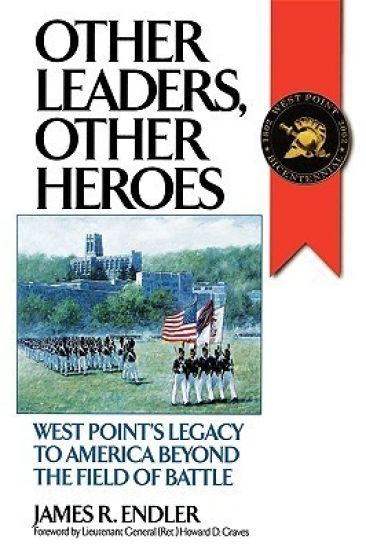
Other Leaders, Other Heroes

Other Leaders, Other Heroes

James R. Endler

Praeger Publishers Inc
1998
sidottu
As West Point celebrates its bicentennial, this study provides examples of significant non-combat contributions made by Military Academy graduates to the development and growth of the United States. It includes a sampling of the accomplishments of the military academy's doctors, clergy, builders, and educators, and tells the story of the statesmen, engineers, industrialists and financiers, artists, and writers who all began their careers at the Military Academy. Their success prompted President Theodore Roosevelt to remark at the centennial celebration that no other educational institution in the land has contributed as many names as West Point has contributed to the honor roll of the nation's citizens. After two hundred years, West Point continues to provide the nation with men, as well as women, of character, trained to undertake the leadership and direction of large enterprises, both in war and peace.Civilian universities produce graduates who are particularly skilled in their primary subject of academic study. At West Point, that primary subject is leadership. West Point graduates were instrumental in the exploration and mapping of unknown territory west of the Mississippi, as well as the unknown reaches of space. They have been elected or appointed to serve at every level of federal, state, and local government, from the office of the president to local boards of education. Graduates of West Point, the sole engineering institution in the nation until 1824, were selected to head the new engineering schools established at some of the nation's most prestigious universities, including Yale and Harvard. Readers will be surprised at the wide range of contributions that Academy graduates have made in our nation's history.
And a Time for Hope

And a Time for Hope

James R. McGovern

Praeger Publishers Inc
2000
sidottu
Creating a broad, new vision of the 1930s, this highly readable social history shows that despite the hard times, Americans faced the Depression years with a characteristic resilience and optimism. Though more seriously affected by the Depression than Europe, Americans weathered hardship while European societies floundered, accepted dictatorships, or were caught in bitter ideological conflicts. Existing depictions of the era emphasize the negatives and overlook the diverse strengths of the American people, their ability to cope with temporary deprivation, and their triumphant retention of hope for themselves and the future of their society. Restoring perspective on the era, this book looks at Americans' solid value systems, their diverse support systems, their religious life, and the role of FDR and the New Deal.Although the New Deal helped undeniably, social and cultural resources played a major role in the stability of American society and the resiliency with which Americans withstood the severity of the Great Depression. Confirming this interpretation, McGovern takes a close look at numerous facets of American life—rural areas, great cities, the Okie Odyssey, labor, African Americans, ethnic organizations, radio and films, technology and design. All reveal sources of confidence, abundant energy, and robust action, typical of a hopeful people. This study attempts to explain the successes and achievements of Americans in the 1930s.
And a Time for Hope

And a Time for Hope

James R. McGovern

Praeger Publishers Inc
2001
nidottu
Creating a broad, new vision of the 1930s, this highly readable social history shows that despite the hard times, Americans faced the Depression years with a characteristic resilience and optimism. Though more seriously affected by the Depression than Europe, Americans weathered hardship while European societies floundered, accepted dictatorships, or were caught in bitter ideological conflicts. Existing depictions of the era emphasize the negatives and overlook the diverse strengths of the American people, their ability to cope with temporary deprivation, and their triumphant retention of hope for themselves and the future of their society. Restoring perspective on the era, this book looks at Americans' solid value systems, their diverse support systems, their religious life, and the role of FDR and the New Deal.Although the New Deal helped undeniably, social and cultural resources played a major role in the stability of American society and the resiliency with which Americans withstood the severity of the Great Depression. Confirming this interpretation, McGovern takes a close look at numerous facets of American life--rural areas, great cities, the Okie Odyssey, labor, African Americans, ethnic organizations, radio and films, technology and design. All reveal sources of confidence, abundant energy, and robust action, typical of a hopeful people. This study attempts to explain the successes and achievements of Americans in the 1930s.
Scottsboro and Its Legacy

Scottsboro and Its Legacy

James R. Acker

Praeger Publishers Inc
2007
sidottu
Nine black teenagers were accused of raping two white women on a train in 1931 in northern Alabama. They were arrested, tried, convicted, and sentenced to death in the town of Scottsboro in little more than two weeks. The Scottsboro Boys case rapidly captured public attention and became a lightning rod for fundamental issues of social justice including racial discrimination, class oppression, and legal fairness. Involving years of appeals, the Scottsboro trials resulted in two landmark U.S. Supreme Court rulings and were a vortex for the sometimes-competing interests of the American Communist Party, the NAACP, and the young men themselves. The cases resulted in a damning portrayal of southern justice and corresponding social mores in several national and international media outlets, and in a spirited defense of the judicial system and prevailing cultural norms in other news reports, particularly in the South. Here, Acker details the alleged crimes, their legal aftermath, and their immediate and enduring social significance as evidenced in media portrayals and other forms of popular culture.Using extensive media reports, including contemporaneous newspaper accounts and interpretations of the proceedings, as well as the sallies of champions of various organizations and social causes, the author illustrates the role of the media in the cases and the effect the cases had on society at the time. In addition to tracing the history of the cases and their media portrayal, the book explores the legacy of the Scottsboro trials and appeals. It examines several issues relevant to the cases that, even today, have enduring significance to law and popular perceptions of justice, including capital punishment, racial discrimination, innocence, the composition and functioning of trial juries, the quality of legal counsel for indigents, evidentiary issues in rape cases, and media interactions with the courts. More than a true crime tale, this book takes readers through the crime but also illustrates its enduring legacy.
Transforming Military Force

Transforming Military Force

James R. Blaker

Praeger Publishers Inc
2007
sidottu
Secretary of Defense Donald Rumsfeld arrived at the Pentagon in 2001 with an agenda that included the transformation of the American armed forces. His intent was to modernize the existing force while simultaneously developing high-tech innovations to revolutionize the military of the future.The primary architect of transformation, Arthur Cebrowski, conceived what is known as network-centric warfare—a concept to leverage advances in military technology that will influence the U.S. Armed Forces for many decades to come. The basis of this work was Arthur Cebrowski's autobiographical history of the development of network-centric warfare. He passed away, however, before he could complete his account. Blaker has used much of the material gathered by Cebrowski to craft a history based on the former naval officer's own writings, testimony, and interviews of Cebrowski conducted by a variety of individuals in the media and military during his time in Washington, D.C. Transforming Military Force is also an examination of the successes and failures of this new form of warfare, analyzing what has been done in the past and offering suggestions on the future direction of this form of conflict.
Party and Factional Division in Texas

Party and Factional Division in Texas

James R. Soukup; Clifton McCleskey; Harry Holloway

University of Texas Press
1964
pokkari
Here is the first attempt by scholars to make a comprehensive analysis of voting patterns in Texas. Examining the results of fourteen elections from 1946 through 1962 and organizing a vast fund of statistics relative to Texas political parties and voters, the authors have laid a solid groundwork for further studies in this field.The previously ineffectual Texas Republican Party made great strides in the twentieth century and became a competitor in state as well as national races. Specifically, the authors maintain that Texas in the 1960s was a "one and two-thirds party state." Within the Democratic Party, factions analogous to warring camps immensely complicated the political struggle. Although the conservative elements within the Democratic Party still had a slight edge, growing liberal strength forced them to moderate their policies and tactics.The authors also contend that there were significant changes in the nature of the issues and the modes of political operation. Though some of the old motivations and tactics lingered on in less significant rural areas, friendship-oriented campaigns appealing to regional and family-like sentiments were being quickly replaced by an organized politics in which political activists made strong ideological appeals to economic and social interests.The Republicans, the conservative Democrats, and the liberal Democrats are each analyzed in relation to regionalism, demography, ethnic elements, and the economic system in Texas; and the history, present status, and future prospects of these factions are discussed in detail. Of special interest are the last two chapters, which analyze the 1962 elections and their bearings on evolving patterns of competition. The developments within the Republican Party and its challenge to the traditional Democratic Party are seen in the perspectives of the growing importance of minority groups and the impact of urbanization.All those interested in Texas politics and the history of the rise of the Republican Party in the state will find this study indispensable for an intelligent appraisal of historical developments.
Feeding the Russian Fur Trade

Feeding the Russian Fur Trade

James R. Gibson

University of Wisconsin Press
2011
nidottu
James R. Gibson offers a detailed study that is both an account of this chapter of Russian history and a full examination of the changing geography of the Okhotsk Seaboard and the Kamchatka Peninsula over the course of two centuries.
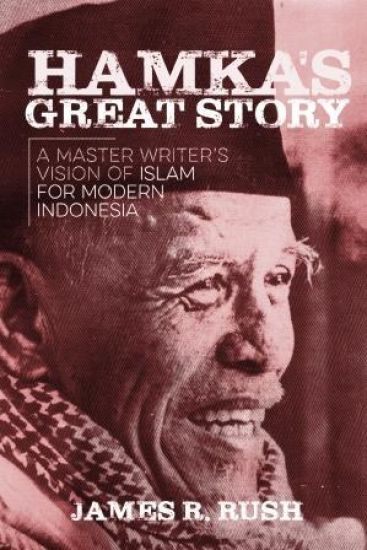
Hamka's Great Story

Hamka's Great Story

James R. Rush

University of Wisconsin Press
2016
sidottu
Hamka’s Great Story presents Indonesia through the eyes of an impassioned, popular thinker who believed that Indonesians and Muslims everywhere should embrace the thrilling promises of modern life, and navigate its dangers, with Islam as their compass.Hamka (Haji Abdul Malik Karim Amrullah) was born when Indonesia was still a Dutch colony and came of age as the nation itself was emerging through tumultuous periods of Japanese occupation, revolution, and early independence. He became a prominent author and controversial public figure. In his lifetime of prodigious writing, Hamka advanced Islam as a liberating, enlightened, and hopeful body of beliefs around which the new nation could form and prosper. He embraced science, human agency, social justice, and democracy, arguing that these modern concepts comported with Islam’s true teachings. Hamka unfolded this big idea—his Great Story—decade by decade in a vast outpouring of writing that included novels and poems and chatty newspaper columns, biographies, memoires, and histories, and lengthy studies of theology including a thirty-volume commentary on the Holy Qur’an. In introducing this influential figure and his ideas to a wider audience, this sweeping biography also illustrates a profound global process: how public debates about religion are shaping national societies in the postcolonial world.
Taking Psychology and Law into the Twenty-First Century

Taking Psychology and Law into the Twenty-First Century

James R.P. Ogloff

Kluwer Academic/Plenum Publishers
2002
sidottu
During his term as President of APA-LS/Division 41, James Ogloff organized a comprehensive program of research reviews in the area of the law and psychology. Taking Psychology and Law into the Twenty-First Century is the product of that program. In these pages top scholars contribute chapters covering a wide range of topics including jurisprudence, competency, children, forensic risk assessment, eyewitness testimony, jurors and juries, lawsuits, and civil law. Also included is an introductory chapter by the editor. The result is a unique and comprehensive treatment of the issues at the confluence of these disciplines.
Esther Williamson Ballou

Esther Williamson Ballou

James R. Heintze

Greenwood Press
1987
sidottu
Esther Williamson Ballou was greatly admired by all who encountered her remarkable versatility as a musician and teacher. Although her music has continued to be performed over the years since her death in 1973, this volume is the first book-length study of her life and contributions to the musical world. The result of an extensive bibliographical search, and repeated contact with Esther's husband, Harold, and her friends and colleagues, James R. Heintze's bio-bibliography will provide the researcher with information about what materials exist and where they are located, that until now was not available.