

Kirjahaku
Etsi kirjoja tekijän nimen, kirjan nimen tai ISBN:n perusteella.
1000 tulosta hakusanalla James T. Cook

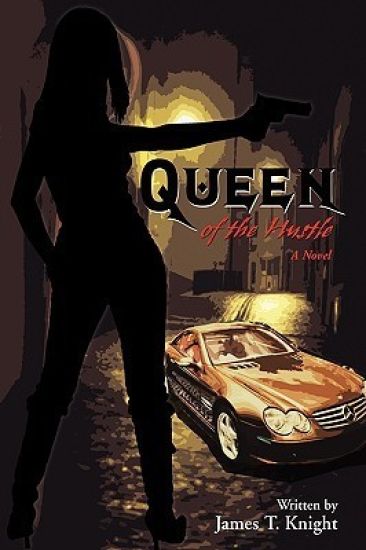


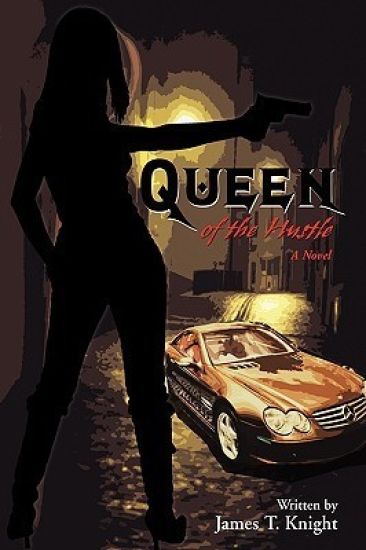


How utterly humiliating it must be for you, being attracted to the bare feet of another man. So coarse, so muscular, so sweaty -- and these are the things that turn you on? Is that what you fantasize about? Dragging your tongue slowly up a hipster boy's naked soles? Putting a frat boy's plump raw toes in your mouth so you can suck all of the flavor right out of them? Being dominated by the sandal-clad footflesh of a mere 20-something man in the comfort of his own apartment? Of course, we haven't even gotten to the tickling yet. Or the edging. In fact, you haven't even begun to realize what deep trouble you're in -- or maybe you have, judging by the tent that's forming in your pants right now ... Completing a trilogy that started with HOW TO BE A TICKLE SLAVE (hailed as an "instant classic" by the Big Tickle Blog) and continued on with the acclaimed MY, WHAT TICKLISH FEET YOU HAVE, James T. Medak brings you another devious collection of fetish erotica in the form of GETTING OFF ON THE WRONG FOOT, his most devious, ambitious set of freaky fetish tales to date. Kidnappings, forced foot worship (on both ends), an absolutely merciless level of tickle torture and the most diabolical edging you can imagine are all wrapped up in Medak's latest tempting tome, featuring two brand new stories that have never been seen anywhere else, including "The Market", a story so epic in scope it takes up over half the book. You'll note in the first few pages that a requirement to reading this book is that you do so without shoes or socks on, because that in itself is its own form of submission -- and guess what, boy? You're about to submit to deepest, most secret fantasies you've ever, ever had ...


America’s Struggle against Poverty in the Twentieth Century
James T. Patterson
Harvard University Press
2000
nidottu
This new edition of Patterson's widely used book carries the story of battles over poverty and social welfare through what the author calls the "amazing 1990s," those years of extraordinary performance of the economy. He explores a range of issues arising from the economic phenomenon--increasing inequality and demands for use of an improved poverty definition. He focuses the story on the impact of the highly controversial welfare reform of 1996, passed by a Republican Congress and signed by a Democratic President Clinton, despite the laments of anguished liberals.

Asked to name an insect society, most of us--whether casual or professional students of nature--quickly point to one of the so-called eusocial marvels: the ant colony, the beehive, the termite mound, the wasp nest. Each is awe-inspiring in its division of labor--collective defense, foraging, and nestbuilding. Yet E. O. Wilson cautioned back in 1971 that sociality should be defined more broadly, "in order to prevent the arbitrary exclusion of many interesting phenomena." Thirty-five years later, James T. Costa gives those interesting phenomena their due. He argues that, in trying to solve the puzzle of how highly eusocial behaviors evolved in a few insect orders, evolutionary biologists have neglected the more diverse social arrangements in the remaining twenty-eight orders--insect societies that don't fit the eusocial schema. Costa synthesizes here for the first time the scattered literature about social phenomena across the arthropod phylum: beetles and bugs, caterpillars and cockroaches, mantids and membracids, sawflies and spiders. This wide-ranging tour takes a rich narrative approach that interweaves theory and data analysis with the behavior and ecology of these remarkable groups. This comprehensive treatment is likely to inspire a new generation of naturalists to take a closer look.

Cancer is that “loathsome beast, which seized upon the breast, drove its long claws into the surrounding tissues, derived its sustenance by sucking out the juices of its victims, and never even relaxed its hold in death,” a turn-of-the-century physician recorded. Even today cancer affects the popular imagination with dread. In a subtle and penetrating cultural history, James Patterson examines reactions to the disease through a century of American life.The modern American preoccupation with cancer was apparent during the widely publicized illness and death from that ailment of Ulysses S. Grant in 1885. Awareness of the disease soon figured heavily in the public consciousness, and individual reactions to it continue to reveal broader tensions within American society. Patterson examines responses to cancer by researchers and physicians, quacks and faith healers, by the multitude who have heard sensational media reports of “cures,” as well as by many who have had firsthand experiences with the disease.Optimistic attitudes of many experts contrast sharply with the skepticism of large segments of the population—often the less wealthy and the less educated—that reject the claims of medical science and resist the advice or, some argue, the paternalistic dictates of the government-supported cancer research establishment.Expanding expectations of a cure from a confident medical profession; the rise of a government-supported Cancer Establishment managing a large research empire; the emergence of a “cancer counterculture”; a new emphasis on prevention through control of the environment and the self; and the private fears and pessimism of millions of Americans form a telling history of American social patterns. Whether the issue is smoking, pollution, or regular checkups, attitudes toward cancer reflect more general views on medicine, public policy, and illness, as well as on death and dying. This century has witnessed both a biomedical revolution and a vastly increased role of the state in the private lives of citizens; but not everyone has bought the medical package, and many have little faith in government intervention.Readers interested in the cultural dimensions of science and medicine as well as historians, sociologists, and political scientists will be enlightened and challenged by The Dread Disease.

Islam and the Arabs in Spanish Scholarship (16th Century to the Present)
James T. Monroe; Michelle M. Hamilton; David A. Wacks
Ilex Foundation
2021
nidottu
Spanish Arabism was a touchstone of the major intellectual and political issues facing Spain as it emerged from its imperial past into its current form as a modern nation-state. James T. Monroe’s survey of four centuries of Spanish scholarship on the cultural history of al-Andalus (Muslim Spain) establishes Spanish scholars on the forefront of European scholars confronting the Orientalism and colonialism at the heart of their national projects.This reissue of James T. Monroe’s classic study of Spanish Arabism features a new foreword by Michelle M. Hamilton and David A. Wacks that offers an overview of its impact and of how the investigation of Spanish Arabism has blossomed since the publication of Monroe’s pathbreaking study.

America's Struggle Against Poverty, 1900-1994
James T Patterson
Harvard University Press
1994
sidottu
THIS EDITION HAS BEEN REPLACED BY A NEWER EDITION. In this probing history of twentieth-century American attitudes toward the poor, James Patterson explores how we have viewed poverty and what our welfare reformers have tried to do about it. It is a history broad in scope--and one that is especially pertinent to the ongoing welfare-reform debate.


Charles Darwin is often credited with discovering evolution through natural selection, but the idea was not his alone. The naturalist Alfred Russel Wallace, working independently, saw the same process at work in the natural world and elaborated much the same theory. Their important scientific contributions made both men famous in their lifetimes, but Wallace slipped into obscurity after his death, while Darwin’s renown grew. Dispelling the misperceptions that continue to paint Wallace as a secondary figure, James Costa reveals the two naturalists as true equals in advancing one of the greatest scientific discoveries of all time.Analyzing Wallace’s “Species Notebook,” Costa shows how Wallace’s methods and thought processes paralleled Darwin’s, yet inspired insights uniquely his own. Kept during his Southeast Asian expeditions of the 1850s, the notebook is a window into Wallace’s early evolutionary ideas. It records his evidence-gathering, critiques of anti-evolutionary arguments, and plans for a book on “transmutation.” Most important, it demonstrates conclusively that natural selection was not some idea Wallace stumbled upon, as is sometimes assumed, but was the culmination of a decade-long quest to solve the mystery of the origin of species.Wallace, Darwin, and the Origin of Species also reexamines the pivotal episode in 1858 when Wallace sent Darwin a manuscript announcing his discovery of natural selection, prompting a joint public reading of the two men’s papers on the subject. Costa’s analysis of the “Species Notebook” shines a new light on these readings, further illuminating the independent nature of Wallace’s discoveries.
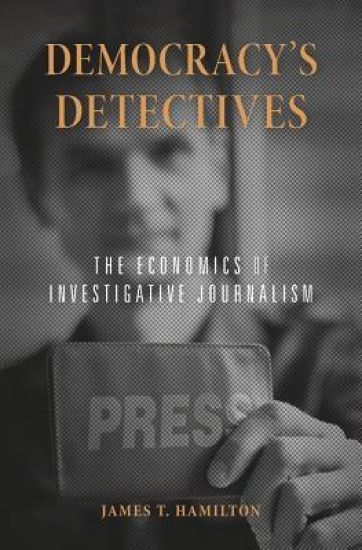
Winner of the Goldsmith Book Prize, Shorenstein Center on Media, Politics and Public Policy at the Harvard Kennedy School of Government Winner of the Tankard Book Award, Association for Education in Journalism and Mass CommunicationWinner of the Frank Luther Mott–Kappa Tau Alpha Journalism & Mass Communication Research Award In democratic societies, investigative journalism holds government and private institutions accountable to the public. From firings and resignations to changes in budgets and laws, the impact of this reporting can be significant—but so too are the costs. As newspapers confront shrinking subscriptions and advertising revenue, who is footing the bill for journalists to carry out their essential work? Democracy’s Detectives puts investigative journalism under a magnifying glass to clarify the challenges and opportunities facing news organizations today. “Hamilton’s book presents a thoughtful and detailed case for the indispensability of investigative journalism—and just at the time when we needed it. Now more than ever, reporters can play an essential role as society’s watchdogs, working to expose corruption, greed, and injustice of the years to come. For this reason, Democracy’s Detectives should be taken as both a call to arms and a bracing reminder, for readers and journalists alike, of the importance of the profession.”—Anya Schiffrin, The Nation“A highly original look at exactly what the subtitle promises…Has this topic ever been more important than this year?”—Tyler Cowen, Marginal Revolution

In this brilliant ethnography of contemporary Java, James Siegel analyzes how language operates to organize and to order an Indonesian people. Despite the imposition of Suharto's New Order, the inhabitants of the city of Solo continue to adhere to their own complex ideas of deference and hierarchy through translation between high and low Javanese speech styles. Siegel uncovers moments when translation fails and compulsive mimicry ensues. His examination of communication and its failures also exposes the ways a culture reconstitutes itself. It leads to insights into the "accidents" that precede the formulations of culture as such.

This book concerns the role of language in the Indonesian revolution. James Siegel, an anthropologist with long experience in various parts of that country, traces the beginnings of the Indonesian revolution, which occurred from 1945 through 1949 and which ended Dutch colonial rule, to the last part of the nineteenth century. At that time, the peoples of the Dutch East Indies began to translate literature from most places in the world. Siegel discovers in that moment a force within communication more important than the specific messages it conveyed. The subsequent containment of this linguistic force he calls the "fetish of modernity," which, like other fetishes, was thought to be able to compel events. Here, the event is the recognition of the bearer of the fetish as a person of the modern world. The taming of this force in Indonesian nationalism and the continuation of its wild form in the revolution are the major subjects of the book. Its material is literature from Indonesian and Dutch as well as first-person accounts of the revolution.
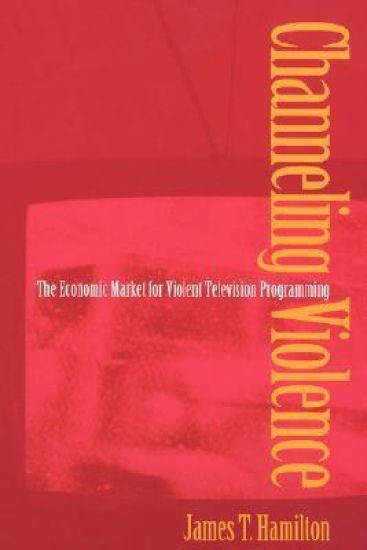
"If it bleeds, it leads." The phrase captures television news directors' famed preference for opening newscasts with the most violent stories they can find. And what is true for news is often true for entertainment programming, where violence is used as a product to attract both viewers and sponsors. In this book, James Hamilton presents the first major theoretical and empirical examination of the market for television violence. Hamilton approaches television violence in the same way that other economists approach the problem of pollution: that is, as an example of market failure. He argues that television violence, like pollution, generates negative externalities, defined as costs borne by others than those involved in the production activity. Broadcasters seeking to attract viewers may not fully bear the costs to society of their violent programming, if those costs include such factors as increased levels of aggression and crime in society. Hamilton goes on to say that the comparison to pollution remains relevant when considering how to deal with the problem. Approaches devised to control violent programming, such as restricting it to certain times and rating programs according to the violence they contain, have parallels in zoning and education policies designed to protect the environment. Hamilton examines in detail the microstructure of incentives that operate at every level of television broadcasting, from programming and advertising to viewer behavior, so that remedies can be devised to reduce violent programming without restricting broadcasters' right to compete.