Barely surviving a brutal attack, young Bronwyn races to warn her Society of Sisters of the invasion of the Savages. They flee to Sanctuary, fearing for their lives. Before the old leader of the community dies, she names Bronwyn as her successor. Responsible for their very survival, she is threatened by Sister Eldred, who, in her madness, is bent on overthrowing her, thus preventing Bronwyn from fulfilling an ancient Prophecy. Even with the help of Stag, her spirit guide, will she find the strength and wisdom needed to care for her people until it's time to return to her beloved forest?
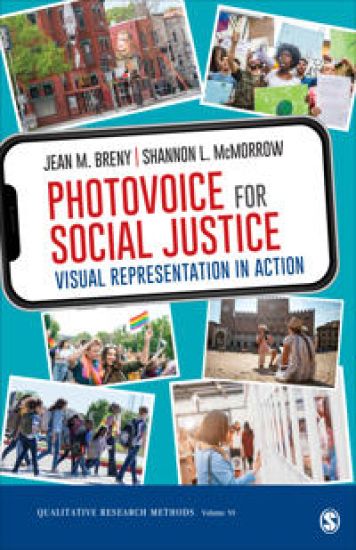
Photovoice for Social Justice, the latest volume in SAGE's Qualitative Research Methods Series, helps readers in the health and social sciences learn the foundations and applications of this exciting qualitative method. Authors Jean M. Breny and Shannon L. McMorrow approach photovoice as not only a community-based participatory research method, but as a method for social justice, centering community participants, organizations, and policy makers at the heart of this research method. Special topics relating to social justice include a focus on ethics and working with marginalized communities, sensitive concerns during data collection, and presenting the work to communities and policymakers, as well as academics. Written for students and researchers new to photovoice, this brief text takes readers from the process of conceptualizing and implementing a photovoice study to analyzing data and finally presenting the results of the study. The book concludes with suggestions for future iterations of photovoice, including web based resources and digital storytelling. The authors take into account the realities of photovoice as a method by providing practical, applied tools including sample consent forms, presentations, recruitment flyers, and photo-taking tips. Using Photovoice for Social Justice, new and experienced researchers can design, implement, and analyze their photovoice projects.
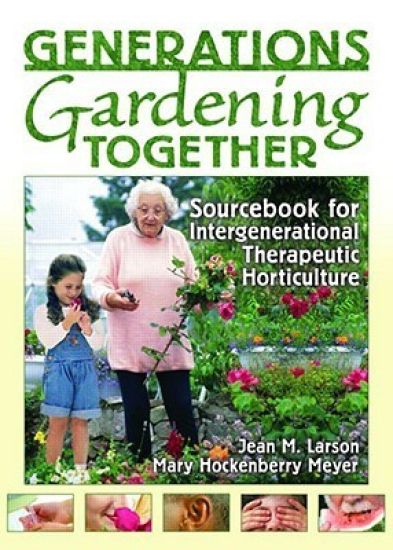
Bring a Sensory Garden to life in a structured therapeutic horticulture program!Intergenerational gardening programs bring the generations together. This book presents a tested, hands-on, easy-to-use activity plan that benefits the development of relationships between adults over 70 and school-age children. It shows how to limit frustration for both groups, how to plan activities that are functional and non-contrived, and how to assure that the interaction between elders and children is rewarding and pleasant for both. The activities rely on inexpensive, readily available tools and resources available throughout the growing season.While other books have discussed designing a Sensory Garden for people with disabilities, Generations Gardening Together applies the Sensory Garden design to a specific population, with a focus on the human senses that are stimulated by the garden. This unique sourcebook shows you, step-by-step, how a Sensory Garden can come alive in a structured therapeutic horticulture program. Generations Gardening Together shows how to create a Sensory Garden that will stimulate young and old gardeners alike. It outlines a six-week program curriculum that has been used and developed over ten years to use gardening as a program to bring generations together. You’ll learn therapeutic techniques that benefit elders by promoting self-esteem, creating feelings of pride, competence, and satisfactionboth from creating a garden and through passing on their knowledge and wisdom to the younger generation, inspiring them to use both their long-term and short-term memory skills, increasing physical stimulation, and providing the comfort of familiar plants and their aromas, which can trigger memories of people, places, and vocations. The activities in the book also benefit children through the establishment of a safe environment where people of all ages, backgrounds, and abilities can come togetheran ideal social situation in which youth can seek the wisdom of elders. Children learn important lessons about accountability, nurturing, and responsibility, for working in a garden teaches youth about life, death, hope, patience, and beauty.Each activity session described in Generations Gardening Together includes the following information: titledescribes the content of the program general statement of purposeidentifies the intent of the program goal(s)outlines the expected outcome(s) of the activity program proceduresprovides a detailed description of each step and the order of the program’s activities evaluationincludes what and how therapeutic program goals are to be measured and recorded materials and equipmentidentifies all the necessary equipment and supplies needed to facilitate the program activityThis important resource shows how to provide appropriate (separate) orientation to seniors and children, what to emphasize and what to avoid in creating a program in your community, how to create garden themes that reflect the interests of the participants (ethnic foods, bird and butterfly gardens, planting to attract wildlife, etc.), how to decide what activities are appropriate for the developmental level of the participants, and much more. Generations Gardening Together is an essential resource for therapeutic recreation specialists, occupational therapists, therapeutic horticulture professionals, activity coordinators, master gardeners, and anyone working in an environment where elders and children come together.
Bring a Sensory Garden to life in a structured therapeutic horticulture program!Intergenerational gardening programs bring the generations together. This book presents a tested, hands-on, easy-to-use activity plan that benefits the development of relationships between adults over 70 and school-age children. It shows how to limit frustration for both groups, how to plan activities that are functional and non-contrived, and how to assure that the interaction between elders and children is rewarding and pleasant for both. The activities rely on inexpensive, readily available tools and resources available throughout the growing season.While other books have discussed designing a Sensory Garden for people with disabilities, Generations Gardening Together applies the Sensory Garden design to a specific population, with a focus on the human senses that are stimulated by the garden. This unique sourcebook shows you, step-by-step, how a Sensory Garden can come alive in a structured therapeutic horticulture program. Generations Gardening Together shows how to create a Sensory Garden that will stimulate young and old gardeners alike. It outlines a six-week program curriculum that has been used and developed over ten years to use gardening as a program to bring generations together. You’ll learn therapeutic techniques that benefit elders by promoting self-esteem, creating feelings of pride, competence, and satisfactionboth from creating a garden and through passing on their knowledge and wisdom to the younger generation, inspiring them to use both their long-term and short-term memory skills, increasing physical stimulation, and providing the comfort of familiar plants and their aromas, which can trigger memories of people, places, and vocations. The activities in the book also benefit children through the establishment of a safe environment where people of all ages, backgrounds, and abilities can come togetheran ideal social situation in which youth can seek the wisdom of elders. Children learn important lessons about accountability, nurturing, and responsibility, for working in a garden teaches youth about life, death, hope, patience, and beauty.Each activity session described in Generations Gardening Together includes the following information: titledescribes the content of the program general statement of purposeidentifies the intent of the program goal(s)outlines the expected outcome(s) of the activity program proceduresprovides a detailed description of each step and the order of the program’s activities evaluationincludes what and how therapeutic program goals are to be measured and recorded materials and equipmentidentifies all the necessary equipment and supplies needed to facilitate the program activityThis important resource shows how to provide appropriate (separate) orientation to seniors and children, what to emphasize and what to avoid in creating a program in your community, how to create garden themes that reflect the interests of the participants (ethnic foods, bird and butterfly gardens, planting to attract wildlife, etc.), how to decide what activities are appropriate for the developmental level of the participants, and much more. Generations Gardening Together is an essential resource for therapeutic recreation specialists, occupational therapists, therapeutic horticulture professionals, activity coordinators, master gardeners, and anyone working in an environment where elders and children come together.
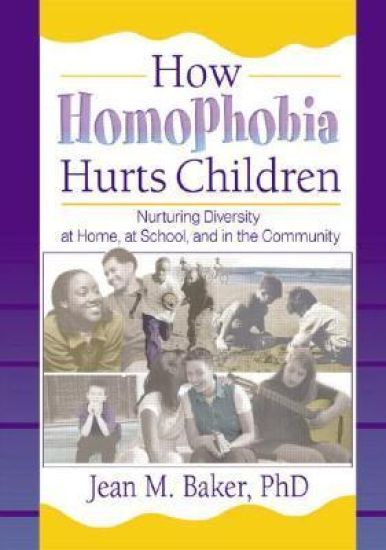
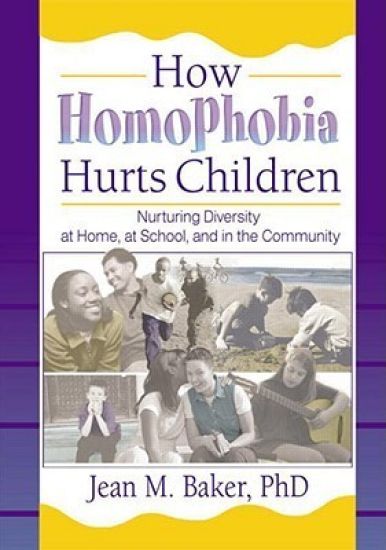
Homophobia hurts kids. Explore ways to minimize that trauma!This book illustrates the ways that children growing up to be gay are harmed by homophobia before anyone, including themselves, even knows they are gay. This compelling and sympathetic volume describes many simple ways that these children can be helped to understand that they can grow up to lead normal lives, with hopes and dreams for their futures. How Homophobia Hurts Children: Nurturing Diversity at Home, at School, and in the Community brings home the voices of these children. They describe their experiences to show how they came to the frightening recognition that they are part of a group held in disregard by the rest of society, even sometimes by their own families.Dr. Jean M. Baker, the author of How Homophobia Hurts Children: Nurturing Diversity at Home, at School, and in the Community is a clinical psychologist and the mother of two gay sons. In this book she shares her experience as both psychologist and mother to show how the myths and fallacies about homosexuality have influenced parents, schools, churches, and lawmakers to send children the cruel message that if they are gay, they are not normal and will not be able to lead normal lives. In this unique volume you'll find: a chapter on identity development, following the Eriksonian model interviews with high school students who are self-identified as gay firsthand descriptions of the harassment and victimization of those perceived as gay in schools research on how victimization at school affects gay youths a discussion of the relatively new phenomenon of gay/straight alliances (gay support groups or clubs) a chapter on transgender identity with interviews with four transsexual persons who describe their personal childhood experiences and their transition processThe focus of How Homophobia Hurts Children: Nurturing Diversity at Home, at School, and in the Community, centering on the social and familial experiences of children who will grow up to be gay but have not yet come to that realization, is unique. But beyond that, this book also explains how homophobia affects the attitudes of non-gay children by leading them to believe that it is acceptable to mistreat homosexuals. Finally, specific suggestions are made for changes in parenting and changes in school/classroom practices that could help prevent the harm that is inflicted upon so many of our gay children. Everyone who comes in contact with children on their way to becoming gay/lesbian/bisexual/transgender adults needs to read this book!
Homophobia hurts kids. Explore ways to minimize that trauma!This book illustrates the ways that children growing up to be gay are harmed by homophobia before anyone, including themselves, even knows they are gay. This compelling and sympathetic volume describes many simple ways that these children can be helped to understand that they can grow up to lead normal lives, with hopes and dreams for their futures. How Homophobia Hurts Children: Nurturing Diversity at Home, at School, and in the Community brings home the voices of these children. They describe their experiences to show how they came to the frightening recognition that they are part of a group held in disregard by the rest of society, even sometimes by their own families.Dr. Jean M. Baker, the author of How Homophobia Hurts Children: Nurturing Diversity at Home, at School, and in the Community is a clinical psychologist and the mother of two gay sons. In this book she shares her experience as both psychologist and mother to show how the myths and fallacies about homosexuality have influenced parents, schools, churches, and lawmakers to send children the cruel message that if they are gay, they are not normal and will not be able to lead normal lives. In this unique volume you'll find: a chapter on identity development, following the Eriksonian model interviews with high school students who are self-identified as gay firsthand descriptions of the harassment and victimization of those perceived as gay in schools research on how victimization at school affects gay youths a discussion of the relatively new phenomenon of gay/straight alliances (gay support groups or clubs) a chapter on transgender identity with interviews with four transsexual persons who describe their personal childhood experiences and their transition processThe focus of How Homophobia Hurts Children: Nurturing Diversity at Home, at School, and in the Community, centering on the social and familial experiences of children who will grow up to be gay but have not yet come to that realization, is unique. But beyond that, this book also explains how homophobia affects the attitudes of non-gay children by leading them to believe that it is acceptable to mistreat homosexuals. Finally, specific suggestions are made for changes in parenting and changes in school/classroom practices that could help prevent the harm that is inflicted upon so many of our gay children. Everyone who comes in contact with children on their way to becoming gay/lesbian/bisexual/transgender adults needs to read this book!
As a clinical psychologist, Jean Baker had always considered herself open-minded and tolerant, but found she wasn’t prepared for the revelation that her only two children were both gay. Family Secrets is an inspirational story of how she and her family learned to accept one another and overcome their internalized fears and prejudices as well as how they coped with a much greater challenge in their personal lives--HIV/AIDS. Family Secrets is more than a parenting memoir, however. It is a guide that draws upon research and scientific findings to capsize the myths and stereotypes that contribute to societal homophobia. It offers important insight into the developmental needs of gay children, and it discusses the issues faced by gay and lesbian youth and their families.Offering practical suggestions about how parents and schools can help gay, lesbian, and bisexual children grow up to be productive, psychologically healthy adults, Family Secrets discusses the effects of social prejudice and stigma on the social and emotional development of sexual minorities. As long as homophobia is running rampant in American society, gay children are going to be reluctant or afraid to confide in their parents, and parents will have trouble understanding and accepting homosexuality in their children. To end the secrecy and build open and healthy environments for all children and adolescents, this book discusses:tactics for reducing homophobia in non-gay youths promoting tolerance and understanding of sexual minorities at home and in school the effects an AIDS death has on families “coming out” about HIV/AIDS discussing homosexuality with your children, regardless of whether or not they are gay or lesbian sexual orientation and the interaction of biology with experienceBecause Family Secrets is written from the viewpoint of a parent/psychologist, it offers insights into the developmental needs of gay and lesbian children in a way that no other book has done. School counselors, psychologists, marriage and family counselors, teachers, school administrators, and the parents and siblings of gays and lesbians will all benefit from reading this honest, helpful, and encouraging book.
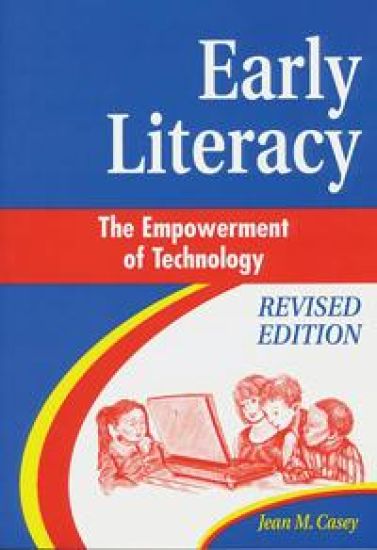
Now you can implement the ideas and research findings of Jean Casey's Early Literacy to help students become successful readers and writers. These flexible, engaging activities can be used across the grade levels. They will motivate students and empower them to design their own projects, create their own written products, and above all, be in control of their learning. A must for every educator, this book is especially useful to those involved in English as a Second Language, Special Education, and Gifted programs.
Casey's critically acclaimed work is revised here with the latest research and software developments that help you strengthen early literacy through the use of talking computers. Filled with exciting research results and anecdotal proof of the effectiveness of new teaching methods for the twenty-first century, it shows you how to boost literacy, especially among those with learning disabilities or oral/hands-on learning styles, as well as ESL students. Computers are being integrated in early literacy classrooms nationwide and around the world. Learn how you can use computers effectively to boost student learning and achievement in your classroom. Filled with exciting information, this book shows you how your classroom can become a part of meaningful literacy projects with other classrooms throughout the world. It also presents the important global research information needed by political teams, school boards, administrators, superintendents, and all parties involved in the vital decision-making process surrounding technology implementation. This revised edition of Casey's critically-acclaimed work includes data on how computers make a difference in the classroom as well as information on software that has been used successfully with children learning English as a second language.
Leading thinkers and activists discuss the intersection of race and poverty. The essays are organized around seven key topics including: affirmative action; the permanence of racism thesis; the use and utility of racial and ethnic categories; multiculturalism; and the underclass debate.
Leading thinkers and activists discuss the intersection of race and poverty. The essays are organized around seven key topics including: affirmative action; the permanence of racism thesis; the use and utility of racial and ethnic categories; multiculturalism; and the underclass debate.
Grants are available from thousands of sources, both private and public. To the grantseeker, however, this wealth of sources appears like an impenetrable jungle. "Where are the grants I need and what do I need to do to submit my ideas and proposals?" This book is designed to answer these questions by aiming the grantseeker to both the grant givers and by providing a bibliography of book for further research.
Clinical Oral Medicine and Pathology, is a clinically relevant and accessible resource for health care professionals that truly bridges the worlds of dentistry and medicine. This handbook of oral medicine and oral pathology serves as a highly readable guide for diagnosis and treatment of commonly encountered oral conditions. The volume is organized by grouping clinical entities under easily recognizable, diagnostically related headings and subheadings and allows the busy clinician to quickly reference and identify a lesion of interest. Concise descriptions of each entity provide background information and treatment recommendations while including specific guidelines on diagnosis, management, and follow-up. The authors of this text both have extensive training in the fields of oral pathology, dentistry, oral surgery and otolaryngology, and provide a comprehensive approach to the practice of oral medicine for all those who are likely to encounter diseases of the oral cavity in their daily practice.
Set against a backdrop of the 1970's Baltimore music scene, this is the story of 23-year-old Margie Stevens as she pulls herself out of a spiraling, heartbreak-induced depression and begins a personal journey of discovery. Clarifying her own views on emerging feminism, social injustice, and personal spirituality-all while touring across the country as a singer in King Vido's Swing Band-Margie encounters sexist and moral challenges that cause her to question her future path. Will she redefine her personal values in order to break away from uncomfortable ways of thinking? Will she find the courage to conquer fears of intimidation from the band leader and others on the tour? Finally, will Margie learn to speak up for herself using her authentic voice?
Set against a backdrop of the 1970's Baltimore music scene, this is the story of 23-year-old Margie Stevens as she pulls herself out of a spiraling, heartbreak-induced depression and begins a personal journey of discovery. Clarifying her own views on emerging feminism, social injustice, and personal spirituality-all while touring across the country as a singer in King Vido's Swing Band-Margie encounters sexist and moral challenges that cause her to question her future path. Will she redefine her personal values in order to break away from uncomfortable ways of thinking? Will she find the courage to conquer fears of intimidation from the band leader and others on the tour? Finally, will Margie learn to speak up for herself using her authentic voice?
Sophia the Piranda is a fiction book but does tell a story of many children who face these prejudices daily all over Europe. Sophia is Roma Gypsy girl who lives in Romania and struggles daily to fit in at school. Her grandmother encourages her to be kind despite the unkindness of others because that's what Jesus teaches. Grandma also teaches Sophia the importance of education to become all God has called her to be. A Piranda, which means a beautiful Gypsy girl in Romanian.
Alex the Keeper of the Gate is a fiction book but tells the tail of the harsh reality of daily life for many Roma Gypsy children on the streets of Europe in the year 2021. Alex's story is also a story of hope and depicts the calling of missionary life to reach the lost, especially children who are suffering. This book teaches the importance of putting the Gospel in actions wrapped in Gods love and works for every believer. It also tells the importance of teaching our children about Jesus's love through our actions so in turn they would grow to do the same for others. That the world would receive the hope we as believers have in Jesus and lives would be transformed.
A groundbreaking, “lavishly informative” (The New York Times) portrait of the six generations that currently live in the United States and how they connect, conflict, and compete with one another—from the acclaimed author of Generation Me and iGen.Upending the conventional theory that generational differences are caused by major events, Dr. Jean Twenge analyzes data on 39 million people from robust national surveys—some going back nearly a century—to show that changes in technology are the underlying driver of each generation’s unique makeup. In this revelatory work, Twenge outlines key shifts in attitudes and lifestyle choices that define each generation regarding gender, income, politics, race, sexuality, marriage, mental health, and much more. Surprising, engaging, and informative, Generations “gets you thinking about how appreciating generational differences can, ironically, bring us together” (Angela Duckworth, New York Times bestselling author). It will forever change the way you view your parents, peers, coworkers, and children, no matter which generation you call your own.