Kirjojen hintavertailu. Mukana 11 699 587 kirjaa ja 12 kauppaa.

Kirjahaku

Etsi kirjoja tekijän nimen, kirjan nimen tai ISBN:n perusteella.

1000 tulosta hakusanalla John Carson

Studies In The Carbonization Of Coal

Studies In The Carbonization Of Coal

Jerome John Morgan

Sagwan Press
2018
pokkari
This work has been selected by scholars as being culturally important, and is part of the knowledge base of civilization as we know it. This work was reproduced from the original artifact, and remains as true to the original work as possible. Therefore, you will see the original copyright references, library stamps (as most of these works have been housed in our most important libraries around the world), and other notations in the work.This work is in the public domain in the United States of America, and possibly other nations. Within the United States, you may freely copy and distribute this work, as no entity (individual or corporate) has a copyright on the body of the work.As a reproduction of a historical artifact, this work may contain missing or blurred pages, poor pictures, errant marks, etc. Scholars believe, and we concur, that this work is important enough to be preserved, reproduced, and made generally available to the public. We appreciate your support of the preservation process, and thank you for being an important part of keeping this knowledge alive and relevant.
Last of Mankind's Carbon Footprint or Utopia: Another Trident Tale Book
This book is fictional...all information is what I have read, or at the worse imagined, plus an insight added perception from true facts of this day and age, projected into the future of the troubled world we live in now, as over the last fifty/ sixty years we as a group have managed to survive so far?Who now on this planet Earth can really predict with any certainty exactly what will happen to our planets future, certainly not I, or perhaps with some certainty it could fragment into areas with people setting the tone of behaviour in selected areas where once again a form of religion, is viewed at the New Dawn, ready to be worshiped, or the offenders who disagree are slaughtered out of hand How will we survive the acts of yet another World War?This will be the third and possibly the end of all man/ women kind War, again the ones sought to blame will be as in the last Wars, Jews, Catholics, Moslems, Pale skin, dark skin, different eye shapes, those who cannot talk, or those who cannot hear, all differences must be removed as they offend someone?You and I know this is a fact as we know our histories, but even worse, you know once it starts so easy, it cannot be stopped as easy, as each and everyone is dragged screaming behind the new leaders, while the peace makers are as easily destroyed It is not impossible with todays speed of progress of technical as well as computer ability, as well as engineering skills, the achievements with fore ordainment of advancement of AI robotics, that they could find a place within our society to take over our every day lives, to the point of full control of out bodies, even should humans completely destroy this world, it would leave the AI robots a place to perfect a new world, with no crime, no problems with the atmosphere, no pollution, or people living causing problems, no deaths and certainly no births, a planet ready for who ever discover it all alone in a massive lot of space A chilling tale with ominous warnings with maybe or perhaps one persons vision or a prediction for all our futures...the choice is yours Dear Reader, David J Moran.
The Potential of U.S. Cropland to Sequester Carbon and Mitigate the Greenhouse Effect

The Potential of U.S. Cropland to Sequester Carbon and Mitigate the Greenhouse Effect

John M. Kimble; Ronald F. Follett; C. Vernon Cole

CRC Press Inc
1998
sidottu
This report assesses the potential of U.S. cropland to sequester carbon, concluding that properly applied soil restorative processes and best management practices can help mitigate the greenhouse effect by decreasing the emissions of greenhouse gases from U.S. agricultural activities and by making U.S. cropland a major sink for carbon sequestration.Topics include:Describe the greenhouse processes and global tends in emissions as well as the three principal components of anthropogenic global warming potential Present data on U.S. emissions and agriculture's related role Examines the soil organic carbon (SOC) pool in soils of the U.S. and its loss due to cultivation Provides a reference for the magnitude of carbon sequestration potential Analyzes the primary processes governing greenhouse gas emission from the pedosphere Establishes a link between SOC content and soil quality Outlines strategies for mitigating emissions from U.S. cropland Discusses soil erosion management Assesses the potential of using cropland to create biomass for direct fuel to produce power Details the potential for sequestering carbon by intensifying prime agricultural landThe Potential of U.S. Cropland to Sequester Carbon and Mitigate the Greenhouse Effect provides an exceptional framework for the adoption of science-based management methods on U.S. cropland, encouraging appropriate agricultural practices for the sustainable use of our natural resources and the improvement of our nation's environment.
Carbon Dioxide Thermodynamic Properties Handbook

Carbon Dioxide Thermodynamic Properties Handbook

Sara Anwar; John J. Carroll

John Wiley Sons Inc
2016
sidottu
With new graphical data added to this revision of the original classic, this volume is still the largest and most comprehensive collection of thermodynamic data on carbon dioxide ever produced, the ONLY book of its kind in print. With carbon dioxide sequestration gaining in popularity around the world in the scientific and engineering communities, having this data in an easy-to-access format is more useful and timely than ever. With data that is accurate down to within a fraction of a degree, this handbook offers, in one volume, literally thousands of data points that any engineer or chemist would need when dealing with carbon dioxide. Not available in other formats, these easy-to-read tables are at your fingertips and are accessed within seconds and does away with the need for constantly working with mathematical formulas. Carbon dioxide is used in many fields, across many industries, including the oil and gas industry and food processing. Even coffee is decaffeinated using carbon dioxide! Though CO2 has many uses in industry, it is also one of the most offensive of the greenhouse gases, on which many scientists and engineers are working to eradicate in the future production of power and fuel. This data is useful for any scientist or engineer in any of these fields, but it is also useful for the chemical engineering or petroleum engineering student.
Life After Carbon

Life After Carbon

Peter Plastrik; John Cleveland

Island Press
2019
pokkari
The future of our cities is not what it used to be. The modern-city model that took hold globally in the twentieth century has outlived its usefulness. It cannot solve the problems it helped to create—especially global warming. Fortunately, a new model for urban development is emerging in cities to aggressively tackle the realities of climate change. It transforms the way cities design and use physical space, generate economic wealth, consume and dispose of resources, exploit and sustain the natural ecosystems, and prepare for the future. In Life After Carbon, urban sustainability consultants Pete Plastrik and John Cleveland assemble this global pattern of urban reinvention from the stories of 25 "innovation lab" cities across the globe—from Copenhagen to Melbourne. A city innovation lab is the entire city—the complex, messy, real urban world where innovations must work. It is a city in which government, business, and community leaders take to heart the challenge of climate change and converge on the radical changes that are necessary. They free downtowns from cars, turn buildings into renewable-energy power plants, re-nature entire neighborhoods, incubate growing numbers of clean-energy and smart-tech companies, convert waste to energy, and much more. Plastrik and Cleveland show that four transformational ideas are driving urban climate innovation around the world, in practice, not just in theory: carbon-free advantage, efficient abundance, nature's benefits, and adaptive futures. And these ideas are thriving in markets, professions, consumer trends, community movements, and "higher" levels of government that enable cities. Life After Carbon presents the new ideas that are replacing the pillars of the modern-city model, converting climate disaster into urban opportunity, and shaping the next transformation of cities worldwide. It will inspire anyone who cares about the future of our cities, and help them to map a sustainable path forward.
Chemical Oceanography and the Marine Carbon Cycle

Chemical Oceanography and the Marine Carbon Cycle

Steven Emerson; John Hedges

Cambridge University Press
2008
sidottu
The principles of chemical oceanography provide insight into the processes regulating the marine carbon cycle. The text offers a background in chemical oceanography and a description of how chemical elements in seawater and ocean sediments are used as tracers of physical, biological, chemical and geological processes in the ocean. The first seven chapters present basic topics of thermodynamics, isotope systematics and carbonate chemistry, and explain the influence of life on ocean chemistry and how it has evolved in the recent (glacial-interglacial) past. This is followed by topics essential to understanding the carbon cycle, including organic geochemistry, air-sea gas exchange, diffusion and reaction kinetics, the marine and atmosphere carbon cycle and diagenesis in marine sediments. Figures are available to download from www.cambridge.org/9780521833134. Ideal as a textbook for upper-level undergraduates and graduates in oceanography, environmental chemistry, geochemistry and earth science and a valuable reference for researchers in oceanography.
Low-carbon Development

Low-carbon Development

Augusto de la Torre; Pablo Fajnzylber; John Nash

World Bank Publications
2009
nidottu
Seeks to inform Governments and civil society in Latin America and the Caribbean as well the global community about the potential costs and benefits of combating climate change, their policy options over the next decades, and the global context for these policy decisions.
John Singer Sargent Watercolors

John Singer Sargent Watercolors

Erica E. Hirshler; Teresa A. Carbone

Museum of Fine Arts,Boston
2013
sidottu
John Singer Sargent’s approach to watercolour was unconventional. Disregarding late-nineteenth-century aesthetic standards that called for carefully delineated and composed landscapes filled with transparent washes, his confidently bold, dense strokes and loosely defined forms startled critics and fellow practitioners alike. One reviewer in England, where Sargent spent much of his adult life, called his work ‘swagger watercolours’. For Sargent, however, the watercolours were not so much about swagger as about a new way of thinking. In watercolour as opposed to oils his vision became more personal and his works more interconnected. Presenting nearly 100 works of art, this book is the first major publication of Sargent’s watercolours in twenty years. Each chapter highlights a different subject or theme that attracted the artist’s attention during his travels through Europe and the Middle East: sunlight on stone, figures reclining on grass, patterns of light and shadow. Insightful essays by the world’s leading experts enhance this book and introduce readers to the full sweep of Sargent’s accomplishments in the medium, in works that delight the eye as well as challenge our understanding of this prodigiously gifted artist.
Age Measurements in Marine Cores by Carbon 14 I.

Age Measurements in Marine Cores by Carbon 14 I.

J. Laurence (John Laurence) 19 Kulp

Hassell Street Press
2021
nidottu
This work has been selected by scholars as being culturally important and is part of the knowledge base of civilization as we know it.This work is in the public domain in the United States of America, and possibly other nations. Within the United States, you may freely copy and distribute this work, as no entity (individual or corporate) has a copyright on the body of the work.Scholars believe, and we concur, that this work is important enough to be preserved, reproduced, and made generally available to the public. To ensure a quality reading experience, this work has been proofread and republished using a format that seamlessly blends the original graphical elements with text in an easy-to-read typeface.We appreciate your support of the preservation process, and thank you for being an important part of keeping this knowledge alive and relevant.
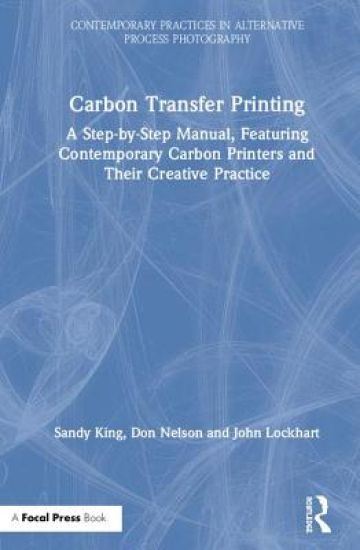
Carbon Transfer Printing

Carbon Transfer Printing

Sandy King; Don Nelson; John Lockhart

CRC Press
2019
nidottu
Carbon Transfer Printing is a book about one of the earliest photographic processes that provided the first permanent printing methods, available in one form or another for over 150 years. This book reviews the extensive history of carbon transfer and related pigment processes in both monochrome and color, to serve as point source for a new carbon printer to begin to master the craft of carbon printing, as well as provide new material for experienced carbon printers so they can expand their techniques. The book includes never-before-published information on pre-sensitizing carbon tissue with newly identified compounds, information on the safe use and disposal of hexavalent chromium compounds, and simplified methods of producing 3-color carbon prints. Carbon Transfer Printing is divided into two parts, illustrated with 175 photographs. Part One is a complete how-to on the carbon transfer process, from simple to complex, with a troubleshooting guide and an extensive chapter on digital negatives. Part Two is devoted to contemporary carbon printers who share their methods and secrets to creating their beautiful carbon prints.Topics that the book covers are: Key events in carbon’s history How to organize the carbon workplace Sections on necessary supplies and equipment A step-by-step digital method of making high quality digital negatives Simple and advanced methods of carbon printing How to make carbon tissue, including several methods of pre-sensitizing How to choose UV light sources for printing in carbon Step-by-step processing directions How to prepare final support papers Troubleshooting carbon Multi-layer printing to add tone, or make a full color carbon print Finishing and final presentation of carbon prints A gallery of images and advice from contemporary carbon printersCarbon Transfer Printing is designed for both the beginning carbon enthusiast as well as for the advanced practitioner. Backed with extensive research on carbon printing from books, journals, and magazine articles from the 1800s to present day, and the extensive personal experience in carbon printing of the authors, there is enough information in this book to provide inspiration and proof of both the glorious past of carbon printmaking and its enduring importance to a new generation of image makers who value the handmade print.
Carbon Transfer Printing

Carbon Transfer Printing

Sandy King; Don Nelson; John Lockhart

CRC Press
2019
sidottu
Carbon Transfer Printing is a book about one of the earliest photographic processes that provided the first permanent printing methods, available in one form or another for over 150 years. This book reviews the extensive history of carbon transfer and related pigment processes in both monochrome and color, to serve as point source for a new carbon printer to begin to master the craft of carbon printing, as well as provide new material for experienced carbon printers so they can expand their techniques. The book includes never-before-published information on pre-sensitizing carbon tissue with newly identified compounds, information on the safe use and disposal of hexavalent chromium compounds, and simplified methods of producing 3-color carbon prints. Carbon Transfer Printing is divided into two parts, illustrated with 175 photographs. Part One is a complete how-to on the carbon transfer process, from simple to complex, with a troubleshooting guide and an extensive chapter on digital negatives. Part Two is devoted to contemporary carbon printers who share their methods and secrets to creating their beautiful carbon prints.Topics that the book covers are: Key events in carbon’s history How to organize the carbon workplace Sections on necessary supplies and equipment A step-by-step digital method of making high quality digital negatives Simple and advanced methods of carbon printing How to make carbon tissue, including several methods of pre-sensitizing How to choose UV light sources for printing in carbon Step-by-step processing directions How to prepare final support papers Troubleshooting carbon Multi-layer printing to add tone, or make a full color carbon print Finishing and final presentation of carbon prints A gallery of images and advice from contemporary carbon printersCarbon Transfer Printing is designed for both the beginning carbon enthusiast as well as for the advanced practitioner. Backed with extensive research on carbon printing from books, journals, and magazine articles from the 1800s to present day, and the extensive personal experience in carbon printing of the authors, there is enough information in this book to provide inspiration and proof of both the glorious past of carbon printmaking and its enduring importance to a new generation of image makers who value the handmade print.
A Synopsis of the Characters of the Carboniferous Limestone Fossils of Ireland. Prepared by F. M'Coy for Sir R. Griffith, by Whom Is Now Appended a List of the Fossil Localities, as Arranged for the Journal of the Geological Society of Dublin
Title: A synopsis of the characters of the Carboniferous Limestone Fossils of Ireland. Prepared by F. M'Coy for Sir R. Griffith, by whom is now appended a list of the fossil localities, as arranged for the Journal of the Geological Society of Dublin. ... With twenty-nine lithographic plates.Publisher: British Library, Historical Print EditionsThe British Library is the national library of the United Kingdom. It is one of the world's largest research libraries holding over 150 million items in all known languages and formats: books, journals, newspapers, sound recordings, patents, maps, stamps, prints and much more. Its collections include around 14 million books, along with substantial additional collections of manuscripts and historical items dating back as far as 300 BC.The HISTORY OF BRITAIN & IRELAND collection includes books from the British Library digitised by Microsoft. As well as historical works, this collection includes geographies, travelogues, and titles covering periods of competition and cooperation among the people of Great Britain and Ireland. Works also explore the countries' relations with France, Germany, the Low Countries, Denmark, and Scandinavia. ++++The below data was compiled from various identification fields in the bibliographic record of this title. This data is provided as an additional tool in helping to insure edition identification: ++++ British Library Maccoy, Frederick; Griffith, Richard John; 1862. fol. 7107.g.14.
Phosphorus: The Carbon Copy

Phosphorus: The Carbon Copy

Keith B. Dillon; François Mathey; John F. Nixon

John Wiley Sons Inc
1998
sidottu
Phosphorus: The Carbon Copy examines the extraordinary similarity between low coordinate phosphorus compounds and unsaturated carbon compounds. Written by three of the leading researchers in the field of modern phosphorus chemistry, Phosphorus: The Carbon Copy focuses on the interface between phosphorus and the transition metal elements and deals with the most recent aspects of unsaturated organophosphorus compounds and their coordination chemistry. Aimed at graduate students as well as academic and industrial researchers, this concise volume publicisies the extraordinary potential of these new phosphorus compounds for applications in catalysis, molecular materials and biochemistry.
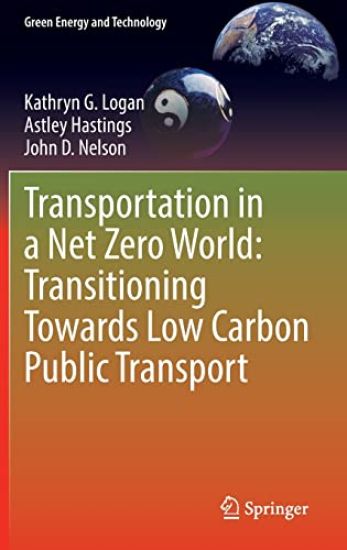
Transportation in a Net Zero World: Transitioning Towards Low Carbon Public Transport

Transportation in a Net Zero World: Transitioning Towards Low Carbon Public Transport

Kathryn G. Logan; Astley Hastings; John D. Nelson

Springer Nature Switzerland AG
2022
sidottu
This book discusses the importance of transitioning from conventionally fuelled, electric and hydrogen personal vehicles towards low carbon electric and hydrogen public transport. It presents international comparisons and case studies of countries who have successfully and unsuccessfully implemented policies to reduce their emissions from land-based transport. It discusses and provides policy recommendations to meet a net zero transport world by exploring potential issues, including infrastructure changes and electricity generation mix which may prevent targets being met successfully. The book also demonstrates how the COVID-19 pandemic has influenced individual transport choices and what will need to be done to ensure travel remains sustainable going forward. Aligned with an active area of academic and civil discourse on the topic of sustainable transportation systems, Transportation in a Net Zero World will be of interest to researchers, policy makers, and graduate students alike, inthe fields of environmental science and transport studies.
Transportation in a Net Zero World: Transitioning Towards Low Carbon Public Transport

Transportation in a Net Zero World: Transitioning Towards Low Carbon Public Transport

Kathryn G. Logan; Astley Hastings; John D. Nelson

Springer Nature Switzerland AG
2023
nidottu
This book discusses the importance of transitioning from conventionally fuelled, electric and hydrogen personal vehicles towards low carbon electric and hydrogen public transport. It presents international comparisons and case studies of countries who have successfully and unsuccessfully implemented policies to reduce their emissions from land-based transport. It discusses and provides policy recommendations to meet a net zero transport world by exploring potential issues, including infrastructure changes and electricity generation mix which may prevent targets being met successfully. The book also demonstrates how the COVID-19 pandemic has influenced individual transport choices and what will need to be done to ensure travel remains sustainable going forward. Aligned with an active area of academic and civil discourse on the topic of sustainable transportation systems, Transportation in a Net Zero World will be of interest to researchers, policy makers, and graduate students alike, inthe fields of environmental science and transport studies.