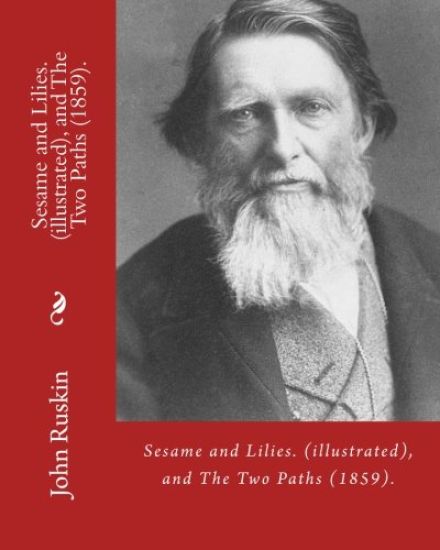
John Ruskin (8 February 1819 - 20 January 1900) was the leading English art critic of the Victorian era, as well as an art patron, draughtsman, watercolourist, a prominent social thinker and philanthropist. He wrote on subjects as varied as geology, architecture, myth, ornithology, literature, education, botany and political economy. His writing styles and literary forms were equally varied. Ruskin also penned essays and treatises, poetry and lectures, travel guides and manuals, letters and even a fairy tale. The elaborate style that characterised his earliest writing on art was later superseded by a preference for plainer language designed to communicate his ideas more effectively. In all of his writing, he emphasised the connections between nature, art and society. He also made detailed sketches and paintings of rocks, plants, birds, landscapes, and architectural structures and ornamentation. He was hugely influential in the latter half of the 19th century, and up to the First World War. After a period of relative decline, his reputation has steadily improved since the 1960s with the publication of numerous academic studies of his work. Today, his ideas and concerns are widely recognised as having anticipated interest in environmentalism, sustainability and craft. Ruskin first came to widespread attention with the first volume of Modern Painters (1843), an extended essay in defence of the work of J. M. W. Turner in which he argued that the principal role of the artist is "truth to nature". From the 1850s he championed the Pre-Raphaelites who were influenced by his ideas. His work increasingly focused on social and political issues. Unto This Last (1860, 1862) marked the shift in emphasis. In 1869, Ruskin became the first Slade Professor of Fine Art at the University of Oxford, where he established the Ruskin School of Drawing. In 1871, he began his monthly "letters to the workmen and labourers of Great Britain", published under the title Fors Clavigera (1871-1884). In the course of this complex and deeply personal work, he developed the principles underlying his ideal society. As a result, he founded the Guild of St George, an organisation that endures today.Ruskin was the only child of first cousins. His father, John James Ruskin (1785-1864), was a sherry and wine importer founding partner and de facto business manager of Ruskin, Telford and Domecq (see Allied Domecq). John James was born and brought up in Edinburgh, Scotland, to a mother from Glenluce and a father originally from Hertfordshire. His wife, Margaret Cox, n e Cock (1781-1871), was the daughter of an aunt on the English side of the family and a publican in Croydon.She had joined the Ruskin household when she became companion to John James's mother, Catherine. John James had hoped to practice law, but was instead articled as a clerk in London. His father, John Thomas Ruskin, described as a grocer (but apparently an ambitious wholesale merchant), was an inadequate businessman. To save the family from bankruptcy, John James, whose prudence and success were in stark contrast to his father, took on all debts, settling the last of them in 1832. John James and Margaret were engaged in 1809, but opposition to the union from John Thomas, and the issue of the debt, delayed their wedding which was finally conducted without celebration in 1818....
John Halifax, Gentleman is a novel by Dinah Craik, first published in 1856. Plot summary: The action is centred in the town of Tewkesbury, scarcely disguised by the fictional name Norton Bury, in Gloucestershire. The story is narrated by Phineas, a friend of the central character. John Halifax is an orphan, determined to make his way in the world through honest hard work. He is taken in by a tanner, Abel Fletcher, who is a Quaker, and thus meets Phineas, who is Abel's son. John eventually achieves success in business and love, and becomes a wealthy man.................. Dinah Maria Craik ( born Dinah Maria Mulock, also often credited as Miss Mulock or Mrs. Craik) (20 April 1826 - 12 October 1887) was an English novelist and poet. Life: Mulock was born at Stoke-on-Trent to Dinah and Thomas Mulock and raised in Newcastle-under-Lyme, Staffordshire, where her father was then minister of a small independent non-conformist congregation. Her childhood and early youth were much affected by his unsettled fortunes, but she obtained a good education from various quarters and felt called to be a writer. She came to London about 1846, much at the same time as two friends, Alexander Macmillan and Charles Edward Mudie. Introduced by Camilla Toulmin to Westland Marston, she rapidly made friends in London, and found great encouragement for the stories for the young. In 1865 she married George Lillie Craik a partner with Alexander Macmillan in the publishing house of Macmillan & Company, and nephew of George Lillie Craik. They adopted a foundling baby girl, Dorothy, in 1869. At Shortlands, near Bromley, Kent, while in a period of preparation for Dorothy's wedding, she died of heart failure on 12 October 1887, aged 61. Her last words were reported to have been: "Oh, if I could live four weeks longer but no matter, no matter " Her final book, An Unknown Country, was published by Macmillan in 1887, the year of her death. Dorothy married Alexander Pilkington in 1887 but they divorced in 1911 and she went on to marry Captain Richards of Macmine Castle. She and Alexander had just one son John Mulock Pilkington. John married Freda Roskelly and they had a son and daughter.
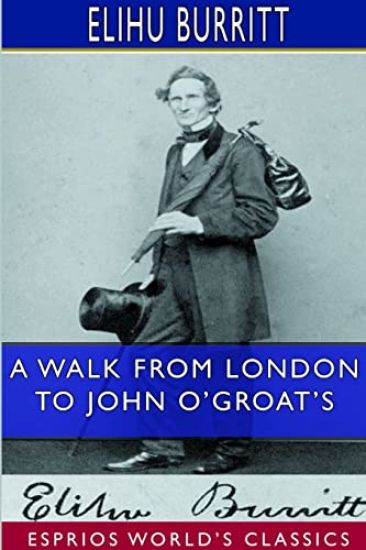
Elihu Burritt was an American diplomat, philanthropist and social activist, born December 8, 1810, in New Britain, Connecticut. He was a descendant of William and Elizabeth Burritt from Stratford, Connecticut. He first worked as a blacksmith. As an adult he was active as a lecturer in many causes, opposing slavery, working for temperance, and trying to achieve world peace. He was a prolific lecturer, journalist and writer, who traveled widely in the US and Europe.
John Denison Baldwin (September 28, 1809 - July 8, 1883) was an American politician, Congregationalist minister, newspaper editor, and popular anthropological writer. He was a member of the Connecticut State House of Representatives and later a member of the U.S. House of Representatives from Massachusetts. Biography: Baldwin briefly studied law, but graduated with a degree in theology from Yale Divinity School in 1834. He became a Congregationalist minister and preached in West Woodstock, North Branford, and North Killingly, all in Connecticut. In 1839 Yale awarded him an honorary Master of Arts degree. He became a member of the Connecticut State House of Representatives in 1847. Baldwin was active in the Free Soil and anti-slavery movements. He edited anti-slavery journals the "Republican" (published in Hartford) and the "Commonwealth" (published in Boston), and from 1859 became the owner and editor of the "Worcester Spy," what George Frisbie Hoar called "one of the most influential papers in New England." From this time onwards Baldwin was resident in Worcester, Massachusetts. He was a delegate to the 1860 Republican National Convention, where Abraham Lincoln was nominated as Republican presidential candidate, and in 1863 he was elected to the U.S. House of Representatives for Massachusetts's 8th congressional district. A "close friend" of both Charles Sumner and Henry Wilson, Senators from Massachusetts, Baldwin served for three terms in the House, promoting full equal rights for black Americans in the wake of the Civil War. In 1869, when George F. Hoar was nominated as the Republican candidate for his seat, Baldwin returned full-time to his journalistic and anthropological work. He edited the Worcester Spy until his death in 1883. In 1867 Baldwin was elected a member of the American Antiquarian Society. Anthropological writings and beliefs: Baldwin conducted correspondence with many notable thinkers of his time, including Ralph Waldo Emerson, Charles Darwin, James Russell Lowell, and particularly his friend Charles Sumner. He accepted Darwin's theory of evolution while maintaining a belief in the divine origin of "first forms." In 1865 he was elected a corporate member of the American Oriental Society. Baldwin's anthropological writing posited the origins of human civilization as arising among an Arabian or Northeast African people, the Cushites, in pre-historic times. In Ancient America, In Notes on American Archaeology he also speculated on the origins of the "Mound Builder" people then believed to have constructed the famous mounds around the Mississippi and Ohio River Valleys, suggesting that they had been an aboriginal people who had migrated northwards from Central America or Mexico. He rejected the then-common notion that they had been a lost European, Semitic, or Asiatic people who had been wiped out by the North American Indians, asserting on the contrary that the Mounds were "wholly original, wholly American" and "did not come from the Old World".He did, however, still subscribe to the idea that these "Mound Builders" were not the same as the American Indian inhabitants of the region at that time, who he believed were a separate race originating in Asia.
John Kendrick Bangs (May 27, 1862 - January 21, 1922) was an American author, humorist, editor and satirist. Biography: He was born in Yonkers, New York. His father Francis Nehemiah Bangs was a lawyer in New York City, as was his brother, Francis S. Bangs.He went to Columbia College from 1880 to 1883 where he became editor of Columbia's literary magazine, Acta Columbia, and contributed short anonymous pieces to humor magazines. After graduation in 1883 with a Bachelor of Philosophy degree in Political Science, Bangs entered Columbia Law School but left in 1884 to become Associate Editor of Life under Edward S. Martin. Bangs contributed many articles and poems to the magazine between 1884 and 1888. During this period, Bangs published his first books. In 1888 Bangs left Life to work at Harper's Magazine, Harper's Bazaar and Harper's Young People, though he continued to contribute to Life. From 1889 to 1900 he held the title of Editor of the Departments of Humor for all three Harper's magazines and from 1899 to 1901 served as active editor of Harper's Weekly. Bangs also served for a short time (January-June 1889) as the first editor of Munsey's Magazine and became editor of the American edition of the Harper-owned Literature from January to November 1899. In 1894, Bangs ran for the office of mayor of Yonkers, New York, but was defeated. He also was a member of the Board of Education in Yonkers. He left Harper & Brothers in 1901 and became editor of the New Metropolitan magazine in 1903. In 1904 he was appointed editor of Puck, perhaps the foremost American humor magazine of its day. In this period, he revived his earlier interest in drama. In 1906 he switched his focus to the lecture circuit. During the period between 1901 and 1906, Mr. Bangs was known to have spent at least parts of his summers at the Profile House in Franconia, New Hampshire. He owned one of the 20 connected cottages adjacent to the large hotel, which he sold to Cornelius Newton Bliss in August 1906. As a satirical writer, he was also known in the "Profile Cottage" circles as a jokester and prankster and was frequently the jovial topic of hotel guests and cottage owners alike. In 1918, he lectured for the Young Men's Christian Association and allied troops on the battle front in France during World War In 1886, he married Agnes L. Hyde, with whom he had three sons. Agnes died in 1903. Bangs then married Mary Blakeney Gray of New York in 1904. In 1907 they moved from Yonkers to Ogunquit, Maine. John Kendrick Bangs died from stomach cancer in 1922 at age fifty-nine, in Atlantic City, New Jersey...............
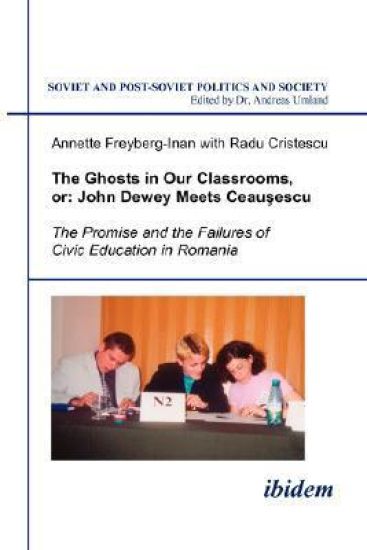
How can democracy be learned? And how successful are we at teaching and learning it?This book does three things: First, it explains why civic education is important for the growth and survival of (any type of) democracy. Second, it focuses on a particular country, which is in many ways representative for the general problems of post-communist transition to democracy. It carefully examines the practical reality of civic education in Romania both at the level of general schooling and in higher education. Emphasis lies on the ways in which the ideals of civic education clash with post-communist realities and on the obstacles that continue to exist in this transition country to the democratic empowerment of citizens through education. Scarcity of resources, corruption in many forms, and attitudes of deference to authority, among other problems, perpetuate a situation in which education fails to support democratization and instead reflects the failures of regimes of the past. Third, the book offers concrete recommendations for how civic education in Romania (and elsewhere) can be improved. How can education be organized to successfully support the realization of democratic ideals?This book is based on its main author's direct experience working in the field of civic education in Romania between 1999 and 2005 and draws on her wider expertise in the study of Romanian political economy and the country's European integration as well as in the fields of political psychology and democratic theory. It is of particular interest for teachers and social scientists willing to reflect on the implications of their teaching or research for democratic empowerment, for policymakers and activists who seek to support processes of democratization, as well as for students of post-communist transition countries in general and of Romania in particular. It provides an accessible, informative, and frequently humorous account of lofty ideals clashing with harsh realities on the battlefield of democratic emancipation.
I have been a Bible teacher all my adult life. These studies in the Gospel of John were first used in a Bible study class. Some of my students and the pastor encouraged me to publish the materials because, as they saw it, they had great value. These studies have lots of background information and windows to let in light. I have incorporated information from many other similar biblical passages to give a fuller picture of what Jesus and John were saying. Both good and bad characters and life in general are used to illustrate the truths of the passages. This book was designed with questions with the hope and prayer that they will engage you in the word of God with life transforming results. You will need an open Bible at the passage being studied. I have added pictures.
Dream of John Ball (1888) is a novel by English author William Morris about the Great Revolt of 1381, conventionally, but incorrectly (few of the participants were actual peasants), called "the Peasants' Revolt". It features the rebel priest John Ball, who was accused of being a Lollard but was really an early Leveller, the name given in the 17th century for what are today called socialists. John Ball is famed for his question "When Adam delved and Eve span, who was then the gentleman?"Morris draws on Froissart for information on the fourteenth century, but has a different attitude towards the revolting peasants from the chronicler who, Sir Walter Scott once remarked, had "marvelous little sympathy" for the "villain churls." Morris was also aware of interpretations of the Peasants' Revolt as representing a socialist tradition. In 1884 he had written an article in which he stated that "we need make no mistake about the cause for which Wat Tyler and his worthier associate John Ball fell; they were fighting against the fleecing then in fashion, viz.; serfdom or villeinage, which was already beginning to wane before the advance of the industrial gilds."The novel describes a dream and time travel encounter between the medieval and modern worlds, thus contrasting the ethics of medieval and contemporary culture. A time-traveller tells Ball of the decline of feudalism and the rise of the Industrial Revolution. Ball realizes that in the nineteenth century his hopes for an egalitarian society have yet to be fulfilled. A parallel can be drawn with the novel's close contemporary-A Connecticut Yankee in King Arthur's Court (1889) by Mark Twain. Unlike Twain's novel, which depicted early-Medieval England as a violent and chaotic Dark Age, Morris depicts the Middle Ages in a positive light, seeing it as a golden, if brief, period when peasants were prosperous and happy and guilds protected workers from exploitation. This positive portrayal of the Medieval period is a recurring theme in Morris' literary and artistic oeuvre, from the largely pastoral and craftsman based economies of the prose romances, to his similar dream vision of Britain's utopian future, News from Nowhere (1889)................ William Morris (24 March 1834 - 3 October 1896) was an English textile designer, poet, novelist, translator, and socialist activist. Associated with the British Arts and Crafts Movement, he was a major contributor to the revival of traditional British textile arts and methods of production. His literary contributions helped to establish the modern fantasy genre, while he played a significant role in propagating the early socialist movement in Britain. Born in Walthamstow, Essex, to a wealthy middle-class family, Morris came under the strong influence of medievalism while studying Classics at Oxford University, there joining the Birmingham Set. After university he trained as an architect, married Jane Burden, and developed close friendships with the Pre-Raphaelite artists Edward Burne-Jones and Dante Gabriel Rossetti and with the Neo-Gothic architect Philip Webb. Webb and Morris designed a family home, Red House, then in Kent, where the latter lived from 1859 to 1865, before moving to Bloomsbury, central London. In 1861, Morris founded a decorative arts firm with Burne-Jones, Rossetti, Webb, and others: the Morris, Marshall, Faulkner & Co. Sir Edward Coley Burne-Jones, 1st Baronet ARA (28 August 1833 - 17 June 1898) was a British artist and designer closely associated with the later phase of the Pre-Raphaelite movement, who worked closely with William Morris on a wide range of decorative arts as a founding partner in Morris, Marshall, Faulkner & Co.