Kirjojen hintavertailu. Mukana 11 704 994 kirjaa ja 12 kauppaa.

Kirjahaku

Etsi kirjoja tekijän nimen, kirjan nimen tai ISBN:n perusteella.

1000 tulosta hakusanalla John H Harding

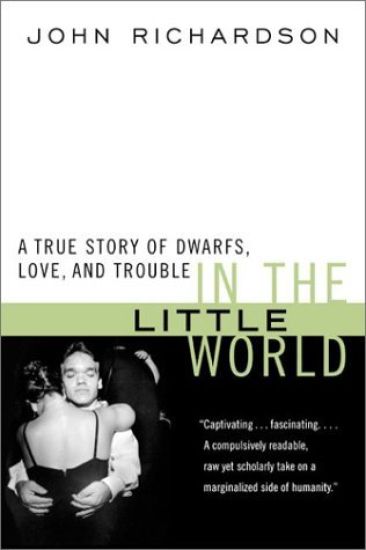
In the Little World: A True Story of Dwarfs, Love, and Trouble
In 1997, almost by accident, John Richardson found himself sharing a hotel with more than a thousand dwarfs. Over the course of a single week, he begins relationships with some of the people at a convention that evolve into an affecting two-year-and-beyond odyssey into the little world.He introduces us to characters like a saintly but obsessed doctor and a mother who sacrifices her family to save her dwarf daughter. He follows two dwarf lovers from their first meeting through their struggle to overcome fear and shame and find the confidence to love each other. He becomes personally involved in a tangled and often confrontational friendship with a female dwarf.Through these stories and musings, ranging from classic theories of beauty to the history of the disability movement, to postmodern theories of difference, Richardson presents a world that is a skewed reflection of our own -- and offers us a glimpse into the essential human condition.
Losing The Race

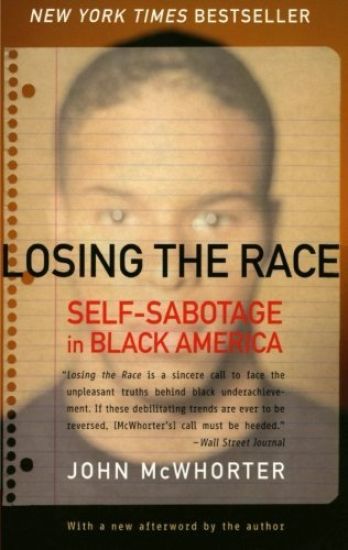
Losing The Race

John H McWhorter

HarperPaperbacks
2001
nidottu
Berkeley linguistics professor John McWhorter, born at the dawn of the post-Civil Rights era, spent years trying to make sense of this question. Now he dares to say the unsayable: racism's ugliest legacy is the disease of defeatism that has infected black America. Losing the Race explores the three main components of this cultural virus: the cults of victimology, separatism, and antiintellectualism that are making blacks their own worst enemies in the struggle for success.More angry than Stephen Carter, more pragmatic and compassionate than Shelby Steele, more forward-looking than Stanley Crouch, McWhorter represents an original and provocative point of view. With Losing the Race, a bold new voice rises among black intellectuals.
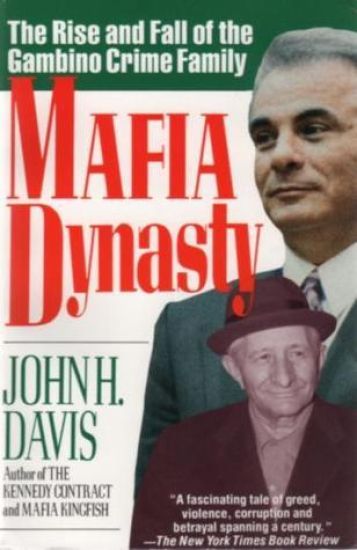
The Mafia Family

The Mafia Family

John H. Davis

HarperPaperbacks
1994
nidottu
The Gambinos--they arrived in America from Sicily when the `20's roared with bootleg liquor. For thirty years they fought a bloody battle for control of New York's underworld to emerge as the nation's richest and most powerful crime family. Now Mafia expert John H. Davis tells their compelling inside story. Here are the chilling details and deceptions that created a vast criminal empire. Here are six decades of the uncontrolled greed and lust for power of such men as Lucky Luciano, Frank Costello, Meyer Lansky, Vito Genovese, Albert Anastasia, Carlo Gambino, Paul Castellano, and John Gotti--men for whom murder and betrayal were business as usual. From the Gambinos' powerful stranglehold on New York's construction, garment, and waterfront industries to the government's onslaught against them in the `80s and `90s, Mafia Dynasty takes you into the mysterious world of blood oaths, shifting alliances, and deadly feuds that will hold you riveted from the first page to the last.
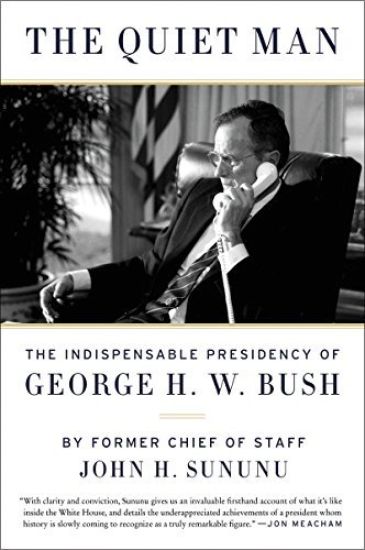
The Quiet Man

The Quiet Man

John H Sununu

HarperOne
2017
nidottu
In this major reassessment of George Herbert Walker Bush, the 41st president of the United States, his former Chief of Staff offers a long overdue appreciation of the man and his universally underrated and misunderstood presidency.-I'm a quiet man, but I hear the quiet people others don't.---George H. W. BushIn this unique insider account, John H. Sununu pays tribute to his former boss--an intelligent, thoughtful, modest leader--and his overlooked accomplishments. Though George H. W. Bush is remembered for orchestrating one of the largest and most successful military campaigns in history--the Gulf War--Sununu argues that conventional wisdom misses many of Bush's other great achievements.During his presidency, the Berlin Wall fell and the Soviet Union collapsed. Bush's calm and capable leadership during this dramatic time helped shape a world in which the United States emerged as the lone superpower. Sununu reminds us that President Bush's domestic achievements were equally impressive, including strengthening civil rights, enacting environmental protections, and securing passage of the Americans with Disabilities Act and the 1990 agreement which generated budget surpluses and a decade of economic growth.Sununu offers unparalleled insight into this statesman who has been his longtime close friend. He worked with Bush when he was vice president under Ronald Reagan, helped him through a contentious GOP primary season and election in 1988, and as his chief of staff, was an active participant and front-row observer to many of the significant events of Bush's presidency. Reverential yet scrupulously honest, Sununu reveals policy differences and clashes among the diverse personalities in and out of the White House, giving credit--and candid criticism--where it's due.The Quiet Man goes behind the scenes of this unsung but highly consequential presidency, and illuminates the man at its center as never before.
Advances in Brain Cancer for Clinicians and Scientists
Advances in Brain Cancer for Clinicians and Scientists provides a rapid update for the busy clinician or scientist interested in learning about the latest advances in brain cancer research. This book is useful for scientists wishing to learn more about clinical advances, clinicians wanting to update themselves on scientific advances, or physicians or trainees who see patients irregularly, but still wish to stay up-to-date. The field of brain tumor research is exploding with new scientific information, and treatments are rapidly changing as new genetic discoveries and technological advances emerge. This book provides a single source for a unified update in this area that includes treatment protocols for brain tumor patients from many different perspectives.
Similarity Solutions for the Boundary Layer Flow and Heat Transfer of Viscous Fluids, Nanofluids, Porous Media, and Micropolar Fluids
Similarity Solutions for the Boundary Layer Flow and Heat Transfer of Viscous Fluids, Nanofluids, Porous Media, and Micropolar Fluids presents new similarity solutions for fluid mechanics problems, including heat transfer of viscous fluids, boundary layer flow, flow in porous media, and nanofluids due to continuous moving surfaces. After discussing several examples of these problems, similarity solutions are derived and solved using the latest proven methods, including bvp4c from MATLAB, the Keller-box method, singularity methods, and more. Numerical solutions and asymptotic results for limiting cases are also discussed in detail to investigate how flow develops at the leading edge and its end behavior. Detailed discussions of mathematical models for boundary layer flow and heat transfer of micro-polar fluid and hybrid nanofluid will help readers from a range of disciplinary backgrounds in their research. Relevant background theory will also be provided, thus helping readers solidify their computational work with a better understanding of physical phenomena.
The Language Hoax

The Language Hoax

John H. McWhorter

Oxford University Press Inc
2016
nidottu
Japanese has a term that covers both green and blue. Russian has separate terms for dark and light blue. Does this mean that Russians perceive these colors differently from Japanese people? Does language control and limit the way we think? This short, opinionated book addresses the Sapir-Whorf hypothesis, which argues that the language we speak shapes the way we perceive the world. Linguist John McWhorter argues that while this idea is mesmerizing, it is plainly wrong. It is language that reflects culture and worldview, not the other way around. The fact that a language has only one word for eat, drink, and smoke doesn't mean its speakers don't process the difference between food and beverage, and those who use the same word for blue and green perceive those two colors just as vividly as others do. McWhorter shows not only how the idea of language as a lens fails but also why we want so badly to believe it: we're eager to celebrate diversity by acknowledging the intelligence of peoples who may not think like we do. Though well-intentioned, our belief in this idea poses an obstacle to a better understanding of human nature and even trivializes the people we seek to celebrate. The reality -- that all humans think alike -- provides another, better way for us to acknowledge the intelligence of all peoples.
What Is a Human?

What Is a Human?

John H. Evans

Oxford University Press Inc
2016
sidottu
What is a human? Are humans those with human DNA, those in possession of traits like rationality, or those made in the image of God? The debate over what makes human beings unique has raged for centuries. Many think that if society accepts the wrong definition of what it is to be human, people will look at their neighbor as more of an animal, object, or machine-making maltreatment more likely. In the longest running claim, for over 150 years critics have claimed that taking a Darwinist definition results in people treating each other more like animals. Despite their seriousness, these claims have never been empirically investigated. In this groundbreaking book John H. Evans shows that the definitions promoted by biologists and philosophers actually are associated with less support for human rights. Members of the public who agree with these definitions are less willing to sacrifice to stop genocides and are more supportive of buying organs from poor people, of experimenting on prisoners against their will, and of torturing people to potentially save lives. It appears that the critics are right. However, Evans finds that few Americans agree with these academic definitions. Looking at how most of the public defines humanity, we see a much more nuanced picture. In a fascinating account, he shows that the dominant definitions are unlikely to lead to human rights abuses. He concludes that the critics are right about the definitions of a human promoted by academic biologists and philosophers, and are therefore justified in their vigilance. However, because at present few Americans agree with these definitions, the academic definitions would have to spread much more extensively before impacting how the general public acts. Evans' book is a major corrective to the more than century-long debate about the impact of definitions of a human.
Diminishing Returns at Work

Diminishing Returns at Work

John H. Pencavel

Oxford University Press Inc
2018
sidottu
The relationship between the number of hours worked and productivity has long fascinated economists and management. It is a central component of the production function that translates inputs to outputs. While increasing the number of hours someone works may increase output, this incisive book demonstrates that there are diminishing returns to long working hours. John Pencavel, of Stanford University, provides an overview of how the length of working hours evolved from the 19th century to today and how the number of working hours affects work performance and other outcomes, including health, well-being, and wages. Diminishing Returns at Work provides a brief history of working hours both in the United States and Britain, including the influence of trade unions pushing for shorter hours of work, the tension with employers who resisted reducing hours, and the influence of legislation and custom. Pencavel discusses various conceptual frameworks for specifying production functions that measure the relationship between inputs and outputs and develops an alternative approach to estimate actual relationships through a reevaluation of classic studies, including the productivity of munitions workers in Britain during the First and Second World Wars, a variety of industries in the United States in the Second World War, and plywood mills in Washington during the 1980s. The book also explores the influence of working hours on the incidence of sickness and injuries and the associations between hours of work and wages. The declining effectiveness of long hours is manifested not only in marketable output but also in a rising probability of ill-health and accidents, and evidence of this has been found both for blue-collar workers and for white-collar workers. In short, shorter hours of work might benefit both firms and workers.
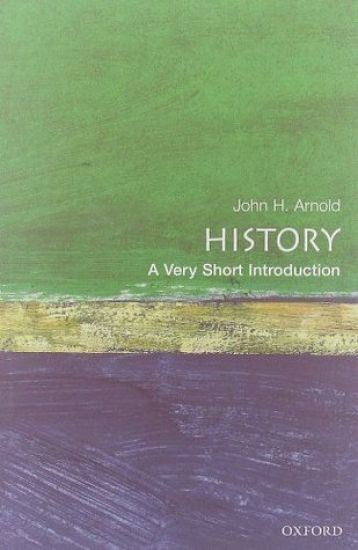
History

History

John H. Arnold

Oxford University Press
2000
nidottu
There are many stories we can tell about the past, and we are not, perhaps, as free as we might imagine in our choice of which stories to tell, or where those stories end. John Arnold's Very Short Introduction is a stimulating essay about how we study and understand history. The book begins by inviting us to think about various questions provoked by our investigation of history, and explores the ways these questions have been answered in the past. Concepts such as causation, interpretation, and periodization, are introduced by means of concrete examples of how historians work, giving the reader a sense of the excitement of discovering not only the past, but also ourselves. ABOUT THE SERIES: The Very Short Introductions series from Oxford University Press contains hundreds of titles in almost every subject area. These pocket-sized books are the perfect way to get ahead in a new subject quickly. Our expert authors combine facts, analysis, perspective, new ideas, and enthusiasm to make interesting and challenging topics highly readable.
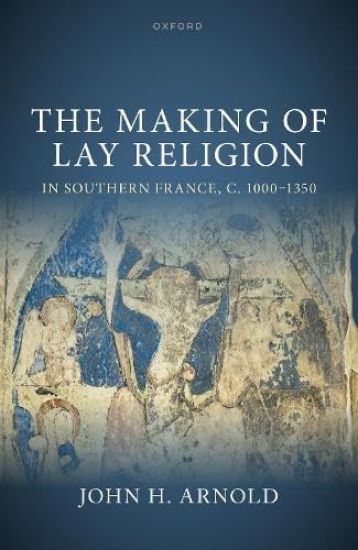
The Making of Lay Religion in Southern France, c. 1000-1350
What was Christianity like for ordinary people between the turn of the millennium and the coming of the Black Death? What changed and what continued, in their experiences, habits, feelings, hopes, and fears? How did they know themselves to be Christians, and indeed to be good Christians? This book answers those questions through a focus on one specific region -- southern France -- across a particularly fraught period of history, one beset by the changes wrought by the Gregorian reforms, the spectre of heresy, the violence of crusade, the coming of inquisition, and the pastoral revolution associated with the Fourth Lateran Council (1215). Using an array of different historical documents, John H. Arnold explores the material contexts of Christian worship from the eleventh through to the fourteenth centuries, the shifting episcopal expectations of the ordinary laity, the changes wrought through wider socioeconomic developments, and periods of sharp inflection brought by the Albigensian crusade and its aftermath. Throughout, the book explores the complex spectrum of lay piety, finding enthusiasms and doubts, faith and scepticism, agency and negotiation. It explores not just developments in the content of faith for the laity but the very dynamics of belief as a lived experience. We are shown how across these key centuries Christianity developed in its external practices, but also via inculcating a more interiorized and affective mode of belief; and thus, it is argued, it can be said to have become truly a 'religion' -- a structured, demanding, and rewarding faith -- for the many and not just the few.
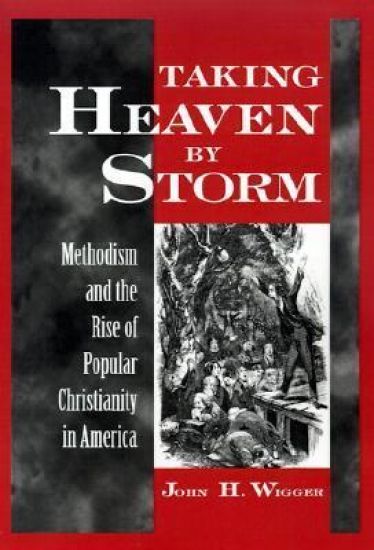
Taking Heaven by Storm

Taking Heaven by Storm

John H. Wigger

Oxford University Press Inc
1998
sidottu
Following the Revolutionary War, American Methodism grew at an astonishing rate, rising from fewer than 1000 members in 1770 to over 250,000 by 1820. John H. Wigger seeks to explain the puzzle of this remarkable growth, offering a provocative reassessment of the role of popular religion in American life. Wigger argues that in the post-Revolutionary years Methodism's style, tone, and agenda worked their way deep into the fabric of American life, influencing all other mass religious movements that would follow, and many facets of American life not directly connected to the church as well.
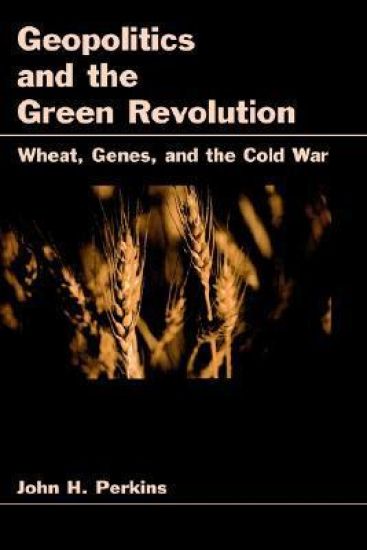
Geopolitics and the Green Revolution

Geopolitics and the Green Revolution

John H. Perkins

Oxford University Press Inc
1998
sidottu
Cereal grains like wheat and rice are important, because they are the basis of most food supplies. Yields of such crops have increased dramatically during the past 100 years and especially since 1950, leading to what was often called the Green Revolution. This book examines why the United States, India, Britain and Mexico each sought to develop high yield wheat production. Although the increase in yield has been attributed to plant breeding science, security concerns and management of foreign exchange were prime motivators of the new technologies. This relationship has not been previously developed in studies of agricultural modernization, and will plague future efforts to make agriculture equitable and sustainable.
Defining Creole

Defining Creole

John H. McWhorter

Oxford University Press Inc
2005
nidottu
This volume gathers the last ten years worth of published articles on creole languages and their origins by John H. McWhorter, a unique and often controversial scholar in the field. The articles fall into roughly three categories: defending his hypothesis that creole languages are synchronically distinguishable from older grammars, addressing the intersection between creole genesis and language change, and lastly countering the accepted argument that creoles' differences from their source languages (called lexifiers) are simply a matter of inflection. This book will be of interest to scholars and students of creole and pidgin studies, and lingustics more broadly.
The Engines of Our Ingenuity

The Engines of Our Ingenuity

John H. Lienhard

Oxford University Press Inc
2003
nidottu
Millions of people have listened to John H. Lienhard's radio program "The Engines of Our Ingenuity." In this fascinating book, Lienhard gathers his reflections on the nature of technology, culture, and human inventiveness. The book brims with insightful observations. Lienhard writes that the history of technology is a history of us--we are the machines we create. Thus farming dramatically changed the rhythms of human life and redirected history. War seldom fuels invention--radar, jets, and the digital computer all emerged before World War II began. And the medieval Church was a driving force behind the growth of Western technology--Cistercian monasteries were virtual factories, whose water wheels cut wood, forged iron, and crushed olives. Lienhard illustrates his themes through inventors, mathematicians, and engineers--with stories of the canoe, the DC-3, the Hoover Dam, the diode, and the sewing machine. We gain new insight as to who we are, through the familiar machines and technologies that are central to our lives.
Orthodox Christians in America

Orthodox Christians in America

John H. Erickson

Oxford University Press Inc
2007
nidottu
This book follows the momentous events and notable individuals in the history of the Orthodox dioceses in America. Erickson explains the huge impact Orthodox Christianity has had on the history of immigration, and how the religion has changed as a result of the American experience. Lively, engaging, and thoroughly researched, the book unveils insightful portrait of an ancient faith in a new world.
How Invention Begins

How Invention Begins

John H. Lienhard

Oxford University Press Inc
2008
nidottu
Invention --that single leap of a human mind that gives us all we create. Yet we make a mistake when we call a telephone or a light bulb an invention, says John Lienhard. In truth, light bulbs, airplanes, steam engines--these objects are the end results, the fruits, of vast aggregates of invention. They are not invention itself. In How Invention Begins, Lienhard reconciles the ends of invention with the individual leaps upon which they are built, illuminating the vast web of individual inspirations that lie behind whole technologies. He traces, for instance, the way in which thousands of people applied their combined inventive genius to airplanes, railroad engines, and automobiles. As he does so, it becomes clear that a collective desire, an upwelling of fascination, a spirit of the times--a Zeitgeist --laid its hold upon inventors. The thing they all sought to create was speed itself. Likewise, Lienhard shows that when we trace the astonishingly complex technology of printing books, we come at last to that which we desire from books--the knowledge, the learning, that they provide. Can we speak of speed or education as inventions? To do so, he concludes, is certainly no greater a stretch than it is to call radio or the telephone an "invention." Throughout this marvelous volume, Lienhard illuminates these processes, these webs of insight or inspiration, by weaving a fabric of anecdote, history, and technical detail--all of which come together to provide a full and satisfying portrait of the true nature of invention.
The Development of Industrial Society in Ireland

The Development of Industrial Society in Ireland

John H. Goldthorpe

Oxford University Press
1994
nidottu
This paperback edition makes more widely available an important text for scholars and students on an aspect of Irish society that has been inadequately covered elsewhere. Ireland is one of the nations of the western world in which industrialization was longest delayed. In these papers, sociologists, economists and political scientists offer 'rich and original insights into how Irish society has developed, particularly over the last 30 years' (Irish Times). Questions of the typicality or 'exceptionalism' of the Irish experience are discussed, and the relevance of this experience for current theories of industrialism and 'modernization' is critically examined.
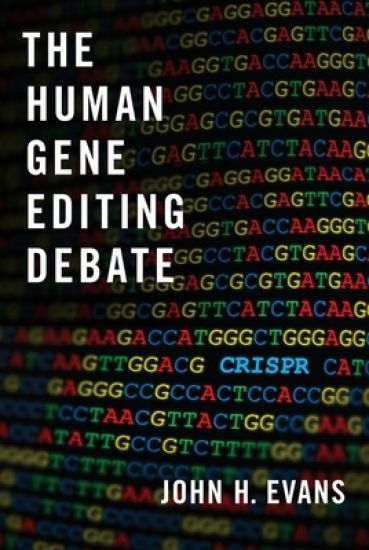
The Human Gene Editing Debate

The Human Gene Editing Debate

John H. Evans

Oxford University Press Inc
2020
sidottu
In 2018 the first genetically modified babies were reportedly born in China, made possible by the invention of CRISPR technology in 2012. This controversial advancement overturned the pre-existing moral consensus, which had held for over fifty years before: while gene editing an adult person was morally acceptable, modifying babies, and thus subsequent generations, crossed a significant moral line. If this line is passed over, scientists will be left without an agreed-upon ethical limit. What do we do now? John H. Evans here provides a meta-level guide to how these debates move forward and their significance to society. He explains how the bioethical debate has long been characterized as a slippery slope, with consensually ethical use at the top, nightmarish dystopia at the bottom, and specific agreed-upon limits in between, which draw the lines between the ethical and the unethical. Evans frames his analysis around these limits, or barriers. Historically they have existed to guide scientists and to prevent the debate from slipping down the metaphorical slope into unacceptable eugenicist possibilities, such as in Aldous Huxley's novel Brave New World or the movie Gattaca. Evans examines the history of how barriers were placed, then fell, then replaced by new ones, and discusses how these insights inform where the debate may head. He evaluates other proposed barriers relevant to where we are now, projects that most of the barriers suggested by scientists and bioethicists will not hold, and cautiously identifies a few that could serve as the moral boundary for the next generation. At a critical time in this new era of intervention in the human genome, The Human Gene Editing Debate provides a necessary, comprehensive analysis of the conversation's direction, past, present, and future.
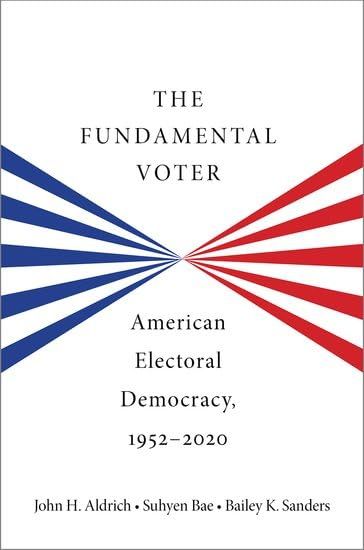
The Fundamental Voter

The Fundamental Voter

John H. Aldrich; Suhyen Bae; Bailey K. Sanders

OXFORD UNIVERSITY PRESS INC
2024
sidottu
Why is American politics so intense and emotionally competitive today, and how did we get here? In The Fundamental Voter, John H. Aldrich, Suhyen Bae, and Bailey K. Sanders explain why the notion that we are divided into tribal loyalties is, at best, only partially correct, and discuss how the divisions rest on much more substantive politics than they once did. In the 1950s and 1960s, the American public based voting primarily on partisan loyalties. Landslide presidential elections were once common, but over the last forty years, they have converged to very closely contested elections. Congressional elections were increasingly incumbent centered before 1984 and decreasingly so afterward. These changes reflect the changing nature of fundamental forces that shape the public's electoral opinions and voting behavior. From a single such fundamental, partisan identification, the electorate now rests on five fundamental forces: party, ideology, issues, race, and economics. Since the 1980s, these fundamentals have grown increasingly important and increasingly aligned, such that voters are now sorted into two increasingly bitterly divided sides. Believing that the other side is on the wrong side of nearly everything of political relevance, voters, like officials, have come to deeply dislike the opposition, a state of affairs that threatens to undermine the stability of democratic institutions in the United States.