Kirjojen hintavertailu. Mukana 11 244 527 kirjaa ja 12 kauppaa.

Kirjahaku

Etsi kirjoja tekijän nimen, kirjan nimen tai ISBN:n perusteella.

1000 tulosta hakusanalla John Hardingham

John Stuart Mill and the Meaning of Life

John Stuart Mill and the Meaning of Life

Elijah Millgram

Oxford University Press Inc
2019
sidottu
John Stuart Mill was one of the most important and influential philosophers of the nineteenth century. He was also someone who exemplified a view about the meaning of life that is widespread among both philosophers and nonacademics: that projects are what make your life meaningful, and if a single project is large enough to occupy center stage in it, that is the meaning of your life. His brilliant career notwithstanding, Mill's life was a train wreck; the intellectual energy and philosophical ingenuity which he devoted to figuring out what had gone wrong make him a fascinating object lesson in the view that projects give life meaning. Elijah Millgram argues that what went wrong was the very fact that Mill's life was a project-the tragedy of his life was an almost inevitable consequence of living out this account of the meaning of life. At once a scholarly contribution to the history of an important philosophical figure and an intervention in an ongoing debate within moral philosophy, this book takes on a topic that people outside the academy expect philosophy to address, but which it too rarely does: namely, the meaning of life. It is simultaneously an exercise in biography and a novel reconstruction and reframing of some of the central theories and texts of the philosophical canon. Millgram's work attempts to look at the theory of rationality from an unusual angle by asking: what difference does it make to the shape and progress of someone's life whether he has one or another understanding of practical reasoning-that is, of how one ought to reason about what to do?
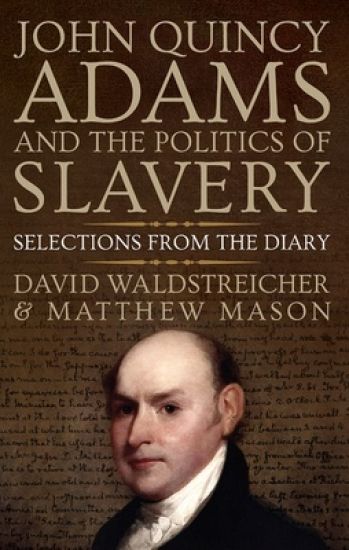
John Quincy Adams and the Politics of Slavery

John Quincy Adams and the Politics of Slavery

David Waldstreicher; Matthew Mason

Oxford University Press Inc
2019
nidottu
In the final years of his political career, President John Quincy Adams was well known for his objections to slavery, with rival Henry Wise going so far as to label him "the acutest, the astutest, the archest enemy of southern slavery that ever existed." As a young statesman, however, he supported slavery. How did the man who in 1795 told a British cabinet officer not to speak to him of "the Virginians, the Southern people, the democrats," whom he considered "in no other light than as Americans," come to foretell "a grand struggle between slavery and freedom"? How could a committed expansionist, who would rather abandon his party and lose his U.S. Senate seat than attack Jeffersonian slave power, later come to declare the Mexican War the "apoplexy of the Constitution," a hijacking of the republic by slaveholders? What changed? Entries from Adams's personal diary, more extensive than that of any American statesman, reveal a highly dynamic and accomplished politician in engagement with one of his generation's most challenging national dilemmas. Expertly edited by David Waldstreicher and Matthew Mason, John Quincy Adams and the Politics of Slavery offers an unusual perspective on the dramatic and shifting politics of slavery in the early republic, as it moved from the margins to the center of public life and from the shadows to the substance of Adams's politics. The editors provide a lucid introduction to the collection as a whole and frame the individual documents with brief and engaging insights, rendering both Adams's life and the controversies over slavery into a mutually illuminating narrative. By juxtaposing Adams's personal reflections on slavery with what he said-and did not say-publicly on the issue, the editors offer a nuanced portrait of how he interacted with prevailing ideologies during his consequential career and life. John Quincy Adams and the Politics of Slavery is an invaluable contribution to our understanding of the complicated politics of slavery that set the groundwork for the Civil War.
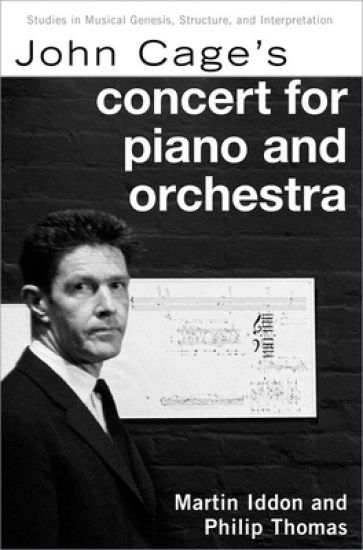
John Cage's Concert for Piano and Orchestra

John Cage's Concert for Piano and Orchestra

Martin Iddon; Philip Thomas

Oxford University Press Inc
2020
sidottu
John Cage's Concert for Piano and Orchestra is one of the seminal works of the second half of the twentieth century, and the centerpiece of the middle period of Cage's output. It is a culmination of Cage's work up to that point, incorporating notation techniques he had spent the past decade developing - techniques which remain radical to this day. But despite Cage's vitality to the musical development of the twentieth century, and the Concert's centrality to his career, the work is still rarely performed and even more rarely examined in detail. In this volume, Martin Iddon and Philip Thomas provide a rich and critical examination of this enormously significant piece, tracing its many contexts and influences - particularly Schoenberg, jazz, and Cage's own compositional practice - through a wide and previously untapped range of archival sources. Iddon and Thomas explain the Concert through a reading of its many histories, especially in performance - from the legendary performer disobedience and audience disorder of its 1958 New York premiere to a no less disastrous European premiere later the same year. They also highlight the importance of the piano soloist who premiered the piece, David Tudor, and its use alongside choreographer Merce Cunningham's Antic Meet. A careful examination of an apparently bewildering piece, the book explores the critical response to the Concert's performances, re-interrogates the mythology surrounding it, and finally turns to the music itself, in all its component parts, to see what it truly asks of performers and listeners.
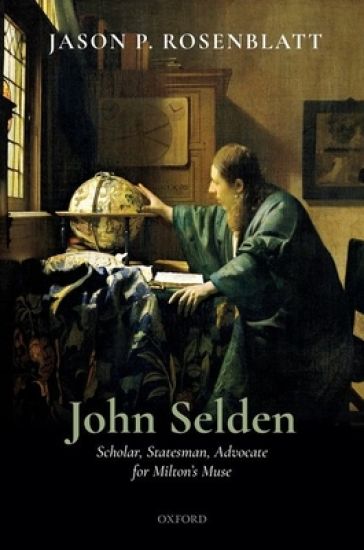
John Selden

John Selden

Jason P. Rosenblatt

Oxford University Press
2021
sidottu
The life of John Selden (1584-1654) was both contemplative and active. Seventeenth-century England's most learned person, he was also one of the few survivors who continued in the Long Parliament of the 1640s his vigorous opposition, begun in the 1620s, to abuses of power, whether by Charles I or, later, by the Presbyterian-controlled Westminster Assembly. His gift for finding analogies among different cultures--Greco-Roman, Christian, Jewish, and Islamic--helped to transform both the poetry and prose of the century's greatest poet, John Milton. Regarding family law, the two might have influenced one another. Milton cites Selden, and Selden owned two of Milton's treatises on divorce, published in 1645, both of them presumably acquired while he was writing Uxor Ebraica (1646). Selden accepted the non-biblically rabbinic, externally imposed, coercive Adamic/Noachide precepts as universal laws of perpetual obligation, rejecting his predecessor Hugo Grotius' view of natural law as the innate result of right reason. He employed rhetorical strategies in De Jure Naturali et Gentium (The Law of Nature and of Nations) to prepare his readers for what might otherwise have shocked them. Although Selden was very active in the Long Parliament, his only surviving debates from that decade were as a lay member of the Westminster Assembly of Divines. The Assembly's scribe left so many gaps that the transcript is sometimes indecipherable. This book fills in the gaps and makes the speeches coherent by finding their contexts in Selden's printed works, both the scholarly, as in the massive De Synedriis, but also in the witty and informal Table Talk.
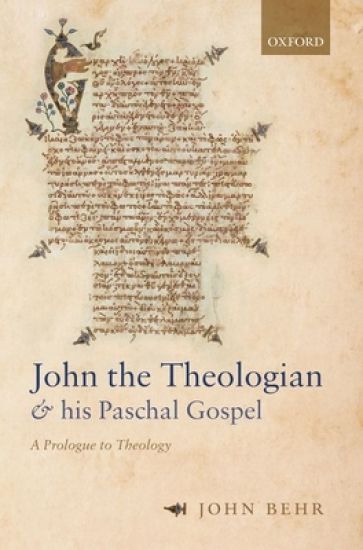
John the Theologian and his Paschal Gospel

John the Theologian and his Paschal Gospel

John Behr

Oxford University Press
2021
nidottu
This study brings three different kinds of readers of the Gospel of John together with the theological goal of understanding what is meant by Incarnation and how it relates to Pascha, the Passion of Christ, how this is conceived of as revelation, and how we speak of it. The first group of readers are the Christian writers from the early centuries, some of whom (such as Irenaeus of Lyons) stood in direct continuity, through Polycarp of Smyrna, with John himself. In exploring these writers, John Behr offers a glimpse of the figure of John and the celebration of Pascha, which held to have started with him. The second group of readers are modern scriptural scholars, from whom we learn of the apocalyptic dimensions of John's Gospel and the way in which it presents the life of Christ in terms of the Temple and its feasts. With Christ's own body, finally erected on the Cross, being the true Temple in an offering of love rather than a sacrifice for sin. An offering in which Jesus becomes the flesh he offers for consumption, the bread which descends from heaven, so that 'incarnation' is not an event now in the past, but the embodiment of God in those who follow Christ in the present. The third reader is Michel Henry, a French Phenomenologist, whose reading of John opens up further surprising dimensions of this Gospel, which yet align with those uncovered in the first parts of this work. This thought-provoking work brings these threads together to reflect on the nature and task of Christian theology.
John Berger

John Berger

Iona Heath

Oxford University Press
2024
sidottu
Iona Heath relates the importance that John Berger's work and friendship had on her working life as a GP. It includes extracts from letters that span 20 years of her correspondence with John Berger. In this book, Iona Heath writes about reading John Berger's writing over more than 50 years and her friendship and correspondence with him over the best part of 20 years. Dr Heath found that both of these interacted profoundly with her work as a general practitioner in a deprived urban area in London. For Iona Heath, general practice is a quite extraordinary undertaking: every working day, sitting with a succession of unique individuals, each worried about some aspect of their health or life circumstances, many burdened by unspoken fears, and each seeking some form of answer. Starting with A Fortunate Man, when she was an ignorant but hopeful undergraduate medical student, she found reading John Berger on any subject had something new to tell her about the aspirations and detail of her work: clues about how to look and how to listen and much else. Later when they started to correspond, Iona Heath found herself in the privileged position of being able to check her understanding directly with the writer and on each occasion found deeper levels of awareness and insight. She is convinced that reading John Berger made her a better doctor.
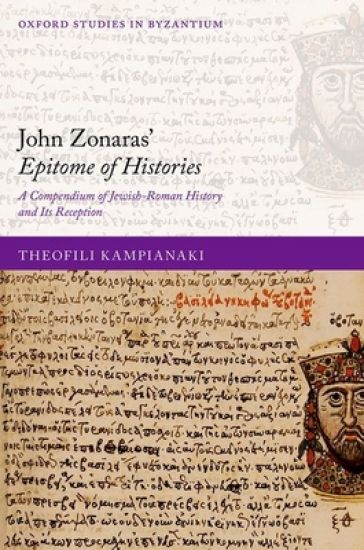
John Zonaras' Epitome of Histories

John Zonaras' Epitome of Histories

Theofili Kampianaki

Oxford University Press
2022
sidottu
The twelfth-century chronicle of John Zonaras, which begins with the biblical Creation and ends in 1118, is one of the longest historical accounts written in Greek that has come down to us. It was also one of the most popular historical works of the Greek-speaking world during the Middle Ages, with a remarkably large number of manuscripts preserving the entire text or parts of it. John Zonaras' Epitome of Histories: A Compendium of Jewish-Roman History and Its Reception analyses Zonaras' chronicle as both a literary composition and a historical account. It concentrates on its composition, sources, and political, ideological, and literary background. It also includes discussions that go beyond the text, such as on the intellectual networks surrounding Zonaras, and the anticipated audience and the reception of the chronicle. By examining such issues, Theofili Kampianaki aims to present Zonaras' chronicle as a product which emerged from a milieu characterized by the increased contacts with Western people and the Komnenian style of rulership in the imperial bureaucracy, and as a work which seamlessly merges the traditions of chronicle writing and classicizing historiography.
John Ruskin

John Ruskin

Oxford University Press
2022
nidottu
This volume in the 21st Century Oxford Authors series offers students an authoritative, comprehensive selection of the work of John Ruskin (1819-1900). The edition represents Ruskin's extraordinary literary output, ranging from lectures, essays, and treatises to reviews, correspondence, and critical notes. Ruskin has been called 'the most powerful and original thinker of the nineteenth century' and yet, like his two fellow Victorian Sages, Thomas Carlyle and Matthew Arnold, his work remains obscure to modern readers. This anthology hopes to remedy this situation by presenting the immense range of Ruskin's interests, from art to politics, museology to ornithology, architecture to geology, and morals to economics—all of which interests were indivisible in his view. Here are rapturous accounts of Turner, the Alps, Renaissance painters, and Gothic architecture; but here, too, are urgently dystopian analyses of the modern culture that we continue to inhabit: vacuousness in communication, callousness in labour relations, amoral sophistication in art, and rationalism in all its various delusory forms in politics, society, and the economy. There are special stresses on cultural preservation and the illusions that it both fosters and depends upon; the status of women in society, which Ruskin reflected on constantly; nature, wilderness, and eco-catastrophism; and the role of artists like the Pre-Raphaelites in a society mostly given over to Philistinism. In short, the nineteenth century continues to cast an interrogatory shadow over the twenty-first, and Ruskin is its most vital and critical antagonist in the English language, inspiring intellectuals as diverse as Tolstoy, Proust, and Gandhi during his lifetime and afterwards. He was, this collection suggests, nothing like a 'sage', but something much more important and much more like those impossible things, a Victorian Renaissance man, an English Rousseau, and a post-religious Jeremiah. Explanatory notes and commentary are included, to enhance the study, understanding, and enjoyment of these works, and the edition includes an Introduction to the life and works of Ruskin, and a Chronology.
John Trevisa's Information Age

John Trevisa's Information Age

Emily Steiner

Oxford University Press
2021
sidottu
What would medieval English literature look like if we viewed it through the lens of the compendium? In that case, John Trevisa might come into focus as the major author of the fourteenth century. Trevisa (d. 1402) made a career of translating big informational texts from Latin into English prose. These included Ranulph Higden's Polychronicon, an enormous universal history, Bartholomaeus Anglicus's well-known natural encyclopedia De proprietatibus rerum, and Giles of Rome's advice-for-princes manual, De regimine principum. These were shrewd choices, accessible and on trend: De proprietatibus rerum and De regimine principum had already been translated into French and copied in deluxe manuscripts for the French and English nobility, and the Polychronicon had been circulating England for several decades. This book argues that John Trevisa's translations of compendious informational texts disclose an alternative literary history by way of information culture. Bold and lively experiments, these translations were a gamble that the future of literature in England was informational prose. This book argues that Trevisa's oeuvre reveals an alternative literary history more culturally expansive and more generically diverse than that which we typically construct for his contemporaries, Geoffrey Chaucer and William Langland. Thirteenth- and early fourteenth-century European writers compiled massive reference books which would shape knowledge well into the Renaissance. This study maintains that they had a major impact on English poetry and prose. In fact, what we now recognize to be literary properties emerged in part from translations of medieval compendia with their inventive ways of handling vast quantities of information.
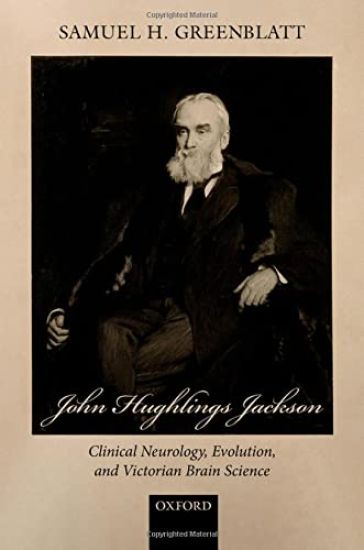
John Hughlings Jackson

John Hughlings Jackson

Samuel H. Greenblatt

Oxford University Press
2021
sidottu
John Hughlings Jackson (1835-1911) was a preeminent British neurologist who is widely recognized today as one of the leading founders of modern clinical neurology and neuroscience. He had a unique ability to translate messy clinical data into viable neuroscientific conceptions. This ability served him well, because in his early years knowledge of cerebral organization was quite rudimentary. Jean-Martin Charcot (1825-1893) faced the same problem at the same time in the 1860s, and each man recognized the other's work at a fundamental level. Although Jackson's historical standing has increased over the century since his death, there is only one full-length biography, the Critchleys' John Hughlings Jackson: Father of English Neurology (OUP 1998). Like the numerous articles and chapters that have been written about Jackson, that book is sometimes inaccurate and often hagiographic. In this new biography, John Hughlings Jackson: Clinical Neurology, Evolution and Victorian Brain Science, Samuel H. Greenblatt provides a critical analysis of Jackson's work within the professional, social, and intellectual contexts of his Victorian milieu. The book follows Jackson's intellectual development through a close examination of his published writings, in chronological order, from the case reports and Suggestions of his early medical career to the major lectures he delivered in his later years. The text is supplemented with a comprehensive bibliography of Jackson's writings that will be of practical use to scholars of his work.
John Gardner Carols

John Gardner Carols

Oxford University Press
2012
muu
for SATB accompanied and unaccompanied This anthology of eleven carols celebrates the festive music of John Gardner (1917-2011). It contains some of his most well-known settings alongside new repertoire, including a previously unpublished Epiphany carol, 'Entry of the Three Kings'. From the reflective 'A Christmas Hymn' to his joyful setting of 'The holly and the ivy', John Gardner Carols presents a variety of styles and moods that will delight choirs and audiences alike. A number of pieces give alternative performance instructions to allow upper-voice choirs to enjoy this superb collection. A number of the carols are included on the EM Records CD 'John Gardner: Cantata for Christmas, Organ Concerto, Christmas Carols' (EMR CD009) with the City of London Choir, conducted by Hilary Davan Wetton and Chris Gardner.
John the Baptist

John the Baptist

Oxford University Press
2016
muu
for SATB and organ Michael Finnissy's John the Baptist won the 2015 British Composer Award in the Liturgical Category. Commissioned by St John's College, Cambridge, for Advent 2014, the piece recalls the folk music of the Middle East, and alternates between boisterous two-part homophony and slower, reflective polyphony.
John Rutter Carols for SA and Men
for sopranos, altos, and unison men with piano or organ or orchestra This collection includes nine of John Rutter's most popular Christmas carols, re-scored by the composer into three parts: for sopranos, altos, and unison men. From 'Star Carol' to 'All bells in paradise', these festive favourites continue to delight choirs and audiences across the world.
John Rutter Carols

John Rutter Carols

Oxford University Press
2005
muu
10 SATB carols, accompanied and unaccompanied Full of joy and tenderness, John Rutter's carols illuminate and celebrate the Christmas story in works of great imagination and variety. This selection of his most popular carols forms an essential collection for all choirs. Instrumental material for individual carols is available on hire.
John Rutter Anthems

John Rutter Anthems

Oxford University Press
2003
muu
A collection of 11 of John Rutter's finest and most popular pieces. With the inclusion of so many 'classics' covering a dazzling variety of texts, styles, and scoring, this anthology will prove a treasured addition to any choir library.
John Wesley

John Wesley

John Wesley

Oxford University Press Inc
1980
nidottu
A major figure in eighteenth-century Christianity, John Wesley sought to combine the essential elements of the Catholic and Evangelical traditions and to restore to the laity a vital role in church life. He began one of the most dynamic movements in the history of modern Protestantism, a movement which eventually produced the Methodist churches. This volume offers a representative selection of theological writings by Wesley and includes historically oriented introductions and footnotes which indicate Wesley's Anglican, patristic, and biblical sources.
John Calvin

John Calvin

William J. Bouwsma

Oxford University Press Inc
1989
nidottu
Professor Bouwsma studies the theologian John Calvin as a way to bring into focus the cultural, psychological, and intellectual problems of the sixteenth century. He argues that Calvin represents an historical moment of transition from traditional modes of philosophical and religious thought to modern ones. Beginning with a description of the traditional culture of Calvin's time, and of the moralism which exerted such a powerful hold over medieval thought, he goes on to identify the crucial issue in this transition as the ability of a culture to manage the anxiety of existence. Medieval society, by creating simplified polarities such as Good and Evil, he argues, was conspicuously successful in performing this task. Finally Bouwsma provides a critical analysis of this medieval philosophy, and explains the significance of Calvin's concept of a "New Order" in providing an ethical system which no longer relied upon these established views of the world.
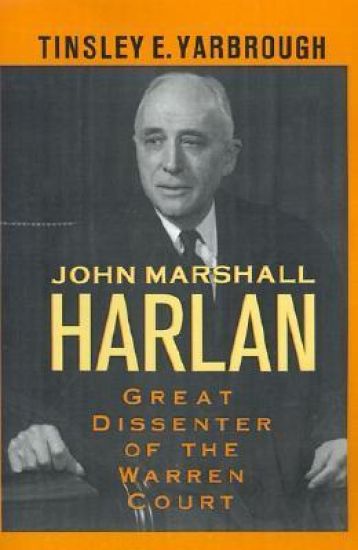
John Marshall Harlan

John Marshall Harlan

Tinsley E. Yarbrough

Oxford University Press Inc
1992
sidottu
Describes the life and times of the Republican judge who opposed the liberal expansion of civil liberties advocated by the Warren Court, from his privileged childhood to his days at Princeton and Oxford, to his stormy legal career
John Nelson, Merchant Adventurer

John Nelson, Merchant Adventurer

Richard R. Johnson

Oxford University Press Inc
1993
sidottu
John Nelson was an entrepreneur born in the mid 17th century, a man, in Johnson's words, `operating ahead of the government and settled society from which he came', one who `responded to conventions and conditions derived from several different and often competing cultures'. In the case of Nelson, this meant operating in England and France in Europe and in French Canada and New England in America. In several major transactions, he acted as middleman between French Canada and New England. He led an uprising that forced out the Royal Governor of Massachusetts in 1689 and later led an expedition against the French at Port Royal, where he was captured and ultimately landed in the Bastille in Paris. When he was finally released in 1698, he returned to Boston and remained in international trade but no longer had a political role. John Nelson's career exemplifies ways in which the expansion of European empires overwhelmed the local and proprietary rules in effect in colonial America. Johnson's book also provides a way of looking at the continued strong conflict between New England and Acadia about fishing rights in the North Atlantic. In Johnson's words, `Nelson's career directs attention beyond social life on the one hand and court politics on the other to individuals whose lives precipitated policy even if they themselves never put it into execution. [Figures like Nelson] were at once the unsung creators and among the numerous victims of Europe's American empires'.
John Williamson Nevin, American Theologian

John Williamson Nevin, American Theologian

Richard E. Wentz

Oxford University Press Inc
1997
sidottu
This study of the life and thought of John Williamson Nevin (1803-1886) offers a revised interpretation of an important nineteenth-century religious thinker. Along with the historian, Phillip Schaff, Nevin was a leading exponent of what became known as the Mercersburg Movement, named for the college and theological seminary of the German Reformed Church located in Mercersburg, Pennsylvania. The story is a neglected aspect of American studies. Wentz provides a kind of post-modern perspective on Nevin, presenting him as a distinctively American thinker, rather than as a reactionary romantic. Although influenced by German philosophy, historical studies, and theology, Nevin's thought was a profound response to the American public context of his day. He was, in many respects, a public theologian, judging the prevailing development of American Christianity as a new religion that was fashioning its own disintegration and that of American culture at large. Nevin's reinterpretation of catholicity in the American context opened the way for a radical understanding of religion and of American public life.