Kirjojen hintavertailu. Mukana 12 358 322 kirjaa ja 12 kauppaa.

Kirjahaku

Etsi kirjoja tekijän nimen, kirjan nimen tai ISBN:n perusteella.

1000 tulosta hakusanalla John R Clarson

Geometry Ancient and Modern

Geometry Ancient and Modern

John R. Silvester

Oxford University Press
2001
nidottu
This book is a guided tour of geometry, from Euclid through to algebraic geometry. It shows how mathematicians use a variety of techniques to tackle problems, and it links geometry to other branches of mathematics. It is a teaching text, with a large number of exercises woven into the exposition. Topics covered: ruler and compass r s1tructions, transformations, triangle and circle theorems, classification of isometries and groups of isometries in dimensions 2 and 3, Platonic solids, conics, similarities, affine, projective and Mobius transformations, non-Euclidean geometry, projective geometry, the beginnings of algebraic geometry.
Autoradiography

Autoradiography

John R.J. Baker

Oxford University Press Inc
2003
nidottu
Autoradiography is the localization within a solid specimen of a radiolabel by placing the specimen against a layer of detector material. Many types of specimen can be studied, from whole organisms to ultra-this cryosections. Indeed, rather than being a single technique, autoradiography is a collection of methods with certain features in common. Between them, these techniques can supply information at the macroscopic, microscopic, and ultrastructural levels, and their use is important to biological scientists in a variety of research areas. In this handbook, the author provides a comprehensive overview of the major techniques of autoradiography. With the aid of numerous illustrations, the various methods are clearly described, and the information which they can provide is discussed. Suggestions for further reading are provided at the end of most chapters. The student involved in biological or biomedical research will find this an invaluable introduction to the theory and techniques of autoradiography, and a clear guide to choosing the correct approach for his or her particular application.It will also be of interest to more experienced researchers, who are already familiar with one particular method, and wish to broaden their approach to another level.
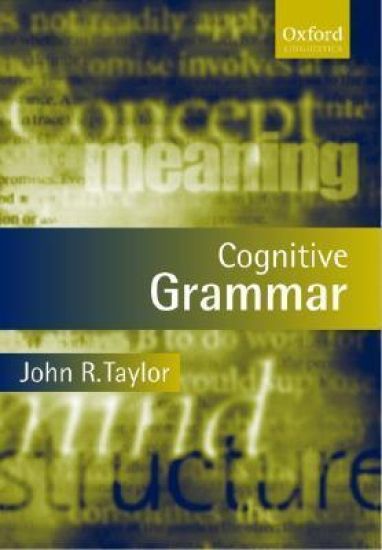
Cognitive Grammar

Cognitive Grammar

John R. Taylor

Oxford University Press
2002
nidottu
'Cognitive Grammar' is a theory of language which has been developing since the late 1970's. Underlying the theory is the assumption that language is inherently symbolic in nature and that a language provides its speakers with a set of resources for relating phonological structures with semantic structures. John R. Taylor introduces the theory of Cognitive Grammar, placing it in the context of current theoretical debates about the nature of linguistic knowledge, and relating it to more general trends in 'cognitive' linguistics. The central concepts of the theory are explained in clear, non-technical language, and are applied to in-depth discussions of a range of topics in semantics, syntax, morphology, and phonology. Suggestions for further applications of the theory are contained in the numerous study questions which accompany each of the main chapters.
Cognitive Assessment for Clinicians

Cognitive Assessment for Clinicians

John R. Hodges

Oxford University Press
2017
nidottu
The third edition of the best-selling Cognitive Assessment for Clinicians provides readers with an up-to-date, practical guide to cognitive function and its assessment to ensure readers have a conceptual knowledge of normal psychological function and how to interpret their findings. Organized into 8 chapters, this resource offers a framework in which various aspects of cognition are considered. This includes the representation of cognition in the brain (such as attention and memory), focal representation (such as language, praxis and spatial abilities), detailed descriptions of the major syndromes encountered in clinical practice, and discussions on taking a patient's history and performing cognitive testing. To ensure readers are aware of the latest developments in patient assessment and neuropsychological practice all content has been carefully revised by John R. Hodges to include essential updates on areas such as the pathology and genetics of frontotemporal dementia, and social cognition and major syndromes encountered in clinical practice such as delirium. This useful resource offers a theoretical basis for cognitive assessment at the bedside or in the clinic, and a practical guide to taking an appropriate history and examining patients presenting with cognitive disorders. This edition also includes the latest version of Addenbrooke's Cognitive Examination III (ACE-III), and 16 case histories on a variety of cognitive disorders illustrating the method of assessment and how to use the ACE-III in clinical practice. In addition, the appendix outlines the range of formal tests commonly used in neuropsychological practice.
Measuring Metabolic Rates

Measuring Metabolic Rates

John R. B. Lighton

Oxford University Press
2018
sidottu
The measurement of metabolic rates is central to important questions in many areas of physiological research. Unfortunately these measurements are anything but straightforward, with numerous pitfalls awaiting both the novice and even the experienced investigator. The original edition of this work, published in 2008, quickly became the principle "how to" manual for the field. It successfully de-mystified the topic, explaining every common variation of metabolic rate measurement. Background information on different analyzer and equipment types allowed users to choose the best instruments for their application. Respirometry equations, normally a topic of terror and confusion to researchers, were derived and described in sufficient detail to facilitate their selection and use. In this new edition, the content has been thoroughly updated and a decade of new literature incorporated. New chapters on room calorimetry, human metabolic measurement, and metabolic phenotyping have also been added.
Future War and the Defence of Europe

Future War and the Defence of Europe

John R. Allen; Frederick Ben Hodges; Julian Lindley-French

Oxford University Press
2021
sidottu
Future War and the Defence of Europe offers a major new analysis of how peace and security can be maintained in Europe: a continent that has suffered two cataclysmic conflicts since 1914. Taking as its starting point the COVID-19 pandemic and way it will inevitably accelerate some key global dynamics already in play, the book goes on to weave history, strategy, policy, and technology into a compelling analytical narrative. It lays out in forensic detail the scale of the challenge Europeans and their allies face if Europe's peace is to be upheld in a transformative century. The book upends foundational assumptions about how Europe's defence is organised, the role of a fast-changing transatlantic relationship, NATO, the EU, and their constituent nation-states. At the heart of the book is a radical vision of a technology-enabling future European defence, built around a new kind of Atlantic Alliance, an innovative strategic public-private partnership, and the future hyper-electronic European force, E-Force, it must spawn. Europeans should be under no illusion: unless they do far more for their own defence, and very differently, all that they now take for granted could be lost in the maze of hybrid war, cyber war, and hyper war they must face.
Measuring Metabolic Rates

Measuring Metabolic Rates

John R. B. Lighton

Oxford University Press
2021
nidottu
The measurement of metabolic rates is central to important questions in many areas of physiological research. Unfortunately these measurements are anything but straightforward, with numerous pitfalls awaiting both the novice and even the experienced investigator. The original edition of this work, published in 2008, quickly became the principle "how to" manual for the field. It successfully de-mystified the topic, explaining every common variation of metabolic rate measurement. Background information on different analyzer and equipment types allowed users to choose the best instruments for their application. Respirometry equations, normally a topic of terror and confusion to researchers, were derived and described in sufficient detail to facilitate their selection and use. In this new edition, the content has been thoroughly updated and a decade of new literature incorporated. New chapters on room calorimetry, human metabolic measurement, and metabolic phenotyping have also been added. Measuring Metabolic Rates is aimed at experimental biologists, physiologists, and any professional scientist involved with metabolic measurement. This practical handbook will also be of relevance and use to graduate students.
Precision and Accuracy in Biological Crystallography, Diffraction, Scattering, Microscopies, and Spectroscopies
Newcomers to the field of structural biology, which aims to understand life at the molecular level, see a vast number of existing results and are faced with a diverse range of experimental methods. These are used singly or in various combinations, however the uncertainties of the results found are unfortunately not fully assessed. Beginning with the basic physics of describing systematic and random errors, this book aims to explore these uncertainties, by examining the accuracy of each experimental method used to determine a 3D biological macromolecule structure and its dynamics, and their various possible combinations. The book also discusses the uncertainties in our determination of atomic positions in our static structures, and our analysis of the living cell. Aimed at graduate students from a wide range of science disciplines including physics, chemistry, biology, and mathematics, this book provides an overview of the topic of precision and accuracy in biological crystallography, diffraction, scattering, microscopies, and spectroscopies.
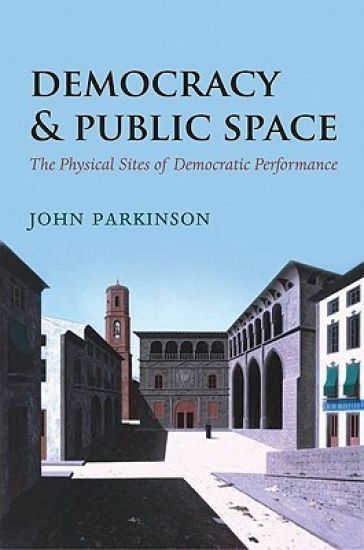
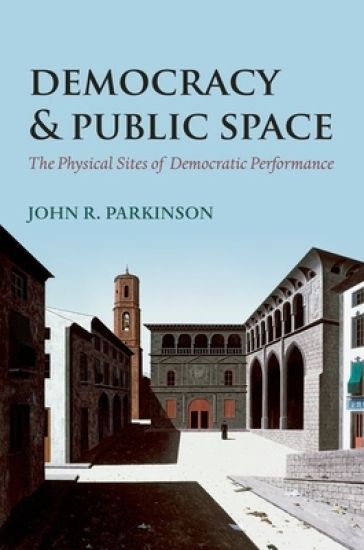
Democracy and Public Space

Democracy and Public Space

John R. Parkinson

Oxford University Press
2012
sidottu
In an online, interconnected world, democracy is increasingly made up of wikis and blogs, pokes and tweets. Citizens have become accidental journalists thanks to their handheld devices, politicians are increasingly working online, and the traditional sites of democracy - assemblies, public galleries, and plazas - are becoming less and less relevant with every new technology. And yet, this book argues, such views are leading us to confuse the medium with the message, focusing on electronic transmission when often what cyber citizens transmit is pictures and narratives of real democratic action in physical space. Democratic citizens are embodied, take up space, battle over access to physical resources, and perform democracy on physical stages at least as much as they engage with ideas in virtual space. Combining conceptual analysis with interviews and observation in capital cities on every continent, John Parkinson argues that democracy requires physical public space; that some kinds of space are better for performing some democratic roles than others; and that some of the most valuable kinds of space are under attack in developed democracies. He argues that accidental publics like shoppers and lunchtime crowds are increasingly valued over purposive, active publics, over citizens with a point to make or an argument to listen to. This can be seen not just in the way that traditional protest is regulated, but in the ways that ordinary city streets and parks are managed, even in the design of such quintessentially democratic spaces as legislative assemblies. The book offers an alternative vision for democratic public space, and evaluates 11 cities - from London to Tokyo - against that ideal.
Pagan City and Christian Capital

Pagan City and Christian Capital

John R Curran

Oxford University Press
2002
nidottu
This title breaks away from notions of religious conflict between Christians and pagans, to focus on a number of approaches to the Christianization of Rome. It surveys laws and political considerations, and the conflict between Christians over "real" Christianity.
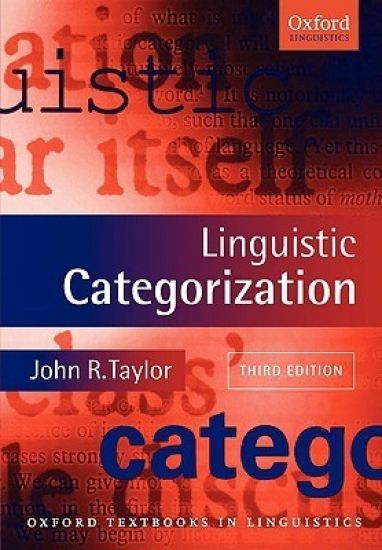
Linguistic Categorization

Linguistic Categorization

John R. Taylor

Oxford University Press
2003
nidottu
This text provides an introduction to the field of cognitive linguistics. It explores the far-reaching implications of Eleanor Rosch's seminal work on categorization and prototype theory, extending the application of prototype theory from lexical semantics to morphology, syntax and phonology.
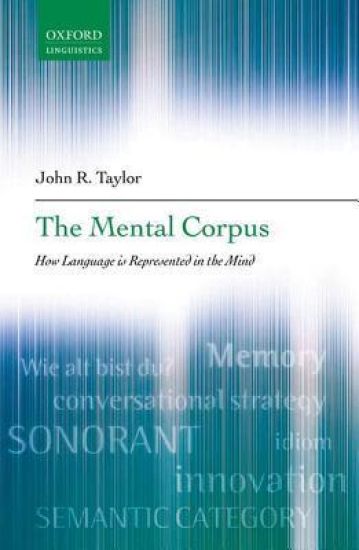
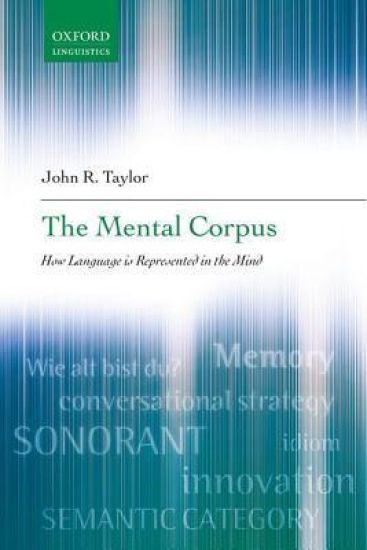
The Mental Corpus

The Mental Corpus

John R. Taylor

Oxford University Press
2012
sidottu
This book presents a radical reconceptualization of the nature of linguistic knowledge. John Taylor challenges the conventional notion that a language can be understood in terms of the interaction of syntax with a lexicon, the second listing the words and the first the rules for combining them. He proposes instead that an individual's knowledge of a language can be thought of as a repository of memories of linguistic experience. Each encounter with the language, he argues, leaves a trace in our minds. We record the forms of utterances, the concepts and interpretations associated with them, and the contexts in which they were heard or seen. Features of incoming language - a word, a phrase, a meaning, a voice quality, an interactional situation - resonate with items already stored. Similarities between stored items give rise to generalizations of varying degrees of certainty and precision, which in turn are able to sanction new and innovative expressions. John Taylor writes with conviction, clarity, and wit, illustrating every stage of his argument with arresting examples. His account makes a profound and original contribution to understanding the nature of language and the operations of the mind and brain. His book will appeal in equal measure to linguists, philosophers, and cognitive scientists.
The Mental Corpus

The Mental Corpus

John R. Taylor

Oxford University Press
2014
nidottu
This book presents a radical reconceptualization of the nature of linguistic knowledge. John Taylor challenges the conventional notion that a language can be understood in terms of the interaction of syntax with a lexicon, the second listing the words and the first the rules for combining them. He proposes instead that an individual's knowledge of a language can be thought of as a repository of memories of linguistic experience. Each encounter with the language, he argues, leaves a trace in our minds. We record the forms of utterances, the concepts and interpretations associated with them, and the contexts in which they were heard or seen. Features of incoming language - a word, a phrase, a meaning, a voice quality, an interactional situation - resonate with items already stored. Similarities between stored items give rise to generalizations of varying degrees of certainty and precision, which in turn are able to sanction new and innovative expressions. John Taylor writes with conviction, clarity, and wit, illustrating every stage of his argument with arresting examples. His account makes a profound and original contribution to understanding the nature of language and the operations of the mind and brain. His book will appeal in equal measure to linguists, philosophers, and cognitive scientists.
Democracy and Public Space

Democracy and Public Space

John R. Parkinson

Oxford University Press
2014
nidottu
In an online, interconnected world, democracy is increasingly made up of wikis and blogs, pokes and tweets. Citizens have become accidental journalists thanks to their handheld devices, politicians are increasingly working online, and the traditional sites of democracy - assemblies, public galleries, and plazas - are becoming less and less relevant with every new technology. And yet, this book argues, such views are leading us to confuse the medium with the message, focusing on electronic transmission when often what cyber citizens transmit is pictures and narratives of real democratic action in physical space. Democratic citizens are embodied, take up space, battle over access to physical resources, and perform democracy on physical stages at least as much as they engage with ideas in virtual space. Combining conceptual analysis with interviews and observation in capital cities on every continent, John Parkinson argues that democracy requires physical public space; that some kinds of space are better for performing some democratic roles than others; and that some of the most valuable kinds of space are under attack in developed democracies. He argues that accidental publics like shoppers and lunchtime crowds are increasingly valued over purposive, active publics, over citizens with a point to make or an argument to listen to. This can be seen not just in the way that traditional protest is regulated, but in the ways that ordinary city streets and parks are managed, even in the design of such quintessentially democratic spaces as legislative assemblies. The book offers an alternative vision for democratic public space, and evaluates 11 cities - from London to Tokyo - against that ideal.
Making the Social World: The Structure of Human Civilization
There are few more important philosophers at work today than John Searle, a creative and contentious thinker who has shaped the way we think about mind and language. Now he offers a profound understanding of how we create a social reality--a reality of money, property, governments, marriages, stock markets and cocktail parties. The paradox he addresses in Making the Social World is that these facts only exist because we think they exist and yet they have an objective existence. Continuing a line of investigation begun in his earlier book The Construction of Social Reality, Searle identifies the precise role of language in the creation of all "institutional facts." His aim is to show how mind, language and civilization are natural products of the basic facts of the physical world described by physics, chemistry and biology. Searle explains how a single linguistic operation, repeated over and over, is used to create and maintain the elaborate structures of human social institutions. These institutions serve to create and distribute power relations that are pervasive and often invisible. These power relations motivate human actions in a way that provides the glue that holds human civilization together. Searle then applies the account to show how it relates to human rationality, the freedom of the will, the nature of political power and the existence of universal human rights. In the course of his explication, he asks whether robots can have institutions, why the threat of force so often lies behind institutions, and he denies that there can be such a thing as a "state of nature" for language-using human beings.
The Economics of Slavery

The Economics of Slavery

John R. Meyer

AldineTransaction
2007
nidottu
How are economists and historians to explain what happened in history? What statistical inferences can be drawn from historical data? The authors believe that explanation in history can be identified with the problems of prediction in a probabilistic universe. Using this approach, the historian can act upon his a priori information and his judgment of what is unique and particular in each past event, even with data hitherto considered to be intractable for statistical treatment. In essence, the book is an argument for and a demonstration of the point of view that the restricted approach of "measurement without theory" is not necessary in history, or at least not necessary in economic history.After two chapters of theoretical introduction, the authors explore the meanings and implications of evidence, explanation and proof in history by applying econometric methods to the analysis of three major problems in 19th century economic history--the profitability of slavery in the antebellum South, income growth and development in the United States during the 1800's, and The Great Depression in the British economy; also included is a postscript on growth reassessing some current arguments in the light of the findings of these papers.The book presents an original and provocative approach to historical problems that have long plagued economists and historians and provides the reader with a new approach to these and similar questions.
The Human Shore

The Human Shore

John R. Gillis

University of Chicago Press
2015
nidottu
Since before recorded history, people have congregated near water. But as growing populations around the globe continue to flow toward the coasts on an unprecedented scale and climate change raises water levels, our relationship to the sea has begun to take on new and potentially catastrophic dimensions. The latest generation of coastal dwellers lives largely in ignorance of the history of those who came before them, the natural environment, and the need to live sustainably on the world's shores. Humanity has forgotten how to live with the oceans. In The Human Shore, a magisterial account of 100,000 years of seaside civilization, John R. Gillis recovers the coastal experience from its origins among the people who dwelled along the African shore to the bustle and glitz of today's megacities and beach resorts. He takes readers from discussion of the possible coastal location of the Garden of Eden to the ancient communities that have existed along beaches, bays, and bayous since the beginning of human society to the crucial role played by coasts during the age of discovery and empire. An account of the mass movement of whole populations to the coasts in the last half-century brings the story of coastal life into the present. Along the way, Gillis addresses humankind's changing relationship to the sea from an environmental perspective, laying out the history of the making and remaking of coastal landscapes-the creation of ports, the draining of wetlands, the introduction and extinction of marine animals, and the invention of the beach-while giving us a global understanding of our relationship to the water. Learned and deeply personal, The Human Shore is more than a history: it is the story of a space that has been central to the attitudes, plans, and existence of those who live and dream at land's end.
Are Predatory Commitments Credible?

Are Predatory Commitments Credible?

John R. Lott

University of Chicago Press
1999
sidottu
Predatory pricing has long been a contentious issue among lawmakers and economists. Legal actions are continually brought against companies. But the question remains: how likely are firms to cut prices in order to drive rivals out of business? Predatory firms risk having to keep prices below cost for such an extended period that it would become cost-prohibitive. Recently, economists have turned to game theory to examine circumstances under which predatory tactics could be profitable. John R. Lott, Jr. provides empirical analysis in this book. By examining firms accused of or convicted of predation over a 30-year period of time, he shows that these firms are not organized as the game-theoretic or other models of predation would predict. In contrast, what evidence exists for predation suggests that government enterprises are more of a threat. Lott presents data and analysis, attacking an issue of major legal and economic importance.
Unpopular Culture

Unpopular Culture

John R. Weeks

University of Chicago Press
2003
sidottu
When you start a new job, you learn how things are done in the company, and you learn how they are complained about too. Unpopular Culture considers why people complain about their work culture and what impact those complaints have on their organizations. John Weeks based his study on long-term observations of the British Armstrong Bank in the United Kingdom. Not one person at this organization, he found, from the CEO down to the junior clerks, had anything good to say about its corporate culture. And yet, despite all the griping—and despite high-profile efforts at culture change—the way things were done never seemed fundamentally to alter. The organization was restructured, jobs redefined, and processes redesigned, but the complaining remained the same.As Weeks demonstrates, this is because the everyday standards of behavior that regulate complaints curtail their effectiveness. Embarrass someone by complaining in a way that is too public or too pointed, and you will find your social standing diminished. Complain too loudly or too long, and your coworkers might see you as contrary. On the other hand, complain too little and you may be seen as too stiff or just too strange to be trusted. The rituals of complaint, Weeks shows, have powerful social functions.
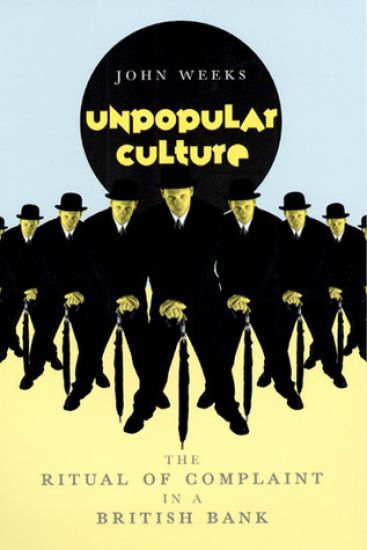
Unpopular Culture

Unpopular Culture

John R. Weeks

University of Chicago Press
2003
nidottu
When you start a new job, you learn how things are done in the company, and you learn how they are complained about too. Unpopular Culture considers why people complain about their work culture and what impact those complaints have on their organizations. John Weeks based his study on long-term observations of the British Armstrong Bank in the United Kingdom. Not one person at this organization, he found, from the CEO down to the junior clerks, had anything good to say about its corporate culture. And yet, despite all the griping—and despite high-profile efforts at culture change—the way things were done never seemed fundamentally to alter. The organization was restructured, jobs redefined, and processes redesigned, but the complaining remained the same.As Weeks demonstrates, this is because the everyday standards of behavior that regulate complaints curtail their effectiveness. Embarrass someone by complaining in a way that is too public or too pointed, and you will find your social standing diminished. Complain too loudly or too long, and your coworkers might see you as contrary. On the other hand, complain too little and you may be seen as too stiff or just too strange to be trusted. The rituals of complaint, Weeks shows, have powerful social functions.