
Kirjahaku
Etsi kirjoja tekijän nimen, kirjan nimen tai ISBN:n perusteella.
1000 tulosta hakusanalla John Stuart

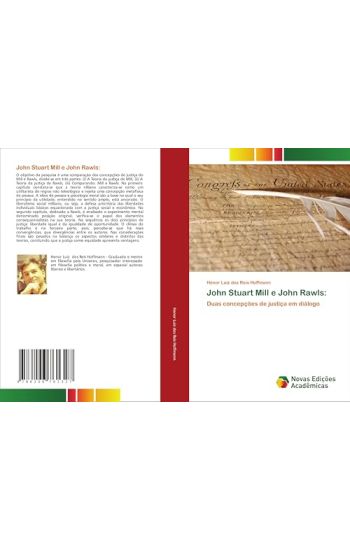
Ziel der Untersuchung ist es, die Gerechtigkeitskonzeptionen von Mill und Rawls zu vergleichen. Sie ist in drei Teile gegliedert: (i) Mills Theorie der Gerechtigkeit, (ii) Rawls' Theorie der Gerechtigkeit, (iii) Vergleich: Mill und Rawls. Das erste Kapitel zeigt, dass Mills Theorie als nicht-teleologischer Regel-Utilitarismus charakterisiert wird und eine metaphysische Konzeption der Person ablehnt. Die Idee der Person und die moralische Psychologie sind die Grundlage, auf der sein im weitesten Sinne verstandenes N tzlichkeitsprinzip verankert ist. Millianischer Sozialliberalismus, d. h. die vorrangige Verteidigung der individuellen Grundfreiheiten in Verbindung mit sozialer und wirtschaftlicher Gerechtigkeit. Im zweiten Kapitel, das Rawls gewidmet ist, wird das Gedankenexperiment, die so genannte urspr ngliche Position, analysiert und die Rolle der konsequentialistischen Elemente in seiner Theorie berpr ft. Es folgen die beiden Grunds tze der Gerechtigkeit: gleiche Freiheit und gleiche Chancen. Der H hepunkt des Werkes liegt im dritten Teil, wo wir feststellen, dass es mehr Konvergenzen als Divergenzen zwischen den Autoren gibt. Die abschlie enden berlegungen w gen die hnlichen und unterschiedlichen Aspekte der Theorien ab und kommen zu dem Schluss, dass Gerechtigkeit als Fairness Vorteile hat.
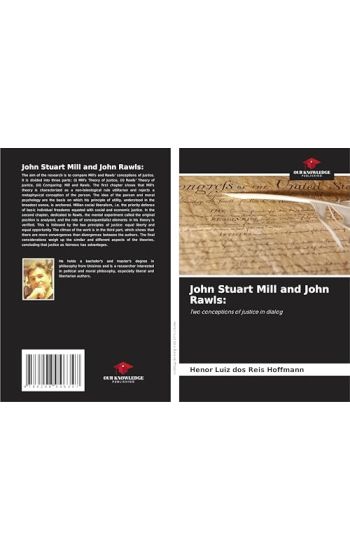
The aim of the research is to compare Mill's and Rawls' conceptions of justice. It is divided into three parts: (i) Mill's Theory of Justice, (ii) Rawls' Theory of Justice, (iii) Comparing: Mill and Rawls. The first chapter shows that Mill's theory is characterized as a non-teleological rule utilitarian and rejects a metaphysical conception of the person. The idea of the person and moral psychology are the basis on which his principle of utility, understood in the broadest sense, is anchored. Millian social liberalism, i.e. the priority defense of basic individual freedoms equated with social and economic justice. In the second chapter, dedicated to Rawls, the mental experiment called the original position is analyzed, and the role of consequentialist elements in his theory is verified. This is followed by the two principles of justice: equal liberty and equal opportunity. The climax of the work is in the third part, which shows that there are more convergences than divergences between the authors. The final considerations weigh up the similar and different aspects of the theories, concluding that justice as fairness has advantages.
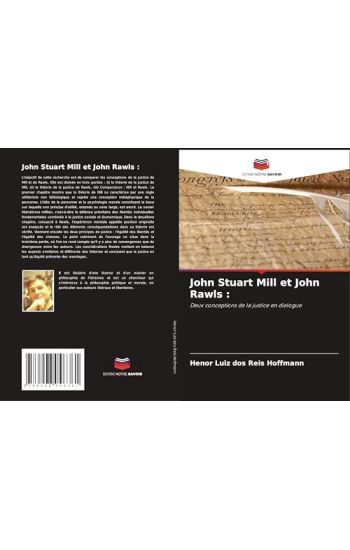
L'objectif de cette recherche est de comparer les conceptions de la justice de Mill et de Rawls. Elle est divis e en trois parties: (i) la th orie de la justice de Mill, (ii) la th orie de la justice de Rawls, (iii) Comparaison: Mill et Rawls. Le premier chapitre montre que la th orie de Mill se caract rise par une r gle utilitariste non t l ologique et rejette une conception m taphysique de la personne. L'id e de la personne et la psychologie morale constituent la base sur laquelle son principe d'utilit , entendu au sens large, est ancr . Le social-lib ralisme millien, c'est- -dire la d fense prioritaire des libert s individuelles fondamentales combin e la justice sociale et conomique. Dans le deuxi me chapitre, consacr Rawls, l'exp rience mentale appel e position originelle est analys e et le r le des l ments cons quentialistes dans sa th orie est v rifi . Viennent ensuite les deux principes de justice: l' galit des libert s et l' galit des chances. Le point culminant de l'ouvrage se situe dans la troisi me partie, o l'on se rend compte qu'il y a plus de convergences que de divergences entre les auteurs. Les consid rations finales mettent en balance les aspects similaires et diff rents des th ories et concluent que la justice en tant qu' quit pr sente des avantages.
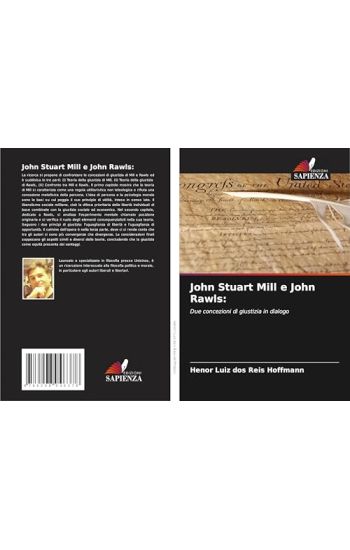
La ricerca si propone di confrontare le concezioni di giustizia di Mill e Rawls ed suddivisa in tre parti: (i) Teoria della giustizia di Mill, (ii) Teoria della giustizia di Rawls, (iii) Confronto tra Mill e Rawls. Il primo capitolo mostra che la teoria di Mill si caratterizza come una regola utilitaristica non teleologica e rifiuta una concezione metafisica della persona. L'idea di persona e la psicologia morale sono le basi su cui poggia il suo principio di utilit , inteso in senso lato. Il liberalismo sociale milliano, cio la difesa prioritaria delle libert individuali di base combinate con la giustizia sociale ed economica. Nel secondo capitolo, dedicato a Rawls, si analizza l'esperimento mentale chiamato posizione originaria e si verifica il ruolo degli elementi consequenzialisti nella sua teoria. Seguono i due principi di giustizia: l'uguaglianza di libert e l'uguaglianza di opportunit . Il culmine dell'opera nella terza parte, dove ci si rende conto che tra gli autori ci sono pi convergenze che divergenze. Le considerazioni finali soppesano gli aspetti simili e diversi delle teorie, concludendo che la giustizia come equit presenta dei vantaggi.

John Stuart Mill: Life, Life Lessons & Achievements
John Stuart Mill
Madison Adams Press
2019
nidottu
This classic memoir brings the complete biography of the one of the greatest thinkers of the western philosophy. Mill is considered to be the most influential mind of liberalism. His work contributed greatly to the development of social theory, political theory and political economy thanks to which he earned the title of "the most influential English-speaking philosopher of the nineteenth century". In this book, John Stuart Mill described his life from childhood and early education until old age. He wrote about his main interests, notable ideas and great influences. Contents: Childhood and Early Education Moral Influences in Early Youth My Father's Character and Opinions Last Stage of Education, and First of Self-education Youthful Propagandism The "Westminster Review" A Crisis in My Mental History One Stage Onward Commencement of the Most Valuable Friendship of My Life My Father's Death Writings and Other Proceedings Up to 1840 General View of the Remainder of My Life Completion of the "System of Logic" Publication of the "Principles of Political Economy" Marriage Retirement From the India House Publication of "Liberty" "Considerations on Representative Government" Civil War in America Examination of Sir William Hamilton's Philosophy Parliamentary Life Remainder of My Life

The Political Theory of John Stuart Mill: 7 Book Collection
John Stuart Mill
Madison Adams Press
2019
nidottu
This collection of selected work presents John Stuart Mill as a political theorist. In this seven-book edition you can find out Mill's thoughts on representative government, parliamentary reform and capital punishment. This collection also contains books where Mill discussed some of the current topics of his time such as the relations between England and Ireland, American Civil War and improvements in the administration of India. Contents: Considerations on Representative Government To What Extent Forms of Government Are a Matter of Choice The Criterion of a Good Form of Government That the Ideally Best Form of Government Is Representative Government Under What Social Conditions Representative Government Is Inapplicable Of the Proper Functions of Representative Bodies Of the Infirmities and Dangers to Which Representative Government Is Liable Of True and False Democracy; Representation of All, and Representation of the Majority Only Of the Extension of the Suffrage Should There Be Two Stages of Election? Of the Mode of Voting Of the Duration of Parliaments Ought Pledges to Be Required From Members of Parliament? Of a Second Chamber Of the Executive in a Representative Government Of Local Representative Bodies Of Nationality, as Connected With Representative Government Of Federal Representative Governments Of the Government of Dependencies by a Free State England and Ireland Memorandum of the Improvements in the Administration of India During the Last Thirty Years Revenue Administration, & Rights of the Rural Population Judicature and Legislation Improvement of the Country by Public Works Education Miscellaneous Improvements Bengal Survey Survey and Assessment of the North-western Provinces Survey and Assessment of the Bombay Territory Exemption of Lands Improved by the Ryots From Extra Assessment Speech in Favor of Capital Punishment The Contest in America Thoughts on Parliamentary Reform A Few Words on Non-intervention
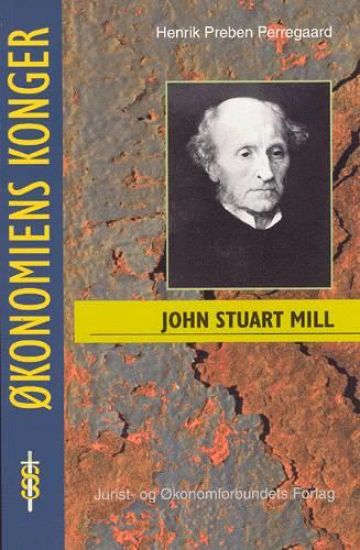
John Stuart Mill er den socialliberale samfundstænker, der i det 19. århundrede evnede at forbinde Ricardos fundamentalistiske liberalisme og de praktiske forhold i den britiske økonomi. Han ønskede at fremme politisk frihed og økonomisk velstand for alle samfundsborgere. Der er overraskende mange paralleller mellem den politisk økonomiske diskussion i midten af 1800-tallet og den, vi oplever i dag. Socialismen døde ved murens fald, og liberalismen sejrede. Resultatet er blevet et samfund, hvor alle i stigende grad tænker på sig selv. Der er derfor behov for, at vi atter vender os mod den europæiske kulturtradition, der har argumenteret for frihed og liberalisme under ansvar - personligt og socialt. De socialistiske tanker om lighed og solidaritet kan vi heller ikke undvære. Her kommer Mill ind i billedet. Bogen beskriver Mills liv og hans bidrag til den økonomiske videnskab. Men også Mills mere politisk prægede analyser om den repræsentative regering, frihedens problemer og kvindernes underkuelse behandles.

In this well-researched, comprehensive study of J.S. Mill, Professor Habibi argues that the persistent, dominant theme of Mill's life and work was his passionate belief in human improvement and progress. Several Mill scholars recognize this; however, numerous writers overlook his 'growth ethic', and this has led to misunderstandings about his value system. This study defines and establishes the importance of Mill's growth ethic and clears up misinterpretations surrounding his notions of higher and lower pleasures, positive and negative freedom, the status of children, the legitimacy of authority, and support for British colonialism. Drawing from the entire corpus of Mill's writings, as well as the extensive secondary literature, Habibi has written the most focused, sustained analysis of Mill's grand, leading principle. This book will be useful to college students in philosophy and intellectual history as well as specialists in these fields.

John Stuart Mill: Principles of Political Economy (Grapevine edition)
John Stuart Mill
Grapevine India Publishers Pvt Ltd
2024
nidottu
John Stuart Mill: Principles of Political Economy is a seminal work that continues to shape modern economic thought. Through meticulous analysis and eloquent prose, Mill delves into the intricate workings of economic systems, exploring the dynamics of production, distribution, and consumption. With a keen eye for social justice, he advocates for policies that prioritize the well-being of all citizens, emphasizing the importance of individual liberty alongside collective progress. A timeless classic, Mill's insights remain indispensable for understanding the complexities of economics and society.
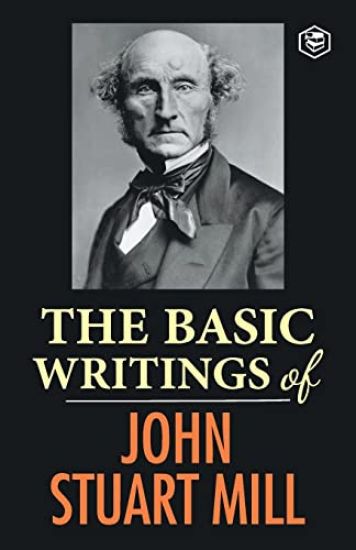
The writings of John Stuart Mill have become the cornerstone of political liberalism. Collected in this volume are John Stuart Mill's Four seminal and most widely read works: On Liberty, The Subjection of Women, Utilitarianism and Socialism. Mill's conception of liberty (from his most famous book, On Liberty) justified the freedom of the individual in opposition to unlimited state control. The Subjection of Women is a passionate defense of the rights of women from the point of view of a man that truly believes in equality. In Utilitarianism, Mill's major contribution is his argument for the qualitative separation of pleasures, in response to Jeremy Bentham's formulation of utilitarianism: the "greatest-happiness principle", which holds that one must always act so as to produce the greatest aggregate happiness among all sentient beings, within reason. Socialism is an early attempt of visualizing a way of putting the Marxist theory into practice. Mill realizes that distributing the wealth onto the proletariat will lead to a state of routine work, where there is neither motivation nor anxiety, not realizing, however, that routine will devoid performance of excellence. John Stuart Mill has been called "the most influential English-speaking philosopher of the nineteenth century."
The writings of John Stuart Mill have become the cornerstone of political liberalism. Collected in this volume are John Stuart Mill's Four seminal and most widely read works: On Liberty, The Subjection of Women, Utilitarianism and Socialism. Mill's conception of liberty (from his most famous book, On Liberty) justified the freedom of the individual in opposition to unlimited state control. The Subjection of Women is a passionate defense of the rights of women from the point of view of a man that truly believes in equality. In Utilitarianism, Mill's major contribution is his argument for the qualitative separation of pleasures, in response to Jeremy Bentham's formulation of utilitarianism: the "greatest-happiness principle", which holds that one must always act so as to produce the greatest aggregate happiness among all sentient beings, within reason. Socialism is an early attempt of visualizing a way of putting the Marxist theory into practice. Mill realizes that distributing the wealth onto the proletariat will lead to a state of routine work, where there is neither motivation nor anxiety, not realizing, however, that routine will devoid performance of excellence. John Stuart Mill has been called "the most influential English-speaking philosopher of the nineteenth century."

John Stuart Mill: Political Economist
Samuel Hollander
World Scientific Publishing Co Pte Ltd
2015
sidottu
John Stuart Mill: Political Economist is a revised version of the part of Samuel Hollander's The Economics of John Stuart Mill (1985) treating the theory of economic policy. In this book, Professor Hollander offers a critical yet sympathetic analysis of Mill's quest to accomplish thorough reform of capitalism in the interest of distributive justice while protecting the security of property and contemplating the potential evolution of capitalism into cooperative organization. Part I of the book serves as an introduction to the investigation of Mill's theory of economic policy; Parts II and III include Mill's primary policy recommendations; while Part IV adds a substantial 'Overview and Evaluation' reviewing the author's main conclusions. A major concern is Mill's perception of the composition of the 'greatest number' whose interests are to be considered by policy-makers; here arises his attitude towards British Imperialism. The author then undertakes thematic comparisons between the positions of Mill and those of Smith, Ricardo, Malthus, Marx and Bernstein; and closes with a rejection of the celebrated criticism of Mill's 'liberalism' by Friedrich Hayek.
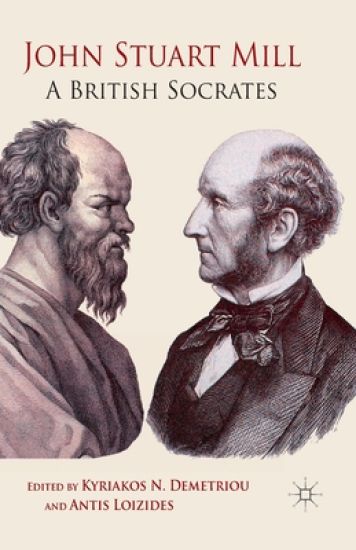
John Stuart Mill
Palgrave Macmillan
2013
nidottu
This edited collection highlights the inquisitive and synthetic aspects of John Stuart Mill's mode of philosophising while exploring various aspects of Mill's thought, intellectual development and influence. The contributors to this volume discuss a number of Mill's ideas including those on political participation, democracy, liberty and justice.

John Stuart Mills politische Theorie und die Entwicklung Afrikas
Promise Frank Ejiofor
Verlag Unser Wissen
2025
pokkari


John Stuart Mill
Hansebooks
2026
pokkari