
Kirjahaku
Etsi kirjoja tekijän nimen, kirjan nimen tai ISBN:n perusteella.
655 tulosta hakusanalla Joni Mitchell


The Parent Playbook K-2 2nd Edition: Standards-Based Learning Activities
Joni K. Samples
ENGAGE PRESS LLC
2019
nidottu

The Parent Playbook 3-5 Revised: Standards Based Learning Activities
Joni Samples
ENGAGE PRESS LLC
2019
nidottu

The Parent Playbook 6-8 Revised: Standard Based Learning Activities
Joni Samples
ENGAGE PRESS LLC
2019
nidottu
Welcome to the Parent Playbook series, where you will find recipies for learning. Similar to a cookbook, each activity begins with a list of needed materials, the time required to complete the acitivity, and a description of the activity. Instead of a "daily nutritional requirement," these recipes are related to State Learning Standards. The activities are easy and fun. Trinidad, the starfish, suggests that you try either the English Language Arts, Math, Science or Social Studies activities. Again, they are fun and easy to do.
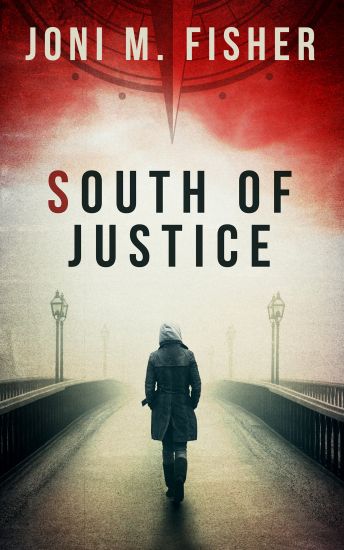



A colossal fortune. A secret reaper. A young woman whose drive for due process makes her the target of dangerous people...Nefi Jenkins dreams of becoming an FBI agent. After outing her parents' heartless killer, the Harvard grad focuses on getting into a stellar criminal justice master's degree program. But her career goals take a back seat when she inherits a ten-million-dollar trust from her late parents...with a hefty chunk gone.Seeking the help of a forensic accountant, Nefi discovers a cunning thief has been stealing from her inheritance. And with her legacy at stake, the hidden enemy's scheme to swipe her cash could turn deadly.Can Nefi restore her parent's gift before her investigation turns fatal?East of Evil is the fourth book in the page-turning Compass Crimes suspense series. If you like strong heroines, greed-driven motives, and jaw-dropping twists, then you'll love Joni M Fisher's hunt for the truth.Buy East of Evil to see the stunning conclusion of the Compass Crimes series

Flywheels and Feedback Loops: A Guide to Success for Amazon Private-Label Sellers
Joni Sensel; Bernie Thompson
Efficient Era
2016
nidottu
Success on Amazon requires fast responses to customers and Amazon itself. Negative reviews need to be treated as opportunities to help and improve. Actions by Amazon and your competitors need quick review and responses on your part. Amazon won't always notify you about these events and triggers, and often won't give you an easy way to respond. This book gives you a full picture of all these feedback loops, and how they enable you to gain or lose search position and sales velocity for your products. Success requires new ways of thinking, outstanding customer service, and unprecedented speed. The author's own electronics company became one of the early private-label success stories on Amazon, mentioned in press articles and Amazon's own shareholder letter. The company has grown total sales every year using these strategies. Now he shares how you can find similar success. Going well beyond the basics (which are widely available elsewhere), this book is for sophisticated private-label sellers and manufacturers who recognize that there are no tricks or schemes, only winning strategies, best practices, and tools for overcoming the inertia of discoverability to get the sales flywheel moving. Specific tips and advice include where to focus your energy, how to make data actionable, and how to close the feedback loops that drive successful e-commerce.

When Normal Blew Up: The Story of the People Who Died and the People Who Lived on
Joni Foster
Red Raku Press
2017
nidottu
2017 Foreword INDIES Book of the Year Bronze, True Crime (Nonfiction)"Powerful book...thinking about it weeks later." -- James Crawford, Director, Lakewood Public LibraryIn 1967, in the small town of Circleville, Ohio, a man walked into an old-fashioned drug store on a busy Saturday and laid a smoking package on the pharmacy counter in the back. He shouted for everyone to leave, he had a bomb. The store owner grabbed the package and ran down the back hallway. The man chased the owner, grabbed him and struggled to take the package away. A pharmacist saw what was happening, raced after both, and tried to pull the two apart. A clerk was standing at the back door. A bookkeeper was in the back office, unaware. The bomb went off. Five people died that day, leaving five spouses and fifteen children to grieve in silence and a stunned community to pick up the pieces. Fifty years later, Joni Foster, who was nine at the time and daughter of the pharmacist who died, began a quest to find out in detail who these people were and what exactly happened. Over nine months, she would interview members from each family to hear their stories of what life was like before, what happened that day, and how they moved forward. Most of the people she interviewed had never told their story before to anyone, including members of their own families.This story is a tragedy, a history lesson on the slow, painful emancipation of women, and ultimately a love story to the families trying to live normal lives.

poetry written about humans being in solitude, humans being in relationship, humans being in nature. It's a map of a wide array of emotional and meditative landscapes.
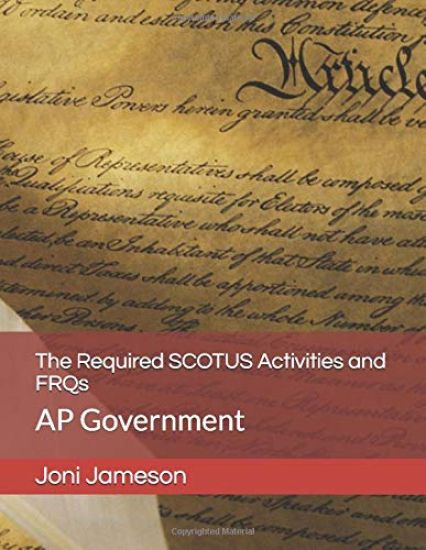
The Required SCOTUS Activities and FRQs: AP Government
Joni Jameson
Independently Published
2019
nidottu
The Required SCOTUS Activity Book includes the 15 Required SCOTUS cases and 33 activities with reproducible handouts, to prepare high school students for FRQ 3 on the newly designed AP U.S. Government examination. The enduring understandings, essential knowledge, and skills outlined in the new College Board CED. Lessons focus on the required SCOTUS cases and the integration of essential knowledge and skills from the course curriculum. Includes notes, suggested procedures, readings, and additional sources. Practice FRQ questions and rubrics are provided for each Required Case. Advanced students. Table of ContentsNotes & Resources:1Lesson 1Marbury v Madison (1803) Judicial Review5Handout 1.1 The Birth of Judicial Review7Handout 1.2: Marbury at a Glance15Lesson 2 McCulloch v Maryland (1819) Necessary and Proper17Handout 2.1 Powers of Congress19Handout 2.2 Conflict between "necessary and proper" and a limited national government19Handout 2.3 Balance between governmental power and individual rights19Lesson 3 U.S. v Lopez (1995) Federal v State Powers20Handout 3.1 The extent of Congressional power to regulate commerce22Handout 3.2 Commerce Clause and Schools27Lesson 4 Baker v Carr (1962) Majority Rule and Minority Rights31Handout 4.1 Elections and the Constitution33Handout 4.2 Evaluating Legal Arguments35Lesson 5 Shaw v Reno (1993) Strict Scrutiny and Equal Protection37Handout 5.1 Constitutional Basis39Handout 5.2 Equal Representation43Handout 5.3 Strict Scrutiny46Lesson 6 Engel v Vitale (1962) Establishment Clause49Handout 6.1 Establishment Clause50Handout 6.2 Applying the Establishment Clause52Lesson 7 Wisconsin v Yoder (1972) Freedom of Religion60Handout 7.1 Wisconsin v Yoder (1972)61Lesson 8 Tinker v Des Moines Independent School District (1969) First Amendment64Handout 8.1 Symbolic Speech65Handout 8.2 The Case for Freedom of Speech in Schools71Lesson 9 New York Times Co v United States (1971) Freedom of the Press75Handout 9.1 The Whistleblower76Handout 9.2 Freedom of the Press versus National Security79Handout 9.3 Alternative Decision82Lesson 10 Schenck v United States (1919) Freedom of Speech83Handout 10.1 A Clear and Present Danger84Lesson 11 McDonald v Chicago (2010) The Right to Bear Arms87Handout 11.1 Writing a Legal Brief88Lesson 12 Gideon v Wainwright (1963) The Right to Counsel90Handout 12.1 Criminal Rights91Handout 12.2 The Right to an Attorney94Lesson 13 Roe v Wade (1973) Right to Privacy104Handout 13.1 Basis for the Right to Privacy105Handout 13.2 The Supreme Court and the Right to Privacy108Handout 13.3 Roe v Wade112Lesson 14 Brown v Board of Education (1954) Separate But Equal117Handout 14.1 Separate but Equal118Handout 14.2 Brown v Board of Education (1954)120Handout 14.3 All Deliberate Speed124Lesson 15 Citizens United v Federal Election Commission (2010) Freedom of Speech126Handout 15.1 The Parties127Handout 15.2 Court Brief135Handout 15.3 Making a Decision144Appendix152Case at a Glance152SCOTUS Required at a Glance154Similarities and Differences158Key Concepts159Practice SCOTUS FRQ Q3163


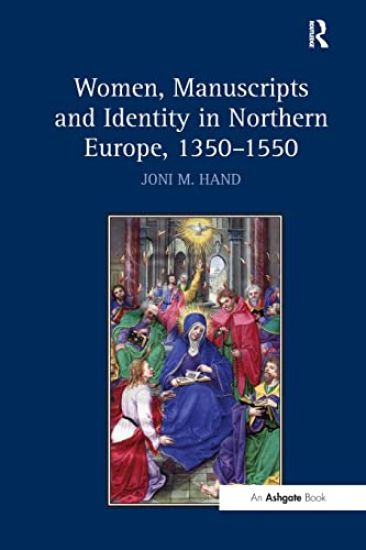
Author Joni M. Hand sheds light on the reasons women of the Valois courts from the mid-fourteenth to the mid-sixteenth century commissioned devotional manuscripts. Visually interpreting the non-text elements-portraits, coats of arms, and marginalia-as well as the texts, Hand explores how the manuscripts were used to express the women’s religious, political, and/or genealogical concerns. This study is arranged thematically according to the method in which the owner is represented. Recognizing the considerable influence these women had on the appearance of their books, Hand interrogates how the manuscripts became a means of self-expression beyond the realm of devotional practice. She reveals how noblewomen used their private devotional manuscripts as vehicles for self-definition, to reflect familial, political, and social concerns, and to preserve the devotional and cultural traditions of their families. Drawing on documentation of women’s book collections that has been buried within the inventories of their fathers, husbands, or sons, Hand explores how these women contributed to the cultural and spiritual character of the courts, and played an integral role in the formation and evolution of the royal libraries in Northern Europe.
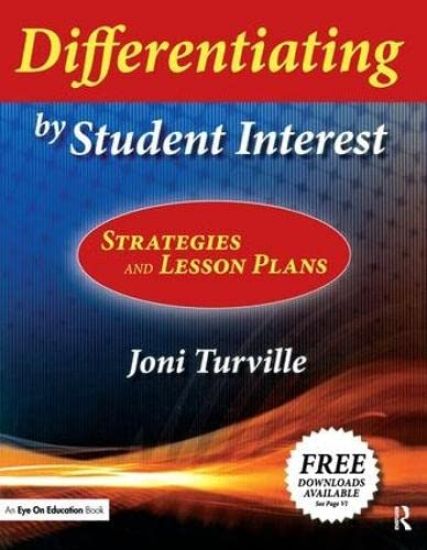
This practical book shows elementary school teachers how to differentiate instruction based on their students' situational and personal interests. It provides a large number of detailed and easy-to-use lesson plans to help you create choices to increase student engagement and learning. Also included is a set of blackline masters which you can duplicate and use in your classroom.