
Kirjahaku
Etsi kirjoja tekijän nimen, kirjan nimen tai ISBN:n perusteella.
1000 tulosta hakusanalla Josef Loderbauer
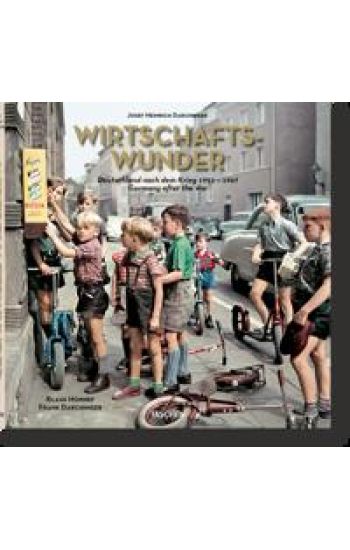
It was no more than eight years after the surrender of the Nazi government when Josef Heinrich Darchinger set out on his photographic journey through the West of a divided Germany. The bombs of World War II had reduced the country’s major cities to deserts of rubble. Yet his pictures show scarcely any signs of the downfall of a civilization. Not that the photographer was manipulating the evidence: he simply recorded what he saw. At the time, a New York travel agency was advertising the last opportunity to go and visit the remaining bomb sites. Darchinger’s pictures, in color and black-and-white, show a country in a fever of reconstruction. The economic boom was so incredible that the whole world spoke of an “economic miracle.” The people who achieved it, in contrast, look down-to-earth, unassuming, conscientious, and diligent. And increasingly, they look like strangers in the world they have created. The photographs portray a country caught between the opposite poles of technological modernism and cultural restoration, between affluence and penury, between German Gemütlichkeit and the constant threat of the Cold War. They show the winners and losers of the “economic miracle,” people from all social classes, at home, at work, in their very limited free time and as consumers. But they also show a country that looks, in retrospect, like a film from the middle of the last century. For this revised edition, we have digitally remastered all photographies in a new, full-frame format that captivate with their highly pigmented colors and fine press varnish.

Josef Bayer (1847-1925)
Maria-Theresia Sokal
Südwestdeutscher Verlag für Hochschulschriften AG
2015
nidottu
Josef Stammel (1695- 1765)
Regina Ahlgrimm-Siess
Sudwestdeutscher Verlag Fur Hochschulschriften AG
2010
pokkari



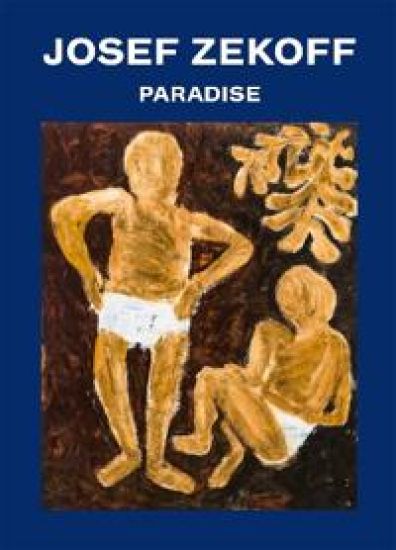
The facelessness of the protagonists in Josef Zekoff's paintings is one of their most distinctive features. From emblematic labyrinths - he does also paint ornaments and maps - to drawn stick figures, the in-between space occupied by these paintings encourages self-reflection, which does, however, require courage on the part of the viewer. Or as Florian Waldvogel writes in his introductory text: Do the protagonists of his paintings seek an encounter with something that goes beyond the world of objects and fixed quantities? Is it, as Martin Heidegger writes in > What is Metaphysics? nothing dread nothing

Josef Jungmann a obrozenska terminologie literarne vedna a linguisticka
Jedlicka Alois Jedlicka
Peter Lang GmbH, Internationaler Verlag der Wissenschaften
1991
nidottu
In der Reihe erscheinen Monographien, Sammelbande und Lehrbucher zu allen Gebieten der Slavistik, der Sprach-, der Literatur- und der Kulturwissenschaft.
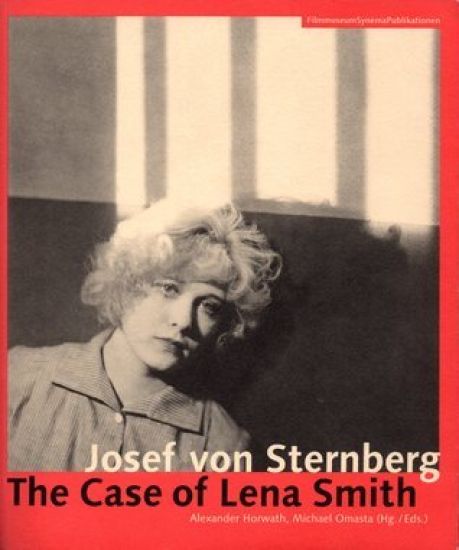
Josef von Sternberg – The Case of Lena Smith
Alexander Horwath
Synema Gesellschaft Fur Film u. Medien
2008
nidottu
In his 1929 Hollywood production The Case of Lena Smith, director Josef von Sternberg vividly brought to life his youthful memories of the turn of the 20th century through the story a young woman fighting the oppressive class system of Imperial Vienna. Critic Dwight Macdonald called it “the most completely satisfying American film I have seen.” And yet, only a short fragment survives. Assembling 150 original stills and set designs, numerous script and production documents and essays by eminent film historians, the book reconstructs one of the legendary lost masterpieces of the American cinema. It also includes essays by Janet Bergstrom, Gero Gandert, Franz Grafl, Alexander Horwath, Hiroshi Komatsu and Michael Omasta, a preface by Meri von Sternberg, as well as contemporary reviews and excerpts from Viennese literature of the era.

The German painter Josef Maria Schröder, born in 1886 in Düsseldorf, where he died in 1965, is still unknown to this day. He worked as a banker in Düsseldorf till 1913, when he boldly resolved to devote himself entirely to his art. After an apprenticeship with the painter Eugen Spiro (1874–1972) in the socially and artistically effervescent Berlin, Schröder enjoyed his first successes when his works were shown in solo exhibitions and he won the Max Liebermann Foundation award. Born with one leg shorter than the other, Schröder was spared conscription into the German army. Over the next forty years, however, he was confronted with all the adversities and deprivations of the war years and the interwar period. A temporary exhibition ban, cancelled commissions, dire financial straits and a general lack of support for the arts made him a representative of the “Lost Generation”. Most of his paintings and drawings are portraits, landscapes or abstract works. His artistic explorations eventually culminated in a ballpoint pen technique that he developed from 1950 on. In these late works, Schröder integrated a wide range of artistic styles from the first half of the 20th century to produce intensely luminous abstract compositions of a surrealist/constructivist cast. This wide range of different forms and colors then served in other works as backgrounds to particularly striking and highly stylized portraits. Until the death of his daughter Cecilie in the spring of 2008, Schröder’s works were gathering dust in her apartment and had never been shown or sold. It was thanks to Post Fine Arts, which acquired the works from the estate in 2012, that they were at long last accorded the public exposure and recognition they deserve in its gallery in Freiburg im Breisgau, Germany.
Josef Geiß - Obersalzberg
Plenk Berchtesgaden
2016
nidottu


Josef K.! Schuldig oder nicht schuldig? Von der Macht in Kafkas "Der Proceß
Rene Jochum
Diplomica Verlag
2014
pokkari

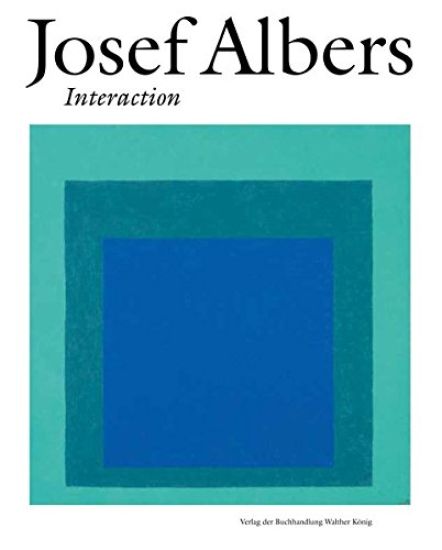
Josef Albers. Interaction
König, Walther
2018
sidottu
Josef Schulz - Hundert Jahre - Faszination eines Überlebenden
Bernd Schulz
Rediroma-Verlag
2022
nidottu