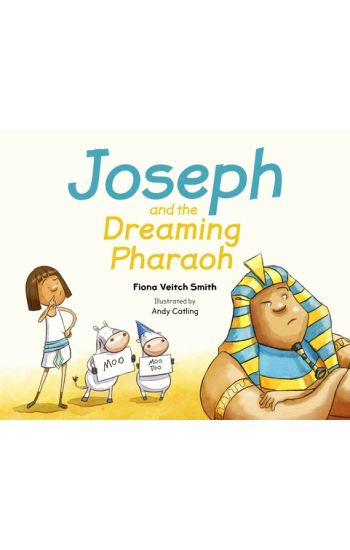
Joseph is still in prison in Egypt, with only his imaginary cows for company. Pharaoh’s butler, who promised to help him, has forgotten all about him. Meanwhile, Pharaoh is having some very strange dreams. Pharoah’s butler remembers that Joseph helped him to understand his dreams. Can Joseph do the same for Pharaoh and finally be free? ‘Fiona Veitch Smith and Andy Catling have done an excellent job . . . The text is fun and accessible and imaginative, yet still faithful to the biblical story. And, best of all, there are cows!’ Bob Hartman, storyteller and author
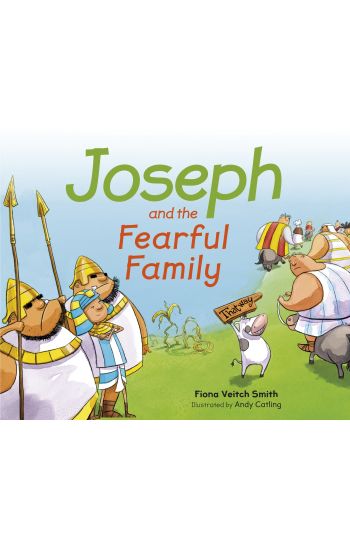
A delightful re-telling of the popular biblical story of Joseph. Having helped Pharoah make sense of his strange dreams, Joseph is now the second most important person in Egypt. Pharoah puts him charge of making sure everyone has enough food. When famine stirkes, Joseph's long-lost brothers come to ask Joseph for food - but they don't recognise the brother they thought was dead. Will Joseph choose to help them or take his revenge? Hilarious illustrations by Andy Catling featuring scene-stealing cows! Covers issues of concern to contemporary children such as sibling rivalry, helping others and making good choices.
Joseph waits for his brothers to return to Egypt with his younger brother, Benjamin. Will they finally recognise the brother they had left for dead? And will Joseph ever be reconciled with his long-lost family?
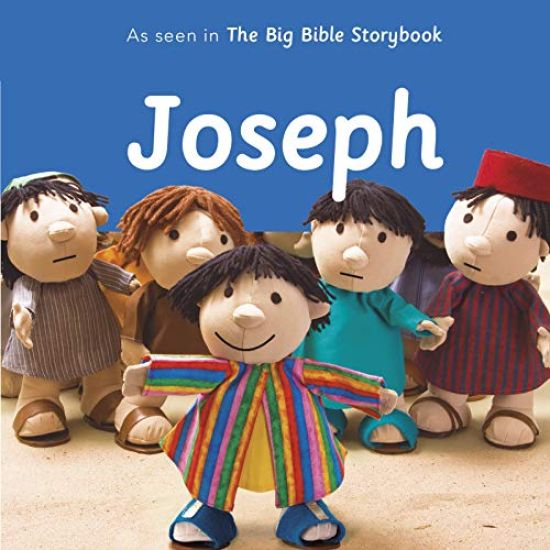
A delightful retelling of the story of Joseph, especially for under 5s. It features full-colour photographic spreads of the characters from the award-winning Big Bible Storybook. This board book is perfectly sized for small hands, with short text for a parent or carer to read to the child.
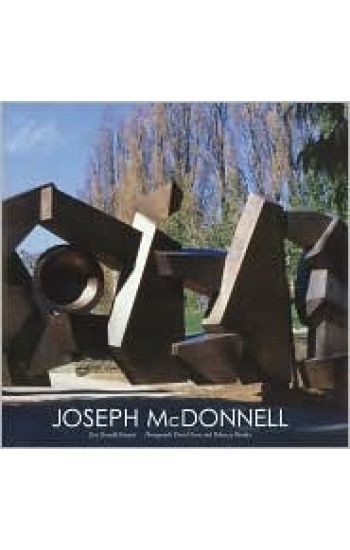
Joseph McDonnell started out as a figurative sculptor studying under renowned Yugoslav sculptor Ivan Mestrovic, but his major works vary from stark geometric forms to others more loosely connected. They range in size from small to monumental and include mobiles, wall reliefs, and, more recently, an exquisite series McDonnell calls "Ice Cubes." He has a flawless sense of mass and speace that produces an inner logic in the forms he creates. His work in bronze and granite contains overtones of ancient civilizations and their symbolism deals with the primordial objects of life: the sun, the column, the arch.With an in-depth text by the well-known art critic Donald Kuspit and photographs by world-famous photographer of sculpture David Finn and his granddaughter, Rebecca Binder, this book brings McDonnell's unique vision to life through exquisite detail shots that explore the sculptures from many angles.
For nearly four decades, Joseph Goldberg has produced paintings of great intelligence and sumptuous beauty. Raised near Spokane, Washington, he returned to live and work in the open, semi-arid spaces of eastern Washington after building a Seattle reputation as an abstract artist working with geometric shapes in the unusual technique of encaustic painting.In the late 1960s and early 1970s, Goldberg's paintings were deceptively simple arrangements of geometric motifs in watercolor on paper or oil on linen. By the mid-1970s, he began to make paintings of a more complex nature, sometimes in nonrectangular forms, but still expressing a reductive sensibility. By the early 1980s, Goldberg had fully embraced his signature medium of encaustic-a demanding and difficult method of fusing intense colors of dry pigments with layers of wax, fired by heat into a lustrous surface. The paintings of the 1980s pursued a variety of motifs abstracted from architecture and landscape, including a series of irregular, banner-like works of shapes within similar shapes. At the same time, Goldberg was producing paintings and drawings of the highly varied Washington landscape and of his travels through the Southwest and Europe. As his work progressed through the 1990s, this expansive vision of the natural world embraced an increasingly larger scope of imagery.Goldberg's development as an artist has been enriched by his travels through ancient Roman ruins and the Greek revival manors of rural Sussex, England, as well as by his studies of Hopi, Anasazi, Navajo, and Zuni civilizations. This history emerges in the form of representational architectural details, landscape impressions, and cultural references. His more recent work is focused on Eastern Washington and its landscape of dramatic gorges, prominent ridges, and desolate fields of sage and sand. The paintings since 2000 have often returned to the severity of his earliest work, now filtered through the artist's keen sense of the art that came before him and of the grandeur of nature surrounding him. Whether painting the space between stars in the dark skies of Eastern Washington or the expansive white ground between rural detritus abandoned at the edges of a snow-covered field, Goldberg has imbued his paintings with mystery and meaning.An essay by New York-based poet Nathan Kernan examines Goldberg's oeuvre and explores the role of poetry in the artist's life and work. In her interview with Goldberg, Seattle Post-Intelligencer critic Regina Hackett considers more personal aspects of the artist's life.A Thomas T. Wilson Book
Joseph Farington (1747-1821) was a professional topographical artist and lived most of his life in London. Through his extensive involvement in the affairs of the Royal Academy, his wide circle of friends, and his membership in several clubs and societies, he touched the life of his time at many points. This diary, which he kept from 1793 until his death, provides a meticulous record of his actions and observations and is an invaluable source for the history of English art and artists. It also constitutes an absorbing record of this period’s social, political, and literary developments.These first two volumes cover the time from July 31, 1793, when he visited Horace Walpole at Strawberry Hill, to August 31, 1796. Apart from recording his constant involvement in Academy business, he describes his visit to Valenciennes and his sketching tour for the History of the River Thames. Such matters as the sale of part of Sir Joshua Reynolds’s collection, the controversies over the Shakespeare forgeries are set down against the background of the French Revolution and the war, and of political turbulence at home. The diary is now for the first time published in full. The unannotated text will be published in successive volumes with a full index and a final volume, A Companion to The Farington Diary, to follow.
Joseph Farington (1747-1821) was a professional topographical artist and lived most of his life in London. Through his extensive involvement in the affairs of the Royal Academy, his wide circle of friends, and his membership in several clubs and societies, he touched the life of his time at many points. This diary, which he kept from 1793 until his death, provides a meticulous record of his actions and observations and is an invaluable source for the history of English art and artists. It also constitutes an absorbing record of this period’s social, political, and literary developments.This second pair of volumes covers the period in which Farington’s influence within the Royal Academy was at its height and he earned the title of ‘dictator of the Royal Academy.’ These years where characterized by artistic controversy over such matters as the eligibility of architects for membership, the expulsion of James Barry from his position as Professor of Painting and then from the Academy itself, and the alleged destructiveness of James Wyatt’s restoration of Durham Cathedral. Farington immersed himself in these and other artistic matters ranging from the campaign for the establishment of a national gallery to his budding friendships with the young Turner and the young Constable.
Joseph Farington (1747-1821) was a professional topographical artist who lived most of his life in London. Through his extensive involvement in the affairs of the Royal Academy, his wide circle of friends, and his membership in several clubs and societies, he touched the life of his times at many points. His diary, now for the first time being published in full, is an invaluable source for the history of English art and artists.In this third pair of volumes, the chief interest is provided by Farington’s account of his visit to Paris, in company with Fuseli, during the Peace of Amiens in 1802. West, Opie, Flaxman, Hoppner, and Turner were among the other English artists who visited Paris at the same time, as did Charles James Fox and his followers. Farington provides much material on French art and artists, notably on David and his pupils, and on the works of art looted from other parts of Europe, especially from Italy, which were on view in the Louvre. There are vivid descriptions of Napoleon and of the atmosphere of Paris during the Consulate. During these years Farington also undertook tours of the Lake District, Scotland, and the Wye valley. He portrays in detail the pre-Regency society of these years, ranging from the small change of gossip and social life to the serious matters of art and politics.
These seventh and eighth volumes of Farrington's diary chronicle a period of troubled time for the Royal Academy and record political events such as the battle of Trafalgar and the death of Pitt and Fox.
The ninth and tenth volumes of the diary cover the years from January 1808 up to December 1810. Among the public events that preoccupy Joseph Farington are the wars in Europe and South America and the spectacular scandal that erupted in 1809 over Duke of York’s association with Mary Anne Clark.This period finds Farington embarking on extended tours—one to the north of England and two to the West Country—making sketches to illustrate the survey of Britain, Britannica Depicta, compiled by his friends Samuel and Daniel Lysons. Farington’s association with this and other projects for the publishers Cadell and Davies involves him in negotiations with many engravers, among them Joseph Landseer, James Heath, and Samuel Middiman.Within the Royal Academy (to which Landseer is pressing that a number of engravers be admitted) feelings run high over the lecture by John Soane criticizing the architecture of Covent Garden Theatre, which was the work of Robert Smirke, the son of Farington’s oldest friends. At the end of 1810 Farington is occupied with assessing Robert Smirke’s prospects at the coming election of academicians. In common with many others in the diarist’s wide circle of acquaintances, Thomas Lawrence and John Constable continue to seek Farington’s advice on professional and practical affairs. Published for the Paul Mellon Centre for Studies in British Art.
These eleventh and twelfth volumes of Farington's famous diaries gives his accounts of Academy exhibitions from 1811 to 1813 and discuss the political events of the time. Published for the Paul Mellon Centre for studies in British art.
Joseph Farington (1747-1821), a respectable though not outstanding painter, was active in the social, cultural, and professional art world of his time. His voluminous diaries enrich our perception of this lively and productive age.Volumes XIII and XIV of the diaries take Farington past his seventieth birthday but show that his keen interest in public and artistic affairs remained undiminished. He rejoices at the end of the long war with France, deplores the conduct of Lord Byron, approves the suspension of the Habeas Corpus Act, and speculates about the probable authorship of the attack on prominent connoisseurs in the catalogue raisonné of the British Institution exhibition. In private life, Farington survives a financial disaster, and campaigns tirelessly to secure the promotion of a nephew to the rank of Post Captain in the Royal Navy.
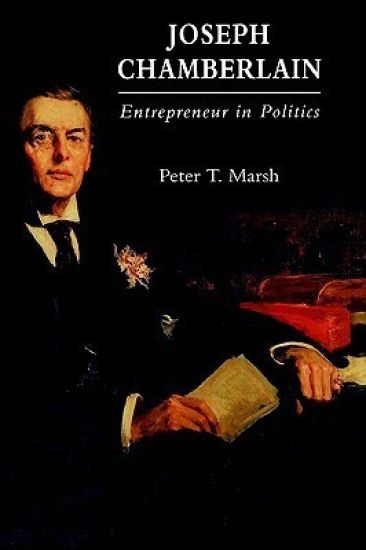
Joseph Chamberlain (1836-1914) was the first industrialist to reach the highest sphere of British politics. Notably successful as a young man in Birmingham's metal-manufacturing industry, he tackled politics as business—venture by venture, innovative in organization as well as product, alert to the importance of accounting and marketing. Aggressive and direct in both personality and principle, he was loyal to enterprise rather than to party. He never became prime minister, yet by the beginning of the twentieth century he was by general consent "the first minister of the British Empire."This book by Peter T. Marsh is the first complete, archivally based, single-volume biography of Chamberlain. Skillfully dissecting his political career, Marsh reveals Chamberlain's radically fresh approach to most of Britain's problems between the Second Reform Act and the First World War. He also highlights the distortions and discontinuities: the breach with Gladstone over Irish Home Rule, which drove Chamberlain from the left of the Liberal party into enduring alliance with the Conservative right; how Chamberlain came to be the champion of the House of Lords instead of its scourge; the cause and effects of Chamberlain's shift from free trader to protectionist. In addition, Marsh explains Chamberlain's internationalism, his involvement in South Africa, Canada, and the United States, and his sustained campaign to develop the Empire's "undeveloped estates."Searching and judicious, the book evokes the contradictions in Chamberlain's personality and private life, his vigor, intensity, and imperious self-confidence along with his inner desolation and lifelong nervous strain. Finely written and argued, the book makes compelling reading, presenting the story of a life that is one of the most absorbing in modern British politics.
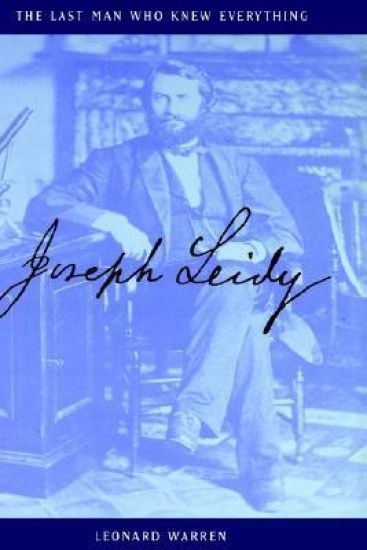
Contemporaries of the modest and unassuming scientist Joseph Leidy (1823–91) revered him as the supreme consultant in questions relating to human anatomy, paleontology, protozoology, parasitology, anthropology, mineralogy, botany, and numerous other scientific fields. Leidy’s achievements and the breadth of his scientific interests and knowledge were astonishing. He seemed, in short, to be the man who knew everything.This is the first published biography of the remarkable Joseph Leidy—a leading American scientist of the mid-nineteenth century, the foremost human anatomist of his time, the first truly productive microscopist, the author of numerous groundbreaking scientific papers and books, and a devoted professor at the University of Pennsylvania and Swarthmore College. An unflagging pioneer and an exceptional illustrator, Leidy was the first in America to use the microscope as a tool in forensic medicine. He established the concept of parasitism in America. He was also the father of American protozoology and parasitology, describing for the first time Trichina in the pig, the source of the human disease trichinosis. As the founder of American vertebrate paleontology, he was the first to describe a dinosaur and many other extinct animals in America. Leonard Warren provides a full account of Leidy’s life and accomplishments and sets them in the social and historical context of Philadelphia and the United States in Leidy’s day. Warren also explores the reasons for the puzzling disparity between Leidy’s fame and recognition during his life and virtual anonymity a century after his death.
Joseph Farington (1747-1821) was a professional landscape and topographical artist. Through his extensive involvement in the affairs of the Royal Academy and his wide circle of friends he was extraordinarily well-informed about the affairs of his day. His diary, which he kept meticulously from 1793 until his death, was published by Yale University Press in sixteen volumes between 1978 and 1984. It comprises not only a detailed record of his actions and observations as an influential figure in the London art world but is also an absorbing record of the social, political, and literary developments of the period. The long-awaited index volume provides access to Farington’s fascination with criminal trials, elections, and frequent Royal scandals of the day as well as the recurrent subject of the French Revolution and Napoleonic Wars in Europe.
An intimate, penetrating study of Joseph Brodsky’s life and work, written by his lifelong friend, the eminent Russian literary scholar Lev Loseff The work of Joseph Brodsky (1940–1996), one of Russia’s great modern poets, has been the subject of much study and debate. His life, too, is the stuff of legend, from his survival of the siege of Leningrad in early childhood to his expulsion from the Soviet Union and his achievements as a Nobel Prize winner and America’s poet laureate. In this penetrating biography, Brodsky’s life and work are illuminated by his great friend, the late poet and literary scholar Lev Loseff. Drawing on a wide range of source materials, some previously unpublished, and extensive interviews with writers and critics, Loseff carefully reconstructs Brodsky’s personal history while offering deft and sensitive commentary on the philosophical, religious, and mythological sources that influenced the poet’s work. Published to great acclaim in Russia and now available in English for the first time, this is literary biography of the first order, and sets the groundwork for any books on Brodsky that might follow.
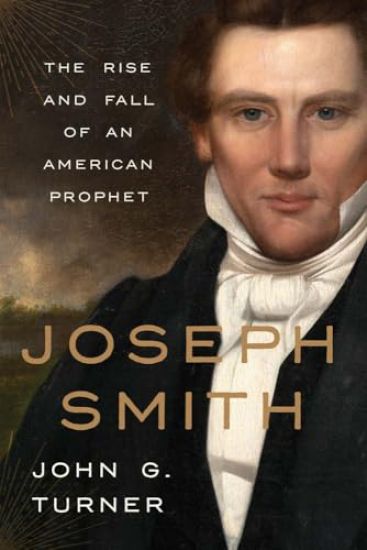
From an award-winning biographer, a riveting and deeply researched portrait of Mormonism’s charismatic founder Joseph Smith Jr. (1805–1844) was one of the most successful and controversial religious leaders of nineteenth-century America, publishing the Book of Mormon and starting what would become the Church of Jesus Christ of Latter-day Saints. He built temples, founded a city-state in Illinois, ran for president, and married more than thirty women. This self-made prophet thrilled his followers with his grand vision of peace and unity, but his increasingly grandiose plans tested and sometimes shattered their faith. In this vivid biography, John G. Turner presents Smith as a consummate religious entrepreneur and innovator, a man both flawed and compelling. He sold books, land, and merchandise. And he relentlessly advanced doctrines that tapped into anxieties about the nature and meaning of salvation, the validity of miracles, the timing of Christ’s second coming, and the persistence of human relationships for eternity. His teachings prompted people to gather into communities, evoking fierce opposition from those who saw those communities as theocratic threats to republicanism. With insights from newly accessible diaries, church records, and transcripts of sermons, Turner illuminates Smith’s stunning trajectory, from his beginnings as an uneducated, impoverished farmhand to his ultimate fall at the hands of a murderous mob, revealing how he forged a religious tradition that has resonated with millions of people in the United States and beyond.
The extraordinary life of a captivating American artist, beautifully illustrated with his dreamlike drawings Much of Joseph Elmer Yoakum’s story comes from the artist himself—and is almost too fantastic to believe. At a young age, Yoakum (1891–1972) traveled the globe with numerous circuses; he later served in a segregated noncombat regiment during World War I before settling in Chicago. There, inspired by a dream, he began his artistic career at age seventy-one, producing some two thousand drawings over a decade. How did Yoakum gain representation in major museum collections in Chicago and New York? What fueled his process, which he described as a “spiritual unfoldment”? This volume delves into the friendships Yoakum forged with the Chicago Imagists that secured his place in art history, explores the religious outlook that may have helped him cope with a racially fractured city, and examines his complicated relationship to African American and Native American identities. With hundreds of beautiful color reproductions of his dreamlike drawings, it offers the most comprehensive study of the artist’s work, illuminating his vivid and imaginative creativity and giving definition and dimension to his remarkable biography.Distributed for the Art Institute of ChicagoExhibition Schedule:The Art Institute of Chicago (June 12–October 18, 2021)Museum of Modern Art, New York (November 28, 2021–March 18, 2022)Menil Collection, Houston (April 22–August 7, 2022)