Kirjojen hintavertailu. Mukana 11 699 587 kirjaa ja 12 kauppaa.

Kirjahaku

Etsi kirjoja tekijän nimen, kirjan nimen tai ISBN:n perusteella.

1000 tulosta hakusanalla Joseph Cotten

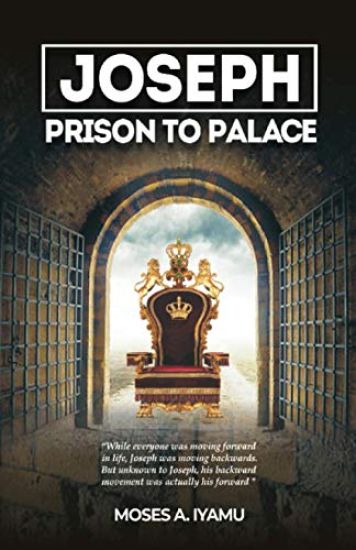
Joseph

Joseph

Moses Airen Iyamu

00214
2021
pokkari
There is something about the morning. Joy comes in the morning. Weeping may endure for a night but joy comes in the morning. No one really knows when his or her morning will comebut it does come because there is something about the morning...When you have a dream and it stays with you all through the night into the morningand you can still remember the beginning and end of the dream, then it's no longer just a dream it's a revelation from God and you must make sure you ask for its meaning because it's very important".
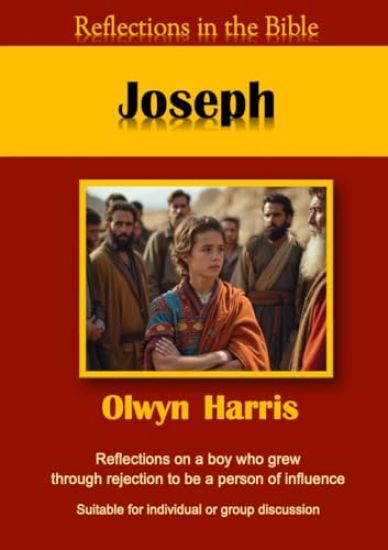
Joseph

Joseph

Olwyn L Harris

Reading Stones Publishing
2025
pokkari
This book is intended to be a reflective space to use alongside your Bible. Sometimes, even the act of opening the pages of our Bible can be a challenge. So open up Don't skip over the suggested passages marked as "Bible Readings". The scriptures tagged as "Bible Reference" are intended to bookmark passages, if you want to check them. Take hold of the opportunity to read or revisit God's Word. You are invited to use these pages as a place to scribble in margins; explore your own questions; and use reflective prompts to go a little deeper. My prayer is that it will be a springboard to explore the incredible love story of God, his great good news of redemption and His grace will draw you closer to who He is as our Good Father. I trust it moves each of us to appreciate more about our relationship with God, ourselves and life in community.
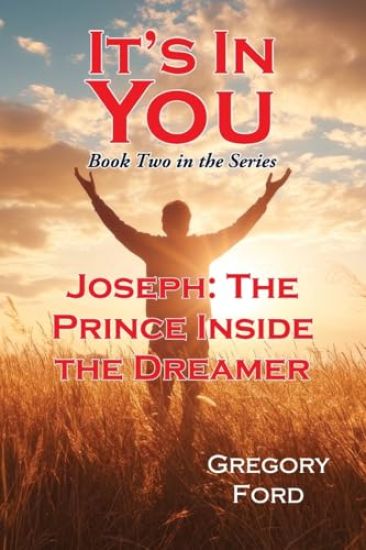
Joseph

Joseph

Gregory Ford

Faithful Life Publishers
2026
pokkari
Every man begins as a dreamer. But dreams alone do not make a prince. Joseph was given a dream-but before it could be fulfilled, it was tested by betrayal, injustice, temptation, and long seasons of waiting. Thrown into a pit by his own brothers, sold into slavery, falsely accused, and forgotten in prison, Joseph's story is not one of instant success or shallow optimism. It is the story of how God forms a man before He entrusts him with authority. In Joseph: The Prince Inside the Dreamer, Gregory Ford walks readers through the defining moments of Joseph's journey-from the pit to the palace-revealing how God uses adversity to shape character, refine integrity, and awaken the leadership He has already placed within. This book is not about shortcuts or self-promotion. It is about faithfulness in obscurity, courage in temptation, perseverance in suffering, and trust in God's sovereign timing. Written with pastoral clarity and spiritual depth, this book speaks directly to men who feel stalled, misunderstood, or forgotten-men who once dreamed boldly but now wonder if those dreams still matter. If you have ever asked: Why is God taking so long? What is He doing in this season of hardship? Is there still something inside me worth bringing forth? This book reminds you of a powerful truth: The prince was always inside the dreamer-and God has not forgotten you.
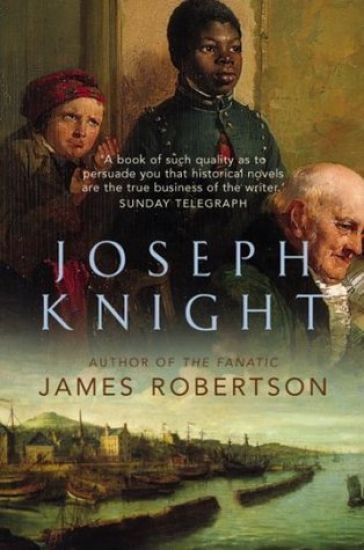
Joseph Knight

Joseph Knight

James Robertson

Harpercollins Publishers
2004
pokkari
Exiled to Jamaica in 1746, Sir John Wedderburn made a fortune, returning to Scotland with Joseph Knight, a black slave. Now, in 1802, Sir John is settling his estate, and wants to find his former slave. Can old wounds that once touched the heart of Scottish law ever heal?
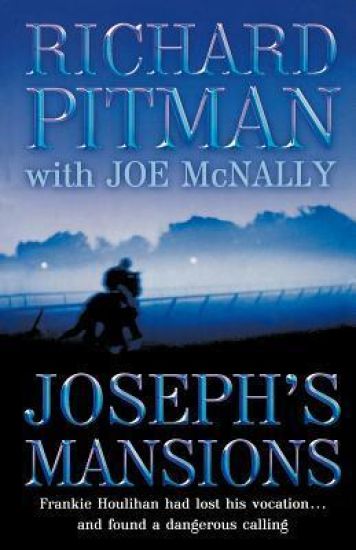
Joseph’s Mansions

Joseph’s Mansions

Richard Pitman

HARPERCOLLINS PUBLISHERS
2008
nidottu
A powerful novel of family life and human relationships set against the exciting background of a horseracing crime. Richard Pitman introduces a wonderful new hero in Frankie Houlihan, a man who quit the priesthood for love and then lost his wife in a terrible accident. Trying to rebuild his life, Frankie accepts a job with the security team who investigate criminal activity in the world of horseracing, and that is how he gets involved – in more ways than one – with a suspenseful story of kidnap, cloning and family rivalry in London, Lambourn and Dublin. Steeplechasing is still very much a country sport, and many of the horses are more like family pets than superstars. One such is Angel Gabriel and when he is kidnapped from the yard run by the Cassidy family, the strains on the family have far reaching consequences. And in getting to the root of the scam, Frankie Houlihan finds himself travelling down just the road he didn’t want to take…back into the tragedy at the heart of his own life.
Joseph Banks

Joseph Banks

Patrick O’Brian

HARPERCOLLINS PUBLISHERS
2026
nidottu
Botanist, explorer, President of the Royal Society and one of Australia’s founding fathers. Sir Joseph Banks was among the most influential figures of the eighteenth and nineteenth centuries. As a young man he accompanied Captain Cook on his voyage of discovery to Australia, in later years he was instrumental in establishing Kew Gardens as the greatest botanical centre in the world and he knew just about everybody who mattered in the scientific circles of the time. Patrick O'Brian's masterly biography draws on much hitherto unpublished material. Far from being the colossus of science traditionally imagined, Joseph Banks emerges here as a warm-hearted enthusiast whose legacy survives not only in the record of his botanizing in the South Seas but in the development of the Australian continent and in the tenor and tradition of subsequent scientific inquiry.
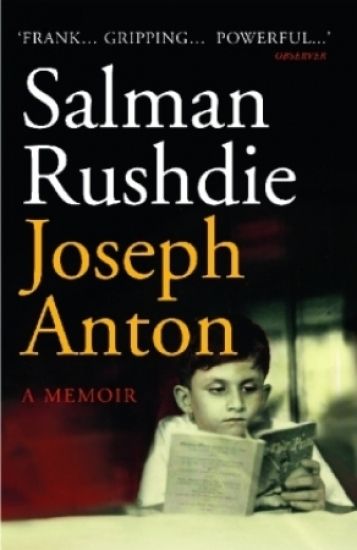
Joseph Anton

Joseph Anton

Salman Rushdie

Random House UK
2013
pokkari
On Valentine's Day, 1989, Salman Rushdie received a telephone call from a BBC journalist that would change his life forever: Ayatollah Khomeini, a leading Muslim scholar, had issued him with a death sentence. This book offers an account of how he was forced to live in hiding for over a decade.
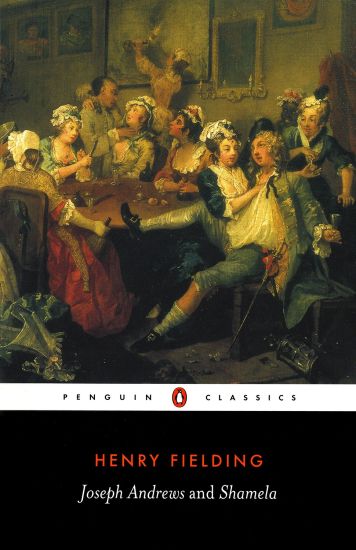
Joseph Andrews & Shamela

Joseph Andrews & Shamela

Henry Fielding

Penguin Classics
1999
isokokoinen pokkari
SHAMELA is a brilliant parody of Samuel Richardson's PAMELA, in which a virtuous servant girl long resists her master's advances and is eventually 'rewarded' with marriage. Fielding's far more spirited and sexually honest heroine, by contrast, merely uses coyness and mock modesty as techniques to catch a rich husband. JOSEPH ANDREWS, Fielding's first full-length novel, can also be seen as a response to Richardson, as the lascivious Lady Booby sets out to seduce her comically chaste servant Joseph, (himself in love with the much-put-upon Fanny Goodwill). As in Tom Jones, Fielding takes a huge cast of characters out on the road and exposes them to many colourful and often hilarious adventures.
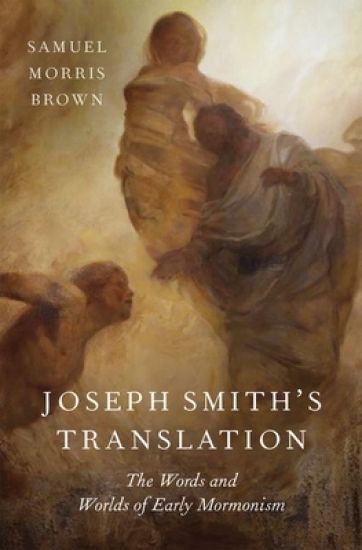
Joseph Smith's Translation

Joseph Smith's Translation

Samuel Morris Brown

Oxford University Press Inc
2020
sidottu
Mormonism's founder, Joseph Smith, claimed to have translated ancient scriptures. He dictated an American Bible from metal plates reportedly buried by ancient Jews in a nearby hill, and produced an Egyptian "Book of Abraham" derived from funerary papyri he extracted from a collection of mummies he bought from a traveling showman. In addition, he rewrote sections of the King James Version as a "New Translation" of the Bible. Smith and his followers used the term translation to describe the genesis of these English scriptures, which remain canonical for the Church of Jesus Christ of Latter-day Saints. Whether one believes him or not, the discussion has focused on whether Smith's English texts represent literal translations of extant source documents. On closer inspection, though, Smith's translations are far more metaphysical than linguistic. In Joseph Smith's Translation, Samuel Morris Brown argues that these translations express the mystical power of language and scripture to interconnect people across barriers of space and time, especially in the developing Mormon temple liturgy. He shows that Smith was devoted to an ancient metaphysics--especially the principle of correspondence, the concept of "as above, so below"--that provided an infrastructure for bridging the human and the divine as well as for his textual interpretive projects. Joseph Smith's projects of metaphysical translation place Mormonism at the productive edge of the transitions associated with shifts toward "secular modernity." This transition into modern worldviews intensified, complexly, in nineteenth-century America. The evolving legacies of Reformation and Enlightenment were the sea in which early Mormons swam, says Brown. Smith's translations and the theology that supported them illuminate the power and vulnerability of the Mormon critique of American culture in transition. This complex critique continues to resonate and illuminate to the present day.
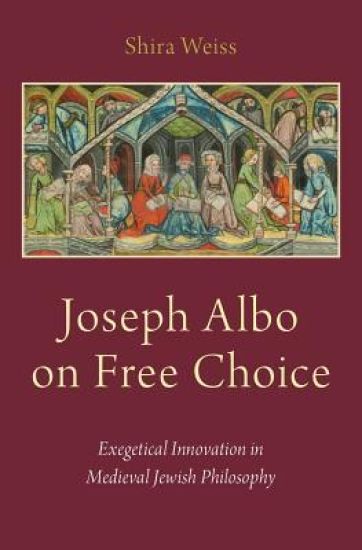
Joseph Albo on Free Choice

Joseph Albo on Free Choice

Shira Weiss

Oxford University Press Inc
2017
sidottu
Joseph Albo on Free Choice discovers unsuspected philosophical originality in the interpretations of biblical narrative found in Joseph Albo's Book of Principles, one of the most popular Hebrew works in the corpus of medieval Jewish philosophy. Several of Albo's exegetical analyses focus on free choice, which emerges as a conceptual scheme throughout his work. An exploration of Albo's innovative homiletical interpretations of the binding of Isaac, the hardening of Pharaoh's heart, the Book of Job, and God's choice of Israel, reveals his view of free choice which was significant during a historical period of religious coercion. Albo's sole surviving responsum dealing with the case of the qatlanit further demonstrates his philosophical position. In this new book, Shira Weiss shows that in the medieval era in which Albo lived, free choice was an important topic, subject to vehement debate that has continued to be contested in modern philosophy.
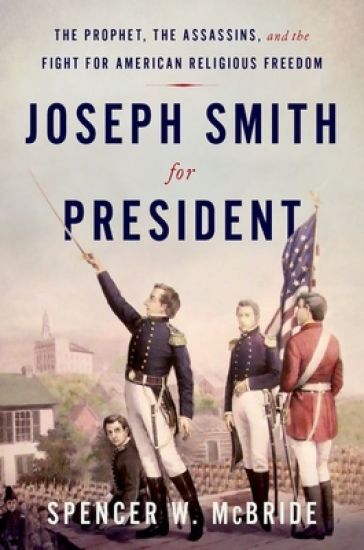
Joseph Smith for President

Joseph Smith for President

Spencer W. McBride

Oxford University Press Inc
2021
sidottu
By the election year of 1844, Joseph Smith, the controversial founder of the Church of Jesus Christ of Latter-day Saints, had amassed a national following of some 25,000 believers. Nearly half of them lived in the city of Nauvoo, Illinois, where Smith was not only their religious leader but also the mayor and the commander-in-chief of a militia of some 2,500 men. In less than twenty years, Smith had helped transform the American religious landscape and grown his own political power substantially. Yet the standing of the Mormon people in American society remained unstable. Unable to garner federal protection, and having failed to win the support of former president Martin Van Buren or any of the other candidates in the race, Smith decided to take matters into his own hands, launching his own bid for the presidency. While many scoffed at the notion that Smith could come anywhere close to the White House, others regarded his run—and his religion—as a threat to the stability of the young nation. Hounded by mobs throughout the campaign, Smith was ultimately killed by one—the first presidential candidate to be assassinated. Though Joseph Smith's run for president is now best remembered—when it is remembered at all—for its gruesome end, the renegade campaign was revolutionary. Smith called for the total abolition of slavery, the closure of the country's penitentiaries, and the reestablishment of a national bank to stabilize the economy. But Smith's most important proposal was for an expansion of protections for religious minorities. At a time when the Bill of Rights did not apply to individual states, Smith sought to empower the federal government to protect minorities when states failed to do so. Spencer W. McBride tells the story of Joseph Smith's quixotic but consequential run for the White House and shows how his calls for religious freedom helped to shape the American political system we know today.
Joseph's Carol

Joseph's Carol

Oxford University Press
2021
muu
for baritone solo, SAATB, and small orchestra Dedicated to the Oxford Vaccine Team and premiered by Sir Bryn Terfel, The Oxford Philharmonic Orchestra, and the Choir of Merton College in a special tribute concert, Joseph's Carol sets words by the composer that recount the Christmas story from the perspective of Joseph. The two expressive verses are taken by the solo baritone, with the chorus performing a macaronic refrain infused with expectancy and wonder, as well as taking on the role of the angels in a soft accompaniment to the closing words of the second solo verse. The upper three voice parts are designed to be approximately equal in strength, and the carol may be accompanied by organ, piano, or small orchestra.
Joseph Conrad's Heart of Darkness

Joseph Conrad's Heart of Darkness

Oxford University Press Inc
2004
nidottu
Heart of Darkness, Joseph Conrad's fictional account of a journey up the Congo river in 1890, raises important questions about colonialism and narrative theory. This casebook contains materials relevant to a deeper understanding of the origins and reception of this controversial text, including Conrad's own story 'An Outpost of Progress', together with a little-known memoir by one of Conrad's oldest English friends, a brief history of the Congo Free State by Sir Arthur Conan Doyle, and a parody of Conrad by Max Beerbohm. A wide range of theoretical approaches are also represented, examining Conrad's text in terms of cultural, historical, textual, stylistic, narratological, post-colonial, feminist, and reader-response criticism. The volume concludes with an interview in which Conrad compares his adventures on the Congo with Mark Twain's experiences as a Mississippi pilot.
Joseph Babinski

Joseph Babinski

Jacques MD Philippon; Jacques MD Poirier

Oxford University Press Inc
2008
sidottu
The life and work of Joseph Babinski (1857-1932) has been revisited by two French physicians whose enthusiasm for the subject is reflected in the depth and breadth of documentary sources. From Babinski's Polish roots, his father (an intrepid revolutionist, his brother(the gold miner and famous gastronome Ali-Bab to the Babinski circle, his friends, his colleagues and his disciples, the reader will find a refreshing perspective on a particularly fascinating period in French medicine. His scientific contribution is analyzed in detail, with for the first time a complete bibliography of his publications. These includes not only the Babinski Sign, but also the earlier and heretofore less-known concerning pathological anatomy and histology, the papers on cutaneous and tendinous reflexes, cerebellar and vestibular semeiology, hysteria and pithiatism, localization of spinal cord compression s and the birth of French neurosurgery.
Joseph Smith, Jr.

Joseph Smith, Jr.

Oxford University Press Inc
2009
nidottu
Mormon founder Joseph Smith is one of the most controversial figures of nineteenth-century American history, and a virtually inexhaustible subject for analysis. In this volume, fifteen scholars offer essays on how to interpret and understand Smith and his legacy. Including essays by both Mormons and non-Mormons, this wide-ranging collection is the only available survey of contemporary scholarly opinion on the extraordinary man who started one of the fastest growing religious traditions in the modern world.
Joseph Smith's Gold Plates

Joseph Smith's Gold Plates

Richard Lyman Bushman

OXFORD UNIVERSITY PRESS INC
2023
sidottu
Renowned historian Richard Lyman Bushman presents a vibrant history of the objects that gave birth to a new religion. According to Joseph Smith, in September of 1823 an angel appeared to him and directed him to a hill near his home. Buried there Smith found a box containing a stack of thin metal sheets, gold in color, about six inches wide, eight inches long, piled six or so inches high, bound together by large rings, and covered with what appeared to be ancient engravings. Exactly four years later, the angel allowed Smith to take the plates and instructed him to translate them into English. When the text was published, a new religion was born. The plates have had a long and active life, and the question of their reality has hovered over them from the beginning. Months before the Book of Mormon was published, newspapers began reporting on the discovery of a "Golden Bible." Within a few years over a hundred articles had appeared. Critics denounced Smith as a charlatan for claiming to have a wondrous object that he refused to show, while believers countered by pointing to witnesses who said they saw the plates. Two hundred years later the mystery of the gold plates remains. In this book renowned historian of Mormonism Richard Lyman Bushman offers a cultural history of the gold plates. Bushman examines how the plates have been imagined by both believers and critics--and by treasure-seekers, novelists, artists, scholars, and others--from Smith's first encounter with them to the present. Why have they been remembered, and how have they been used? And why do they remain objects of fascination to this day? By examining these questions, Bushman sheds new light on Mormon history and on the role of enchantment in the modern world.
Joseph Conrad and the Modern Temper

Joseph Conrad and the Modern Temper

Daphna Erdinast-Vulcan

Clarendon Press
1991
sidottu
A study which relates Conrad's work to the crisis of modernity in the late nineteenth century, this book discusses 'faultlines' - ambiguities and apparent aesthetic ruptures - in nine of the major novels and novellas. These faultlines are diagnosed as the symptoms of an unresolved tension between Conrad's temperamental affinity with the Nietzschean outlook and his fierce ideological rejection of its ultimate implications. Presenting Conrad as 'a modernist at war with modernity', the author studies the perpetual tug-of-war between the artistic will to meaning and the writer's susceptibility to the modern temper, both as a theme and as a structuring principle in his work. The modes of this struggle are defined as the 'failure of myth', the 'failure of metaphysics', and the 'failure of textuality'. This continuously forceful and original inquiry draws on the work of Nietzsche, Vaihinger, Bakhtin, Heller, and MacIntyre, amongst others, to present the ethical and epistemological issues which are interwoven with Conrad's aesthetics.
Joseph Scaliger: I: Textual Criticism and Exegesis
This volume is the first half of an intellectual biography of Joseph Scaliger (1540-1609), the greatest classical scholar of his time. Anthony Grafton describes Scaliger's early work as an editor of and commentator on classical texts, setting this into the wider context of classical scholarship in the Renaissance. At the same time he interprets the major changes that Scaliger's work underwent, as responses to pressures exerted by his social situation and emotional life.