Kirjojen hintavertailu. Mukana 11 342 296 kirjaa ja 12 kauppaa.

Kirjahaku

Etsi kirjoja tekijän nimen, kirjan nimen tai ISBN:n perusteella.

1000 tulosta hakusanalla Joyce Rodgers

Joyce's Investments

Joyce's Investments

Fannie E. (Fannie Ellsworth) Newberry

Anson Street Press
2025
sidottu
"Joyce's Investments: A Story for Girls" by Fannie E. Newberry offers a heartwarming glimpse into girls' story and family life. This classic juvenile fiction explores the theme of "investments" beyond the purely financial, delving into the value of friendship and the rewards of moral choices. Through relatable experiences, the story imparts valuable lessons in a way that resonates with readers of all ages. Newberry's narrative gently guides young readers as they consider the investments they make in their relationships, their communities, and themselves. Explore the enduring themes of values and virtues presented within the context of everyday life. "Joyce's Investments" is a timeless exploration of the importance of character and the lasting impact of one's actions.This work has been selected by scholars as being culturally important, and is part of the knowledge base of civilization as we know it.This work is in the public domain in the United States of America, and possibly other nations. Within the United States, you may freely copy and distribute this work, as no entity (individual or corporate) has a copyright on the body of the work.Scholars believe, and we concur, that this work is important enough to be preserved, reproduced, and made generally available to the public. We appreciate your support of the preservation process, and thank you for being an important part of keeping this knowledge alive and relevant.
Joyce as Theory

Joyce as Theory

Gabriel Renggli

TAYLOR FRANCIS LTD
2023
sidottu
Joyce as Theory is the first book-length examination of James Joyce to argue he can be read as a theorist. Joyce is not just a favourite case study of literary theory; he wrote about how we make meaning, and to what effect. The present volume traces his hermeneutics in those narratives in Finnegans Wake which deal with textual production and interpretation, showing that the Wake’s difficulty exemplifies Joyce’s theoretical stance. All reading involves responding to problems we cannot quite fathom.This preoccupation places Joyce alongside Jacques Derrida and Jacques Lacan. Joyce as Theory revives debates on theory with a linguistic focus, laying open misconceptions that have muddled attempts to be over and done with this kind of thought. It demonstrates that Derrida and Lacan, almost exclusively presented as rivals, converge on a common position. It opposes the myth of linguistic theory as a formalist approach, instead showing that Joyce, Derrida, and Lacan give us a hermeneutic ethics alert to how meaning-making impacts our lived experience. And it challenges the notion that theory imposes matters alien to Joyce, demonstrating that it is an appreciation of Joyce’s arguments in Finnegans Wake that generates a theoretical perspective.Joyce as Theory is essential reading for researchers and students in Joyce studies, continental philosophy, literary theory, and modernist literature.
Joyce as Theory

Joyce as Theory

Gabriel Renggli

TAYLOR FRANCIS LTD
2024
nidottu
Joyce as Theory is the first book-length examination of James Joyce to argue he can be read as a theorist. Joyce is not just a favourite case study of literary theory; he wrote about how we make meaning, and to what effect. The present volume traces his hermeneutics in those narratives in Finnegans Wake which deal with textual production and interpretation, showing that the Wake’s difficulty exemplifies Joyce’s theoretical stance. All reading involves responding to problems we cannot quite fathom.This preoccupation places Joyce alongside Jacques Derrida and Jacques Lacan. Joyce as Theory revives debates on theory with a linguistic focus, laying open misconceptions that have muddled attempts to be over and done with this kind of thought. It demonstrates that Derrida and Lacan, almost exclusively presented as rivals, converge on a common position. It opposes the myth of linguistic theory as a formalist approach, instead showing that Joyce, Derrida, and Lacan give us a hermeneutic ethics alert to how meaning-making impacts our lived experience. And it challenges the notion that theory imposes matters alien to Joyce, demonstrating that it is an appreciation of Joyce’s arguments in Finnegans Wake that generates a theoretical perspective.Joyce as Theory is essential reading for researchers and students in Joyce studies, continental philosophy, literary theory, and modernist literature.
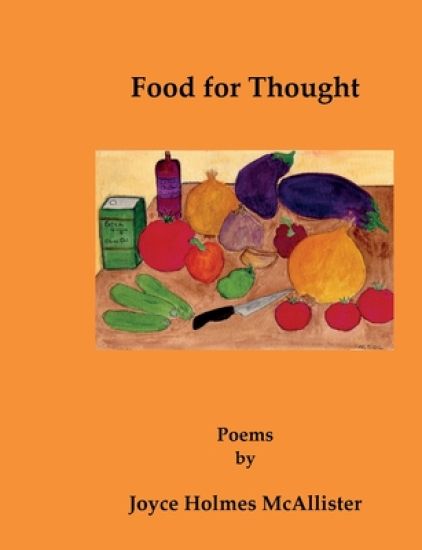
Food for Thought: Poems by Joyce Holmes McAllister

Food for Thought: Poems by Joyce Holmes McAllister

Joyce Holmes McAllister

Yellow Sofa Press
2019
nidottu
Poems honoring the memory of meals shared with loved ones, imagined feasts, odes to vegetables... In her latest collection Food for Thought, Joyce Holmes McAllister pays homage to all things culinary, from the humble turnip to the dangers of garlic, from thoughtful cows to fed-up chickens, from reluctant little neck clams to the truth about caviar. This poet ranges widely in space and time, conjuring memories from the farm kitchen of her youth, meditating on the cooking of Alice B. Toklas, recalling a dear friend's penchant for Hebrew National hot dogs, remembering the tradition of cocktail hour, and mourning the loss of her husband and dining companion of 40 years. Whether playful and light hearted or haunted by absence, these poems reflect the wisdom of a life fully lived, meals fully savored. At times bittersweet, always creative, McAllister's work is permeated by her lifelong passion for gastronomy and poetry. Fellow poet and friend Mary Beth O'Connor has provided whimsical color illustrations for several of the poems. Joyce Holmes McAllister's first chapbook Before We Knewwas published by Foothills Press in 2016; the second, Return (Yellow Sofa Press), appeared about a year later. This is her first full-length collection.
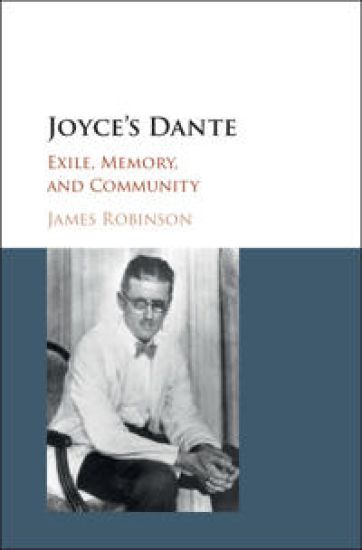
Joyce's Dante

Joyce's Dante

James Robinson

Cambridge University Press
2016
sidottu
Joyce's engagement with Dante is a crucial component of all of his work. This title reconsiders the responses to Dante in Joyce's work from A Portrait of the Artist as a Young Man to Finnegans Wake. It presents that encounter as an historically complex and contextually determined interaction reflecting the contested development of Dante's reputation, readership and textuality throughout the nineteenth century. This process produced a 'Dante with a difference', a uniquely creative and unorthodox construction of the poet which informed Joyce's lifelong engagement with such works as the Vita Nuova and the Commedia. Tracing the movement through Joyce's writing on exile as a mode of alienation and charting his growing interest in ideas of community, Joyce's Dante shows how awareness of his changing reading of Dante can alter our understanding of one of the Irish writer's lasting thematic preoccupations.
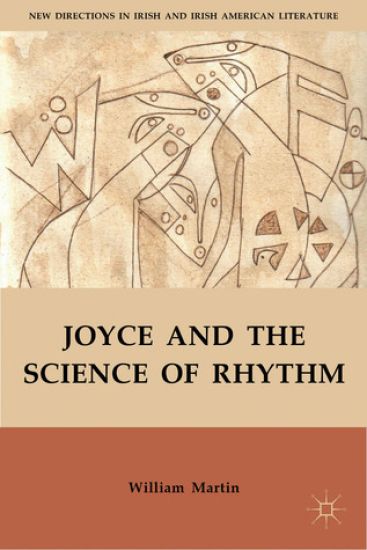
Joyce and the Science of Rhythm

Joyce and the Science of Rhythm

W. Martin

Palgrave Macmillan
2012
sidottu
This book situates Joyce's critical writings within the context of an emerging discourse on the psychology of rhythm, suggesting that A Portrait of the Artist dramatizes the experience of rhythm as the subject matter of the modernist novel. Including comparative analyses of the lyrical prose of Virginia Woolf and the 'cadences' of the Imagists, Martin outlines a new concept of the 'modern period' that describes the interaction between poetry and prose in the literature of the early twentieth century.
Joyce’s Nietzschean Ethics

Joyce’s Nietzschean Ethics

Sam Slote

Palgrave Macmillan
2013
sidottu
The first book-length treatment of James Joyce's work through the lens of Friedrich Nietzsche's thought, Slote argues that the range of styles Joyce deploys has an ethical dimension. This intersection raises questions of epistemology, aesthetics, and the construction of the 'Modern' and will appeal to literary and philosophy scholars.
Joyce & Betrayal

Joyce & Betrayal

James Alexander Fraser

Palgrave Macmillan
2016
sidottu
This book offers a fundamental and comprehensive re-evaluation of one of Joyce’s most pervasive themes. By showing that betrayal was central to how Joyce understood and depicted the difficulties and terrors at the heart of all relationships, this book re-conceives Joyce’s approach to history, politics, and the other. Leaving behind the pathologizing discourses by which Joyce’s interest in betrayal has been treated as an ‘obsession,’ this book offers a vision of Joyce as both dramatist and theorist of betrayal. It demonstrates that, rather than being compelled by some unconscious urge to produce and reproduce textual betrayals, Joyce had a deep and hard-won conception of the specific dramatic energies wrapped up in the language and structures of betrayal and repeatedly found ways to make use of this understanding in his work.
Joyce's Politics

Joyce's Politics

Dominic Manganiello

Routledge
2015
sidottu
The object of this study, first published in 1980, is to dispel the view that James Joyce had no political views. Although not a political novelist like D. H. Lawrence or Joseph Conrad, political issues and discussions are central to Joyce’s major novels. This title links that political content with Joyce’s own views, and examines the evolution of those views and attitudes. A number of unusual and fascinating sources for Joyce’s thought are uncovered. Joyce’s Politics is thus a thorough review of a neglected aspect of Joyce and his writings, and will be of interest to students of literature.
Joyce's Politics

Joyce's Politics

Dominic Manganiello

Routledge
2017
nidottu
The object of this study, first published in 1980, is to dispel the view that James Joyce had no political views. Although not a political novelist like D. H. Lawrence or Joseph Conrad, political issues and discussions are central to Joyce’s major novels. This title links that political content with Joyce’s own views, and examines the evolution of those views and attitudes. A number of unusual and fascinating sources for Joyce’s thought are uncovered. Joyce’s Politics is thus a thorough review of a neglected aspect of Joyce and his writings, and will be of interest to students of literature.
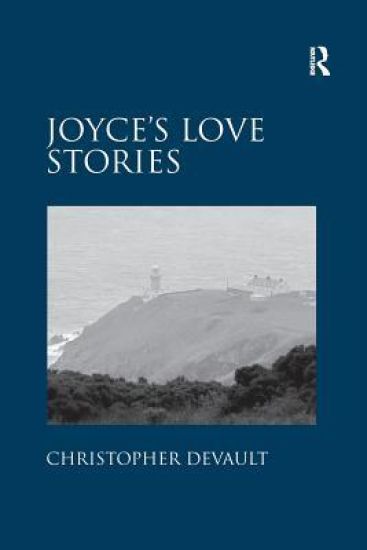
Joyce's Love Stories

Joyce's Love Stories

Christopher Devault

Routledge
2016
nidottu
In his comprehensive study of love in James Joyce's writings, Christopher DeVault suggests that a love ethic persists throughout Joyce's works. DeVault uses Martin Buber's distinction between the true love for others and the narcissistic desire for oneself to frame his discussion, showing that Joyce frequently ties his characters' personal and political pursuits to their ability to affirm both their loved ones and their fellow Dubliners. In his short stories and novels, DeVault argues, Joyce shows how personal love makes possible a broader social compassion that creates a more progressive body politic. While his early protagonists' narcissism limits them to detached engagements with Dublin that impede effective political action, Joyce demonstrates the viability of his love ethic through both the Blooms’ empathy in Ulysses and the polylogic dreamtext of Finnegan's Wake. In its revelation of Joyce's amorous alternative to the social and political paralysis he famously attributed to twentieth-century Dublin, Joyce's Love Stories allows for a better appreciation of the ethical and political significance underpinning the author's assessments of Ireland.
Joyce and Lacan

Joyce and Lacan

Daniel Bristow

Routledge
2018
nidottu
What happens when the intellectual giant of twentieth-century literature, James Joyce, is made an object of consideration and cause of desire by the intellectual giant of modern psychoanalysis, Jacques Lacan?This is what Joyce and Lacan explores, in the three closely interrelated areas of reading, writing, and psychoanalysis, by delving into Joyce’s own relationship with psychoanalysis in his lifetime. The book concentrates primarily on his last text, Finnegans Wake, the notorious difficulty of which arises from its challenging the intellect itself, and our own processes of reading. As well as the centrality of the Wake, concepts of Joycean ontology, sanity, singularity, and sexuality are excavated from sustained analysis of his earliest writings onward.To be ‘post-Joycean’, as Lacan describes it, means then to be in the wake not only of Joyce, but also of Lacan’s interventions on the Irish writer made in the mid-70s. It was this encounter that gave rise to concepts that have gained currency in today’s psychoanalytic theory and practice, and importance in wider critical contexts. The notions of the sinthome, lalangue, and Lacan’s use of topology and knot theory are explored within, as well as new theories being launched.The book will be of interest to psychoanalysts, literary theorists, and students and teachers of literature, theory, or the works of Joyce and Lacan.
Joyce and Lacan

Joyce and Lacan

Daniel Bristow

Routledge
2016
sidottu
What happens when the intellectual giant of twentieth-century literature, James Joyce, is made an object of consideration and cause of desire by the intellectual giant of modern psychoanalysis, Jacques Lacan?This is what Joyce and Lacan explores, in the three closely interrelated areas of reading, writing, and psychoanalysis, by delving into Joyce’s own relationship with psychoanalysis in his lifetime. The book concentrates primarily on his last text, Finnegans Wake, the notorious difficulty of which arises from its challenging the intellect itself, and our own processes of reading. As well as the centrality of the Wake, concepts of Joycean ontology, sanity, singularity, and sexuality are excavated from sustained analysis of his earliest writings onward.To be ‘post-Joycean’, as Lacan describes it, means then to be in the wake not only of Joyce, but also of Lacan’s interventions on the Irish writer made in the mid-70s. It was this encounter that gave rise to concepts that have gained currency in today’s psychoanalytic theory and practice, and importance in wider critical contexts. The notions of the sinthome, lalangue, and Lacan’s use of topology and knot theory are explored within, as well as new theories being launched.The book will be of interest to psychoanalysts, literary theorists, and students and teachers of literature, theory, or the works of Joyce and Lacan.